
Unfortunately, I don’t make it out to the movie theatre much these days. Between my day job driving my kids to and from baseball and ballet practices at least five times (each) a week and my writing about Chinese language films (which rarely play at theatres near me) over at The Chinese Cinema and my coverage of various international film festivals at InReview Online (which is entirely done via screener), there’s not a whole lot of time in my week for doing what I really love most: watching a movie, big. I did get to the Grand Illusion before it closed for a martial arts triple feature (and a tour around my old stomping grounds, which look almost nothing like they did the last time I worked in the U-District). And I made sure to catch Tsui Hark’s latest, which happened to be playing at one of the mall theatres nearby. Other than that, the last time I was in a theatre was for a self-made double feature of Furiosa and I Saw the TV Glow last summer. But of course I had to roll out opening weekend for Milla Jovovich and Paul WS Anderson’s latest.
When last we saw PWSA and Milla, they were remaking Hell in the Pacific along with Tony Jaa in the guise of a video game adaptation with Monster Hunter. This time, they take their stab at a George RR Martin-style bloody fantasy adventure by adapting a short story by. . . George RR Martin. The project originated with Jovovich, who, as Anderson says in this interviews with critics Rob Sweeney and Bilge Ebiri, has long been a huge fantasy fan and shepherded the project for years. Unlike Game of Thrones’s medieval high fantasy setting, however, this Martin story takes place in a post-apocalyptic future, one more reminiscent of George Miller’s Mad Max world than Lord of the Rings. That’s the visual approach Anderson adopts as well, blending real environments with computer-generated imagery in a cinematic unreality that recalls Furiosa as much as anything else.
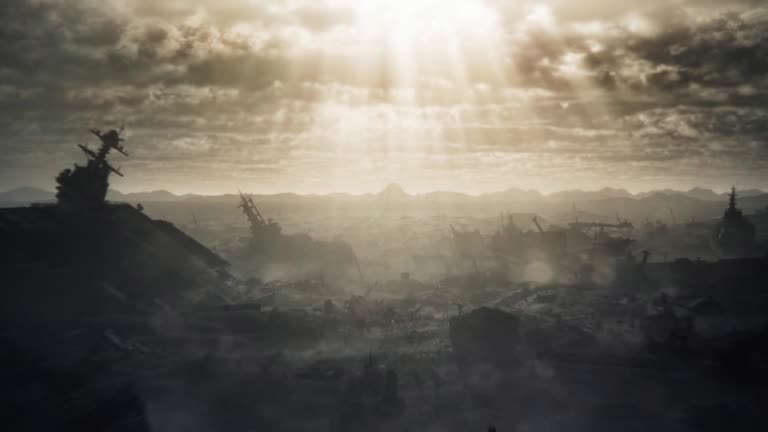
Eschewing the desert orange and open blue skies of Miller’s films, though, Anderson opts for a highly stylized and desaturated color palette, ranging from sepia to mud gray, with only occasional forays into blue or green (and very little red). Anderson has worked in this vein before, with Death Race and Resident Evil: The Final Chapter, and while its not a visual scheme that I find particularly appealing, it does make sense as his vision of the world after the fall is one of relentless bleakness and violence where nature, like humanity, has all the color drained out of it. Lost Lands, at least, is not as monochromatic as Death Race, as its variety of environments and settings allows for some alternation between gray and brown, just enough to keep things interesting.
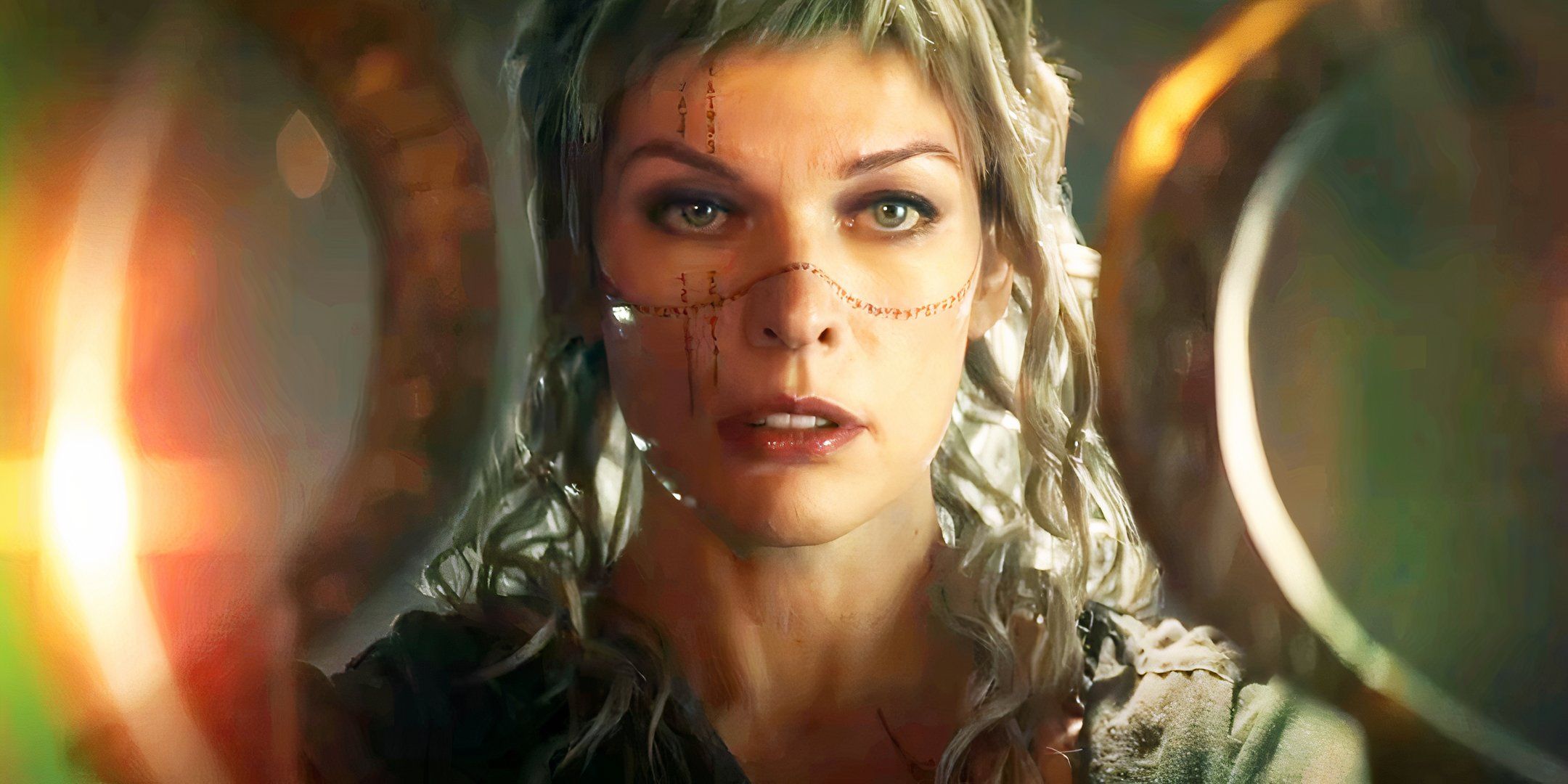
Those Lost Lands are the world outside of what is humanity’s last remaining city. The city is controlled by an Overlord and a Church. Jovovich plays Gray Alys (recall that she played many different Alices in the Resident Evil movies), a witch who is bound to grant the wishes of anyone who asks something of her (though it never works out how they’d hope). She’s tasked by the Queen to give her the power of a werewolf, so Alys enlists the help of a Hunter (Dave Bautista) to track down just such a beast in the Lost Lands so she can kill it and take its power. But the Church is hot on their trail as well, as Alys’s power is a direct affront to their religion, and her escape from their attempt to lynch her in the film’s prologue has inspired some potentially revolutionary energy among the downtrodden populace. The bulk of the film is then a simple quest/chase structure, with a ticking clock (Alys has only a week to complete her task).
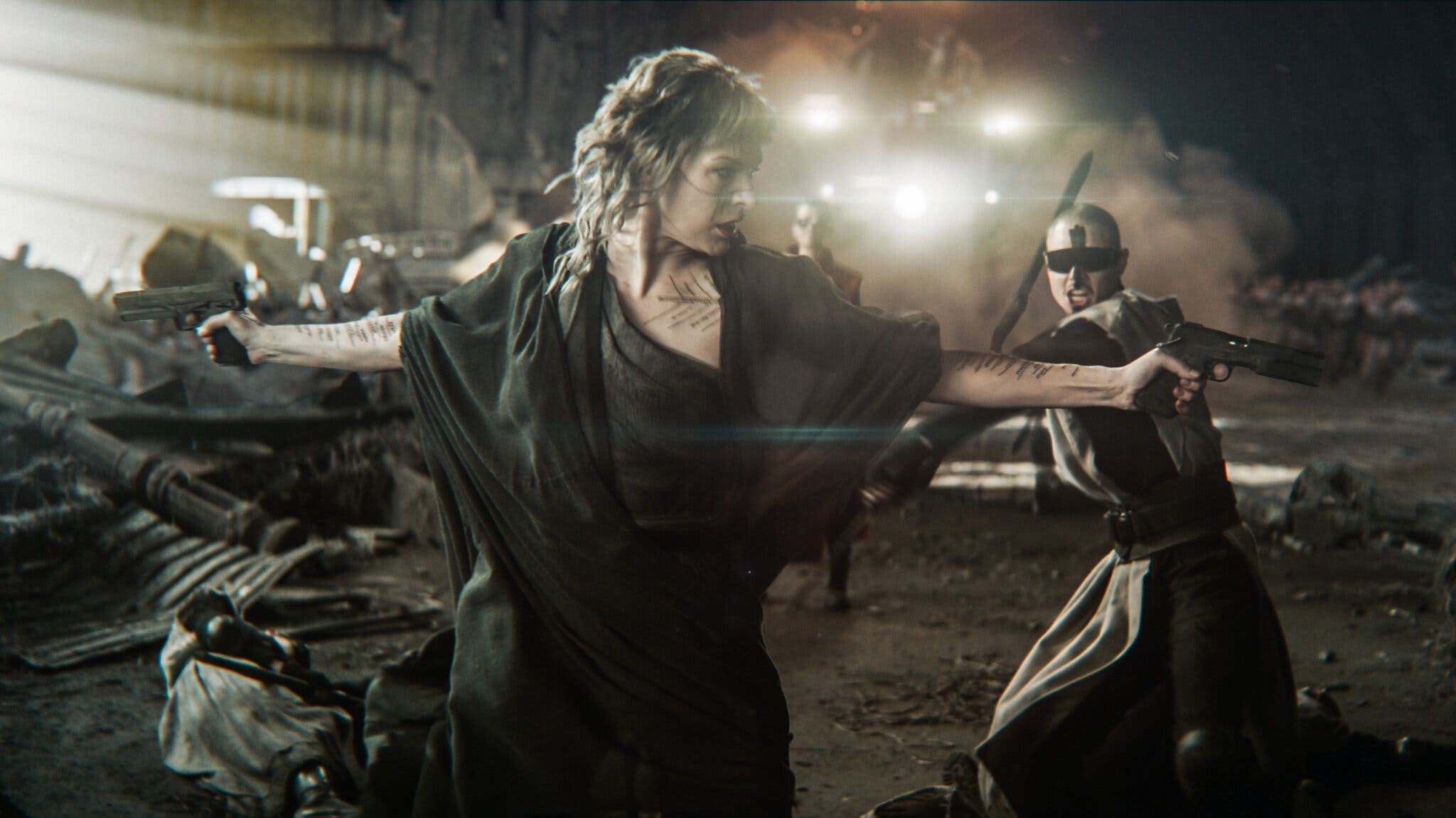
The film’s success rests on two things: the action sequences, which are up to Anderson’s usual standard of mid-budget audacity (Outlaw Vern compared Anderson to Albert Pyun on blusky, and that’s incredibly apt: he’s Pyun with all the money and backing of the Polish film industry); and the chemistry between Jovovich and Bautista, which, also per Anderson’s usual standard, works better visually than it does verbally. Anderson and Jovovich work so well together because he knows how to turn her weakness as an actress (her weirdly detached affect) in to a strength by positioning her as a person outside the norms of the regular world. In the Resident Evil movies she’s a manufactured super-hero; in The Three Musketeers she’s a schemer always a step ahead of heroes and villains alike, following her own agenda alone; in Monster Hunter she’s a human lost in a world she doesn’t understand with her lone companion being someone who literally doesn’t speak her language (Luc Besson understood this aspect of Jovovich as well, with two of her finest performances coming in his The Fifth Element and The Messenger).
Jovovich’s Gray Alys fits this template perfectly. Seemingly existing outside of time as well as outside the bounds of the spiritual and temporal powers of her world, Alys is both wiser than everyone around her and able to manipulate those lesser mortals merely by making eye contact with them (the joy I felt when Anderson opened the movie with a close-up of Jovovich’s eyeball!). She’s outside of their reality both in affect and literally in that she can remake the world they see to serve her own ends. This however does create some awkwardness in the quiet moments of the journey, when she and Bautista are bonding, forming what seems like it should be a romantic connection. While the images of the slight Jovovich curled up next to the hulking Bautista are effectively cozy, she’s never really convincing as someone who might fall in love, and thus their declarations of feeling ring somewhat hollow and unnatural.
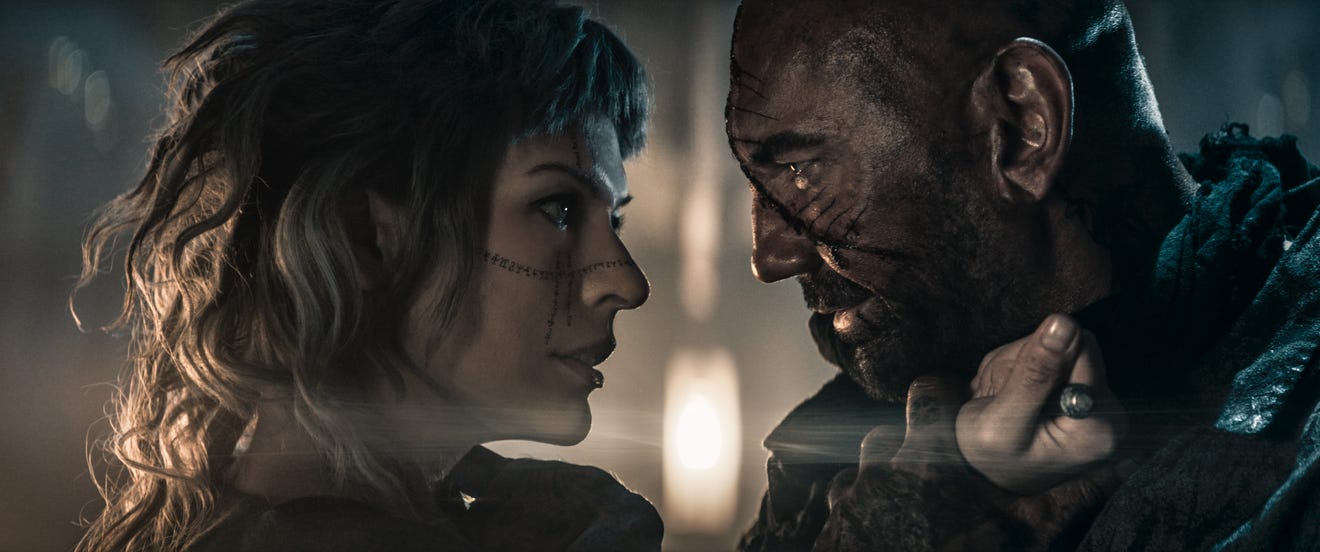
That turns out to be, I suspect, by design, as the twists in the film’s final section, where Alys reveals the various levels of her plan which she had mapped out from the film’s very beginning, contain more levels of friendship and betrayal than the simple quest + romance structure had implied. These twists are quite effective, and stitch all the disparate threads of the plot together into a satisfying whole. To what end I’m not sure. Anderson as ever remains a distinctive stylist and reliable deliverer of genre entertainment. At his best, his films approach a coherent vision of a post-digital world where human life is devalued and ultimately redeemed through family (the Resident Evil series), romance (Pompeii), and friendship (Musketeers, Monster Hunter). In the Lost Lands is more of a mystery, a portrait of Milla Jovovich as a creator of reality, albeit one limited in her power to truly transform a world that has already died. As with almost all of Anderson’s best films (Pompeii being the obvious exception), he leaves us with the most important question of all: what happens next??
 Seattle Screen Scene