Assassin’s Creed (Justin Kurzel, 2016)

assassin's creed

Assassin’s Creed‘s principal visual motif, that of the same eagle seemingly flying all over the world in multiple different time periods, feels as head-slappingly obvious yet needlessly convoluted as the film it stitches together. Said film, of course, is in the long-standing tradition of movies based on video games that almost invariably fail to attract critical support (the only probable exceptions are the Resident Evil films by Paul W.S. Anderson and Takashi Miike’s Ace Attorney), but this particular incarnation’s failure is more puzzling than usual. Directed by Justin Kurzel, who helmed last year’s lurid but tedious adaptation of Macbeth, and featuring many returning collaborators from cinematographer Adam Arkapaw to lead actors Michael Fassbender and Marion Cotillard, Assassin’s Creed possesses the talent to become a dynamic and thrilling movie. But it feels hampered by many aspects, neither embracing its video game origins nor providing any sort of compelling reason to exist.

Though the movie essentially takes place two timelines, and most of the physical action is set in 1492, it primarily follows the story of Callum Lynch (Fassbender), a convicted criminal sentenced to death, in present-day Spain. After undergoing a fake execution, he is brought to an organization known as Abstergo Industries and, under the supervision of Dr. Sophia Rikkin (Cotillard) and her father and CEO Alan Rikkin (Jeremy Irons), is connected to a device called the Animus. The contraption allows Callum to relive the memories of his ancestor Aguilar, a member of a group of assassins that has continually opposed the Templar Order, so that he may help Abstergo find the Apple of Eden, an ancient artifact that purportedly would allow the owner to control the free will of the entire human race.

Continue reading Assassin’s Creed (Justin Kurzel, 2016)”

Things to Come (Mia Hansen-Løve, 2016)

things to come

The title Things to Come may conjure in the viewer many conflicting feelings. Whether it be a sort of reminder that the best is yet ahead, an inducement of a fatalistic attitude, or even a memento mori, Mia Hansen-Løve foregrounds the idea of the inevitable. However, her film concerns itself solely with the present, anchoring itself in the rush of human experience with vigor and beauty. Centering on Nathalie (Isabelle Huppert), a philosophy professor living sometime in the late 2000s, Things to Come follows her life over the course of a year (with a brief prologue and extended epilogue) as she deals with marital problems, her aging and weakened mother (played with verve by Édith Scob), and engages in more academic matters. On the surface, this premise would smack of weightlessness, but Hansen-Løve imbues it with a light, always consequential import.

The key to the success of Things to Come is, perhaps inevitably in this year, the magnificence of Isabelle Huppert. For one, her ability to relay weighty philosophical ideas both in lecture and in casual conversation with her family and friends is impressive in more than one sense of the word; she is always persuasive and adamant in her belief, but it always feels like a conversation, like Huppert embodies Nathalie’s worldview and gives it life. Even more crucial is Huppert’s physicality, an odd term to be invoking in a film where no one moves more quickly than a brisk walk. Whether it be wading through a muddy beach to find a cell phone signal or moving through her apartment, she always seems to be in motion, never rudderless or lacking in purpose—though of course she does have many crises of faith or loneliness.

Continue reading Things to Come (Mia Hansen-Løve, 2016)”

La La Land (Damien Chazelle, 2016)

la la land

It begins with a joke and ends with glances. Perhaps this is the best way to describe the odd maturation of La La Land that occurs before the viewer’s very eyes, a movement from flashy kitsch to a fount of true human emotion wrapped up in dreams, that most Hollywood of ideas. Damien Chazelle and company certainly can’t be accused of insincerity, but they only seem to catch fire in the last twenty minutes, leaving the rest of the film to wallow in a strange mixing pot of playful cynicism at modern society and faint stabs at a genuinely compelling romance.

La La Land wears its influences on its sleeve, from Stanley Donen and Gene Kelly to Jacques Demy, but the movie often struggles to even come close to the kind of magic that those triumphs exuded. This comes from a myriad of reasons—for one, the songs, catchy as they are, lack a strong sense of momentum—but perhaps most importantly, he uses the traditions of those movies without truly embodying them or conveying what made them sing. Much of this feeling is due to a certain semblence of grandstanding that begins from the opening number, a grandiose, celebratory affair set over an entire traffic-jammed highway, all done in a single hyperactive shot to boot. Chazelle rarely lets up from there, extensively using the Steadicam to add a swooping flair to even the most mundane scenes in a way that feels intrusive in a strange way. The aesthetic feels misapplied, hyper-concentrated and suffocating instead of free and lithe like the classics Chazelle tries to imitate.

Continue reading La La Land (Damien Chazelle, 2016)”

Arrival (Denis Villeneuve, 2016)

arrival

The best science fiction films are often praised for what may seem like the antithesis of the genre: the essential humanity and drama in the face of spectacle and grandeur. So it is perhaps no surprise that Arrival, a film of no small ambition, takes as its subject nothing less than the human race, filtered through the unique perspective of expert linguist Louise Banks (Amy Adams). It is an alien invasion movie without an invasion, and indeed it seems as if Denis Villeneuve is almost totally uninterested in the extraterrestrials except as vaguely benign, abstract concepts. Instead, he first focuses with minute detail on the great unknown of the potential threat of the pods (the twelve cavernous spaceships that land in seemingly random places around the globe) before lurching into grand displays of emotion that culminate in an entirely unexpected conclusion that radically recontextualizes practically the entire film.

Villeneuve’s strength is in his gift for immersive suspense, which he only truly gets to display in the first venture of Louise and her compatriots, including Ian Donnelly (a caring, amusing Jeremy Renner) and Colonel Weber (a stolid Forest Whitaker), into the pod. Elsewhere, his sensibility comes off as too dour, particularly in the opening scenes which lean too hard into the panicked yet muted reactions of the public at large. Adams provides a welcome counterpoint throughout, infusing Louise with equal parts sensitivity and determination and a dash of ingenuity that almost feels like a light in the darkness of the unknown.

Continue reading Arrival (Denis Villeneuve, 2016)”

Tower (Keith Maitland, 2016)

tower

Approaching the subject of one of the first mass shootings in American history is by nature a tricky undertaking. In the case of the UT Austin clock tower shooting, it seems even more so; compared to other, more recent shootings, which usually take place in confined spaces like a movie theater, a club, or a school campus, this one took place in the wide expanses of downtown Austin, where no one seemed safe during the prolonged, two-hour standoff. So Keith Maitland’s approach comes as somewhat of a surprise: instead of seeking to paint a comprehensive portrait of this shocking day, it is a story primarily in anecdotes, from people who in all likelihood would only connect in events as shattering as this.

The most striking aspect is, undoubtedly, the almost entirely rotoscoped aesthetic of Tower. It almost purposefully eschews photorealism for a more impressionistic, almost faded effect, exaggerating the expressions and emphasizing the details, like the beads of sweat in the summer Texan heat or the sudden flashes of light from bullets on the sides of buildings. Even more radical is the mixing of archival footage with this animation. Particularly in the opening—before the shooting occurs—Maitland splices in animation interacting directly with the footage, the bright colors of the cars pulling up to the curb or people walking through the UT campus contrasting with the monochrome photography. But after the shooting happens, in an admittedly spurious but incredibly effective creative choice, the colors bleed out of the animation. Each person gets their own “loss of innocence” moment as they learn about the shooting (no matter how far it is into the actual events), and crucially the color never returns after the fact; when recalling certain memories the color returns to only further accentuate this point.

Continue reading Tower (Keith Maitland, 2016)”

Moonlight (Barry Jenkins, 2016)

moonlight

The only true constant in Moonlight is its look. It is an odd sort of luminescence, bringing out the vibrancy of the subject while turning everything not in the immediate foreground into a impressionistic haze of blurred colors. The effect is definitely one of immediacy, but crucially, it is immediacy that belongs to all time periods: apart from some signposts in the form of cars, cell phones, and music, the setting of the film, Miami, doesn’t seem to change all that much. The background of run-down homes, barred windows, and an moonlit beach stay the same, while the people and their changes are highlighted in stunning detail.

The movie’s visual style mirrors Barry Jenkins’ approach towards his main character, Chiron. The story of Chiron’s growth during three decades in Miami, Moonlight functions less like a biography and more like a series of snapshots. Each section, denoted by the name Chiron goes by in each section (Little, Chiron, and Black, respectively), is set over a few consecutive days, and the events are at once the most consequential and yet seem like transitions to different stages of Chiron’s life. They are formative moments, in a sense, and they come together over the course of the film to gather a quiet, cumulative force that dazes the viewer, making them feel as lost yet as at home as Chiron does.

Continue reading Moonlight (Barry Jenkins, 2016)”

Cameraperson (Kirsten Johnson, 2016)

cameraperson-620x348

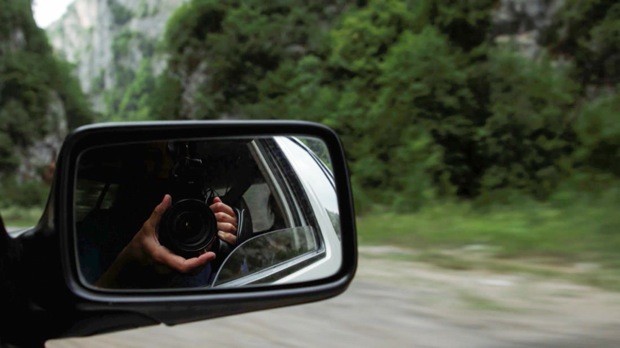
When I first heard about the significant buzz surrounding Cameraperson, it seemed heavily reminiscent of Sans soleil, Chris Marker’s 1983 magnum opus that I regard as the greatest film I’ve ever seen. The description, detailing how it was comprised of outtakes from various documentaries all shot by the same cameraperson, Kirsten Johnson, was intriguing, only slightly removed from the other film’s freewheeling examination of the human condition and memory using footage shot mostly in Tokyo, Guinea-Bissau, and San Francisco. But it took me more than half the runtime to realize that the film is not Sans soleil, and that it was just one of the many, many aspects that makes Cameraperson the stunning, quietly revolutionary work that it is.

Continue reading Cameraperson (Kirsten Johnson, 2016)”