Red Sonja (MJ Bassett, 2025)

Film adaptations of characters from Robert E. Howard stories have a cursed history. After the first, 1982’s Conan the Barbarian, a legitimately great film, every one that has followed has either misunderstood the material or misunderstood how to make a movie, or both. John Milius’s adaptation, which introduced Arnold Schwarzenegger as the title character, is the best because Milius shared Howard’s brute force sensibilities and fascination with stories of violence. Conan the Barbarian is one of the few fantasy films that brings a genuine sense of mystery and weirdness to its world (see also John Boorman’s Excalibur and Lucio Fulci’s Conquest; it is perhaps a coincidence that all three of these films were released in a brief three year period, from 1981-83). Conan the Barbarian feels ancient, truly evoking Howard’s idea of a civilization predating the oldest we have on record, a Hyborian Age in which nations and peoples rose and fell thousands of years before Sumeria and Egypt, before even the Alps rose and the Mediterranean sank.

Its successors, however, abandoned Milius’s macho seriousness in favor of swashbuckling camp. This was somewhat successful in 1984’s Conan the Destroyer and disastrous in the following year’s Red Sonja, both directed by Richard Fleischer (a director with a filmography of remarkably mixed quality) and both of which are marred by a particularly British tone of condescension toward the material. Red Sonja’s scriptwriters were George MacDonald Fraser, author of the Flashman series of historical adventure novels as well as the (excellent) 1970s Three Musketeers films directed by Richard Lester and the (not-so-excellent) 1983 Bond film Octopussy, and Clive Exton, who wrote the terrific TV series adaptations of Poirot and Jeeves and Wooster. Fine as these writers were at tweaking the conventions of the Victorian and post-World War I British Empire, they were a terrible match for Howard’s world of blood and fire and magic.

A gritty reboot of Conan the Barbarian was attempted in 2011 with Marcus Nispel at the helm, a director whose film career seems built around remaking classic genre films (Friday the 13th, Texas Chain Saw Massacre) but whose best work is probably the videos for C+C Music Factory’s “Gonna Make You Sweat” and Janet Jackson’s “Runaway.” He too is a poor fit for the material, as unlike Milius or Fleischer, he doesn’t appear to have any point of view on it at all. Torn between wanting to be true R-rated pulp and a four-quadrant, personality-driven crowd-pleaser along the lines of the then-nascent MCU, the film ends up not being much of anything, despite some fine performances from the cast and, as always for Howard adaptations, even the worst ones, some exceptional set design.

So, with this history, expectations had to be low for a new version of Red Sonja. But, in a pleasant surprise, it’s found a novel way to avoid the Robert E. Howard curse: it doesn’t try to be a Howard adaptation at all.

The character of Red Sonja traces her origins back to a Howard story, but one set in a wholly different world than that of the Conan series. Instead, it was a comic book adaptation, written by Roy Thomas and drawn by Barry Windsor-Smith that transplanted Howard’s swashbuckling woman back in time to the Hyborian Age, where she became a popular swordswoman in bikini armor and eventually got herself reincarnated as Spider-Man’s red-haired girlfriend Mary Jane Watson. The 1985 film integrates the Thomas character into the world established by Conan the Destroyer, one of silly adventure, bad comic relief, questionable special effects, and truly impressive set design. It’s sunk more than anything else by poor acting (from star Brigitte Nielsen and a phoning-it-in Schwarzenegger) and worse writing.

The new version though takes for its inspiration one of the later reboots of the comics character, specifically the 2010s series written by Gail Simone. This adaptation does take place in the Hyborian Age, in a recognizably Howard-esque world of unrelenting violence and mystery, but with a more modern sensibility, jettisoning many of the more retrograde ideas in the Howard, Milius, and Thomas source material in favor of a more feminist take on the character. To put it the dumbest possible way: they made Red Sonja woke.
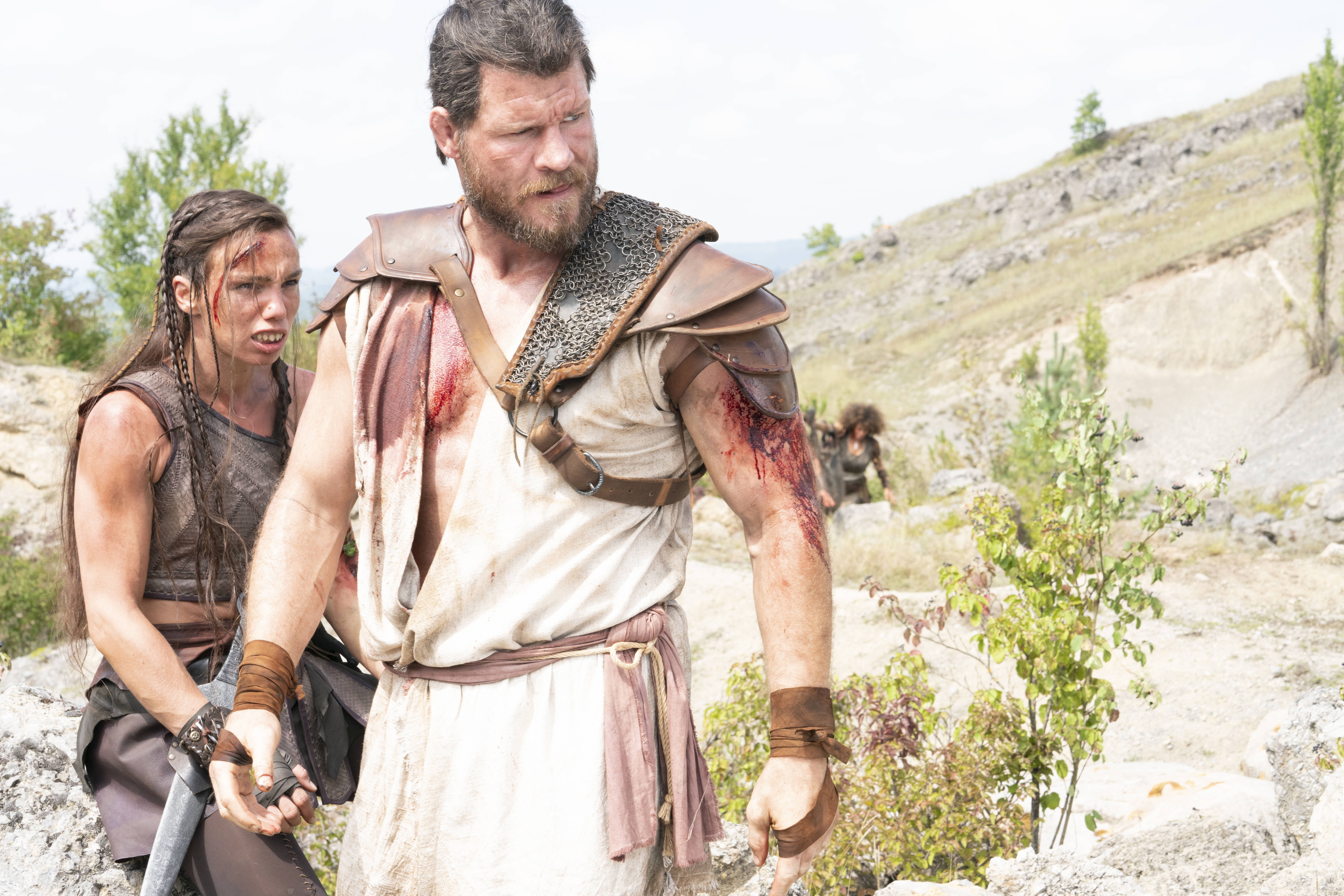
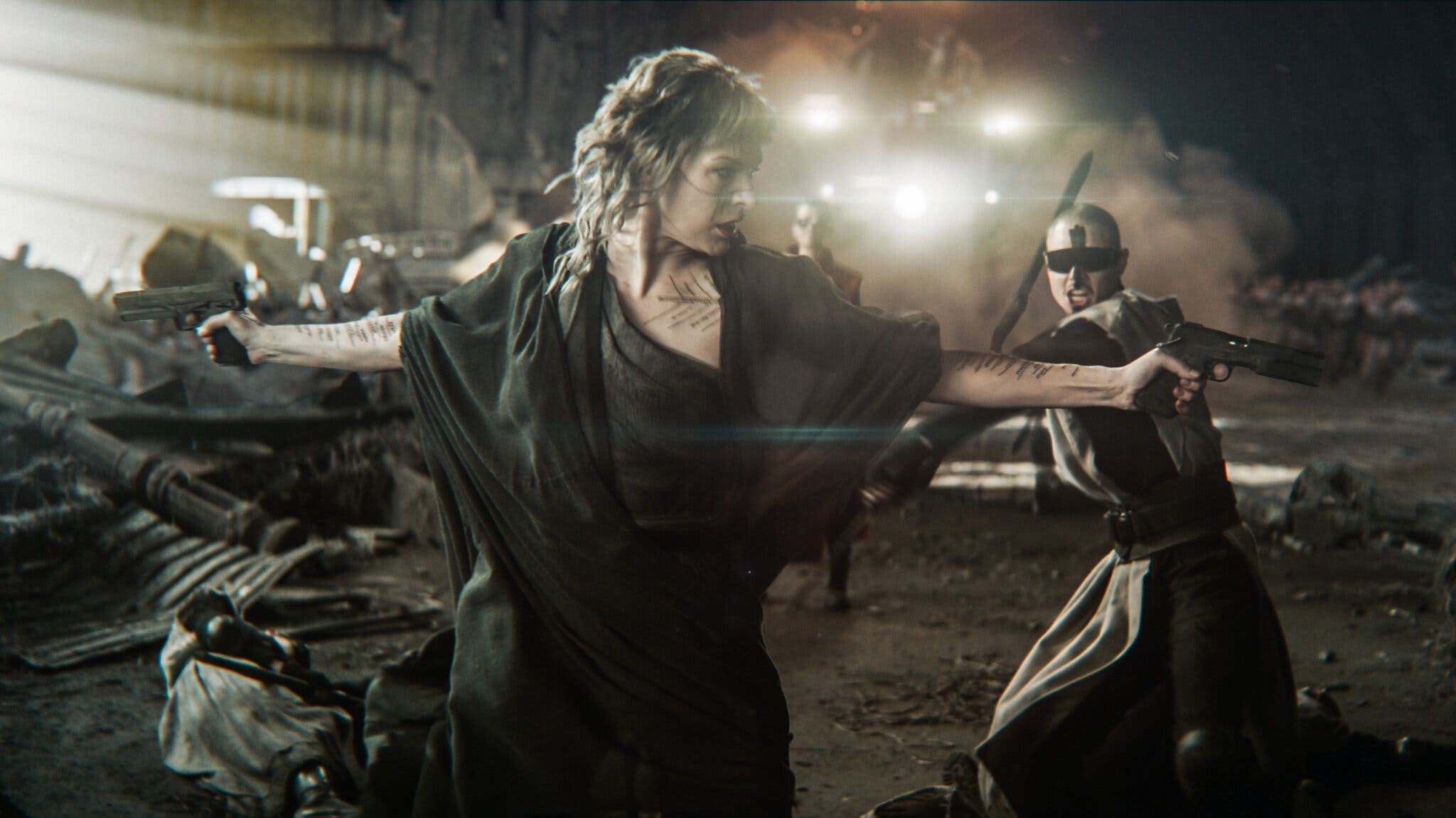
Directing is MJ Bassett, who directed a 2009 Howard adaptation I haven’t seen called Solomon Kane (it looks to be reasonably well-regarded, I just ran out of time). The film stars Matilda Lutz (star of Coralie Fargeat’s 2017 Revenge) as the heroine, introduced wandering a vast forest with her trusty horse, searching, for years, for the remnants of her tribe. She’s captured by the forces of an upstart Emperor and forced into a community of gladiators, whom she unites and leads in revolt against their captors. Her revolution spreads to the forest and, joining with her people at last, takes on the Empire as a whole. Being a low-budget genre film shot largely in Bulgaria, Red Sonja lacks the scale or CGI budget of the 2011 Conan, but makes up for it with a strong ensemble of actors, interesting characters who express real emotions, and actually good fight choreography filmed well. It’s reminiscent of recent low-budget woman-led action films like The Princess, Boudica: Queen of War, or In the Lost Lands) in its efficient use of limited resources to make top-notch, serious genre entertainment that emphasizes performance and action over spectacle and ironic distance. Lutz in particular is terrific as the lead: I hope all those people complaining in the youtube comments section for the film’s trailer that she isn’t big enough (physically, in terms of height and musculature) for the role actually watch it and realize that size isn’t everything. It’s a gritty and physical performance that effectively humanizes what is literally a cartoon character.

And that humanity, beyond the more primal pleasures of sword-fighting, giant-monsters, and silver bikinis, is what distinguishes this Red Sonja from any previous Howard-related film. Milius’s film works as well as it does because it stands against all modern sensibilities in favor of a world more primal than even classical notions of what it means to be human. His Hyborian Age is the Old Weird World, alien and therefore endlessly fascinating. This new film is in contrast wholly in keeping with the sensibilities of our modern world, concerned with technology and environmentalism and feminism and slavery and human rights and justice, concepts that exist only by accident in Howard and Milius but which are vitally important to us today. The villain in this Red Sonja is not the impassive God of Death played by James Earl Jones in the 1982 film, nor is it the embodiment of lesbian panic played by Sandahl Bergman in the 1985 film. Instead he’s a little guy, a tech genius turned capitalist, the prehistoric version of this year’s Lex Luthor as Elon Musk villain in Superman. His quest doesn’t involve magic or mystery or conquering the world of the dead like Stephen Lang’s villain from the 2011 film, but rather churning up natural resources (trees, people) for the sake of his own power and security. It’s not at all a subtle parallel to current events, but we don’t want subtle from this material. That’s how we end up with Wodehouse adapters writing our pulp fiction.
But beyond that, Barrett and screenwriter Tasha Huo, as well as actor Robert Sheehan, who plays Dragan the Emperor, give him a recognizable humanity. The 2011 film makes a courtesy nod in this direction with its villain, motivating Lang’s (otherwise finely snarling) bad guy with the sad story of a dead wife, but it plays like its something the film’s writers learned in a screenwriting manual. Dragan’s story is not especially original either, but it is given enough space to develop and breathe, and deftly weaves into Sonja’s story as well. Similarly, Sonja is paralleled by Annisia (played by Wallis Day), another former gladiator (she dresses all in white to match her white hair), She’s Sonja’s primary foil in Simone’s book as well, driven mad by the spirits of the people she’s killed and manipulated by the Emperor (in the film) to serve as his top killer. Unlike Rose MacGowan’s scary witch from the 2011 Conan, Day brings a humane confusion to the role of a mad killer. She and a half dozen other characters emerge as fully realized and complex beings, far more so than one would expect from low budget pulp filmmaking.

The result is a film that actually has something to say about the world, about how we’re all damaged and how we also all have choices about how we respond to the things in our past that make us who we are. Howard’s characters are determined, driven by forces beyond their control to rage against death while knowing it is inevitable: after all, their whole world is doomed to be erased from history, flooded by seas and crumbling to dust under rising mountains. This knowledge of their own doom dominates everything about how they behave and how we contextualize their adventures, with a kind of nihilist thrill in violence for its own sake that Milius taps into in a way few mainstream blockbusters ever have. Red Sonja’s world will ultimately share the same fate as the rest of the Hyborean Age. And Bassett’s heroes respond with violence for sure, glorious bloody violence, but never nihilistically. This is violence with a purpose. Violence to build a better world while they can, before their people, like their stories, are lost forever.
In the Lost Lands (Paul WS Anderson, 2025)

Unfortunately, I don’t make it out to the movie theatre much these days. Between my day job driving my kids to and from baseball and ballet practices at least five times (each) a week and my writing about Chinese language films (which rarely play at theatres near me) over at The Chinese Cinema and my coverage of various international film festivals at InReview Online (which is entirely done via screener), there’s not a whole lot of time in my week for doing what I really love most: watching a movie, big. I did get to the Grand Illusion before it closed for a martial arts triple feature (and a tour around my old stomping grounds, which look almost nothing like they did the last time I worked in the U-District). And I made sure to catch Tsui Hark’s latest, which happened to be playing at one of the mall theatres nearby. Other than that, the last time I was in a theatre was for a self-made double feature of Furiosa and I Saw the TV Glow last summer. But of course I had to roll out opening weekend for Milla Jovovich and Paul WS Anderson’s latest.

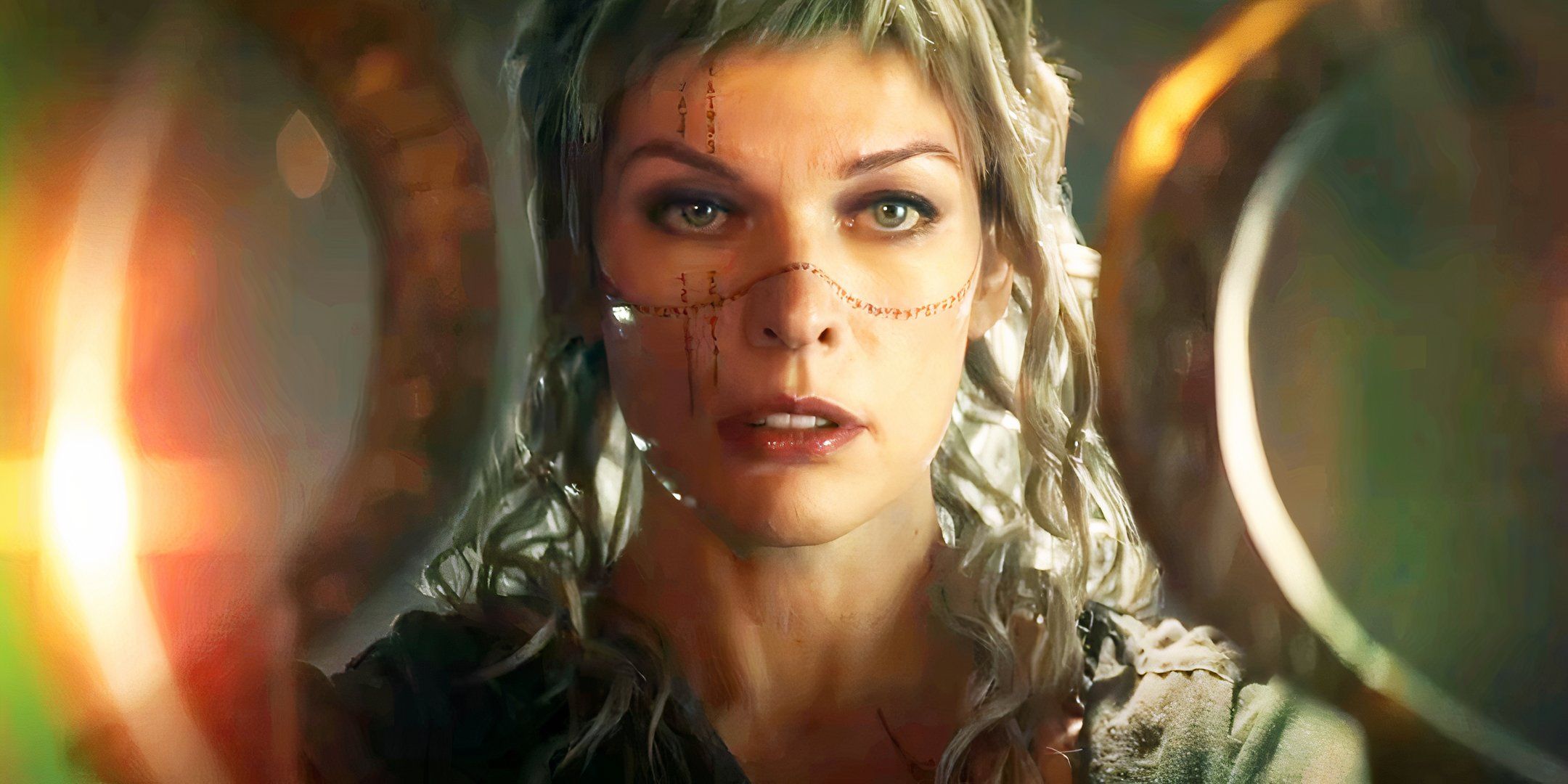
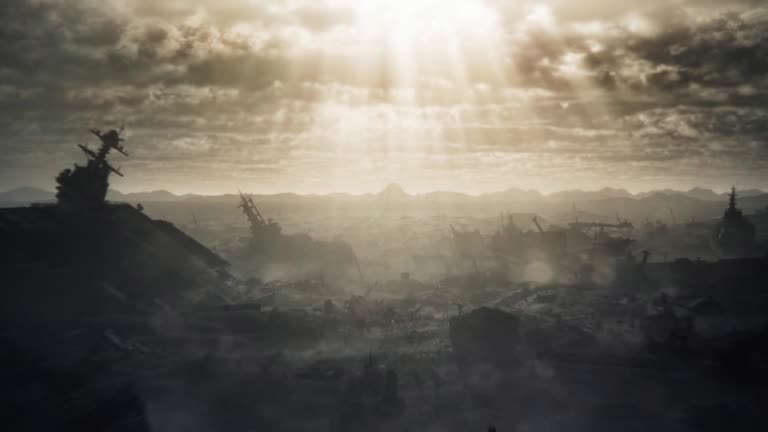
When last we saw PWSA and Milla, they were remaking Hell in the Pacific along with Tony Jaa in the guise of a video game adaptation with Monster Hunter. This time, they take their stab at a George RR Martin-style bloody fantasy adventure by adapting a short story by. . . George RR Martin. The project originated with Jovovich, who, as Anderson says in this interviews with critics Rob Sweeney and Bilge Ebiri, has long been a huge fantasy fan and shepherded the project for years. Unlike Game of Thrones’s medieval high fantasy setting, however, this Martin story takes place in a post-apocalyptic future, one more reminiscent of George Miller’s Mad Max world than Lord of the Rings. That’s the visual approach Anderson adopts as well, blending real environments with computer-generated imagery in a cinematic unreality that recalls Furiosa as much as anything else.

Eschewing the desert orange and open blue skies of Miller’s films, though, Anderson opts for a highly stylized and desaturated color palette, ranging from sepia to mud gray, with only occasional forays into blue or green (and very little red). Anderson has worked in this vein before, with Death Race and Resident Evil: The Final Chapter, and while its not a visual scheme that I find particularly appealing, it does make sense as his vision of the world after the fall is one of relentless bleakness and violence where nature, like humanity, has all the color drained out of it. Lost Lands, at least, is not as monochromatic as Death Race, as its variety of environments and settings allows for some alternation between gray and brown, just enough to keep things interesting.

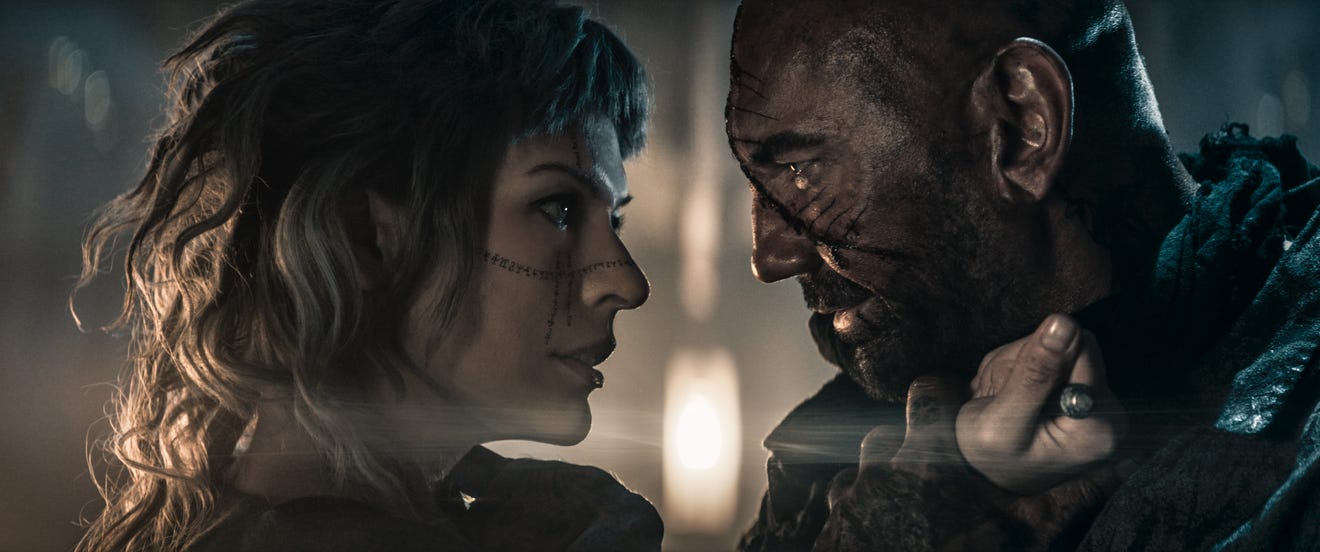
Those Lost Lands are the world outside of what is humanity’s last remaining city. The city is controlled by an Overlord and a Church. Jovovich plays Gray Alys (recall that she played many different Alices in the Resident Evil movies), a witch who is bound to grant the wishes of anyone who asks something of her (though it never works out how they’d hope). She’s tasked by the Queen to give her the power of a werewolf, so Alys enlists the help of a Hunter (Dave Bautista) to track down just such a beast in the Lost Lands so she can kill it and take its power. But the Church is hot on their trail as well, as Alys’s power is a direct affront to their religion, and her escape from their attempt to lynch her in the film’s prologue has inspired some potentially revolutionary energy among the downtrodden populace. The bulk of the film is then a simple quest/chase structure, with a ticking clock (Alys has only a week to complete her task).

The film’s success rests on two things: the action sequences, which are up to Anderson’s usual standard of mid-budget audacity (Outlaw Vern compared Anderson to Albert Pyun on blusky, and that’s incredibly apt: he’s Pyun with all the money and backing of the Polish film industry); and the chemistry between Jovovich and Bautista, which, also per Anderson’s usual standard, works better visually than it does verbally. Anderson and Jovovich work so well together because he knows how to turn her weakness as an actress (her weirdly detached affect) in to a strength by positioning her as a person outside the norms of the regular world. In the Resident Evil movies she’s a manufactured super-hero; in The Three Musketeers she’s a schemer always a step ahead of heroes and villains alike, following her own agenda alone; in Monster Hunter she’s a human lost in a world she doesn’t understand with her lone companion being someone who literally doesn’t speak her language (Luc Besson understood this aspect of Jovovich as well, with two of her finest performances coming in his The Fifth Element and The Messenger).

Jovovich’s Gray Alys fits this template perfectly. Seemingly existing outside of time as well as outside the bounds of the spiritual and temporal powers of her world, Alys is both wiser than everyone around her and able to manipulate those lesser mortals merely by making eye contact with them (the joy I felt when Anderson opened the movie with a close-up of Jovovich’s eyeball!). She’s outside of their reality both in affect and literally in that she can remake the world they see to serve her own ends. This however does create some awkwardness in the quiet moments of the journey, when she and Bautista are bonding, forming what seems like it should be a romantic connection. While the images of the slight Jovovich curled up next to the hulking Bautista are effectively cozy, she’s never really convincing as someone who might fall in love, and thus their declarations of feeling ring somewhat hollow and unnatural.

That turns out to be, I suspect, by design, as the twists in the film’s final section, where Alys reveals the various levels of her plan which she had mapped out from the film’s very beginning, contain more levels of friendship and betrayal than the simple quest + romance structure had implied. These twists are quite effective, and stitch all the disparate threads of the plot together into a satisfying whole. To what end I’m not sure. Anderson as ever remains a distinctive stylist and reliable deliverer of genre entertainment. At his best, his films approach a coherent vision of a post-digital world where human life is devalued and ultimately redeemed through family (the Resident Evil series), romance (Pompeii), and friendship (Musketeers, Monster Hunter). In the Lost Lands is more of a mystery, a portrait of Milla Jovovich as a creator of reality, albeit one limited in her power to truly transform a world that has already died. As with almost all of Anderson’s best films (Pompeii being the obvious exception), he leaves us with the most important question of all: what happens next??

Boudica: Queen of War (Jesse V. Johnson, 2023)

Just about the first thing that happens in Jesse V. Johnson’s low-fi epic  is that a bunch of Roman soldiers come across a praying band of Druids and slaughter every one of them in brutal detail. A close-up of an innocent belly being sliced open by a merciless soldier tells us exactly what kind of movie this is going to be, and then it just. . . stops being that kind of movie for the next forty minutes or so. Instead, Johnson takes pains to show us the idyllic normality of life under the Empire, at least for the family of the King of the Iceni, Prasutagus, devoted to peace with the Romans and submitting his state to them as a client kingdom. He lives in pastoral splendor with his beautiful wife and daughters, who are all clever and loving. Hints of the real world lie just outside: a vision of Christians rotting crucified on a country road, the danger of an overheard whisper that might disparage the Emperor (Nero at this time, circa 60 AD). A visit from the new Roman in charge, snide and, well, imperious, signals trouble ahead, as do closeups of the King’s sad-eyed second in command. And sure enough, soon the King is dead and the women in his family, disinherited by the Romans, are cruelly beaten, tortured, raped, and left for dead. Most of that we don’t see, but what we do witness is plenty to understand how a charming collaborationist wife and mother could suddenly find herself becoming Boudica, the legendary and long-prophesied warrior queen destined to lead the Britons to freedom. Or, failing that, at the least to kill a whole lot of Romans.

And so she does. After a couple of brief training sequences wherein Boudica proves that she has a magic sword (with an assist from some ghosts) and enlists the support of a band of experienced international mercenaries as well as the local Druids, she sets off to one victory after another, butchering soldiers and burning towns with relish. Colchester (Camulodunum), London (Londinium), and St. Albans (Verulamium) all fall to her band of painted and befurred Celts, before the Romans can finally organize a proper military response. In the meantime, Boudica’s victories cause the Romans at home to riot and burn the city down, inspire the mad Emperor to kill himself. Which isn’t actually what happened at all, Nero killed himself almost a decade later (even the fire was in 64), and the British revolt was only one of several that rocked his demented reign. Nor is it true, as far as I know, that Nero decreed that women couldn’t hold power or property (which in the film is the legal justification for disinheriting Prasutagus’s heirs), but this is a matter where something can be accurate without being true: Roman society was deeply patriarchal, much more so than the Celtic and Germanic nations on their periphery. So if one wants to adopt Boudica’s revolt as a stand for the rights of women, rather than merely a celebration of British nationalism, that seems reasonable. Similarly, if Johnson wants to fold aspects of Arthurian legend into Boudica’s story (at one point she has to dive into the water to retrieve her sword, becoming her own Lady of the Lake), I see no problem with that.

Jesse V. Johnson is one of the most accomplished indie action film directors working today, the man behind any number of straight to video classics starring the likes of Scott Adkins, Marko Zaror, and Louis Mandylor I wrote about his Hell Hath No Fury here a couple of years ago, and that film has a lot in common with this one. Both are centered on a woman hero rather than a beefy Adkins-type. Both are set in the past, mostly in a forest. But where Hell is a small-scale story, set largely in one location which we learn in minute geographic detail in order to better understand and follow the intricately constructed action scenes that form the bulk of the movie, Boudica is Johnson trying something new, albeit with apparently the same limited resources he’s always had. The action scenes, because there are more of them in many different locations, are shorter, more impressionistic, but just as bloody. The emphasis is not on action for the sake of displaying the skill of the stunt performers or choreographers, but rather on the brutality of violence in the Classical period, and thus on the brutality of Empire itself. Boudica gives speeches about freedom, but she is never really interested in ruling or building a state. She’s on a mission to kill as many Romans as she can before they kill her, no more and no less.

Olga Kurylenko plays Boudica and it’s a striking performance if the only work of hers you’re familiar with before seeing this is Terrence Malick’s To the Wonder, where she eats at Sonic, makes Ben Affleck sad, and twirls her gorgeous way through fields of sun-dappled wheat. That’s really the outlier in Kurylenko’s career, though. She’s spent most of the past decade making action movies, with parts in various sizes in everything from the Timothy Olyphant-starring proto-John Wick Hitman (2007) to this year’s Extraction 2. Here she’s equally at home in both halves of the film: memories of Malickian fields in the early scenes, battered and scarred and broken toothed in the action scenes, twirling through them like a ballerina with a magic sword. If Johnson is the low-budget version of a Paul WS Anderson or Luc Besson, then Kurylenko is the indie Milla Jovovich, and Boudica is her The Messenger. (I mean that as a compliment.)

Barbie (Greta Gerwig, 2023)

I took my daughter and one of her friends, a fellow tween ballerina, to the screening of Barbie last night. They were excited to see it, though my daughter at least never played with Barbies. She had only a brief doll phase as a toddler, but moved on pretty quickly to video games and drawing and dance. I was curious, then, what they thought about the film, given that it takes for granted the essential role of playing with dolls in the formation of a child’s consciousness, from the opening riff on 2001: A Space Odyssey, where the invention of the Barbie doll frees a generation of little girls who were beforehand only able to imagine themselves as mothers, to the whole philosophical crux of the film, which uses Barbie as a stand-in for our entire culture’s conception of women, both for good and for ill. They said they liked the movie: it was funny, some of it was inappropriate, but they had a great time with it. My daughter did express some exaggerated concern that unlike all the other Barbies in the film, she did not (yet) have a defined identity. Apparently “Tween Ballerina” is not enough to sum up the inchoate mass that is an 11 year old girl. When I pressed them for more specifics, trying to dig into their thoughts on some of the thornier issues, they ignored me and then proceeded to sing along to songs on playing on their phone to each other for the rest of the ride home. They did not listen to “Closer to Fine,” but they did have a lot of fun with “Baby Got Back.”

Barbie is a movie designed first and foremost to sell toys. It’s also a movie by one of the more accomplished Hollywood filmmakers of the last 20 years, one who as both an actress, writer, and director has demonstrated a unique and arresting artistic personality. Even though she doesn’t appear on screen, every word of Barbie sounds like it could have been said by a Greta Gerwig character, which I suppose puts her at least in this in sense, in the same class of auteur as Hong Sangsoo, Eric Rohmer, and Woody Allen. Noah Baumbach co-wrote the script with her, but other than the fact that the film ends up being the kind of thing one would imagine being created at the university in Baumbach’s version of Don DeLillo’s White Noise, the movie doesn’t really sound like him at all. It’s probably safe to say that while Baumbach directed them, it’s Gerwig who, as star and writer, was the true auteur of Frances Ha and Mistress America. Regardless, here this great artist is hard at work selling toys for a massive corporation. That contradiction is just one of many at the explicitly stated core of the film, and Gerwig’s refusal to resolve it, instead in fact to embrace the contradiction is what makes the film so successful as both art and commerce.

Margot Robbie’s “Stereotypical Barbie” lives in an idealized world with all the other Barbies (President Barbie, Doctor Barbie, Physicist Barbie, etc) and all the Kens (who exist only to bask in the light of the Barbies). It’s a perfect pink paradise until one day Stereotypical Barbie becomes self-aware and plagued by doubts about existence, death, and the nature of the universe. She and Beach Ken (Ryan Gosling) go on a quest to the real world to get answers from the girl who is playing with Barbie and thus projecting these ideas into her head, but things go wrong when Ken discovers patriarchy and the Mattel corporation tries to recapture Barbie and put her back in a box. Ken heads home to create a manly paradise while Barbie is rescued by a mom and daughter. The mom is played by America Ferrera, star of Sisterhood of the Traveling Pants, Ugly Betty, and Superstore, three works that collectively have as much if not more to say about being a woman under capitalism as Barbie does.

Beach Ken succeeds in quickly taking over Barbieland, brainwashing the Barbies into subservience while all the Kens enjoy manly pursuits like horses and talking about The Godfather and Stephen Malkmus. The trick Barbie and America discover is that the Barbie can be freed only through paradox, by recognizing the many, many contradictions in what society expects from women. The only way for them to be free is the knowledge that there is no way to be free, that there is no acceptable way to be a woman under patriarchy. The mechanics of this are fuzzy, but the scenes of deprogramming are funny, which basically goes for the movie as a whole. Every second is bright and joyous and weird, with some terrific musical sequences, a great supporting cast (including an all-time great Michael Cera role), and has such an infectious energy, even when it’s being dark and depressing. The embrace of contradiction extends to a critique of Mattel itself: a male-dominated company designing toys for girls. But the men are actually pretty cool and they’re led by Will Ferrell, who is still a funny guy, so maybe it’s OK, but yeah no they’re still going to run things. This is the fundamental conundrum with Barbie’s solution to existential unhappiness: accepting the contradiction is not the same thing as working to make the world a better place, in fact, by focusing our energies inward, it may actual foreclose the possibility of real change. Thus the film would make for a fascinating double feature with Soi Cheang’s Mad Fate, in which the hero, driven crazy by the contradictions of an arbitrary and capricious higher power does not simply accept them with a kind of pseudo-zen complaisance, but pours all his heart and soul into defying Fate in the hope of saving even just one life from degradation and murder. It’s hard to imagine Enlightened Barbie doing anything so rebellious, even if she gets a sequel.

Barbie is, among other things, the best example I’ve seen of “There’s No Ethical Consumption Under Capitalism: The Movie”. It’s absolutely true that the evils of society, patriarchy and capital prominent among them but by no means the only ones, are inescapable, that there’s really no way to live in society without compromising one moral value or another. Can a toy, or an artist for that matter, change the world? Probably not. So what’s a filmmaker to do? Preston Sturges answered that question more than 80s years ago in Sullivan’s Travels about as well as it can be answered. People lead hard lives, it’s OK to give them a chance to laugh at some silly moving pictures once in awhile.

Once Upon a Time in Uganda (Cathryne Czubek, 2021)

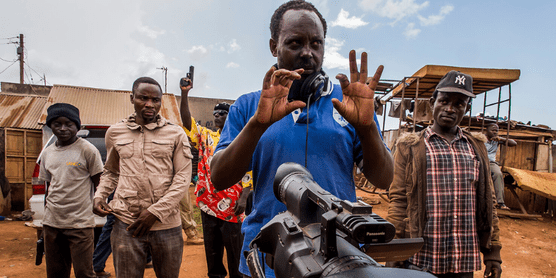
Isaac Nabwana is one of the great under-recognized geniuses in contemporary cinema. With budgets numbering, at most, in the low hundreds of dollars, and the support of a community of friends and family, he’s built a film studio in the Wakaliga slum of Kampala, churning out ingenious comedy-action films with handmade props, low-fi computer graphics, and self-taught kung fu artists. Wakaliwood and its films are the ideal of DIY cinema, the fulfillment of digital technology’s promise of allowing anyone to be a filmmaker. Anyone may be able to cook, but it takes a visionary like Nabwana to not only see the possibilities of democratic filmmaking, but actually realize it in a way that is infectiously entertaining and delightful to audiences the world over. And even then, none of it would be possible without the community that has coalesced around him, prop-makers, wanna be actors, martial artists, and film enthusiasts. All of this is apparent in Cathryne Czubek’s documentary Once Upon a Time in Uganda, which chronicles close to a decade in the life of the studio, from the time it first drew international attention (a trailer for Who Killed Captain Alex? posted on YouTube in 2010) through Nabwana’s triumphant appearance at a Toronto Film Festival screening of Crazy World in 2019.

Czubek started filming Wakaliwood in 2012, not long after another westerner, Alan Hofmanis, himself enamored with the studio’s YouTube releases, left his home in America and traveled to Uganda in search of cinematic enlightenment. A longtime veteran of the industry (on sets, in marketing, and in festival programming), Hofmanis tells us he was inspired by what Nabwana and his team had done, and simply wanted to be a part of it. He was quickly adopted into the Wakaliwood family, appearing on-screen as the recurring white guy, the Mzungu, in films like Bad Black and the yet-to-be-released, but delightful looking, Eaten Alive in Uganda. Hofmanis also took on a role in promoting the company, focusing on getting Wakaliwood seen in the West, where his years of festival and marketing experience would prove helpful, though it would be an uphill battle considering that what most Western film festival directors (and therefore the critics and audiences that live downstream from them) want out of third world cinemas are anguished stories of poverty and deprivation, not lovably goofy paeans to the joys of making cinema. While Hofmanis focused abroad, Nabwana would concentrate on getting his films seen at home in Uganda, and that’s where the documentary’s real tension comes.

Nabwana explains that film in Uganda is not seen as a particularly prestigious activity, at least not among the elite classes that actually have the money that Wakaliwood desperately needs to expand and improve. He says that his true audience are the “peasants,” the poor people he grew up with and around in the chaotic years after the end of Idi Amin’s dictatorship and who still occupy the nation’s villages and slums, but, unfortunately, often they do not have access to DVD players. As has been the case in other emerging film cultures, there can be a kind of inferiority complex that certain communities have about their own art, and sometimes it takes recognition by outsiders for a people to appreciate what their own cinema has to offer**. To this end, Hofmanis’s efforts in getting Wakaliwood films seen and praised abroad helps raise Nabwana’s profile at home, leading to an offer from one of the local television moguls to make a Who Killed Captain Alex? TV series. Because Nabwana’s overarching goal is not international success or personal acclaim, but rather building a viable and sustainable film culture in his home country, training actors and filmmakers and seeing them succeed him with their own works, he necessarily devotes himself to the local production. But this in turn disrupts Hofmanis’s efforts at international promotion and distribution, ultimately leading to an awkward falling out between the two friends. But after some time apart, the family is reunited, leading to the heart-warming Crazy World premiere, because ultimately Nabwana and Hofmanis share the same love for what they are doing and hope for the future of cinema.

Czubek’s film is at its best showing the Wakaliwood crew at work. Nabwana directing and editing, almost always with big smile on his face. His wife Harriet doing a endless number of jobs, from feeding the crew with leftovers from the cake-making business she’s started to raise extra money, to casting and line producing and helping with every other aspect of the productions. We meet “Mad Prop Genius” Dauda Bisaso, who builds guns and helicopters and camera cranes out of scrap metal, and catch a glimpse of VJ Emmie at work, Wakaliwood’s most glorious contribution to film culture: a Video Joker who talks along with the film, one part Benshi-style narrator, four parts your most hilarious friend three drinks in cracking jokes alongside you as you watch a movie together. A magical sequence shows Nabwana, who had been a mud brickmaker before he became a filmmaker, assembling a film projector out of a couple of batteries, a string of wire, a small lightbulb and some aluminum foil. He uses it to show some local kids how film works, lighting up one frame of film at a time (it appears to be a scrounged reel of some version of Spider-Man), and running it through his hands, magical images projected on a crumbling concrete wall. 

Wakaliwood is currently running a crowdfunding campaign for Who Killed Captain Alex 2. If you love movies, contribute if you can. You can also by a deluxe BluRay edition of Bad Black and Who Killed Captain Alex from Vinegar Syndrome and the American Genre Film Archive. You won’t regret it.

  1. Eventually this dichotomy tends to turn in on itself, as those filmmakers most popular in the West are rejected by the next generation for not being authentic enough to their home culture. I’m thinking here about Kurosawa Akira winning an award at the Venice Film Festival at a time when no one outside of Japan and few people inside it considered it to be on a par with the cinemas of the West, only to then be derided as “too Western” by the next generation of Japanese filmmakers. It’s an endless argument that no one wins, except audiences who get to see great films made by all sides of the divide. ↩︎

Old Man Yells at Time: Indiana Jones and the Dial of Destiny (James Mangold, 2023)

The prospect of a new Indiana Jones movie at this late date, more than forty years after Raiders of the Lost Ark, is daunting. The series ran its natural course through the 1980s: a stellar debut followed by a sequel that expanded and complicated the original premise and then a second sequel that regressed into crowd-pleasing antics, stunt-casting, meta-humor, and ended with a satisfactory ride off into the sunset. The franchise was revived in 2008 with mixed results. Kingdom of the Crystal Skull features some terrific sequences from Steven Spielberg, who alongside all his other virtues (and shortcomings) as a filmmaker remains one of the greatest directors of action in film history, a fine hammy villain performance from Cate Blanchett, and a mostly satisfactory ending. It’s also marred by a disastrous screenplay, featuring some of the most poorly-written dialogue ever filmed by a major director. What could we expect, another 15 years down the line? Further degeneration of a once-great franchise, or perhaps a return to greatness, fully embracing the age and increasing obsolescence of its star, creators, and the whole world the series was created in homage to?

A little bit of both, as it turns out. The opening reel (an archaic term in reference to a 20 minute chunk of film, rendered nonsensical by the digitization of cinema, much like the terms “film” and “movie”) of Indiana Jones and the Dial of Destiny is dire, encapsulating in an ugly gray package all the worst trends in contemporary Hollywood blockbuster filmmaking. Star Harrison Ford is digitally de-aged with horrifyingly uncanny results and the exterior shots, and this being a sequence set on a train in an Indiana Jones movie there are a lot of exterior shots as the action moves to the top and the sides of said train, are cartoonishly incompetent. The phoniness of the images, something I’m not necessarily opposed to on principle—there are lots of ways to make a movie and digital fakery is certainly one of them—are made galling by our awareness of what has come before in the series. Raiders of the Lost Ark is, above all else, a loving tribute to the stunt performers and action filmmakers of the Hollywood studio era, when lunatics like Yakima Canutt would risk life and limb for the sake of a two-reel serial installment. Last Crusade even gave us a prologue with a similar set-up: a flashback to a younger Indiana Jones (played by River Phoenix at a time when studios and filmmakers had enough faith in their audience’s imagination to allow a character to be played by more than one actor, without the benefit of computers) for a chase sequence that takes place largely inside and on top of a moving train. An actual train, moving in the actual world. More or less. Dial of Destiny’s opening couldn’t more perfectly remind us of what we’ve lost, of the debased state of the modern blockbuster, if it tried. And maybe that’s the point.

Because the rest of the movie, once it gets going, turns out to, in fact, be about what it’s like to outlive your relevance. In 1969, Ford’s Jones is an old man, nearing retirement, divorced and mourning his son (RIP Mutt). He’s sucked into a new adventure by a daffy young woman named Helena, played by 2018 It Girl Phoebe Waller-Bridge. She’s the daughter of one of his old colleagues (Toby Jones in the prologue), obsessed with the eponymous object, a device designed by Archimedes. The device is split in two: Jones has the first half until Helena steals it. They eventually will team up to find the second half, with the help of a map which also has to be found. Opposing them is Mads Mikkelson, playing a Nazi scientist (now NASA rocket builder) similarly obsessed with the device. The film settles into the familiar rhythm: Jones travels to a new location, meets some strange people, then gets chased by them and a bunch of Nazis. 

The chases may be a matter of necessity: every action sequence in the film is something the aged Ford can perform sitting down. But they’re also for the most part fun and creative. New director James Mangold is no Spielberg of course, but he’s always been, at worst, a competent craftsman. They also have a tangibility entirely missing from the opening sequence. The supporting cast is mostly anonymous: Mikkelson’s minions are suitably if generically menacing (they’re also CIA agents, lol); Helena’s companion is a wispy-mustached teenager who is mostly OK; and Antonio Banderas shows up for a little while and has almost nothing interesting to do. So there’s really very little of note other than the plot mechanics, which lead us ruthlessly from one set-piece to another. This is of course the classic Indiana Jones structure, one borrowed from old serials, and one that earned the films and the era of high concept blockbuster they helped usher in the ire of an older generation of critics who longed for more personal, humane filmmaking. This is now the standard form for the Hollywood blockbuster: the chase, enlivened by scenes of mass destruction (usually but not necessarily of cities). The early Indiana Jones films pioneered and perfected this form: think the truck chase in Raiders, with its direct Canutt homage, or the mine cart chase in Temple of Doom, which merged cinema and theme park ride as well as anything before or since. The 21st century Jones movies though, do not aspire to compete with that past. And Dial of Destiny suggests they simply cannot do so: everyone’s just too old to bother.

For if Dial of Destiny is about anything, it’s about letting go of the past. All of the Indiana Jones films are, in some sense, about letting go. Raiders is about the wisdom of choosing to not open the ark; Temple of Doom about artifacts as vehicles for community harmony and growth rather than Fortune and Glory; Last Crusade about finding a balance between obsessive archeological pursuit and family commitment. (Crystal Skull doesn’t really fit this scheme, because, again, Crystal Skull’s script is terrible.) Dial of Destiny finds Jones an obsolete and broken man. The adventure he’s dragged into brings him back to life, and it ultimately offers him the chance to continue that life of adventure or go back home to his broken old man world. He has the opportunity to live in the past (literally), but we know, and he knows, that one can’t ever really do that. Like it or not, we have to go on living in the present, as dull and gray and marred by crappy digital effects as it is.

Top Ten Movies of 2022

I’ll have my regular end of the year list up at The End of Cinema in a couple of days (because the year isn’t over until the year is actually over, and there’s always hope I’ll be able to watch another movie). But deadlines being what they are, I’m putting up a Seattle-specific Top Ten list here and now. These are my favorites of the films eligible for the Seattle Film Critics Society’s end of the year awards.

1. The Novelist’s Film and In Front of Your Face (Hong Sangsoo)

Cheating right off the top with a tie. Hong’s third eligible film, Introduction, makes my Top 30 as well.

2. The Fabelmans (Steven Spielberg)

As packed with sublime moments (funny and terrifying and weird) as anything Spielberg’s ever made.

3. Ponniyin Selvan: Part 1 (Mani Ratnam)

In a terrific year for large-scale action film, Ratnam’s epic stands out for its commitment to swashbuckling and to beautiful people hatching complicated schemes.

4. Three Thousand Years of Longing (George Miller)

Like The Fabelmans, a film about telling stories. Like Ponniyin Selvan, a film that tells stories.

5. Detective vs. Sleuths (Wai Ka-fai)

Wai Ka-fai returns with another detective who has an unstable relationship to reality. But this time he’s the sane one while reality itself (ie Hong Kong in the post-protest era) has gone crazy!

6. Decision to Leave (Park Chan-wook)

Tang Wei gives one of the finest performances of her storied career as the most fascinating femme fatale we’ve seen in years.

7. A New Old Play (Qiu Jiongjiong)

The missing link between Hou’s The Puppetmaster and Jia’s Platform.

8. Avatar: The Way of Water (James Cameron)

Look I’m as surprised as anyone, given how much I have, in the past, not liked digital 3D, high frame rate filmmaking, and the first Avatar movie. But I loved pretty much everything about this. Maybe we’ve all been trapped inside too long, by COVID and/or the dire state of 2010s blockbuster filmmaking.

9. Baby Assassins (Sakamoto Yugo)

The year’s most surprising great film, a slacker comedy about two hired killers who find themselves needing to find jobs in the real world. Bookended by the two best fights scenes of the year.

10. RRR (SS Rajamouli)

Rajamouli finally breaks through in the West with what is an undeniably rousing epic of anti-imperialist spectacle, featuring two larger than life stars, wildly imaginative action sequences, and a politics that can charitably be described as “complicated”.

VIFF 2022: Septet: The Story of Hong Kong (Various, 2020)


It’s hard to imagine how long I’ve been talking about the film that would eventually become Septet: The Story of Hong Kong. The first time I tweeted about it appears to have been August of 2017, although that tweet is phrased as a reminder, which means I must have retweeted something about it some time before that point. It’s possible the rumors go as far back as the summer of 2016, shortly after the release of Johnnie To’s feature Three. The story was that To was producing an omnibus film called 8 1/2, with contributions from a who’s who of Hong Kong film legends: Ann Hui, Tsui Hark, Patrick Tam, John Woo, Ringo Lam, Sammo Hung, Yuen Woo-ping, and To himself. Somewhere along the way, Woo dropped out (it’s unclear why, I think I heard there may have been health reasons, but Ringo Lam died in December of 2018 and still managed to finish his section, so I don’t know) and the title was changed to Septet. The film was finally set to premiere at Cannes in 2020, when COVID delayed those plans. It eventually did begin making the festival rounds in the fall of that year (Busan in 2020, then the Hong Kong and Fantasia Film Festivals in 2021). It received a theatrical release in China, Taiwan and Hong Kong earlier this summer, and is now set to play at the Vancouver Film Festival.

The setup is simple enough: each director is given a decade and the films are separated by title cards and arranged chronologically. Together they tell not just the “Story of Hong Kong” but a story of Hong Kong film and the story of themselves, an irreplaceable generation of filmmakers looking back on the place they’ve lived and worked and come to define as much and for as long as any group of filmmakers ever has anywhere in the world. Each of these directors was born between 1945 and 1955. Tsui, Hui, and Lam were key figures in the Hong Kong New Wave; Hung and Yuen revolutionized the period martial arts film, modernizing the tropes established by the Shaw Brothers studio and melding slapstick comedy and outrageous stunt-work into some of the greatest spectacles in movie history; and Lam and To (and of course the absent Woo) were leading exponents of the Heroic Bloodshed genre that did as much as anything to establish Hong Kong cinema as a force in world film culture. Together, these filmmakers have produced some of the most vital art works of the last fifty years.

Watching Septet, I decided to see if I could guess which director was responsible for which segment (the director credits don’t pop up until the end of their short). I’m happy to say that I was right on all seven, which means that perhaps this whole The Chinese Cinema project and the last decade of my film critic life have not been entirely in vain. Some of them were much easier to guess than others, starting with the first one, which begins with the line, “I’m Sammo Hung.” It also stars Hung’s son Timmy, who looks exactly like a skinny version of his father. The short starts us off in the 1950s, at the Peking Opera school where Sammo was a student (along with many other future stars). Timmy plays the teacher, Yu Jim-yuen, a role Sammo himself played in Alex Law and Mabel Cheung’s excellent 1988 film Painted Faces. The genial story of childhood disobedience (whenever their teacher’s back is turned, the kids slack off on their exercises), concludes with Sammo’s punishment (as the eldest student, he’s expected to set an example). Forced to do a handstand for a couple of hours, he finally collapses and cuts his head. Then we cut to the present and a close-up of the scar on Sammo’s head, as he directly addresses the camera to say, “Time flies like an arrow, it only moves forward. The past is but a memory.” Statements which will set the tone for the remainder of the film.

All but one of the shorts to come will feature some kind of a leap in time. The film is of course an exercise in nostalgia, but one which nonetheless unfolds in an eternal present (that’s what film necessarily is: we always experience it now) where past and past-past mingle freely in the memory. Film is a place where a director can make a film where he recreates a moment from his past in which he is scolded by his teacher, and have that teacher be played by his son, such that the son is scolding his own father, who is a child.

Ann Hui’s story begins in the 1960s, following a couple of teachers at a more traditional kind of school, a kind yet ascetic headmaster and a thoughtful and lovely young woman. Then it leaps thirty years into the future (though still thirty years in our past) where we see a class reunion (very Ozuvian this) with the students from the first half now all grown up (in the blink of an edit). The headmaster is still alive, and wistfully recalls the teacher, who has since died. Unrequited emotions surface and may be resolved with a visit to a memorial, where a photo of the teacher lives — she still looks the same as she did 30 years earlier, while everyone else has grown old.

After two tales of school and the relations between students and teachers, Patrick Tam takes us into the 80s (the 70s are skipped, possibly this was Woo’s assignment?), for the first of two stories about late adolescence and the Handover of Hong Kong from the UK to the PRC. Two young people are in love with each other and poetry, but she and her family are emigrating to England sometime after the Joint Declaration, while his is staying behind. Our temporal perspective comes from sometime in the future, in a narration by an older version of the young man (this narration, plus a shot of an airplane flying over the Hong Kong sky, clues us in that this is Tam’s film, being extremely reminiscent of the work of his most accomplished protegé, Wong Kar-wai). The young couple spend one last day together, fighting through their desperate feelings of loss and abandonment and young love, and in the end, our perspective shifts such that it’s the young woman who narrates the conclusion. A joint memory for the time of the Joint Declaration.

The 90s brings us Yuen Woo-ping and the story of an elderly man (played by Yuen Wah, Sammo’s old classmate, now grown old, but not as old as the kids in the first film would have been in the 90s, rather as old as they are now, in the 2020s) and his granddaughter. Her family is moving away too (to Canada), just before the Handover, but she has to stick around with gramps for a few weeks to finish her exams. It’s a sweet story of a generation finding common ground (she helps him learn English and appreciate hamburgers; he teaches her how to defend herself with kung fu). Then she leaves, but returns three years later. He’s become more older, but more Westernized; she’s grown older and more patient, and tells him their family is back to stay. The short’s title is Homecoming, presenting a rather idealized vision of the Handover: people were afraid everything about Hong Kong was going to end. But it didn’t, and many of those who left (including directors like Woo, Lam, Tsui, and Yuen who went to work in Hollywood) came back.

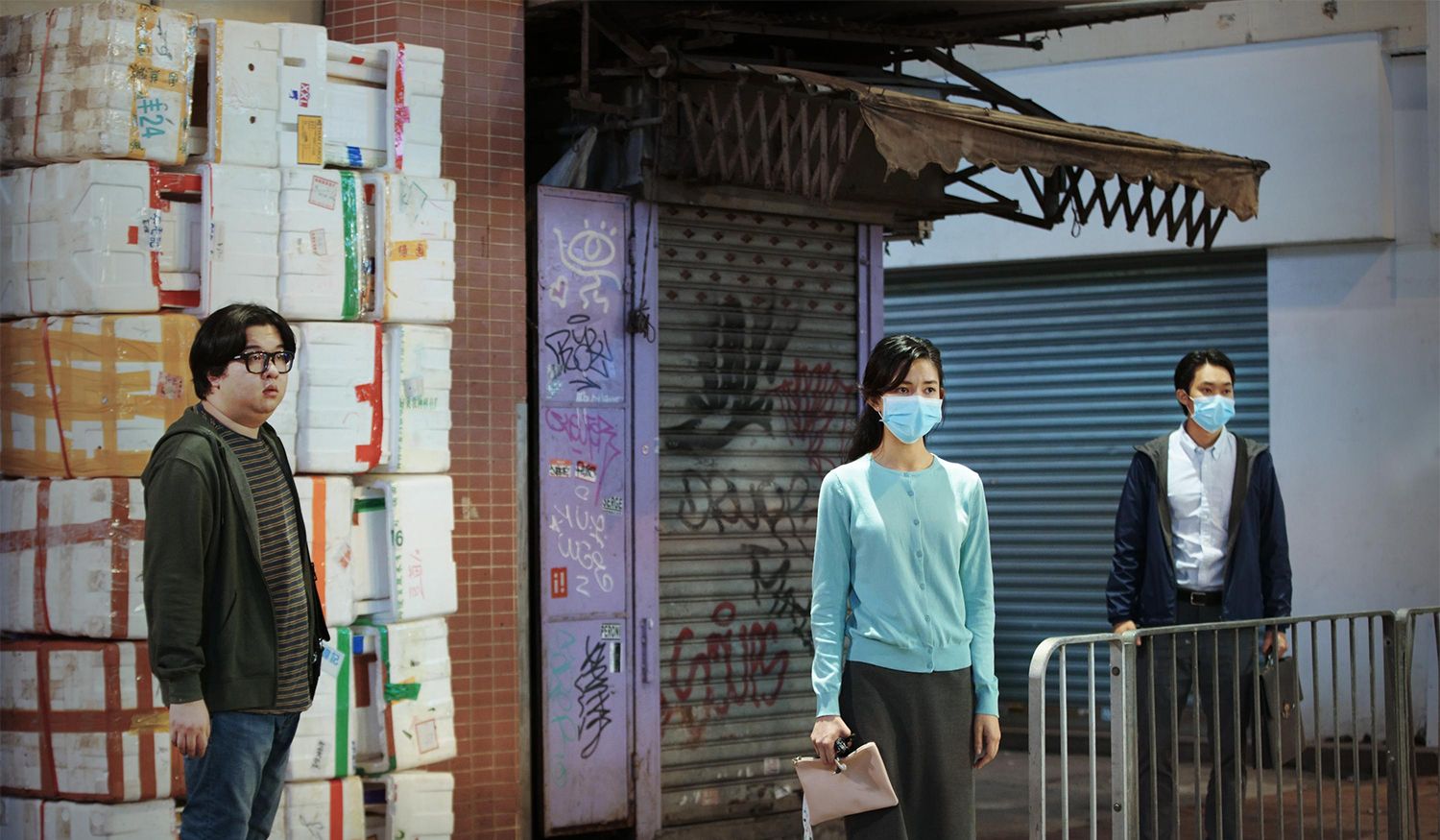
The short for the 2000s, I will admit, was initially the toughest for me to place. But I finally got it and it in retrospect seemed blindingly obvious that it was the work of Johnnie To (a reference to Chasing Dream late in the film didn’t hurt). It’s set almost entirely in a restaurant over the course of a few key moments in the decade. Three young people are debating whether or not to invest in a tech stock. The price keeps going up while they argue, and it seems they’ve missed their opportunity, when all of a sudden it begins to plummet: the beginnings of the dot-com crash. A couple of years later, they have the opportunity to buy an apartment at a discount price, thanks to it being located at one of the centers of the SARS epidemic. They’re ultimately scared off, which an image of a 2000s era Windows screen informs us cost them dearly given the rapid inflation of the value of Hong Kong real estate. Finally, they have a chance to invest in some stocks around the time of the US mortgage crisis. But they accidentally switch the numbers of the stocks they want with the ones for the dishes they want to order (a classic bit of Johnnie To restaurant table-related comic mayhem), only to make money anyway. It turns out that buying stocks at random is just as effective, or more, than researching and debating them. Once again, in a Johnnie To film, chance and fate work in mysterious ways.

Ringo Lam’s film brings us into the present, or at least the present as of when the film was conceived and finished. It’s also the most heart-breaking, made almost unbearably poignant by our knowledge (from the future, which is our present) of the director’s death, which happened almost three years ago now. Simon Yam plays an elderly man who has come back to Hong Kong to visit his son (played by Lam’s own son). He’s lost in contemporary Hong Kong: all the landmarks he remembers (pointedly a movie theatre is as vital as a major industrial pier) have been transformed by time into something more glassy, less real. He holds old pictures up to the present reality; they can’t compare. His past bleeds into his present, reimagining time spent in these spaces with his own father, when he was the younger man, or with his wife. Inevitably, rushing to his family, he encounters an unexpected bus and disappears. Only his phone remains. But we move a while into the future, to see his family giving him a goodbye, scattering his ashes in the sea. His advice — don’t work so much, focus instead on your family and the people you love — reminds us that Lam himself spent more than a decade away from his work in order to spend time with his family, only returning to directing in 2015, once his son was grown. We didn’t get as many great films from him as we might have, but it definitely wasn’t time wasted.

Finally we have Tsui Hark’s contribution, which might be set in our now (2022) which would be the future from the film’s 2020 premiere, or possibly some as yet undefined future of our own as well as the film’s. It’s the funniest and weirdest and boldest of the shorts, as it should be considering Tsui is all of those things and more. Two men are arguing in what appears to be some kind of mental institution. The doctor asks the patient who he is, and he replies “Ann Hui”. When pressed on this (the gender congruity alone seems to belie the factuality of his assertion) he resorts first to “Ringo Lam” and then “Johnnie To” and then back to Ann Hui. After a few minutes of this farce, we pullback behind a mirror to find two doctors observing (played by director Lawrence Ah Mon and icon Lam Suet). They suggest that who we think is who is exactly backwards, part of a kind of therapy for a man who believes he’s a doctor. Then another shift reveals a big crowd behind another window, this one including Tsui himself along with Ann Hui and several other film figures. The tangle of identity: who is watching who, who is the director, who the audience, who exactly is calling the shots here, becomes impossible to sort. It’s the plight of the Hongkonger under the watchful eye of the PRC, as well as of the Hong Kong filmmaker who, like Tsui, strives to work within the censorship codes and regulations of the Mainland government, ostensibly giving them the propaganda they require, while struggling to remain their own, independent (Hongkonger) self. The struggle is real, the silliness, the joy in the jumble of it all, is the wisdom of perspective, of age, of a life lived in a Hong Kong that has changed so much, so wildly, in the span of these seven single lifetimes.

VIFF 2022: King of Wuxia (Lin Jing-jie, 2022)

Joining the ever-expanding pantheon of great Chinese filmmakers given the full-length documentary treatment is King Hu, the man behind many of the most accomplished and influential action films of all-time. But while Johnnie To, Ann Hui, Hou Hsiao-hsien, and Jia Zhangke are still very much alive and working, and thus the films about them all feature extensive interviews with them and footage of them at work (and of course scenes of them drinking and/or singing karaoke), King Hu has been dead for 25 years. Director Lin Jing-jie thus takes an unusual approach: rather than using an interview as the spine of his story, having the director talk us through their life film by film, or big event by big event, he splits King of Wuxia into two parts. The first half, subtitled The Prophet Was Once Here, looks at the run of films Hu made from Come Drink with Me in 1966 through the pair of Legend of the Mountain and Raining in the Mountain in 1979. This is the core of Hu’s career, the masterpieces on which his reputation has been built. The second half, called The Heartbroken Man on the Horizon, takes a more biographical approach, covering Hu’s first days as a 17 year old refugee in Hong Kong in 1949 through his work as an actor in the mid-1950s, then skipping his successful years as a director ahead to the last 15 years or so of his life, marked by emigration to the United States and a series of professional disappointments.

The first section runs just over two hours and features a remarkable cast of talking heads: big directors like John Woo, Tsui Hark, Sammo Hung, and Ann Hui are to be expected, as are appearances from frequent Hu actors Shih Chun, Cheng Pei-pei, and Hsu Feng. But Lin gives just as much attention to less famous names who nonetheless provide some of the most interesting insights to Hu’s work. A pair of Peking Opera actors recreate certain stunts to demonstrate the connection between Hu’s approach to screen fighting and the stage tradition, while two traditional musicians explain the link between Hu’s editing and music. Production designer Huang Mei-ching explains Hu’s exacting and painstaking approach to set decoration and costume design and color and the ways he’d use framing and editing to discover all kind of new and unusual spaces within his sets. Renowned critics like Shu Kei and Peggy Chiao explain all kinds of interesting things about his work, who he was influenced by and what made his films so influential. Everyone talks about how much he loved to fill his shots with smoke. Extensive clips from the movies are studied and used as examples, and also intercut with present-day scenes set in the same locations Hu shot at, with actor Shih Chun wandering around the landscapes, pointing out where they filmed, why Hu chose the locations he did, and how they’ve changed over the past 50 years.

All through the first half of the film, we only ever see Hu himself in still images. But early on in the second there are clips of him speaking about his early life. He was from a wealthy family in Beijing, though as the son of a concubine, he had a lower status than his many half-siblings. Arriving in Hong Kong as the Civil War drew to a close, he worked a variety of odd jobs before finding himself acting in several dozen films from the mid-1950s through early 60s. Most of these are difficult if not impossible to find in the West, so getting to see him act is one of the many pleasures of King of Wuxia. Just before he transitions into directing, however, the film skips ahead to the 1980s, and finds Hu living in Los Angeles, again working odd jobs (writing a magazine column, lecturing at universities) while trying and failing to scrape together film projects. The talking heads include most of the big names from the first half, but the emphasis is more on his circle of friends, including Chung Ling, Hu’s wife at the time (she had written Legend of the Mountain). We get some new insights into how Hu came to leave and/or be fired from the production of Tsui Hark’s The Swordsman in 1990, which is basically the story of the second half of his career in microcosm: his painstaking approach led to extremely long shooting periods for Hong Kong cinema of the time, and he refused to compromise on that, to the displeasure of the money people in charge of the production (how much Tsui did or did not agree with said money people remains an open question).

The final stages of the documentary are heartbreaking, as Hu finally seems to be able to put his dream project, an epic about Chinese laborers in California, into production, with financiers on board, John Woo producing, Sammo Hung choreographing, and Chow Yun-fat starring, only for him to die due to complications during an angioplasty mere weeks before shooting was set to begin. It’s devastating, as are his friends’ and colleagues’ reminiscences of him, clearly still pained by their loss though it’s been 25 years. The most crushing scene, for me at least, comes somewhat earlier, as critic Shu Kei is discussing the commercial failure of Legend of the Mountain, a film that he now understands to be one of Hu’s greatest achievements. The money people pulled the three hour long Legend out of theatres and demanded Hu recut it to mangable length. Shu recalls Hu calling him in, helplessly asking how to do it. He can’t remember what he said (though he does say Tony Rayns cheerfully suggested “you need to cut here and here and here and you don’t need this or that, etc etc”), but he’s overcome with guilt over the fact that he even thought he should be cut at all, to the point that he breaks down in tears. They aren’t the only tears shed in King of Wuxia, but they are the only ones that aren’t necessarily about the person who’s life was cut short, but about the art that we all lost because we weren’t able, or willing, to support it in the way it could and should have been supported.

Inu-Oh (Yuasa Masaaki, 2021)

Yuasa Masaaki continues his winning streak: he’s probably been the best director in the world over the past five years, or at the very least the most productive great director. Since 2017, he has produced three acclaimed TV series (Devilman Crybaby, Japan Sinks 2020, Keep Your Hands Off Eizouken!) along with four feature films: the definitive One Crazy Night romance Night is Short, Walk on Girl, the off-beat Little Mermaid variation Lu Over the Wall, the heart-breaking post-romance Ride Your Wave and now Inu-oh, a medieval rock opera about the power of rock and roll to connect us to our past, find our true selves, and help us overcome our terrible fathers.

Inu-oh begins with the story of Tomo (they’ll be, at various times, “Tomona”, “Tomoichi”, and “Tomoari” throughout the story). As a child, Tomona works with his father diving for treasure lost at sea 600 years ago during the definitive battle between the Taira and Minamoto clans, passed down through history in the Tale of the Heike, a collection of stories about the war that plays a somewhat similar role in Japanese literary history as The Iliad or The Romance of the Three Kingdoms. The Tale of the Heike was compiled in 1371 by Kakuichi, part of a band of traveling blind monks that recited the various tales accompanied by music on the biwa, a lute-like stringed instrument, pretty much just as the Greek bards would have done (and, if he was an actual person, the blind poet Homer himself). What Yuasa’s film, written by Nogi Akiko, asserts is that there were other tales of the Heike, tales which were so powerful in their truth that they were able to magically transform their tellers into the greatest versions of their selves.

Tomona is blinded by buried treasure in an accident which also kills his father. Wandering the countryside, he takes up with the blind monks and over the next decade or so learns the biwa and all the various tales. One day he meets a malformed young masked man (legs too short, one arm way too long, scales for skin, and eyes in the wrong places) who loves music and dance. He’d grown up all but disowned by his father, a dancer of Heike tales in an early form of Noh theatre called sarugaku, made to live and eat with the family dogs. One day, overcome with the spirit of music, he dances and his legs are transformed into normal human limbs. Tomoichi (name changed to reflect his status as a member of the blind monk troupe) deduces that the spirits of the lost Heike soldiers are rewarding the as yet unnamed man for dancing and singing their story. The two then do what comes naturally: form a rhythm and blues band to spread the untold tales of the Heike (whispered to them by the spirits of the dead) far and wide.

The second half of the film is dominated by their music, as Tomoari (a third name, adopted to show their new-found indepence, along with a fluid expression of gender) incants lengthy rock introductions to three spectacular performances by the newly self-christened Inu-Oh, songs and dances which heal his limbs and skin and face. But they run afoul of the shogun, who doesn’t have time for new stories, and especially Inu-oh’s father, who turns out to have been a villain all along, like so many rock and roll dads. It all ends tragically, as a rock opera should. Rock star revolutionaries don’t tend to last long, at least not in that form. They shine bright and either burn out or become something less spectacular (think Ziggy Stardust morphing into the Thin White Duke, or the Wild Mercury Dylan turning into a Regular Dad). Music can keep stories alive, or bring them back from the dead, and it can change people’s lives for better and for worse, but is it enough to sustain them? For that, the maker of Keep Your Hands Off Eizouken! and Inu-oh would seem to suggest we need animated cinema. And I’m not sure he’s wrong.