Princess Cyd (2017, Stephen Cone)

tuxedo

Chicago-based director Stephen Cone has quietly crafted, over the past decade, some of the loveliest films about queerness, faith, and queerness of faith in recent memory. His careful synthesis of exquisitely balanced ensemble casts and a straight-on, vaguely dreamy style makes for films that feel immensely attuned to both their main protagonists and the peripheral characters that fill out their existences. The two films that established his reputation on the American festival circuit, The Wise Kids and Henry Gamble’s Birthday Party, notably both took place in the distinct milieus of churches and never resorted to one-dimensional or dogmatic views of believers or nonbelievers.

In this regard, Princess Cyd represents something of a departure for Cone. It follows the stories of Cyd (Jessie Pinnick) and her aunt Miranda (Rebecca Spence) as the former, a vivacious teen about to enter her high school senior year, visits the latter, a professor and author of some renown, in Chicago for a few weeks. Their relationship is, from the start, playful and dynamic, as the two push and poke at the difference in years, views, and experiences between them. During her short stay, Cyd attends parties – her aunt’s “soirées,” a turn of phrase that does not go unnoticed – explores the city, and embarks upon a tentative relationship with an androgynous barista, Katie (Malic White).

Continue reading Princess Cyd (2017, Stephen Cone)”

Downsizing (Alexander Payne, 2017)

downsizing-movie-vodka-bottle

Downsizing begins as a premise: what if the technology existed to shrink people down to five inches tall, while retaining everything else about them? Scarcity would not exactly cease to be a problem, but resources would instantly become vastly more available, as it would require far less in terms of material to feed, clothe, or house a human being. The result is a vast increase in wealth for the shrunken: the middle class instantly transformed into the idle rich. The first third of Alexander Payne’s film follows just such a middle class couple, Matt Damon and Kristen Wiig, as they decide to undergo the downsizing process. There are informational meetings with sales reps, goodbye parties with friends and loved ones, and the clinical downsizing process itself, right down to where the shrunken people are gently scooped out of their now-oversized hospital beds with spatulas. Damon’s dream of post-capital luxury however, is crudely broken when he learns that he wife has backed out of the procedure. The resulting divorce leaves him not happily retired in a palatial mansion, but doomed to work as telephone support for Land’s End.

Continue reading Downsizing (Alexander Payne, 2017)”

Pitch Perfect 3 (Trish Sie, 2017)

1*fsIHXCfmz3uSr8P9Lnk06w

The latest installment in the Pitch Perfect franchise, about an all-female competitive a cappella group, is as delightfully unpretentious a comedy as one is likely to find these days coming out of Hollywood. Gone are the obnoxious and dull men who cluttered up the fun of the first two films with bland romantic subplots. Missing as well is the undercurrent of loneliness and failure that made the first film (about the unnatural drive to fit in with a group) and the second (about the power of female friendship) surprisingly emotionally resonant. Instead, this time around the young women (college students no longer) find themselves whisked away from their dull entry-level jobs and into a globe-trotting USO show, which offers a chance at international intrigue that, weirdly enough, turns a goofy comedy about singing into the best Fast and the Furious movie of 2017.

Much funnier than the previous two films, the comedy in Pitch Perfect 3 is almost entirely verbal, disregarding the gross-out jokes of prior films. Much of it is in the form of call-backs, but not simply references to earlier, funnier jokes (as in Journey to the West: Conquering the Demons), but in knowing, muttered asides building on our knowledge of the various characters and the films’ structures. (Missing as well is the questionable characterization of the group’s lone Hispanic member, an immigrant from Guatemala. The film’s one reference to her home country is merely a setup for one of the year’s finest puns). The Bellas classic riff-off game is turned in on itself when they challenge their fellow musicians on the tour, the bizarre rituals of competitive a cappella increasingly absurd in a real world where people can make music with things that aren’t their mouths. Anna Kendrick again leads the way, deadpanning her way through what amounts to the film’s emotional crisis: whether to take an opportunity at solo stardom or remain with the group. While Rebel Wilson finds herself in the middle of an action movie plot, with her estranged father, John Lithgow (the anti-music dad from Footloose) as antagonist. Her series of fights at the climax successfully, I kid you not, calls back to some of Michael Hui’s finest work. The music is much the same as always, though the Bellas are at least this time blissfully free of internal or musical conflict: they function as a team and through years of experience are not lacking in confidence, merely opportunity. No performance has yet matched Kendrick’s chilling “When I’m Gone” from the first film, but the finales have gotten better with every movie, and this one’s choice of song couldn’t be more, well, perfect.

The Shape of Water (2017, Guillermo del Toro)

hawkins

Evaluating a film based upon the awards it has won or is expected to win is, by its very nature, a dubious endeavor. The tastes of a particular organization or festival (especially one whose jury is reconfigured every year) are fickle and often unreliable in selecting the very best films in competition. But the case of Guillermo del Toro’s The Shape of Water presents a curious case. As the winner of the Golden Lion at this year’s Venice Film Festival and an unabashedly romantic fantasy, it represents a sharp break with the winners of the past few years. The previous recipient of the prestigious award was a typically protracted, ascetic effort from Lav Diaz, and in general the tastes of the festival juries have tended towards the more extreme ends of the arthouse.

The Shape of Water, by contrast, lies as close to the mainstream as a film dedicated to an interspecies romance can. Set in early Cold War-era Baltimore, it follows Elisa (Sally Hawkins), a woman who works the cleaning night shift at a governmental research facility. Rendered mute as a child, her existence is simple but fulfilling, with companionship found in her fellow janitor Zelda (Octavia Spencer) and her neighbor Giles (Richard Spencer), a closeted advertising artist. Into this cozy existence comes two distinctly separate, equally emblematic forces: an amphibian creature (Doug Jones) revered in the South American jungle as a god, with whom Elisa quickly develops a longing rapport and attraction born out of common loneliness, and Strickland (Michael Shannon), the authoritarian agent who discovered him.

Continue reading The Shape of Water (2017, Guillermo del Toro)”

The Disaster Artist (James Franco, 2017)

the_distaster_artist_e

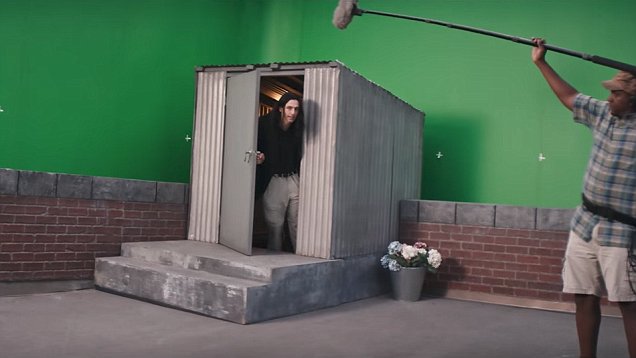
James Franco’s story of the making of the latest “Worst Movie of All-Time”, Tommy Wiseau’s The Room (which plays monthly at the Central Cinema and other places around town) feels like all the cool kids got together to make fun of the freakiest, geekiest kid in school. I mean, the movie opens with an actual Disney princess talking about how terrible the guy’s movie is, kicking off a series of so-bad-it’s-hilarious proclamations by Hollywood successes. I haven’t seen The Room, bad movies just make me feel bad. And laughing at them only makes me feel worse. And from what I have seen, and from its depiction here in exacting recreations, seen side-by-side with the original over the closing credits, it is impossible not to laugh at The Room.

The obvious comparison is with Tim Burton’s Ed Wood, of course. But that was a film that really tried to understand its subject as an actual human being, rather than just an opaque manifestation of weirdness. We want Ed Wood to fulfill his dreams and we feel for him at every failure and (humble) triumph: it doesn’t matter that his art is terrible, at least he succeeded in making something that meant something to him. And Glen or Glenda, at least, is so personal and horrifying an object that it arguably qualifies as great art, despite the fact that the corporate video store I worked at in the 90s deemed it so bad we would rent it out free of charge.

Franco never bothers to look at Wiseau the same way: he’s too opaque a collections of quicks to have an actual personality to express, and he isn’t even allowed to be the center of his own story. This is a story about Greg, a wanna-be actor (played by Dave Franco) who met a weirdo and together they made a terrible movie that everybody laughed at. And in our degraded age that has somehow become the same thing as making something great.

The Last Jedi (Rian Johnson, 2017)

Star-Wars-Last-Jedi-New-Character-Photos-Rose

The following are a few brief thoughts on The Last Jedi rather than a proper review. I try to keep it vague or completely unmentioned for fear of spoiling. Depending on how sensitive you are to such things, you probably shouldn’t be reading any reviews at all. Maybe I’ll come back to it in a few weeks, after I’ve had a chance to more fully absorb it and to see it again.

The Last Jedi is the Star Wars movie we’ve been waiting for, the culmination of years of ancillary products building on and expanding the mythos developed over the first trilogy and inverted in the second. Like The Force Awakens, its structure is explicitly modeled on a film from the first trilogy, in this case, The Empire Strikes Back. Despite our heroes’ triumph in the last film, a rag-tag band of freedom fighters find themselves under assault by the fascistic enemy. They escape, but the principal good guys are separated and their storylines play out individually, one set on the run in space, while another tries to get advice from a reclusive Jedi master. All threads come together in an ending more bittersweet than triumphant, setting the stage for a final showdown in part three of the story. But this, aside from a handful of gags both visual and verbal here or there, is where the similarities end. In fact, The Last Jedi deftly subverts the expectation of repetition, resolving some conflicts while deepening others, breaking out of the series’ ringlike story and calling for a radical break with the past. To put it into the terms of our contemporary politics: if the original trilogy is about the triumph of neo-liberalism, and the prequel trilogy about the corruption of that ideology by the forces of fascism, then The Last Jedi is where the trilogy truly embraces revolution.

Continue reading The Last Jedi (Rian Johnson, 2017)”

The Post (Steven Spielberg, 2017)

__5a1ca2f7832cc

Steven Spielberg’s latest couldn’t be more obviously a grasp at contemporary relevance if it was titled The Post #TheResistance. Like his last film, Bridge of Spies and 2012’s Lincoln, it’s a procedural about the levers of American power, in this case the argument within the Washington Post about whether or not to publish excerpts of the Pentagon Papers, the lengthy report on the history of American involvement in Vietnam which was leaked by Daniel Ellsberg to the New York Times in 1971. The hero is Katharine Graham, beloved socialite, who finds herself unsteadily in the position of Post publisher after her husband’s death (he had inherited the position from Graham’s father). Pushing her to publish is Ben Bradlee, editor-in-chief and old school newspaperman, while an army of relatives, board members and advisors urge her to be more concerned with the bottom line (the controversy around the Pentagon Papers could threaten the paper’s IPO). With Meryl Streep and Tom Hanks as the leads, and Spielberg’s unparalleled felicity with composition and movement, The Post has everything Liberal, Elite America could want in a movie about itself.

Continue reading The Post (Steven Spielberg, 2017)”

The 2017 Seattle Romanian Film Festival [TWO LOTTERY TICKETS, SIERANEVADA, SCARRED HEARTS]

car

The unexpected programming highlight of the fall 2017 slate in Seattle for me has been the fourth edition of the Romanian Film Festival at Seattle, which took place this past weekend at SIFF Uptown. This perhaps isn’t the biggest surprise in the world, as the Romanian New Wave has been one of the most exciting, motivated filmmaking movements of this century, but as far as I can tell, last year’s selection was roughly on the same level as most other country-specific festivals in this city. But with this year, the festival managed to gather, among other movies, three immensely exciting and worthwhile films, all without stateside distribution and from three directors that span the gamut, from Romanian New Wave old guard to venerated festival regular to even semi-subversive newcomer.

The latter filmmaker is Paul Negoescu, who has a small but passionate following on the basis of his extraordinary, incredibly low-key debut A Month in Thailand from 2012. His follow-up is the opening gala selection Two Lottery Tickets, a straightforward and totally hilarious comedy. While the previous film side-stepped much of the conventions that have codified the Romanian New Wave – the crushing nature of bureaucracy and the police, a single-minded pursuit of a goal, the need for money – this one manages to take on many of these DNA strands without sacrificing the wry warmness that suffused his first film, even as it moves from a late Dardennes-esque door-to-door approach to the road movie. Concerning a group of three hapless friends who lose a lottery ticket worth six million euros and embark upon a farcical journey to take it back from two thugs they believe have stolen it, Negoescu’s film manages to interweave in genuine emotional subplots that augment rather than distract from the humor. And there is a great deal of comedy here, including a handful of totally sublime setpieces and even more deadpan one-liners, all pulled off in well-composed static shots.

Continue reading “The 2017 Seattle Romanian Film Festival [TWO LOTTERY TICKETS, SIERANEVADA, SCARRED HEARTS]”

Lady Bird (2017, Greta Gerwig)

mother

Over the past decade, Greta Gerwig has become one of the most vital and vibrant stars of the independent film scene. In doing so, she has established an artistic identity apart from her acting: she co-directed Nights and Weekends with Joe Swanberg, and has cultivated a strong creative and personal partnership with Noah Baumbach, co-writing two of the most attuned comedies of the decade together. So it was only a matter of time before Gerwig made a film all her own, and with Lady Bird comes something expected yet totally delightful: a work of both nostalgia and anti-nostalgia, something both fleeting and grounded, all anchored in an utterly indelible character.

That character is Christine McPherson (Saoirse Ronan), nicknamed (by herself) Lady Bird, a young woman in her senior year of high school literally living on “the wrong side of the tracks” in Sacramento circa 2002. An underachieving yet passionate student, she wishes nothing more than to go to a college on the East Coast in a city that, unlike her perception of her hometown, has culture and heritage. Sensibly, Lady Bird is effectively split into two stories: the more dominant portion, dramatically speaking, deals with Lady Bird’s tenuous relationship with her family, including her tough, loving mother (Laurie Metcalf) and her kindly but suffering father (Tracy Letts); and the second, more lighthearted but never lightweight one portrays her life at her Catholic private school, negotiating popularity, drama, poor math grades, and the college application process.

Continue reading Lady Bird (2017, Greta Gerwig)”

Daguerrotype (Kiyoshi Kurosawa, 2016)

le-secret-de-la-chambre-noire

Halloween may have passed but it’s always a good time to watch a creepy movie by a great director, and that exactly what Daguerrotype, by Kiyoshi Kurosawa is. The artiest of the filmmakers to emerge in the J-Horror boom of the late 90s, or at least the one most likely to win awards at Cannes, Kurosawa’s formal precision and methodical rhythms have earned him comparisons to the usual suspects (Kubrick, Tarkovsky), and films like Cure and Pulse are indeed a far cry from the free-wheeling genre hysterics of Takashi Miike and Sion Sono. This isn’t his latest film (that would be Before We Vanish, which premiered this year, at Cannes), but rather the one that premiered last year, at Cannes, around the same time his other 2016 film, Creepy, was playing here at SIFF. It’s not getting a local release here in Seattle, but will be available on-demand starting on November 7.

Daguerrotype finds the director working in France, in French and with an all European cast (the French title, Le secret de la chambre noir gives a much better sense of the film’s eerie vibe). Tahar Rahim plays a young man who gets a job assisting a photographer (Dardennes regular Olivier Gourmet) at his suburban mansion (or “old house with some land”). The photographer uses 19th century equipment and techniques to create life-sized and disturbingly like-like photographs of his daughter (Constance Rousseau), which require dressing her in old dresses and locking her into place using a terrifying brace so that she can remain totally immobilized for the inordinately long exposure times the daguerrotype process requires (they start at an hour and get longer as the film goes along). He previously used the process on his wife, now deceased and possibly haunting the house. The young man falls in love with the daughter, who wants to be a gardener, and so a real estate scam begins. The movie is essentially a film noir, except instead of Lana Turner seducing a working class guy into murdering her husband, it’s a ghost (or two) doing the seducing. Call it “The Ghost-man Always Rings Twice”.

But, like any film noir or horror film, to reduce it to its plot is to highlight its essential absurdity. Daguerrotype is far more mysterious an object than that, a black hole of a movie that sucks you in with the gravity of its deliberate movements, then revels in the terror that is the absence of explanation. Possible interpretations of the facts of the film abound (perhaps too many), but mostly it seems to come down to an act of revenge against the impulse to freeze things in time place, to stop the gradual process of change, both men ultimately driven by an obsolete patriarchal desire to lock women down, as wives, daughters, lovers, subjects. The entropic destruction of the father is inverted in the panicked scheming of the worker, both leading to their inevitable and not especially surprising doom. But perhaps most upsetting is that there’s no satisfaction to be found in this revenge, no cathartic joy at the destruction of an immoral system. The ghosts seem to be just as scared as we are.