Rampant (Kim Sunghoon, 2018)

Rampant_2

Billed as coming from the same studio (Next Entertainment World) as the breakout 2016 zombie thriller Train to Busan, Kim Sunghoon’s Rampant has a fine pedigree and a promising premise: what if zombies, but in medieval Korea? Set in what appears to be the 17th or 18th Century, a complex conspiracy works to both topple the sitting Joseon King (and his son the Crown Prince) while also introducing a horde of zombies among the dissatisfied and rebellious populace (rebellious because they resent the neighboring Chinese Qing dynasty’s suzerainty over Korea). This sets the stage for lots of fun fights between mindless armies of bloodthirsty undead and warrior heroes armed with arrows and big swords.

Alas, apparently that wasn’t enough for Kim and his writers, because they’ve decided to pack their zombie movie with lengthy scenes of palace intrigue, discourses on the requirements of filial and fraternal piety, and the true source of governmental legitimacy  (the sovereign or the people). Where the fights scenes are fluid and exciting (these zombies are of the fast-moving variety, though they are vampirically afraid of sunlight), the court drama plays out like one of those palace rivalry soap operas that seem to be ubiquitous nowadays in Chinese television (if not Korean). Rather then the increasing tension of the set-piece upon set-piece constriction of Train to Busan, which spends only a few quiet moments fleshing out its characters and hints at broader themes in-between the fights, Rampant spends the first 90 minutes or so of its two hour(!) run-time acquainting us with the various rivalries at court, with only occasional breaks for zombie mayhem.

That would, of course, be fine if the palace intrigue stuff was the least bit interesting. But it’s rote genre stuff played like serious drama (there’s a hint of an idea about the zombies coming from European traders, and so being a metaphor for Western influence on the country, but it doesn’t go anywhere and more time is spent bemoaning China’s relation to the country instead). It’s basically Pride & Prejudice & Zombies, but without the humor. Zhang Yimou’s upcoming Shadow has a similar problem: it desperately wants to be a silly action movie, but it plays its non-fight scenes so straight they simply come off as overwrought, repetitive and dull. But, as with Shadow, the final half hour or so of Rampant, once all the masks are dropped and there’s nothing left to do but kill the unkillable, is a lot of fun. Director Kim stages his fights well, with a hint of CGI wuxia wirefu amid the beige and grey, while lead actors Hyun Bin and Jang Donggun are solid: Hyun as the happy-go-lucky second son of the King turned People’s Hero and Jang especially as the power-hungry villain. And for Hong Sangsoo fans there’s even a special treat: the King is played by Kim Euisung, star of Hong’s first film and featured actor in many of his later ones (and also Train to Busan), and the Crown Prince is played by Kim Taewoo, star of Woman is the Future of Man, Like You Know it All and Woman on the Beach.

The Fog (John Carpenter, 1980)

6a017d4117b2c6970c01a73dba5dc8970d

There’s something fitting about the new restoration of John Carpenter’s The Fog rolling onto Seattle screens the day after Halloween. Everything about it is just a little off the beat, a little bit odd. Which is, of course, what makes it, almost 40 years after its release, continue to be one of his better works. It lingers in the back of your brain, long after its brief running time has elapsed. Clocking in at a mere 89 minutes, and taking place over a single 24 hour period in the life of a small coastal community, The Fog is the leanest work of modern Hollywood’s most efficient great director (one of the many qualities that links him to Howard Hawks).

It begins at a campfire, with a village elder (John Houseman in old-timey fisherman drag) telling the story of the tragedy that accompanied the village’s founding exactly one hundred years earlier. Quickly we will learn the truth behind the legend, that the ship that tragically crashed in the fog one night was lured there intentionally, part of a scheme by the great men of the town to steal gold from a rich leper and his diseased companions: they murdered them and built their town atop their ruins. One hundred years later, the dead men return to balance the karmic scale.

Arrayed against the forces of darkness are Jamie Lee Curtis (a hitchhiker passing through town), the solid blond guy she hooks up with, Janet Leigh (wife of a fisherman and leader of the town’s anniversary festivities), Adrienne Barbeau (single mom from Chicago and operator of the town’s radio station/lighthouse) and Hal Holbrook (drunken priest whose grandfather was integral in the murders and whose diary tells the whole secret). They’re all pretty quick to figure out what is happening, though each of them has only a piece of the puzzle. The fog itself, what with its eerie glow and hidden frozen sailors, is pretty obviously the danger.

It’s a simple story built out of small, perfectly crafted suspense sequences. And while a lot of the horror movies of the era, including Carpenter’s own Halloween, seem to be designed in response to second wave feminism and The Pill, with their Final Girls surviving while their more promiscuous friends get the knife, The Fog is part of another strand of New Hollywood horror, one inspired more by the crises of the 1960s (the Vietnam War and its attendant atrocities in particular) and a kind of generational awakening to the sins of America’s past. Nightmare on Elm Street about a suburban lynching, Poltergeist about building suburbia on the graves of our ancestors, and so on. The Fog equates the foundation of the American community with the literal theft of capital, a town built on blood money. But then Carpenter complicates it further. In the film’s final moments, the priest reads the next few pages of his grandfather’s diary and finds out that the conspirators were actually betrayed: they never even got the money they were trying to steal. Their murder was ultimately pointless, their conspiracy undermined from within. But they founded the town anyway. That’s America for you: immoral, cruel, murderous, hypocritical, and totally incompetent.

Hale County This Morning, This Evening (RaMell Ross, 2018)

Brody-Hale-County-This-Morning-This-Evening

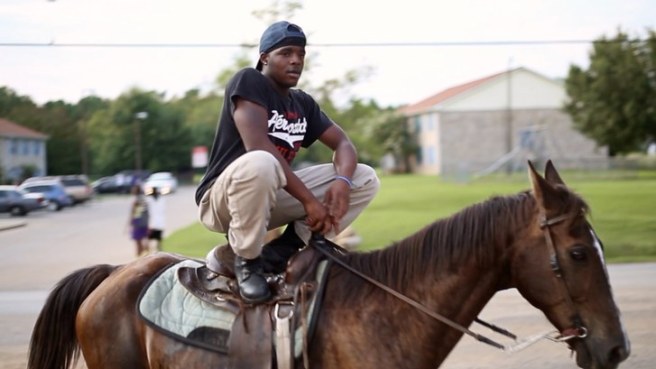
Shot over several years while he lived in Hale County, Alabama working as a teacher in the area, RaMell Ross’s debut film Hale County This Morning, This Evening is without a doubt one of the essential documentaries of 2018, and it plays this week exclusively at the Northwest Film Forum. It’s an interesting companion to What You Gonna Do When the World’s on Fire?, one of the highlights of this year’s Vancouver Film Festival (Seattle release date unfortunately unknown). Both are portraits of Southern, African-American communities, but from vastly different perspectives. As much as Roberto Minervini did to embed himself with his subjects and befriend them, he is necessarily an outsider, an Italian immigrant in America. And his film is more focused on rhetoric and event than on individual moments or the environments of the communities he’s depicting.

RaMell Ross, on the other hand, is documenting people he lived among for years. He’s filming from inside the room, and Hale County is made up of the kind of off-hand, minor moments that make up life, often devoid of any kind of narrative context (though there is a spine of a story about two young men, one of whom goes to college while the other stays home after high school). His tendency is toward the impressionistic (unlike, say, a Frederick Wiseman film), structured as much by image as theme. Ross even gives Apichatpong Weerasethakul a “creative advisor” credit, to give a hint of what the film’s rhythms are like. Though it’s world is far from dreamlike, it does have a certain potent magic. The presence of landscape (and its absence in the film’s interior spaces) is as deeply felt as any film of the year. Still, Hale County is no less political than Minervini’s film, of course, in its expressed intent to reconfigure stereotypical images of African-Americans, and in reclaiming the land they live in (the white residents of which were documented in the 30s by Walker Evans). Simply showing the way people live, in all their joy, wonder, tragedy and fear, is a revolutionary act.

Bisbee ’17 (Robert Greene, 2018)

Oral-Visual-History-Bisbee-17-Robert-Greene-Talkhouse-Film-880x369

In July of 1917, 2,00 deputized citizens of Bisbee, Arizona, under direction of the county sheriff (and almost certainly the copper mining interests that ran the town), rounded up at gunpoint 1,200 striking mineworkers, members of the IWW, marched them four miles out of town, loaded them onto boxcars, and transported them into the New Mexico desert, to be left to die in the middle of nowhere. The one-hundredth anniversary of this event, and the town’s attempt at reckoning with it, is the subject of the latest film from documentarian Robert Greene, which opens today at the SIFF Film Center.

Questioning the nature of truth as it is presented in non-fiction film is the guiding mission of Greene’s work, in acclaimed films like Actress and Kate Plays ChristineBisbee ’17 too is explicitly about the recreation of historical events, as the town organizes a kind of dramatization of the Deportation (as it has come to be known), with various townspeople, some of them fairly recent arrivals to the community, some with family members who fought on either side (or both sides) in 1917. We meet the various locals who will be taking part in the reenactment, and learn a little bit about their current lives, though the emphasis is on their thoughts about the strike and its bloody conclusion.

That the consciousness of an American community has not changed much with regard to labor rights in the past hundred years should come as no surprise. But even some of those who say they still support the mining company’s actions notably feel pangs of regret as they watch their fellow citizens rounded up and shipped away. There’s a lot of good old fashioned American excuse-making on the pro-capital side, especially ubiquitous is that most despicable of all arguments: that the actions of these cruel men were on some level acceptable simply because they believed they were doing the right thing. I don’t know where this idea comes from (I suspect Evangelical Protestantism, but I can’t say for sure), that what you do in life doesn’t matter as long as your intentions are good, that any evil is justifiable in the name of belief, but it is long past time it was discarded. Let us send it to the desert to die.

Stories like that of Bisbee are increasingly necessary, not simply for their obvious parallels to the political issues of the present day (Bisbee is only a handful of miles from the Mexican border, and Deportation today has all kinds of new though not-so different resonances). Somewhere in the immediate post-war era, with the mass expansion of public education at the high tide of Cold War propaganda, America lost a sense of its own labor history, of the crimes committed by capital in the creation of our communities and our nation. As the great factory and mining towns that built the foundations for our national wealth have been abandoned over the last 40 years (Bisbee in most respects looks identical to the mining towns my parents grew up in in Northern Idaho), whole generations have been adrift, without a coherent narrative to explain how things got to be so bad or what we can do to get from here to a better place. Watching the residents of Bisbee grapple with basic truths about capital, its exploitation of labor and its manipulation of racism in the creation of an all-white community (the vast majority of the deported mine workers were Latino or Eastern European), one can, with hope, see the beginnings of a reborn class consciousness.

But compared to Peter Watkins’s La Commune (Paris 1871), which similarly reenacted a historical event and mixed in coverage of the past with discussions among the performers about their own feelings regarding the events they were depicting, highly energized, engaged and informed discussions of labor, sexual and racial politics as they stood in the last century and continued into the present, one can see just how much our educational system, our culture, our politics, have let us down. We’re playing catch-up, but it’s starting to look like we might finally be back in the game.

VIFF 2018: Mirai (Mamoru Hosada, 2018)

mirai_02_copy_0

In 2012 Mamoru Hosada released Wolf Children, one of the finest animated films of the decade. It followed a young mother’s struggle to let her children go as they age, to become their own people, separate from her (that one of them chooses a human life while the other heeds the call of the wild and runs off to live as a wolf like his father is only tangentially relevant). With Mirai, Hosada addresses much the same issue from the opposite perspective, this time we see the child’s point of view as he grows form a wholly ego-driven individual into a member of a family, a continuum of people that extends not just horizontally to his sister and parents, but also backwards and forwards in time, to the people his ancestors were and the people he and his sister will become.

He’s not a werewolf this time (though he does have a talent for canine imitation) rather he is subject to a series of fantasies that grow out of the trauma of the arrival of his younger sibling, and the shattering of the idyllic existence he’d led as the center of the universe. He sees the family dog anthropomorphized into a fallen prince (an initial act of empathy that mirrors his own loss of place). He meets an older version of his baby sister, and he has an adventure with his great-grandfather. In interacting with these people (which may be mere figments of his young imagination or could be the manifestation of some supernatural power, it amounts to much the same thing) he learns perspective: that other beings are just as conscious as he is, that the world and the people in it are both distinct from him while also forming an essential part of him, a vast web of humanity with a center that might belong to him, but then again, it might not.

Mirai is as fanciful as anything Hosada has made, with a trip to the geometric horror of a train station a particular highlight. But like Wolf Children, as well as his version of The Girl Who Leapt through Time, it is fundamentally grounded in the every day, which in this case means a whole lot of parent humor, for which I am, no doubt, a sucker (I happen to have a self-centered, train-obsessed boy in my home as well). Hosada expertly fuses fantasy and slice-of-life anime, following in the tradition of the best of Studio Ghibli (Kiki’s Delivery Service, Only Yesterday and Whisper of the Heart), as well as any director of his generation.

VIFF 2018: Asako I & II (Ryūsuke Hamaguchi, 2018)

asako

In keeping the same minute attention to the smallest details of human routine and interaction that so distinguished his intimate 2015 epic Happy Hour, but trapping them within the familiar confines of a romantic comedy, Ryūsuke Hamaguchi has created something remarkable, a genre film as alive to the possibilities and contradictions of the human psyche and its dealing with other souls as we’ve seen in some time. It’s certainly the best romantic film since Hong Sangsoo’s Yourself and Yours, with which it shares a certain surface similarity. But in every important respect it is sui generis, very much its own thing.

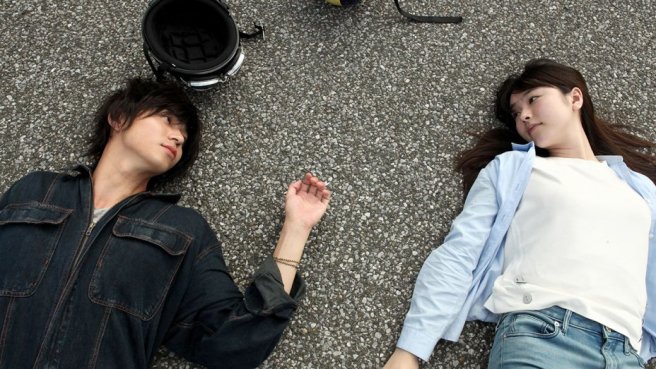
Asako and Baku meet-cute at an art gallery. It’s love at first sight, the two are wordlessly drawn together and stay that way for some time, in the pure romance of youth, impervious to the outside world and not only unafraid of death but turned on by its impossibility. Until, one day Baku disappears. Five years later, Asako meets cute again, this time with a young businessman named Ryôhei, who looks exactly like Baku and is played by the same actor (Masahiro Higashide, from Kiyoshi Kurosawa’s Before We Vanish). The bulk of the film tracks their relationship, growing from awkward avoidance to friendship to love with the rhythms of the everyday and in parallel to the romance between their respective best friends. The friends’ antagonistic first meeting over a performance of Chekov, is the best of the films several digressions, with an unexpected natural disaster and an idyllic montage in a fishing weekend providing other highlights.

The inevitable conflict comes in the final third, as Baku returns. If Hamaguchi doesn’t resolve The Case of the Two Bakus (or rather, the Two Asakos, the first crazed with the freedom of youth, the second safe in the benign contentment of maturity) with as much bald-faced ingenuity as Hong did, he can be forgiven. The solution he does find is as emotionally confused and true as real-life. We are unlikely to see a more open and all-embracing film this year.

VIFF 2018: Diamantino (Gabriel Abrantes & Daniel Schmidt, 2018)

e2809cdiamantinoe2809d-credit-charades

A soccer player strides across the field. Beautiful, dumb and happy, he tells us his story in a wide-eyed narration. A Candide lost in a world far too corrupt for his dim intelligence and brilliant soul. In the opening moment we get to see the world, the game, through his eyes. Not one of screaming lunatic fans or hulking, hostile opponents, but of giant fluffy puppies cavorting in slo-mo through cotton candy pink billows of cloud.

Circumstances, as they do, intrude on this perfect, pre-verbal vision of the world as it might be, and our hero, Diamantino, is sent into a tailspin of awareness, first by an encounter with refugees lost at sea, then by the death of his beloved father. Rather than center their film on their naive hero’s growing consciousness, as in, say, Daisy von Scherler-Meyer’s Party Girl, in which club kid Parker Posey grows into an existentialist librarian, directors Gabriel Abrantes and Daniel Schmidt instead put poor Diamantino at the center of a complex and farcical conspiracy involving his evil twin sisters, a pair of undercover cops, a Brexit-like campaign (but for Portugal) and a scientist who walks in water and tries to clone our hero (to make the perfect soccer team) but with gender-confounding consequences. His only ally is one of the cops, whom he adopts thinking she is an orphan refugee boy.

The conspiracy plotting is ridiculous, reminding me of the half-assed terrorism sub-plot in the film within the film of Spice It Up at best and the grotesque anti-comedy of Edgar Pêra’s Cinesapiens short at worst. A few of the jokes land, especially when the directors find new uses for familiar musical cues like the “Vorspiel” from Das Rheingold or Henry Purcell’s “Dido’s Lament”. But the film rarely again reaches the heights of its first few magical moments, yet every time they bring us back to Diamantino and his pure, foolish soul I’m won over again. He’s truly the hero we need in our dumb, degraded, beautiful world.

VIFF 2018: Spice It Up (Lev Lewis, Yonah Lewis, & Calvin Thomas, 2018)

spiceitup

One of the highlights of this year’s Future//Present program, and almost certainly the funniest movie to ever play in the now three-year-old series highlighting the cutting edge in Canadian independent cinema, is Spice It Up, from the directorial troika of Lev and Yonah Lewis and Calvin Thomas. Beginning life five years ago as a shambolic portrait of seven young women who, failing at high school, join the Canadian Army and spend one crazy summer together hanging out, dancing and somehow becoming involved in a terrorist plot involving French Canadian separatists. Charming and goofy, the original film seems like exactly the kind of thing people who teach in film schools rail against: it’s formless and fails to follow the rules of screenwriting as set done by hacks in how-to books. The current version of the film embraces that criticism, inventing a frame story in which the film student who ostensibly directed the movie (played by Jennifer Hardy), is tasked by her teacher (a very funny Adam Nayman) with restoring some classical virtues to her slice-of-life hangout movie. And he isn’t the only one with criticisms: seemingly everyone Hardy meets tells her what is wrong with her film and makes suggestions that simply don’t make sense to her. Still, she works at it, but, as she says, every change she makes away from her original vision simply makes her like the movie less.

Of course all the people who criticize Hardy’s work are men: her instructor, her editor, a guy who suggests she turn her characters into manifestations of virtues set down by moral philosophers, a guy who lives next door who walks out of her movie halfway through a screening. The only woman she actually talks to about it is her sister, played by Sophy Romvari, who hasn’t even bothered to watch the movie yet. It’s a pointed criticism of the film school system, and the wider world of film criticism, dominated by the point of view of men, both under- and over-educated, with directors like Hardy flustered when their personal style of cinema doesn’t line up with established norms. It’s hardly a polemic, though, and the film is just as hilarious in its parody of film culture as the film within a film is of a group of underprepared women sticking together (where Hardy in her story is pointedly alone) despite a significant dearth of common sense. It’s maybe the funniest movie about independent filmmaking since La última película, or maybe even Tom DiCillo’s classic Living in Oblivion. It’s also, with its memorable supporting cast, a compelling portrait of the Toronto film scene as it stands right now in the 2010s, resolutely opposed to commercial norms and dedicated to making the personal cinematic and the cinematic personal.

VIFF 2018 Preview: Grass, People’s Republic of Desire, Girls Always Happy, Microhabitat, Matangi/Maya/MIA

grass

I’m actually already here in Vancouver, three excellent movies into my time at this year’s Film Festival. But as a kind of a preview, I want to highlight some of our previously published coverage of films that will be playing here over the next couple of weeks.

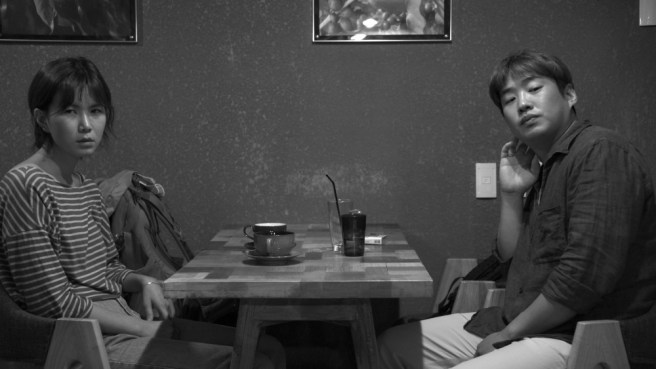
Hong Sangsoo is of course the headliner. His Grass, which premiered earlier this year, will be playing in the second week of the festival, after I leave town. Fortunately, Evan and I had a chance to see and talk about it earlier this year. Like The Day After and Hotel by the River (which isn’t playing VIFF but will be at the New York Film Festival this week), it’s a black and white film starring Kim Minhee. All three films are melancholy,  meditations on death and suicide informed by a Christian spirituality. I think Grass, the Purgatorio of Hong’s Divine Comedy, is the best of them.

Evan and I were split on the documentary People’s Republic of Desire when it played SIFF earlier this year. He found it too formally boring to really get anything out of its subject, the online celebrity culture of contemporary China, while I thought that was kind of the point, that despite the apparent newness of the world, all the old evils will reassert themselves.

Yang Mingming was the most adventurous of the several solid titles in SIFF’s Chinese film program this year, and I’m glad to see it pop up again here at VIFF. The director herself stars as a young woman with a hot and cold relationship with her mother (played by Nai An, who also stars here at VIFF in Ying Liang’s A Family Tour).  Yang “mixes tones cavalierly, one minute wrenching personal drama told in close-ups of anguished, sweaty, tear-stained faces, the next a jaunty scooter trip through Beijing’s warren of hutong alleys, the next those same alleys turned to the scene of unnamable, invisible dread. The result is a highly unstable film, lurching from lyricism to (self-)excoriation, coming dangerously close to resembling life itself.”

Also in VIFF’s Gateway stream is Jeon Go-woon’s Microhabitat, which I wrote about this summer when it played the New York Asian Film Festival. It’s a polished, warm film about a young woman who “chooses homelessness when price increases make sustaining her budget of cigarettes, whiskey and rent unsustainable. She couches surfs from one former college bandmate to another, all miserable in their own way while she remains pure, the only one of her peers not to compromise her independence and joy in life’s most basic consumptive pleasures.”

Finally, I was mixed on the documentary Matangi/Maya/MIA when it played at SIFF. Made up almost entirely of footage the star shot herself, long before she became famous or even., apparently had any idea of becoming a musician, it’s a fascinating look inside the mind of a creative person who hasn’t quite figured out what she wants to create. It kind of falls apart once she becomes famous, skipping from controversy to controversy, but I imagine that happens to all of us when we get old.

Golden Job (Chin Ka-lok, 2018)

They discover the car is loaded with gold

In the wake of the 1997 Handover, when Hong Kong turned from a relatively independent British colony to a Special Administrative Region of the People’s Republic of China, the Hong Kong film industry, which had been for most of the previous 30 years or so one of the glories of the world, almost completely collapsed. Uncertainty was the primary cause, both in economic and political freedom, which led many of the industry’s brightest talents to seek employment in the United States and beyond (Jackie Chan, John Woo, Tsui Hark, Sammo Hung, Jet Li, Ringo Lam, Michelle Yeoh, Corey Yuen, Ronny Yu, etc), while the excesses of production in the 80s and early 90s, plus infiltration of unsavory, criminal elements into the filmmaking business, led to the dissolution of most of the major production houses that had led Hong Kong’s last Golden Age. But still, the Hong Kong cinema didn’t collapse entirely: Herman Yau kept churning out low-budget horror and gangster films (as he continues to do to this day); Johnnie To founded his own studio, which found a way to produce anywhere from two to six high quality films a year, both popular entertainments and idiosyncratic personal explorations of genre; Stephen Chow, who for much of the mid-90s was the only star who mattered, single-handedly keeping the industry afloat, began directing and produced increasingly ambitious and accomplished work. But above all, the Young & Dangerous series struck a chord with the youth audience, leading to something in the neighborhood of a dozen sequels, prequels and spin-offs between 1996 and 2001.

The Young & Dangerous films, shepherded by director Andrew Lau (an accomplished cinematographer (he shot Wong Kar-wai’s debut As Tears Go By and parts of Chungking Express, he also co-directed the Infernal Affairs films, the first of which came out in 2002), were a cheap, glossy, teen idol-driven, comic book variations on the heroic bloodshed sagas of the late 1980s. Stars Ekin Cheng and Jordan Chan had fancy hair and stylish clothes and a propensity for finding themselves in musical montages depicting the anguish and joy of violent brotherhood. They are wholly absurd and a great deal of fun. Now, more than 20 years after the first installment, director Chin Ka-lok reunites the stars of the series for Golden Job, a maudlin action film about brotherhood among formerly stylish middle-aged men.

Five “brothers”, friends since they were orphans together, work as vaguely immoral mercenaries for hire, kind of like the A-Team, but with more hugging. One of them goes bad and betrays the group, and the others have to, well, not really seek revenge, but do something to fix his errors. The film skirts topics familiar from recent Chinese action films (the pharmaceutical foul play of Woo’s Manhunt and Lam’s Sky on Fire, the paternalism of China’s relationship with East Africa from Wolf Warrior II), but in most ways it is a throwback to those older movies, albeit with much more expensive and impressive action sequences. Director Chin is a former member of Sammo Hung’s stunt team with a long career as an actor and fighter, though this is only his third film as a director in his own right (he did Aces Go Places ’97 with Tony Leung and Alan Tam, and the 2002 Yuen Biao film No Problem 2). His action scenes are solid, if not original. Capable facsimiles of the military maneuverings of Operation Red Sea and vehicle stunts that honestly aren’t all that much worse than what you’d see in a Mission: Impossible movie. It’s just hard to take them seriously because the rest of the film is so generically earnest, its aged heroes so out of step with the times that their posed male laughter and tears play even more absurdly than they did twenty years ago.

The difference isn’t with the film’s earnestness. That was always there in the Young & Dangerous movies: their sentimentality is entirely believed. But what those earlier films also had were brilliant supporting performances, like Anthony Wong chewing up scenery and picking his nose, or Simon Yam at his oiliest, or which served to cut the sap with a bit of irony or acidic cruelty. Golden Job has Eric Tsang being wise and noble as the gang’s father figure, which is a complete waste. In fact, the only actor who seems to be having any fun at all is Yasuaki Kurata, who continues his late career rebirth with a far too brief appearance. His short fight scene is the best one in the film, though it’s also the smallest and probably the cheapest. Clement Cheng and Derek Kwok’s Gallants similarly revived stars of the past now well into middle-age into a genre film, one with its share of sentimentality but also one that updated the genre stylistically and ideologically for a new era. Golden Job plays everything straight, all as it would have been done twenty years ago, and as a result there’s nothing to leaven the soapiness, leaving a bunch of nice action sequences surrounding a sickeningly schmaltzy core.