Old Man Yells at Time: Indiana Jones and the Dial of Destiny (James Mangold, 2023)

The prospect of a new Indiana Jones movie at this late date, more than forty years after Raiders of the Lost Ark, is daunting. The series ran its natural course through the 1980s: a stellar debut followed by a sequel that expanded and complicated the original premise and then a second sequel that regressed into crowd-pleasing antics, stunt-casting, meta-humor, and ended with a satisfactory ride off into the sunset. The franchise was revived in 2008 with mixed results. Kingdom of the Crystal Skull features some terrific sequences from Steven Spielberg, who alongside all his other virtues (and shortcomings) as a filmmaker remains one of the greatest directors of action in film history, a fine hammy villain performance from Cate Blanchett, and a mostly satisfactory ending. It’s also marred by a disastrous screenplay, featuring some of the most poorly-written dialogue ever filmed by a major director. What could we expect, another 15 years down the line? Further degeneration of a once-great franchise, or perhaps a return to greatness, fully embracing the age and increasing obsolescence of its star, creators, and the whole world the series was created in homage to?

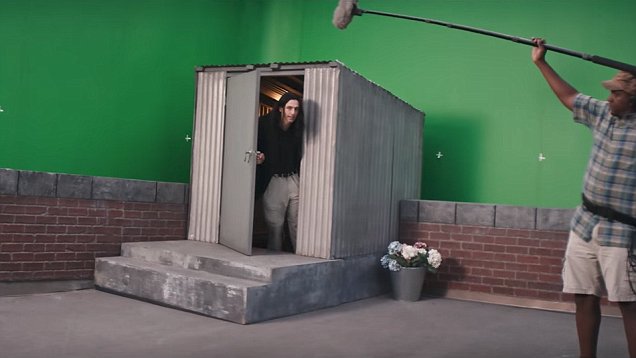
A little bit of both, as it turns out. The opening reel (an archaic term in reference to a 20 minute chunk of film, rendered nonsensical by the digitization of cinema, much like the terms “film” and “movie”) of Indiana Jones and the Dial of Destiny is dire, encapsulating in an ugly gray package all the worst trends in contemporary Hollywood blockbuster filmmaking. Star Harrison Ford is digitally de-aged with horrifyingly uncanny results and the exterior shots, and this being a sequence set on a train in an Indiana Jones movie there are a lot of exterior shots as the action moves to the top and the sides of said train, are cartoonishly incompetent. The phoniness of the images, something I’m not necessarily opposed to on principle—there are lots of ways to make a movie and digital fakery is certainly one of them—are made galling by our awareness of what has come before in the series. Raiders of the Lost Ark is, above all else, a loving tribute to the stunt performers and action filmmakers of the Hollywood studio era, when lunatics like Yakima Canutt would risk life and limb for the sake of a two-reel serial installment. Last Crusade even gave us a prologue with a similar set-up: a flashback to a younger Indiana Jones (played by River Phoenix at a time when studios and filmmakers had enough faith in their audience’s imagination to allow a character to be played by more than one actor, without the benefit of computers) for a chase sequence that takes place largely inside and on top of a moving train. An actual train, moving in the actual world. More or less. Dial of Destiny’s opening couldn’t more perfectly remind us of what we’ve lost, of the debased state of the modern blockbuster, if it tried. And maybe that’s the point.

Because the rest of the movie, once it gets going, turns out to, in fact, be about what it’s like to outlive your relevance. In 1969, Ford’s Jones is an old man, nearing retirement, divorced and mourning his son (RIP Mutt). He’s sucked into a new adventure by a daffy young woman named Helena, played by 2018 It Girl Phoebe Waller-Bridge. She’s the daughter of one of his old colleagues (Toby Jones in the prologue), obsessed with the eponymous object, a device designed by Archimedes. The device is split in two: Jones has the first half until Helena steals it. They eventually will team up to find the second half, with the help of a map which also has to be found. Opposing them is Mads Mikkelson, playing a Nazi scientist (now NASA rocket builder) similarly obsessed with the device. The film settles into the familiar rhythm: Jones travels to a new location, meets some strange people, then gets chased by them and a bunch of Nazis. 

The chases may be a matter of necessity: every action sequence in the film is something the aged Ford can perform sitting down. But they’re also for the most part fun and creative. New director James Mangold is no Spielberg of course, but he’s always been, at worst, a competent craftsman. They also have a tangibility entirely missing from the opening sequence. The supporting cast is mostly anonymous: Mikkelson’s minions are suitably if generically menacing (they’re also CIA agents, lol); Helena’s companion is a wispy-mustached teenager who is mostly OK; and Antonio Banderas shows up for a little while and has almost nothing interesting to do. So there’s really very little of note other than the plot mechanics, which lead us ruthlessly from one set-piece to another. This is of course the classic Indiana Jones structure, one borrowed from old serials, and one that earned the films and the era of high concept blockbuster they helped usher in the ire of an older generation of critics who longed for more personal, humane filmmaking. This is now the standard form for the Hollywood blockbuster: the chase, enlivened by scenes of mass destruction (usually but not necessarily of cities). The early Indiana Jones films pioneered and perfected this form: think the truck chase in Raiders, with its direct Canutt homage, or the mine cart chase in Temple of Doom, which merged cinema and theme park ride as well as anything before or since. The 21st century Jones movies though, do not aspire to compete with that past. And Dial of Destiny suggests they simply cannot do so: everyone’s just too old to bother.

For if Dial of Destiny is about anything, it’s about letting go of the past. All of the Indiana Jones films are, in some sense, about letting go. Raiders is about the wisdom of choosing to not open the ark; Temple of Doom about artifacts as vehicles for community harmony and growth rather than Fortune and Glory; Last Crusade about finding a balance between obsessive archeological pursuit and family commitment. (Crystal Skull doesn’t really fit this scheme, because, again, Crystal Skull’s script is terrible.) Dial of Destiny finds Jones an obsolete and broken man. The adventure he’s dragged into brings him back to life, and it ultimately offers him the chance to continue that life of adventure or go back home to his broken old man world. He has the opportunity to live in the past (literally), but we know, and he knows, that one can’t ever really do that. Like it or not, we have to go on living in the present, as dull and gray and marred by crappy digital effects as it is.
Licorice Pizza (Paul Thomas Anderson, 2021)

Licorice Pizza is, like almost every other Paul Thomas Anderson movie, about America. More specifically it is about America as embodied in the San Fernando Valley of California in the 1970s, just as Inherent Vice and Boogie Nights were before it. There Will Be Blood is the prequel: it’s about California in the early 20th century. The Master is another prequel, about mid-century Californian metaphysics. Magnolia moved the timeline into the 90s, albeit one haunted by the 1970s. Hard Eight is set in Las Vegas, but that’s a first film so we’ll cut him some slack. Licorice Pizza is also an oddball romance, like Punch-Drunk Love and The Phantom Thread, neither of which are particularly about America, though the former is more than the latter. It’s about a girl and a boy and the world they live in and how they somehow, against all common sense, find something like love, at least for now.

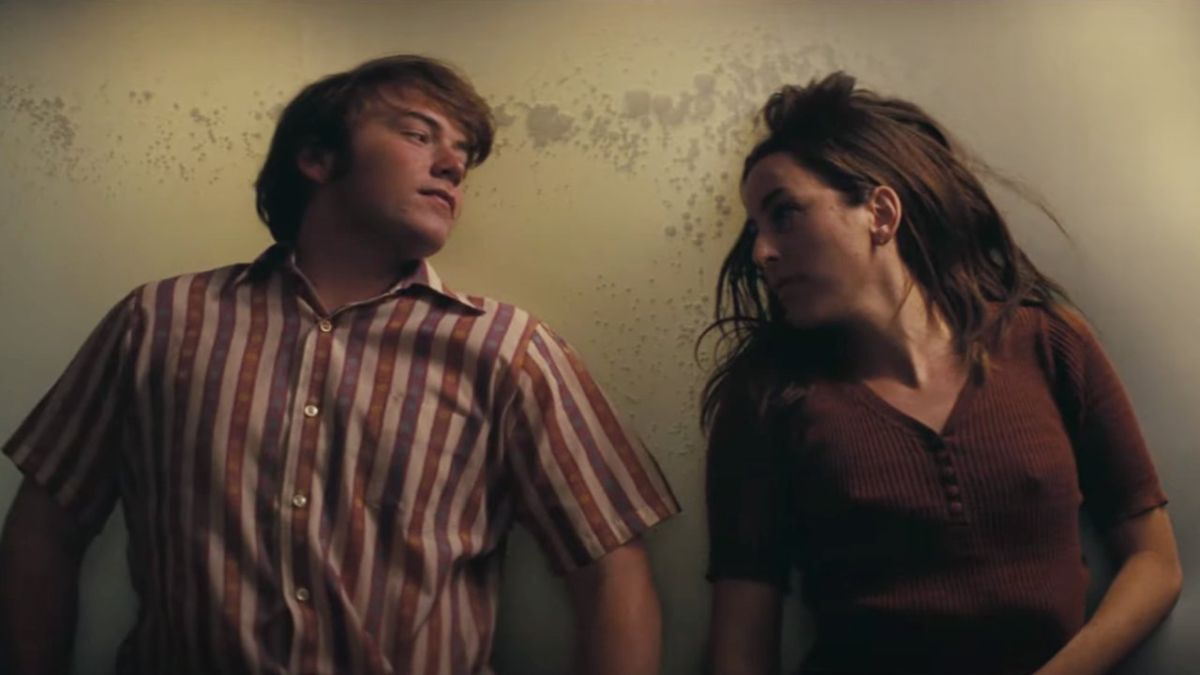
Alana Haim plays a rudderless 25 year old named Alana who, when working for a company that shoots high school yearbook photos, is spotted by 15 year old Gary Valentine (Cooper Hoffman, looking eerily like his father), a precocious go-getter who has just about grown out of being a cute child actor. He falls for her instantly and walks right up and tells her so, beginning the first of several lengthy walk and talk camera movements that form the spine of Anderson’s approach to the film. Alana and Gary are always moving laterally, sometimes walking, often running. All the kids in the movie love to run—they have to, they’re in a hurry. Alana, sensibly, rebuffs Gary’s romantic advances, but the two have an obvious connection and the two strike up a friendship. 

The rest of the film follows their various career schemes while deftly negotiating the fact that these two characters are obviously in love but really should not be. It’s a picaresque set almost entirely in the Valley, and it feels like it could have gone on forever, just vibing with all the weirdness of America in the 70s. But the film is far from a nostalgia trip: like its cousin Dazed and Confused, Licorice Pizza is as much about what was, and is, wrong with America as it is about classic rock and questionable fashion. Alana and Gary meet vast array of white people in their adventures, most of them older, most of them seriously fucked up in a way that no one is allow to discuss openly. 

There’s Bradley Cooper’s gross John Peters, who hits on every woman he sees and is the definition of an entitled Hollywood hanger-on (a hairdresser and a producer, the real John Peters was a child actor as well). There’s Sean Penn’s aging star actor who reads with the starstruck Alana during an audition, takes her out for drinks (at Gary’s favorite restaurant “The Tail of the Cock”), then loses interest as he and an old director buddy (Tom Waits) recreate a scene from one of their Korean War movies (Penn’s character is named Jack Holden, and is apparently based on William Holden). There’s John Michael Higgins, who plays a the owner of Gary’s other favorite restaurant, who hires Gary’s mother’s PR firm to advertise the place, a Japanese place called The Mikado. Higgins and his Japanese wife listen to the proposed ad (which does everything it can to downplay the food and up the Orientalist appeal), and Higgins “translates” to his wife by adopting a grotesque caricature of a Japanese accent (think Mickey Rooney’s ghastly Breakfast at Tiffany’s performance). He does the same thing in a later scene, now with a different wife (they’re apparently interchangeable for him) and admits that he doesn’t speak Japanese. The performance is too absurd to be based in anything but reality. Finally there’s Benny Safdie as Joel Wachs, a city council member whose campaign for mayor Alana joins as a volunteer. Wachs is a closeted gay man (he came out in 1999, after decades of accomplished service). It’s Alana’s realization of Wachs’s sexuality, and the pain having to hide it causes him and his partner, that sends her back to Gary. Because theirs is a world when all the cultural norms are completely wrong: men as debauched misogynists or macho burnouts, where condescendingly racist fetishizers of other people and cultures are greeted with, at most, a raised eyebrow, where a good man has to call in a beard to a restaurant because his political enemies might find out who he’s really dining with and why. Because in such a world, when you find a true friend, you really have to stick with them.

Or, taken another way, you can see it as a story of integration. Alana’s family is played by her real-life family, her sisters and parents. They’re very Jewish (one agent keeps coming back to Alana’s “Jewish nose”, a potential boyfriend is kicked out of the house for refusing to give the blessing at dinner because he’s an atheist) and it’s easy to read Alana’s attraction to Gary as an Old World/New World thing, with Gary as the embodiment of a wide-eyed American innocence and entrepreneurialism. He’s bursting with crazy schemes, always looking to make a quick buck with waterbeds (inspired by Leonardo DiCaprio’s father) or pinball machines or making campaign commercials. Gary is a hustler who believes deeply in everything (contrast with failed boyfriend Lance, the atheist). Most of all he believes in Alana. This differentiates him from Higgins’s racist restauranteur. Gary is an idealized, uncorrupted American man that doesn’t exploit other cultures, or other people, that hurts only people that deserve it (like that rich asshole John Peters). He’s all the potential of America, but he’s only 15 years old. And though we all know how his story is going to end, the movie ends while there’s still hope.

Once Upon a Time in Hollywood (Quentin Tarantino, 2019)

image7

Once Upon a Time in Hollywood can be seen, as most of the best Quentin Tarantino movies can, as a collection of short stories (along with Pulp Fiction, Inglourious Basterds and Kill Bill; Jackie Brown is a novel; Reservoir Dogs, The Hateful Eight and Death Proof are plays; I have no idea what Django Unchained is–I haven’t seen it since it was first released and I’m as baffled by it now as I was then, but I suspect it’s a movie). He’s best when he’s building out of small, discreet scenes, rather than trying to follow a single thread through various permutations. The approach allows his movies time to breathe, and lets his actors do their thing. Hollywood is, for its incredible first two-thirds, a series of sketches around two days in the life of three characters: former TV Western star Rick Dalton, played by Leonardo DiCaprio; Dalton’s longtime stunt double and best friend, played by Brad Pitt; and Sharon Tate (Margot Robbie), the young actress who has just moved in next door to Dalton on Cielo Drive with her husband, Roman Polanski. It’s February of 1969, and we know, but they do not, that the night of the Manson Family murders is only six months away.

Hints of that fateful night to come, one of those events that has transcended its own tragedy, like the Stones at Altamont, to become a symbol of the End of Something (Old Hollywood, the 60s, Innocence), abound through this first two-thirds: we see Manson’s young followers digging through trash and hitch-hiking through Hollywood; Charlie himself shows up looking for the former residents of Tate’s house; Pitt even takes a trip out to the Spahn Ranch with one of the Manson girls (played by Margaret Qualley, from Fosse/Verdon). But more time is spent away from them, with each of the principals going about their day. Tate takes a trip into town where she spots a movie theatre playing her latest movie, the Dean Martin vehicle The Wrecking Crew. Pitt works on DiCaprio’s house and reminisces about the time he beat the crap out of Bruce Lee while working on Green Hornet (Mike Moh does a very funny Lee impression). DiCaprio works on a TV western pilot, where he tries his best to act despite a hangover and depression over the state of his career (he’s considering an offer from Al Pacino to go make Westerns in Italy). It’s these stories, which have nothing to do with Manson but everything to do with Hollywood and Tarantino’s vision of it, that make the movie something special.

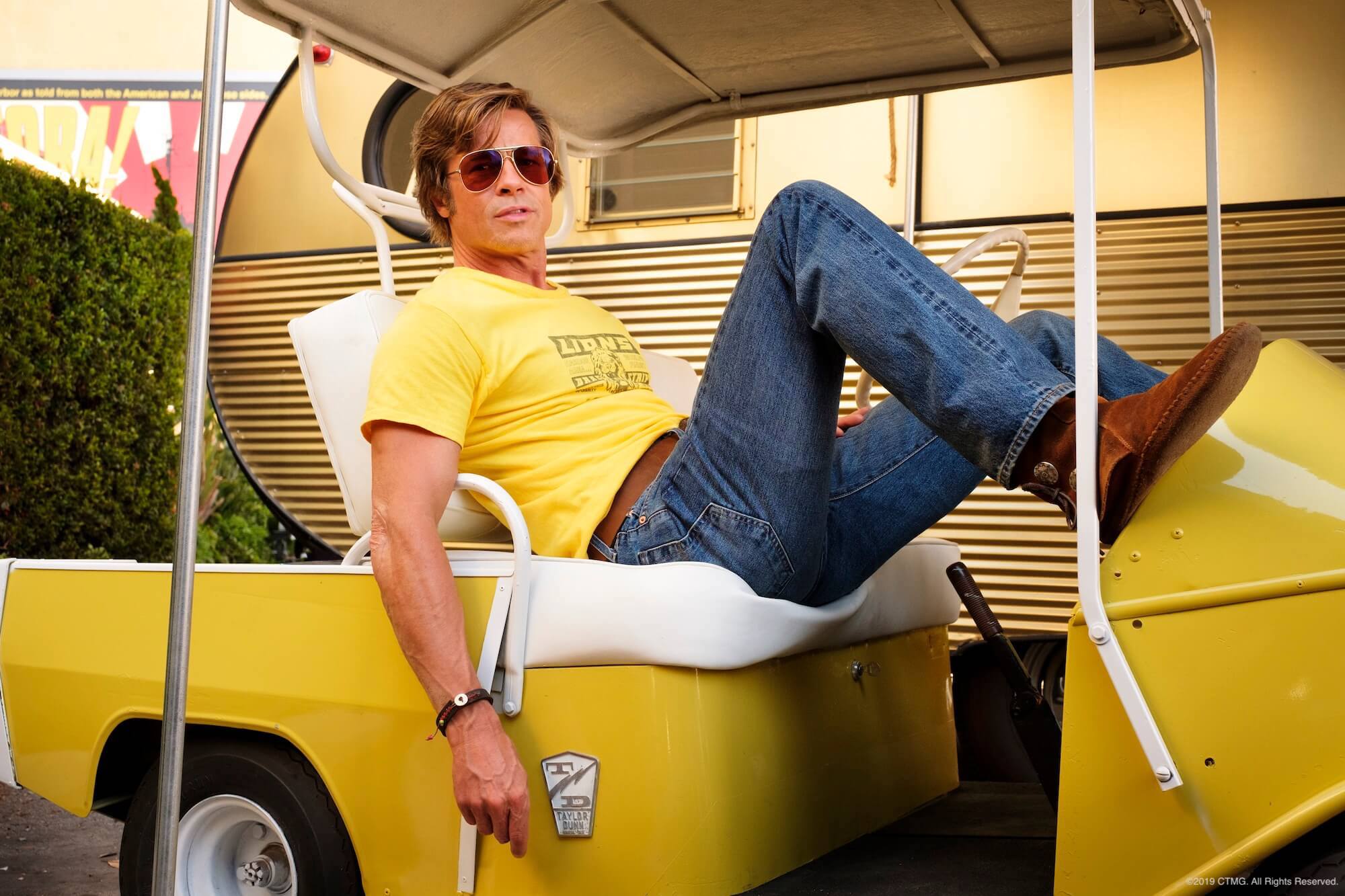
I’m toying with the idea of seeing them as three parts of a whole theory of Hollywood. DiCaprio as its heart: as an actor he’s highly emotional, it’s what allows him to achieve greatness in his performances, but it also sends him into rages and funks when he fails. Robbie’s Tate is all wonder and joy, a dream of youth and beauty and exuberance. Her sitting in a dark theatre, listening to the laughs her performance gets is maybe the warmest, happiest moment Tarantino has ever filmed. Pitt is all technique and skill, the muscle that makes it possible for DiCaprio to function (in work as well as life: he’s his driver and does odd jobs around his house, like fix the TV antenna). Supremely aware of himself and his own capabilities, he has all the quiet confidence in himself that the other actors (including the preening Lee) lack. He’s the Marlboro Man, a masculine ideal. And not so hidden within him is the threat of violence. He’s naturally attractive, but absolutely capable of murder, an uncomfortable dichotomy which will be put to the absolute test in the film’s final third.

Quentin Tarantino is the best director of actors of his generation. In any other hands, a movie like this, packed with famous names playing famous names, steeped in a historical place and time marked by wild behavior and wilder fashions, would degenerate into farce. Think of the wig acting of a movie like American Hustle, where brilliant performers are buried beneath a whole lot of noise and nonsense. Tarantino understands quiet as well as any mainstream American director. He has the patience to let the camera rest on an actor while they work, taking us inside DiCaprio’s head as he shows us the difference between mediocre acting and great acting. This might be my favorite Brad Pitt performance, at least since True Romance. He gets the swagger of a man who isn’t needy enough to be a movie star, who loves his dog but will without hesitation break your nose if you wrong him, exactly right.

There’s much more to say about Once Upon a Time in Hollywood, but it can wait until sometime later, after everyone has a chance to see it. Suffice it to say that I think it’s Tarantino’s best since Jackie Brown, and, going by imdb dates, it’s without a doubt the first great movie of 2019.

The Disaster Artist (James Franco, 2017)

the_distaster_artist_e

James Franco’s story of the making of the latest “Worst Movie of All-Time”, Tommy Wiseau’s The Room (which plays monthly at the Central Cinema and other places around town) feels like all the cool kids got together to make fun of the freakiest, geekiest kid in school. I mean, the movie opens with an actual Disney princess talking about how terrible the guy’s movie is, kicking off a series of so-bad-it’s-hilarious proclamations by Hollywood successes. I haven’t seen The Room, bad movies just make me feel bad. And laughing at them only makes me feel worse. And from what I have seen, and from its depiction here in exacting recreations, seen side-by-side with the original over the closing credits, it is impossible not to laugh at The Room.

The obvious comparison is with Tim Burton’s Ed Wood, of course. But that was a film that really tried to understand its subject as an actual human being, rather than just an opaque manifestation of weirdness. We want Ed Wood to fulfill his dreams and we feel for him at every failure and (humble) triumph: it doesn’t matter that his art is terrible, at least he succeeded in making something that meant something to him. And Glen or Glenda, at least, is so personal and horrifying an object that it arguably qualifies as great art, despite the fact that the corporate video store I worked at in the 90s deemed it so bad we would rent it out free of charge.

Franco never bothers to look at Wiseau the same way: he’s too opaque a collections of quicks to have an actual personality to express, and he isn’t even allowed to be the center of his own story. This is a story about Greg, a wanna-be actor (played by Dave Franco) who met a weirdo and together they made a terrible movie that everybody laughed at. And in our degraded age that has somehow become the same thing as making something great.