How Long Will I Love U (Su Lun, 2018)

Long

It’s been awhile since we had a Chinese release of interest here on Seattle Screens, but this time-travel rom-com certainly fits the bill, the kind of clever, unique popular cinema that the Mainland film industry will hopefully start churning out in greater numbers, as opposed to cartoonish action films packed with stars who have little to offer but a basic ability to look cute on camera. A weird temporal anomaly smushes together a single apartment, occupied by a man in 1999 and a woman in 2018. Lei Jiayin plays the man, a down on his luck young aspiring developer with big dreams for the outskirts of Shanghai and a boss engaged in shady business. Tong Liya is a former rich girl who has fallen on hard times and is desperately in search of a husband to lift her out of poverty.

The special effects and design of the squished apartment (mirror images colliding in a chaos of broken lamps and crushed furniture) united by a door that opens onto one time or another depending on who opens it, are especially striking, a unique twist on the premise of something like The Lake House, to which the film bears a superficial similarity. Like another recent Chinese time-travel film, Duckweed, it hearkens back more to early 90s Hong Kong comedies like Peter Chan’s He Ain’t Heavy, He’s My Father, in exploring the ways Chinese culture has, and hasn’t changed during an era of more rapid than can reasonably be comprehended modernization. Tong’s grasping materialism is as much a sickness of the 21st Century as it is her own character flaw born of a privileged childhood, while Lei’s more proletarian attitudes and values prove less durable than he’d like to believe when the couple encounter his 21st Century self, a real estate magnate with a dark past.

The couple have a nice chemistry, though Lei, at 34 years old, seems miscast playing a callow 25 year old. In some shots he looks positively middle aged. Tong though is delightful, as she was as the landlady in Detective Chinatown. Director Su has a fine eye as well, she knows enough to just let the colors and actors pop and not drag down the conceit with too much science (the mad scientist who caused the problem (time travel in China as to be result of either a dream or science, no magic allowed). A fun, well put together movie with an interesting approach to an old formula, as with last year’s This Is Not What I Expected, China is rapidly becoming home to the best romantic comedies in the world.

SIFF 2018 Preview: Week Two

lead_960_540

We’re now into the second week of the Seattle International Film Festival. So far, here at Seattle Screen Scene we’ve reviewed: Freaks and Geeks: The DocumentaryFirst Reformed (twice), and People’s Republic of Desire, with much more to come in the next few weeks.

Here are some of the movies we’re looking forward to that are playing during the second week of the festival:

Angels Wear White – Director Vivian Qu was received acclaim for this, her second feature on the festival and award circuit for almost a year now. SIFF’s description: “A young woman witnesses a local official’s assault against two schoolgirls, leading to a complex aftermath of cover-ups and gaslighting.” I quite liked Qu’s first film, Trap Street, an effective noirish film about living in a surveillance state, so I have high hopes for this one.

The Third Murder – Fresh off his Palme d’Or at this year’s Cannes Film Festival, here is the prolific Kore-eda Hirokazu’s film from last year, a courtroom drama that sounds very different from his more popular (in the US at least) movies about Japanese families.

Love Education – The latest from director and star Sylvia Chang (herself the subject of an on-going series at the Metrograph in New York, which I wrote about last week) is about a woman who hopes to exhume her father’s ashes so they can be buried with her recently deceased mother. Problem is the ashes currently reside under the watchful eye of her father’s first, and possibly only, wife. A nuanced and moving exploration of ideals of love and commitment across generations and genders, it’s surely one of the best new films at SIFF this year.

Let the Sunshine In – No less anticipted though is the arrival at last of Claire Denis’s latest film, a romantic comedy starring Juliette Binoche. Probably the one film from 2017 I most regret not having seen yet.

The Bold, the Corrupt, and the Beautiful – This Taiwanese film from director Yang Ya-chee was somewhat of a surprise Best Picture winner at last year’s Golden Horse Awards, especially considering its strong competition (which included Love Education and Angels Wear White). But with the always great Kara Hui starring as the head of a crime family, it certainly should be pretty great.

Belle de jour – Luis Buñuel’s classic starring Catherine Deneuve as a bored housewife who decides to dabble in prostitution gets the restoration treatment. We talked about it on The George Sanders Show way back in 2013.

The Widowed Witch – “A third-time widow who falls on especially hard times is declared cursed, but turns superstition to her advantage by travelling the wintry landscape of rural China and offering supernatural advice, in this modern tale of mysticism told with mordant humor and starkly beautiful cinematography.” Sold.

Ryuichi Sakamoto: Coda – A documentary about the Japanese musician and composer (who starred with David Bowie in the very great World War II film Merry Christmas, Mr. Lawrence). Another in an interesting selection of musician docs at SIFF this year.

The Day After (Hong Sangsoo, 2017)

hhXU63GT

The Day After: Never Forget a Face

For most films and to most film viewers, the detail can appear so minimal: the opening credits. Nobody would confuse an opening credits of a Hong Sangsoo film with say, the dazzling, intricate opening credit works done by Saul Bass for films by Alfred Hitchcock. But in The Day After, Hong Sangsoo’s film that premiered at last year’s Cannes Film Festival and which is now opening in Seattle on May 25th, the credits plays differently in the context of so many previous Hongs. Instead of bold colored backgrounds that the credit text fills as we’ve been conditioned to find from the prolific South Korean auteur, The Day After has no title cards and instead the credits play straight into the film. Minor and unnoticeable for most, but for Hong fans who have often only had the opportunity to catch his films at various festivals, the change caused a kind of jolting reaction. However, the opening credits are just the start of the feeling that with this film, Hong Sangsoo has shifted and is turning in a new direction.

The Day After is a fascinating film in its non-linear, cyclical structure and is one of Hong’s most formally confident works that should be striking to both fans and those previously unfamiliar with his work alike. Hong’s movies often have featured male characters in a crisis, artists (most of them film directors) unfulfilled by public reception and various degrees of success, and often very aware of their poor behavior, which includes disgraced drunkenness from too much soju and infidelity. It has been quite irresistible for reviewers of Hong’s works to tie those films’ portrayals to autobiography, that art imitates life/life imitates art reaching new heights with the tabloid scandal of Hong’s marriage dissolving after an extramarital affair with South Korean actress Kim Minhee (who at this point has made five films with him, including The Day After). Hong’s films themselves do feel confessional in a way that invites such readings, his works full of auto-critique in the various misbehaviors of his main characters and the fragility of masculinity, particularly in the character of the male artist played to hilarious, exasperated comic effect, which has earned him comparisons to Eric Rohmer and Woody Allen. Not everyone appreciates this auto-critique, however, mainly due to how often this has been repeated in his work over and over. It would also be reductive to say his films are, as they have been deemed and dismissed, ‘all the same’. Hong’s early works showed a melodramatic streak as well as a creative, unique playfulness with structure that has become more intricate, audacious, and mysterious but also highly aware of the nature of his films’ non-linearity, an artist completely confident in how to disperse and re-litigate his own film’s stories, logic, and plots, even halfway through.

The Day After continues and expands on those virtues while making choices that confront and interrogate his characters in a more direct way. In fact, The Day After begins with an interrogation by a wife, Song Haewoo (Cho Yunhee), of her husband, Kim Bongwan (Kwan Haehyo), over her suspicion that he’s having an affair. It’s frank, brutal, and direct, taking place in their home kitchen, a setting often synonymous with marital domesticity and bliss. Infidelity may be a mark and trait of many Hong characters but rarely so early in his films is the act, not yet seen by the viewer, discovered and called out, and by the harmed party no less. What proceeds after in this film is not so much connecting the dots to that first moment but slowly shifting perspectives from Bangwon to a woman who might have and could have meant something to him.

Shot in black-and-white (as Hong has shot with other notable works such as Virgin Stripped Bare by Her Bachelors and The Day He Arrives), The Day After follows Bongwan, who runs a small publishing house in South Korea and has hired a new employee, Song Areum (Kim Minhee), to replace the woman he had an affair with, Lee Changsook (Kim Saebyeok). Bongwan, who the audience has seen internalizing and carrying much pain for his actions while walking the lonely city streets at night, appears to have taken an immediate liking to Areum, whom he invites to lunch, asking her questions that feel less professional and more like romantic advances. Bongwan cannot seem to resist his impulses, ones which have taken a toll on his wife, his lover (who repeatedly calls him cowardly), and, ultimately, Areum, who gets attacked by Haewoo on her first day at work after being mistaken for the lover.

Mistaken identity, memory, and place, or being unable to place a face to a person, act, or ideal, is at the center of The Day After. Haewoo is hurt and cannot help but act out against a figure that had her husband step out–she is not attacking the person but the act and the actor that played a role in her betrayal, and Bongwan cannot seem to break his circle of repeated indiscretions such that after one woman may or may not be out of the picture, he chases another. Hong casts a cynical eye toward Bongwan’s behavior and resolution in a way more damning and more cutting than any previous “auto-critique” in his work. That cynicism exists due to the shift of perspective from Bongwan to Areum.

Areum enters her first day at the publishing house as an admirer of Bongwan. She at first goes along with Bongwan’s suggestions and questions that blur the lines of a simple work relationship. But her opinion of Bongwan declines as soon as she gets caught in his tangled web of love, life, and work which results in her job status at the publishing house wavering over the course of the day once the attack she suffers at the hand’s of Bongwan’s wife occurs. There is something unusual about Areum from the beginning that makes her immediately different from the wife and the lover. Having no history with Bongwan, she also probes him and even under her non-judgmental gaze, Bongwan falls short in answering her questions. Her interrogation should be the least hard and he still struggles. They were never meant to be and it is clear that Areum dodges a bullet.

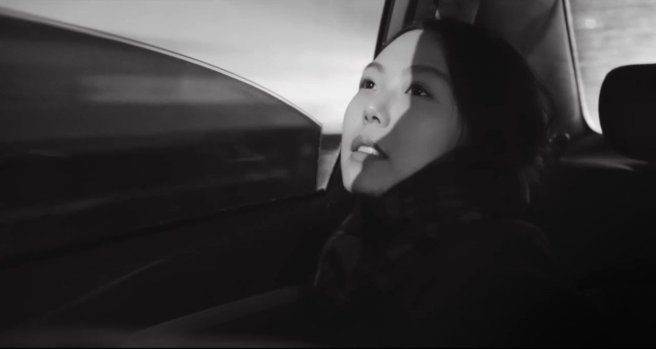
Kim Minhee’s performance, while not as soulful, vulnerable, and spur of the moment as her turns in On The Beach At Night Alone or Right Now, Wrong Then, still relies on her physicality and innocent but not-suffering-fool’s intelligence. When she first appears at the publishing house she appears overwhelmed by the claustrophobic confines of stacks upon stacks of books, looking very meek. She practically seems to be on the verge of escaping the frame when she is shot, on the fringes, feeling like she could pull away at any moment because she is not fated for Bongwan’s world. When he asks her what she believes in, Areum confesses she does not feel like she is the master of her own self, “not a leading character”. Then in the film’s perspective shift, once leaving Bongwan’s orbit, rather than leaving the film, Areum becomes more centered, in control, moving towards God’s plan for her, as she becomes the film’s leading character. Areum slowly moves towards the center of the frame that culminates in one of the most beautiful scenes of Hong’s career with a close-up of Areum in the passenger’s seat of a car taking in the night.

Hong’s longtime cinematographer, Kim Hyeonggu, whose filmography has extended to working with other South Korean masters Bong Joonho and Lee Changdong, gets wrongfully maligned for Hong’s films having a seeming aesthetic simplicity to them, known more for pans and zooms than something showier. The black-and-white in The Day After is beautiful and sleek, but film’s visual pleasures come from Hong’s confidence in his cinematographer and leading actress to visually present a character taking the reigns of film from our original protagonist with the way Areum is shot and is performed through the course of the film. There is also the clever staging, scenes in which Areum is the only one to see the faces of characters while the audience is left to look at Kim Minhee’s expressive facial reactions, suggestive and intriguing.

After making what was his most emotionally naked film to date with On The Beach At Night Alone, The Day After also has a raw nerve in it, but it gives the audience the ability to step away. The film features a musical motif (composed by Hong himself) that takes on the most high-pitched moments of sorrow that can be so operatic but also gives them a comic twist due to the fraught emotions which consume certain characters, an effect which seems purposeful. When shifting from Bongwan to Areum, the film and viewer are emancipated and so is that motif. There are other stories to tell about what The Day After presents and moves towards. But it is not simple in its shifts: for example Areum return to Bangwon’s publishing house, which becomes a major comic payoff. Areum seems to be the only character not trapped within a cycle of behaviors and relationship drama. She can confess freely, experience, and learn to move forward in life, a new type of character for Hong Sangsoo that makes the film a flashpoint in his career and one of his best films.

SIFF 2018: First Reformed (Paul Schrader, 2017)

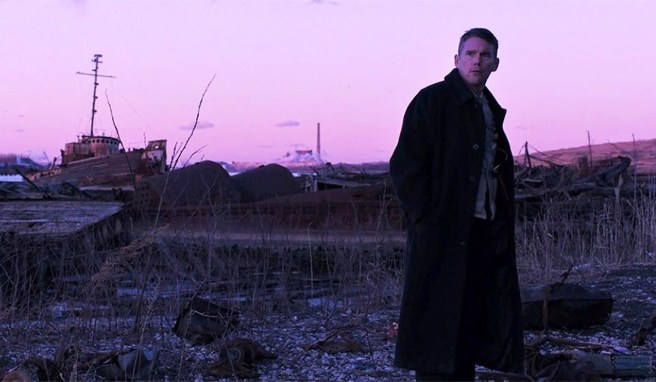
First Reformed possesses a gravestone’s beauty: cold and white like marble, angular, terminal. Paul Schrader learned his art in the pews; he relishes mounting the pulpit with his camera. And for better or worse, sermons don’t come much more sulphuric than this. Damnation is as American as apple pie (“it’s organic and local”). Hawke devoutly incorporates this chronicle of darkest hours, and Schrader remains, as ever, trapped in the garden.

SIFF 2018: People’s Republic of Desire (Hao Wu, 2018)

peoples-republicof-desire

Note: as this film is under embargo until its release in the Seattle area, here are exactly 75 words.

Life in the People’s panopticon; that’s the idea anyways. Money sloshes around via exploding CGI coins—the digital puss of wealth accretion under authoritarian capitalism—yet the film fails to locate China’s live-stream stars in meaningful social context. Trapped in the machine, but never interrogating 21st century cinema’s central question: how do we watch people watching screens? Talking head aesthetics won’t cut it. It takes a poet to penetrate the human surge beneath the simulacra.

SIFF 2018: First Reformed (2017, Paul Schrader)

toller

Note: as this film is under embargo until its release in the Seattle area, here are exactly 75 words.

Rare is the modern film that understands the consequences of what it depicts and how it achieves this to the level of First Reformed. In many ways the perfect distillation of what Paul Schrader has sought throughout his career, its influences range from transcendental cinema to Classical Hollywood, yet its many concerns seem uniquely its own. Ethan Hawke, as an ailing reverend who undergoes an extended long dark night of the soul, is revelatory.

SIFF 2018: Freaks and Geeks: The Documentary (Brent Hodge, 2018)

AB-Film-Freaks-and-Geeks

Not much more than a DVD extra, this story of the seminal 1999-2000 TV series is fun but doesn’t really tell us anything we didn’t already know. The show had a remarkable collection of talent, almost all of whom were unknown at the time it was made. Director Brent Hodge mixes some great archival material and clips with talking heads of the cast, creators, and executives. The latter interviews are the most heart-breaking, both from the producers who championed the show and the still-clueless executives who buried and then cancelled it.

Friday May 18 – Thursday May 24

Featured Film:

The 2018 Seattle International Film Festival

SIFF kicks off its 2018 edition this week and we’ll have full coverage here throughout the next three and a half weeks of the festival. I’ve got a brief preview of some of the films we’re looking forward to over this first week, including Paul Schrader’s First Reformed, documentaries on Freaks & Geeks, MIA, and John McEnroe (that’s three separate films, though now I’m imagining a Fast, Cheap & Out of Control-style doc about the three of them all together and that would be really cool), and archival presentations of classics by Derek Jarman (Edward II) and Kenji Mizoguchi (Sansho the Bailiff). The latter would be my suggestion if you could only see one festival film this week. Or this festival. Or probably if you could only see one film on screen in Seattle this entire year.

Playing This Week:

AMC Alderwood:

Pope Francis – A Man Of His Word (Wim Wenders) Fri-Thurs
Raazi (Meghna Gulzar) Fri-Thurs
Champion (Kim Yong-wan) Fri-Thurs

Central Cinema:

Drop Dead Gorgeous (Michael Patrick Jann, 1999) Fri-Tues
Showgirls (Paul Verhoeven, 1995) Fri-Tues Hecklevision

SIFF Egyptian:

The 2018 Seattle International Film Festival Full Program

Century Federal Way:

Harjeeta (Vijay Kumar Arora) Fri-Thurs
Champion (Kim Yong-wan) Fri-Thurs
Porco Rosso (Hayao Miyazaki, 1992) Sun, Mon & Weds Only Subtitled Monday

Grand Cinema:

Pope Francis – A Man Of His Word (Wim Wenders) Fri-Thurs
Itzhak (Alison Chernick) Fri-Thurs
The Last Unicorn (Peter S. Beagle, 1982) Sat Only Free Screening
Dark City (Alex Proyas, 1998) Sat Only
Summer in the Forest (Randall Wright) Tues Only
Crazywise (Phil Borges & Kevin Tomlinson) Thurs Only Free Screening

Grand Illusion Cinema:

The Guardians (Xavier Beauvois) Fri-Thurs
Ghost Stories (Jeremy Dyson & Andy Nyman) Fri-Tues
Take it Out in Trade (Ed Wood, 1970) Thurs Only

Cinemark Lincoln Square:

Pope Francis – A Man Of His Word (Wim Wenders) Fri-Thurs
Raazi (Meghna Gulzar) Fri-Thurs
Mahanati (Ashwin Nag) Fri-Thurs
102 Not Out (Umesh Shukla) Fri-Thurs
Porco Rosso (Hayao Miyazaki, 1992) Sun, Mon & Weds Only Subtitled Monday

Northwest Film Forum:

Boom for Real (Sara Driver) Fri-Thurs
Hurricane Bianca 2: From Russia with Hate (Matt Kugelman) Fri-Thurs
Mothering Every Day (Various) Sun Only

AMC Pacific Place:

Pope Francis – A Man Of His Word (Wim Wenders) Fri-Thurs

Regal Parkway Plaza:

Raazi (Meghna Gulzar) Fri-Thurs
102 Not Out (Umesh Shukla) Fri-Thurs

SIFF Film Center:

The 2018 Seattle International Film Festival Full Program

AMC Southcenter:

Pope Francis – A Man Of His Word (Wim Wenders) Fri-Thurs

Regal Thornton Place:

Pope Francis – A Man Of His Word (Wim Wenders) Fri-Thurs
Porco Rosso (Hayao Miyazaki, 1992) Sun, Mon & Weds Only

SIFF Uptown:

The 2018 Seattle International Film Festival Full Program

Varsity Theatre:

Porco Rosso (Hayao Miyazaki, 1992) Weds Only

In Wide Release:

Avengers: Infinity War (Anthony & Joe Russo) Our Review
Ready Player One (Steven Spielberg) Our Review
Isle of Dogs (Wes Anderson) Our Review
Black Panther (Ryan Coogler) Our Review

SIFF 2018 Preview: Week One

sansho-the-bailiff

Today marks the start of the annual odyssey that is the Seattle International Film Festival. Here at Seattle Screen Scene we’ll have full coverage of the festival, with reviews of as many movies as we can manage to see and maybe even an episode or two of The Frances Farmer Show to go along with it.

Here are some of the movies we’re looking forward to playing during the first week of the festival:

First Reformed – Ethan Hawke plays a country priest in the latest from Paul Schrader, writer of Taxi Driver and director of Cat People.

Freaks and Geeks: The Documentary – Probably won’t be much in the way of a film, but even an overblown DVD extra should be worth watching since Freaks and Geeks was one of the best TV shows of the 2000s.

Dead Pigs – Director Cathy Yan got the job directing the upcoming Harley Quinn movie, which probably says something about the appeal of this, her feature debut. SIFF’s tagline makes it sound promising: “Five Shanghai residents find their lives converging amidst the backdrop of a mysterious river of dead swine.”

Eight Hours Don’t Make a Day – If I didn’t have to be out of town this weekend, spending quality time with my children, I would be at the Film Center on Saturday watching this marathon screening of Rainer Werner Fassbinder’s TV series, “a decades-spanning social history of postwar Germany as told through the life of a young toolmaker and his sprawling group of friends, coworkers, and family.” It also plays in three different parts on Wednesdays throughout the festival.

People’s Republic of Desire – Maybe it’s just me, but it seems like SIFF’s Asian Crossroads and China Stars programs are by far the most interesting of this year’s festival. This documentary by Hao Wu covers the culture of internet fame in contemporary China.

The Greenaway Alphabet – I like the few Peter Greenaway movies I’ve seen (especially Prospero’s Books), and he seems like a genuinely weird person, so this doc about him, made by his wife Saskia Boddeke, should be fun.

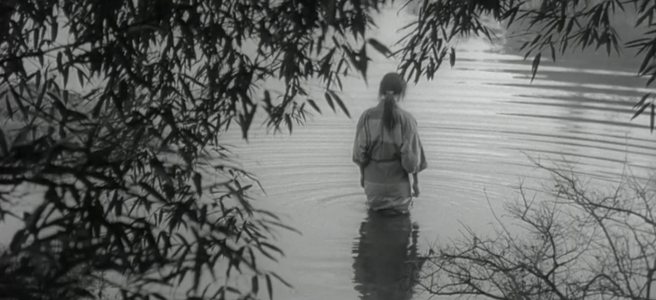
Sansho the Bailiff – One of the absolute highlights of the festival, almost guaranteed to be the best film playing in Seattle this month, is this restoration Kenji Mizoguchi’s 1954 masterpiece about two kidnapped children who grow up in medieval servitude, dreaming of their mother and a better life. One of the most emotionally devastating films ever made, don’t miss it.

Redoubtable – I’m refusing to acknowledge that they changed the name of The Artist director Michel Hazanavicius’s film about Jean-Luc Godard and Anne Wiazemsky’s 1968 romance. “Godard mon amour” isn’t just a much less interesting title, I’m pretty sure they changed it to disassociate the film from all the reviews that blasted it on its festival run last year. It makes my list of want-to-see films, purely for its car wreck spectacle value, which I imagine approaches Weekend-like dimensions.

I Am Not a Witch – I don’t really know anything about Rungano Nyoni’s film other than that it got a lot of strong buzz on the festival circuit last fall. SIFF says: “A nine-year-old Zambian girl is thrown into a witch camp after she’s blamed for a seemingly innocuous accident.” Could go either way.

Edward II – Derek Jarman’s 1991 film is another of the strong archival presentations at this year’s festival, an adaption (more or less) of Christopher Marlowe’s play about the gay 14th Century English monarch, with Tilda Swinton as his queen, Isabella.

The African Storm – Sylvestre Amoussou’s film about a fictional country in Africa confronting the forces of imperial capitalism by nationalizing their mining industry.

Matangi/Maya/MIA – A doc about the Sri Lankan pop star and activist MIA, which SIFF calls “a kinetic collage of her own footage”. I really liked her first two albums, but have lost track of her career since then, so I’m looking forward to catching up with this.

John McEnroe: In the Realm of Perfection – A documentary about the fiery genius tennis player, made by Julien Faraut and focusing on footage from McEnroe’s performance at the 1984 French Open. I don’t know anything about tennis, but it sounds fascinating.


Solo (Ron Howard, 2018)

11_hs-ff-000097-h_2018

After three films and a few billion dollars earned, Disney has finally succeeded in turning Star Wars into a Marvel movie. Under the competent hands of America’s most consistently mediocre director (Ron Howard, subbing in for the LEGO guys), Solo is a perfectly fine bit of blockbuster action filmmaking, with a capable cast and some neat special effects upholding a wholly conventional screenplay with nary a hint of the idiosyncrasy that has marked every other Star Wars film, for good or for ill.

Solo is a superhero origin story, as such its ceiling is somewhat limited: it’s designed around the pleasure of recognition, rather than discovery, the solving of mysteries which didn’t need to be solved rather than exploration of a wider universe. But there are hints at broader issues: the film begins in the slums of Corellia, a manufacturing planet rife with orphans in thrall to a monstrous (literally) Fagin figure, from whom young Han (Alden Ehrenreich) and his girlfriend Qi’ra (Emilia Clarke) scheme to escape. He does, she doesn’t, and the film skips ahead three years to Han’s desertion from the Imperial infantry to join a criminal gang led by Woody Harrelson. From there the film proceeds to its requisite three setpieces (a train robbery, a heist, and a showdown), with pauses for exposition and fill-in-the-blanks characterization. Some of the back story explanations are well-done: anything involving Chewbacca and Lando in particular, but some are just pointless or silly (how Han got his last name, Chewbacca learning to play Dejarik). The film makes a great point of fetishizing Han’s gun with pointed inserts and closeups as it takes shape, which is silly because we’re expected to believe that A) Han’s gun is iconic and B) he had the same gun for his entire life. This is I suppose part of the attempt at aping Westerns lying buried in the screenplay (though Westerns never unequivocally adored guns as much as this one seems too, even the movies named after guns like Anthony Mann’s Winchester ’73), just as Harrelson’s character is supposed to recall Long John Silver or something (though with his unfortunate haircut all he reminds me of is Nazi buffoon Richard Spencer). But I don’t know, maybe someone should have read the room and realized that valorizing guns probably isn’t the best idea right now (or ever). I’m sure they hope to sell lots of toy versions though (yeah, I admit I had one 35 years ago).

Anyway, all that aside, it is a fun movie. Donald Glover of course is excellent as Lando and I really liked Ehrenreich’s performance as Han, a much more innocent take on the character than Harrison Ford’s in the original films, but a charming one nonetheless. Clarke fares less well, her character is not given much of a personality or even identity, and her scenes with Ehrenreich lack any real spark. Of the newer elements to the film, Phoebe Waller-Bridge comes off best as Lando’s friend and droid L3. Her outspoken demands for equal rights for droids are both funny and pointed, and in keeping with the ideals of revolution espoused in the last two Star Wars films (Rogue One and The Last Jedi), though it’s mostly played for a laugh, until it becomes sentimental (traditional the only two modes in Ron Howard’s directorial toolkit). Although even here Howard and his screenwriters (only the father-son teams of Lawrence and Jake Kasdan are credited) can’t resist making a call back all the way to a line in the original Star Wars, one which in a short sentence (“We don’t serve their kind here.”) conveyed more of a sense of an actual world than any of the speechifying and expositing in the Kasdans’ script. The world Han finds himself is peripheral to the Empire, and there are hints of interest to be found there, a kind of jianghu existing outside the bounds of everyday society ruled by five Triad-like gangs, only one of whom we encounter. But the film’s villain, a gang boss played by Paul Bettany, is underdeveloped and bound to a single set (a result of his late insertion into the film, replacing Michael K. Williams as an alien during reshoots, apparently), and his reputed army of henchman is weirdly small and unintimidating.

Origin stories are nearly impossible to do well, as a sampling of any first installment of a Marvel picture will tell you. Really only Tsui Hark has managed to make a great movie out of an origin story (with A Better Tomorrow III: Love and Death in Saigon), and that was by turning the ostensible hero into a side character for much of the film, allowing it to be driven by his mentor. There was no way of course that Disney could allow Han Solo to be a side character in a Woody Harrelson picture, so I imagine that this movie is about the best that Ron Howard and the Kasdans could produce given the inherent limitations of the project. With a glimpse at a wider underworld and a few developments in the film’s final moments, there are hints of other, more interesting chapters to come in the Young Han Solo story. Here’s hoping the corporate overlords in charge of the project allow someone with a little more vision to tell them. I’m going to go ahead and nominate Soi Cheang for the job.