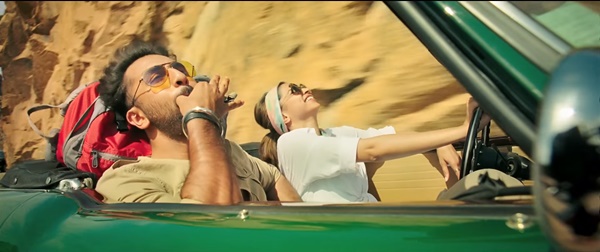
The opening stretch of Imtiaz Ali’s latest film, Tamasha, takes some of the biggest risks of any film I’ve seen all year. Opening with a metaphorical gambit that’s downright bizarre (Ranbir Kapoor as a tin man on a treadmill?!) that announces the film’s “all the world’s a stage” conceit, Tamasha then segues into an extended stay in Corsica where the film introduces its two main characters.
Category: Reviews
Sisters (Jason Moore, 2015)

Sneaking onto Seattle Screens at the end of the year in an act of counter-programming to both the aggro fantasies of Quentin Tarantino and Alejandro González Iñárritu, as well as tasteful award hopefuls good, bad and miscellaneous Carol, The Danish Girl and Joy (I’ll leave you to sort out which is which), and, of course the cultural Singularity of The Force Awakens, is this modest and hilarious union of former NBC talents big and small with the director of Pitch Perfect, one of 2010s Hollywood’s most delightfully shaggy entertainments. As that film reflected as much the voice of its writer Kay Cannon and producer Elizabeth Banks (who directed the sequel, which Cannon also wrote), Sisters is driven as much by its writer, Paula Pell, and the personae of its two stars, Tina Fey and Amy Poehler. All of these people, save Moore, worked with Fey on Saturday Night Live or 30 Rock or both, and the new film is as much an excuse for old co-workers to get together and act weird as it is a narrative feature film. On the tenuous thread of a story structure borrowed from 20 years of teen films (16 Candles through Can’t Hardly Wait and American Pie at least), Pell asks what happens when a pair of women in their mid-40s return to their childhood home and attempt to recreate one of the raging parties of their high school youth. Hilarity ensues, but also an uneasy desperation, the quiet sigh that comes with the recognition of our own inevitable disintegration.
45 Years (Andrew Haigh, 2015)

(This review is a revised version of an earlier review for Seattle Screen Scene.)
Like his 2011 feature, Weekend, Andrew Haigh, in his newest film, 45 Years, places us inside the circle of intimacy of one particular couple. Here, though, it examines a long-standing relationship, a marriage of 45 years, rather than a new one. This couple is established, rooted in an easy routine of closeness, rooted in a shared identity. That identity, however, as the film begins, is suddenly in question, and over the course of one week, Haigh examines the assumptions about identity and relationship through the lens of the small, private gestures of domesticity. Continue reading “45 Years (Andrew Haigh, 2015)”
Macbeth (Justin Kurzel, 2015)

Opening this week at a few screens around town (the Uptown, the Seven Gables, along with the Grand in Tacoma) is the latest high-profile adaptation of a Shakespeare play, with Michael Fassbender as the Scottish usurper and Marion Cotillard as his ambitious wife. Directed by Justin Kurzel, this Macbeth proves a solid entry in what must be considered the Games of Thronesification of the historical film, with an outsized emphasis on the lurid details of medieval warfare. The brooding sense of doom, of course, comes right out of Shakespeare, but where previous adaptations by Orson Welles and Akira Kurosawa found shadows and fog in the text, Kurzel finds blood. Whether that is an improvement or not I think depends a great deal on how important you feel verisimilitude is to realism. At its best, the film has some of the hallucinatory power that gives the play an eternal aura of mystery, like Nicolas Winding Refn’s psychotic Viking epic Valhalla Rising, but with words. At its worst, it’s simply Fassbender looking confused and mumbling incoherently.
This Week at the Multiplex

The second phase of Awards Season is upon us, with early Oscar contenders spreading like a winter cold across Seattle Screens. Late November is the final stretch before the Christmas glut, when studios dump all their high profile releases at the same time, a phenomenon which never ceased to amaze me in my former life in the theater business: the early weeks of December are always a wasteland, while a dozen quality films come out at the same time at the end of the month, stretching into January, when certain releases will finally make it out of the New York-LA bubble to grace us in the hinterlands with their Oscar lunges. Most November releases will be forgotten by that time, the awards bloggers twiddling with their own self-created narratives, while the actual business of handing out awards is mostly accomplished. I caught up with a few of the films with strong cases for end-of-the-year recognition last weekend at the local mall, Brooklyn, Spotlight and Creed, all of which are very fine films you can catch all over town, at least for a couple more weeks.
Two Documentaries: Moana with Sound (Robert Flaherty/Monica Flaherty, 1926/1980) and A Ballerina’s Tale (Nelson George, 2015)

This is a big week for documentaries on Seattle Screens. The big name, of course is the new Frederick Wiseman film, In Jackson Heights which plays Friday through Thursday at the Northwest Film Forum. We’ll have a review of that sometime soon, once we’ve managed to see it. But two other non-fiction films of interest open this week as well. The Grand Illusion is presenting a 2014 restoration of a 1980 updating of a classic 1926 documentary, Moana, the second feature from Robert Flaherty, the man who more or less legitimated documentary filmmaking as an art form with his first feature, Nanook of the North in 1924, while at the same time muddying for all time the distinction between fiction and non-fiction film. A few blocks south on the Ave, the Varsity is playing director Nelson George’s glowing tribute to Misty Copeland, who just this summer became the first African-American principal dancer at the prestigious American Ballet Theatre.
Dangerous Men (John S. Rad, 2005)
If years-in-the-making is a means of quantifying quality, then Dangerous Men is twice as good as Boyhood. Production began at the dawn of the 1980s and yet the film was not completed until two and half decades had passed. And it’s not as if all of the footage was captured during Reagan’s presidency and put on the shelf. Some scenes are filled with late ’70s model cars and feathered hair, only to be interspersed with shots set at a makeshift police station with a calendar marking December 1995.
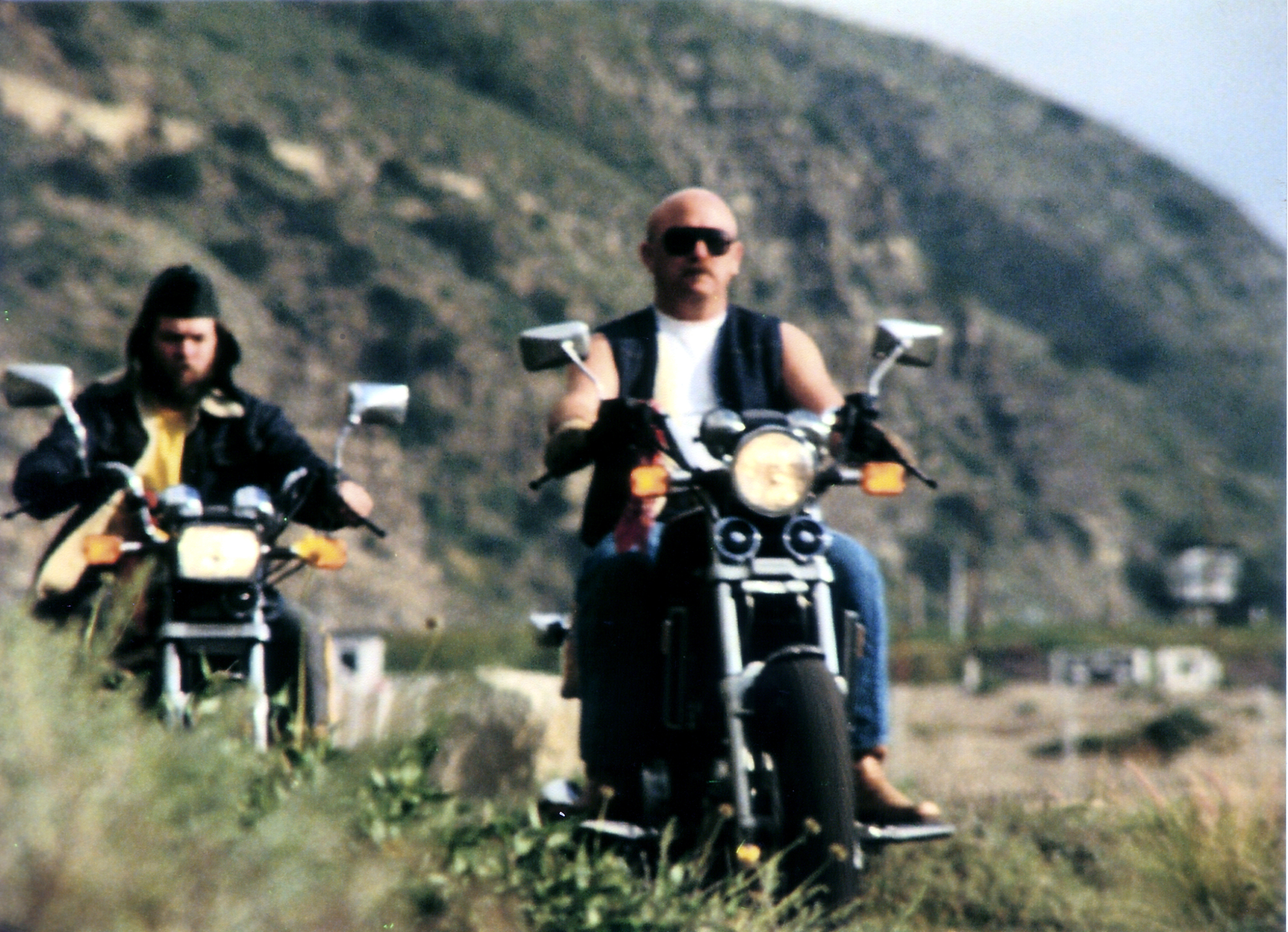
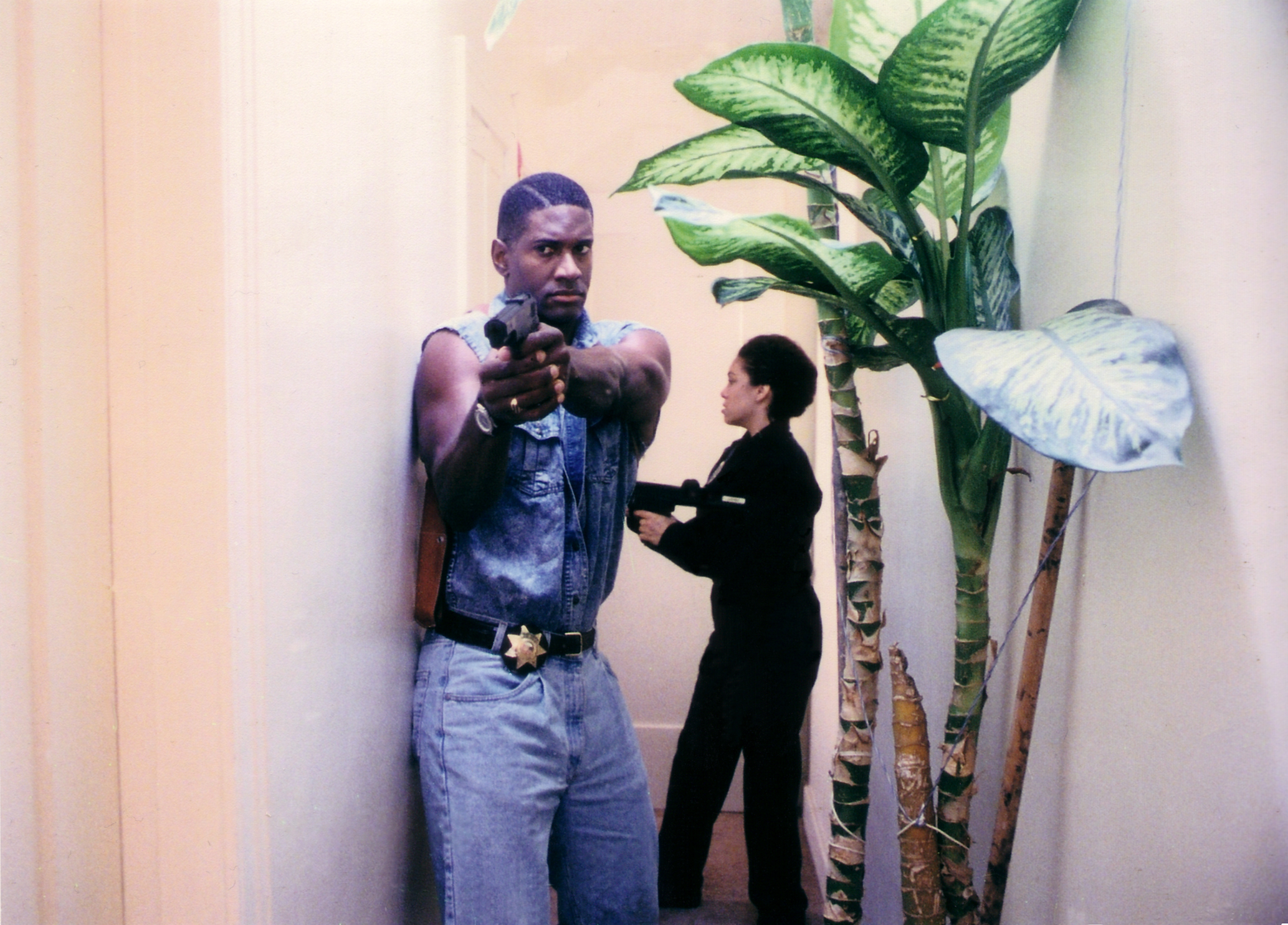
The film tells the story of a woman named Mina, who is out for revenge after her fiancé is killed by bikers. At least that’s the story for about half the running time until Mina ages out of the role and/or the production’s finances temporarily ran dry. At that point the story decides to follow Mina’s brother-in-law, a cop who is also tracking down some bikers but they don’t really have anything to do with one another. In fact the film’s final villain, the incongruously named Black Pepper, never actually does anything wrong, unless the extended belly dance he and his girlfriend watch as prelude to their lovemaking in his barely furnished apartment is somehow illegal.
Dangerous Men is inept. It is often inscrutable and more than a little insane. It spends a significant chunk of time following a thwarted rapist as he wanders through the California desert completely naked as a means of comic relief. He is also British for some reason. Later Mina picks up a prostitute but doesn’t tell the woman that she’s not interested in sex, she only wants to ask questions about her profession, until after they arrive at Mina’s apartment and the prostitute has gotten naked. A lot of people get naked. Most of them are not people you would want to see naked.
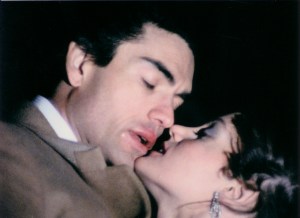
The film is an auteurist’s dream come true as Iranian transplant John S. Rad (yes, Rad) lists himself as writer, director, editor, producer, and composer. His is literally the only name in the opening credits. As the film begins, it is his musical score that garners attention with funky synth soundscapes bleeding into tranquil acoustic ballads. But soon it becomes apparent that Rad just had five songs on autoplay which he simply layered throughout the full cut of the film, irrespective of whether the music belonged at any given moment. As happens often throughout Dangerous Men‘s 81 minute running time, one song ends in the middle of a scene and is immediately followed by a tonally different tune, which then plays on into the next scene, which is set in a different location and filmed at a different time with different characters.
Dangerous Men’s release comes courtesy of Drafthouse Films, in partnership with the American Genre Film Archive. And while the film contains elements of the previous Drafthouse treasure Ms. 45, Abel Ferrara’s provocative and powerful tale of feminist revenge, Dangerous Men is more in line with some of Drafthouse’s less accomplished offerings, such as the newly minted midnight movie staple, Miami Connection. And there is nothing wrong with that. If you want cinema to show you something you’ve never seen before, then Dangerous Men is as worthy a film as any. I for one had never seen a woman hide a knife between her naked butt cheeks.
(Dangerous Men plays in 35mm 11/13 – 11/19 at the Grand Illusion Cinema.)
In the Mood for Love (Wong Kar-wai, 2000)
“I cannot see what flowers are at my feet,
Nor what soft incense hangs upon the boughs,
But, in embalmed darkness, guess each sweet”
~John Keats, “Ode to a Nightingale”
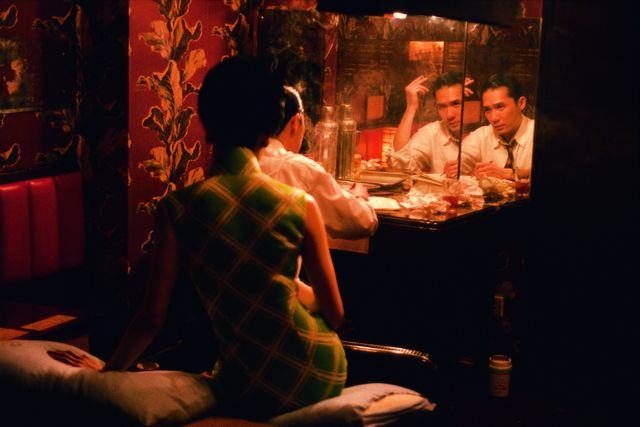
Time shifts and slips, and the past is a thing of soft veils and refracted reflections, three of you, two of me, then none, only the round white face of the clock and the sound of your voice, my voice. I can’t reach you there, at the edges of my mind; you slip from view.
But in the now, a sudden scent presses the bright deep color of your dress, the shape of your hip, a white clasp at the dip in your neck, into my vision, filling it. A green dress with bright yellow daffodils, impossibly vivid. Could you have been so beautiful?
The streets of the teeming city were empty then, only you and I were there, there in the rain, under the bulb, there in the passage on the stairs. Our shadows pass along those walls, where paper notices tatter, fade, and are smoothly absorbed into the place on which they were glued. The rain soaks us, pounds the pavement; water seeps down into the earth, the water stands in clear pools. It disappears, leaving blackness; it reflects, leaving shimmers of light.
I can feel the press in the hallway, packed with furniture, movers. Was it there I first felt the press of your arm? Or in the cab? Your fingers slip out of my grasp, leaving their warm fading print.
I wait for you. You wait for me. Memory, shrouded and alive, floats in red, graceful curtains in the long deserted passage.
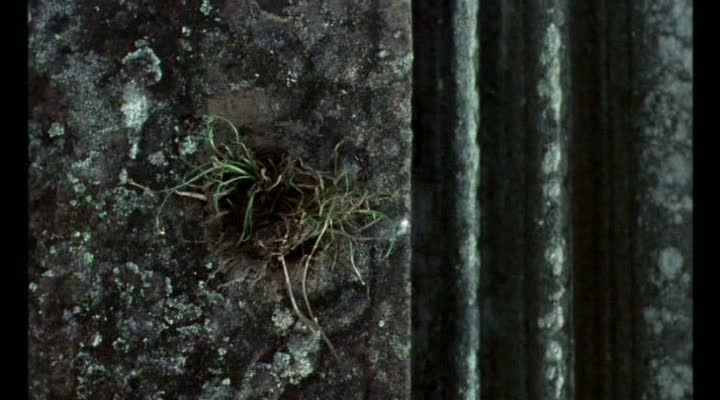
I whisper this fleeting, lingering thing into the ancient ruins, where boldly soaring arches and disintegrating figures in stone relief, settle into the earth, growing into the grass and mud.
Yakuza Apocalypse (Takashi Miike, 2015)
Playing this Friday and Saturday at midnight only comes the latest from prolific Japanese lunatic Takashi Miike. The limited late night time slot gives a hint of what to expect, even if you’re unfamiliar with Miike’s work, much of which amounts to highly imaginative reworkings of familiar genres, pushing them to their extreme (and often extremely violent) conclusions. But while the Miike review that doesn’t contain the word “gonzo” is a rarity, he is no scattershot shock auteur, rather his films, unpredictable as they may be, are always guided by a clever intelligence. He’s not a director of chaos, but of logical absurdity. Of the more than 40 films he’s directed this century, I’ve only seen a handful, but Yakuza Apocalypse is firmly in the tradition of earlier films like Sukiyaki Western Django, 13 Assassins and his remake of the Maskai Kobayashi classic Harakiri in their critique of the psychotic masculinity that underlies the ideology of Japanese action narratives. Of course, critiquing the samurai code has been an essential part of the samurai/yakuza genres in cinema since at least the end of World War II. But Kobayashi, Kihachi Okamoto and Akira Kurosawa, as far as I know at least, never made a film about gangster vampires fighting demons in plushy cosplay frog outfits.
Oklahoma! (Fred Zinnemann, 1955)

The following review of Oklahoma! was originally published in March, 2014 on my website The End of Cinema.
Richard Rodgers and Oscar Hammerstein II are generally credited with ushering in a Golden Age of musical theatre, this 1943 play marking the first truly integrated show, with music, lyrics and story seamlessly interwoven. Of course it wasn’t the first (Show Boat did much the same thing 15 years earlier, to say nothing of the operettas from the 19th century onward that did as well, but whatever), but it was a huge hit, inspiring many imitators, some of which are actually good. Similarly, the 1955 film adaptation was followed by a new form of musical film: more or less direct translations of stage musicals, often excruciatingly long, presented as roadshow extravaganzas (more expensive tickets, super widescreen formats, elaborate sets and locations). These films, increasingly bloated and dull, eventually killed the musical as a viable American film genre and played no small role in bankrupting the studio system that had been in place in Hollywood since the 1920s.