
This week the Central Cinema, home of Seattle’s most adventurous double features, revives one of the key oddities of the late 1990s, Luc Besson’s The Fifth Element, as unstable a collection of genres, tones and actors as you’re likely to find in the mainstream cinema. 300 years from now, Bruce Willis, bleached but otherwise comfortably within his Die Hard star persona, is an ex-military agent who has the key to saving the universe fall into his lap (almost literally). That key is the by definition perfect form of Milla Jovovich, a genetically supreme being that is the fifth part of a machine some aliens have installed in the Egyptian desert as a device to defeat the periodically occurring onslaught of Evil, which takes the form of a planet sized black hole that devours everything like Orson Welles in Transformers the Movie. Because of Luke Perry, we’re not as prepared for Evil’s arrival as we should be and a bumbling priest (played by Ian Holm at the peak of the bumbling priest phase of his career) is the only one who knows what’s really going on: Evil has allied itself with Gary Oldman (playing Ross Perot with Hitler’s hair) to steal the magic rocks that make up the rest of the Milla-machine from an alien opera singer. And Chris Tucker is there playing Prince if Prince was really, really loud.
Category: Reviews
The Film Critic (Hernán Gerschuny, 2013)
“I’m trapped in a genre I don’t belong in.” So says Victor Tellez, the titular character in Hernán Gerschuny’s witty and winning movie, The Film Critic. Victor is Argentinian but he thinks in French. Why? Because his native tongue is less refined. In a voiceover he explains that he is suffering through la maladie du cinéma. His editor at the local newspaper calls him a “terrorist of taste” because Victor has not written a five star review in two decades.
La Sapienza (Eugène Green, 2014)
La Sapienza opens this week at the Northwest Film Forum. I caught the film last fall at the Vancouver International Film Festival and the following is adapted from the dispatch I wrote last year.
Like director Eugène Green’s other films (I watched 2001’s Toutes les units and 2004’s Le Pont des Arts in preparation for the festival, having never seen any of Green’s other work), La Sapienza features an unusually declamatory acting style, with a Bressonian minimization of emotion (though notably not as extremely robotic). Also Bressonian is a penchant for introducing scenes and characters with close-ups of their feet, or rather, their shoes. Green apparently is a big fan of shoes (not that there’s anything wrong with that). He films his characters’ conversations at right angles, a two-shot with them facing each other, perpendicular to the camera, followed by medium close-ups of each actor as they face the camera directly and speak in turn, Green not cutting until they’ve finished what they have to say. This combination of effects reminds me very much of Manoel de Oliveira, though the artifice is apparently indebted as much to Baroque theatrical technique as any cinematic fore-bearer. Green is said to be an expert in this, and knowing absolutely nothing about the subject myself, I’m in no position to disagree.
SIFF 2015: Don’t Think I’ve Forgotten: Cambodia’s Lost Rock & Roll (John Pirozzi, 2014)
This is part of our coverage of the 2015 Seattle International Film Festival.
Fans of Seattle’s essential record label Sublime Frequencies may already be familiar with the sound of Cambodia’s music scene from the 1950s, ’60s and ’70s. The country’s music during that time was often a unique blend of Western-style rock and traditional Eastern singing styles. Sublime Frequencies gets a shout out in the credits of John Pirozzi’s documentary Don’t Think I’ve Forgotten: Cambodia’s Lost Rock & Roll, which tracks the country’s wild regime changes over those years and the concurrent development of their music.
SIFF 2015 Report #3: Overheard 3, Dreams Rewired, The Apu Trilogy, Mistress America, Unexpected, A Matter of Interpretation, Dearest
Overheard 3 – The third in a series of thrillers from Hong Kong, directed by Alan Mak and Felix Chong and starring the powerhouse trio of Lau Ching-wan, Louis Koo and Daniel Wu. Each film follows a new set of characters in a crime story involving eavesdropping technology of some kind and nefarious financial transactions. Each one is overwritten, the kind of film in which characters speak in long monologues of exposition, explaining things to the audience that all the characters in the scene should already know. Each movie weaves a financial crime (insider trading, real estate fraud) into traditional cop melodrama (read: problems with the wife/girlfriend), lending well-trod territory the shiny patina of contemporary relevance. Each movie delights in maiming Louis Koo in some horrible way. This is easily the worst entry in the series thus far, the plot overcomplicated (and not, as you’d expect, because Western audiences get confused by the nature of real estate deals in the New Territories, but rather just because the various schemes and revenge plots are far too complex to have ever been enacted by any actual humans), the characters thin and prone to radically irrational behavior. The first two managed to mitigate that with some clever suspense and action sequences, but there is hardly any of that here either. All of these people have done vastly superior work. It looks slick, like a lot of post-Infernal Affairs Hong Kong films (Mak was a co-director on that one as well), but it doesn’t have any depth, any soul.
SIFF 2015: Big Father, Small Father and Other Stories (Phan Dang Di, 2015)
This is part of our coverage of the 2015 Seattle International Film Festival.
Vu is a student photographer, a quiet, contemplative young man who feels more comfortable alone in his dark room than out among the pulsing nightlife of Saigon. His lover, Thanh, however, thrives on the city’s rhythm and spends his evenings bartending at a club. He is also sleeping with the club’s chanteuse, Van, who loves drugs in the night and ballet during the day. These three inhabit director Phan Dang Di’s new film Big Father, Small Father and Other Stories. It’s a bit like a bisexual Jules and Jim with a soundtrack of synths and Vietnamese folk songs.
Continue reading “SIFF 2015: Big Father, Small Father and Other Stories (Phan Dang Di, 2015)”
SIFF 2015 Preview: Week Three
The 2015 edition of the Seattle International Film Festival concludes this week and we here at Seattle Screen Scene are planning more extensive coverage. We’ll be watching and reviewing as many festival films as we can and highlighting some you may want to check out. As a preview, here’s a list of some of our most-anticipated films from the festival’s third and final week. We’ll add links to the titles here as we review them.
Week of May 29 – June 7:
A Matter of Interpretation – A cyclical investigation of narratives begins as a struggling actress discovers that her dreams are eerily syncing up with reality. From Lee Kwangkuk, longtime associate of Hong Sangsoo, so expect something in that vein.
Dearest – The latest from veteran Hong Kong director Peter Chan (Comrades, Almost a Love Story, Wuxia) is based on a true story about a kidnapping in Shenzhen and a foster mother’s search for her adopted daughter. Star Zhao Wei has already picked up a handful of Best Actress Awards for her performance.
The Black Panthers: Vanguard of the Revolution – A documentary about the radical activist group that probably is exactly what it sounds like.
The Chinese Mayor – This documentary follows the mayor of Datong as he attempts to navigate the complexities of the Chinese political system while cleaning up his city.
The Royal Road – An experimental essay film from Jenni Olson about California’s landscapes and history, movies and her own relationships.
Rebel Without a Cause – Nicholas Ray’s movie about an angry young teenager, the girl he loves, the boy who loves him, and the parents he can’t stand. Starring James Dean, Natalie Wood, Sal Mineo and, briefly, Dennis Hopper. Best known as the inspiration for Paula Abdul’s “Rush, Rush” video, co-starring Keanu Reeves.
Chatty Catties – A comedy in which cats can talk and pass judgment on their terrible human overlords.
Phoenix – After the success of 2012’s Barbara, director Christian Petzold and star Nina Hoss reunite for another thriller set in Cold War Germany. This time, she plays a Holocaust survivor trying to find out if it was her husband who betrayed her to the Nazis.
Black Girl – Ousmane Sembène’s 1966 film is a landmark of African cinema. It follows a Senegalese woman who moves to France and works as a maid for an abusive couple.
Revivre – The latest from Korean director Im Kwontaek, his 102nd film, is about a middle-aged executive with a dying wife and a pretty, young co-worker.
The Teacher’s Diary – Thai romantic comedy about a school teacher on a rural island who finds a diary left behind by the previous teacher and falls in love with her.
Saved from the Flames – Presentation of several restored nitrate films, movies that were lost or unknown. Includes a restored version of Georges Méliès’s A Trip to the Moon. Collected by documentarian Serge Bromberg.
Cave of the Spider Women – 1927 Chinese silent adaptation of an episode from the epic Journey to the West and featuring live accompaniment by Donald Sosin. Presented along with The Cave of the Silken Web, the 1967 Shaw Brothers adaptation of the same story from director Ho Meng-hua.
Experimenter – Biopic about social psychologist Stanley Milgram, famous for his “obedience experiments” at Yale in the 1960s, starring Peter Sarsgaard and Winona Ryder.
It’s So Easy – Documentary adaptation of Guns N’ Roses bassist Duff McKagen’s memoir.
Eden – The latest from director Mia Hanson-Løve is a rock biopic about a pioneering French DJ in the 1990s. Honestly, I’m mostly excited to see this just because Hanson-Løve put Millennium Mambo on her Sight and Sound Top Ten list.
Liza the Fox Fairy – A Hungarian film inspired by Japanese folklore follows a woman who may or may not be a demonic fox.
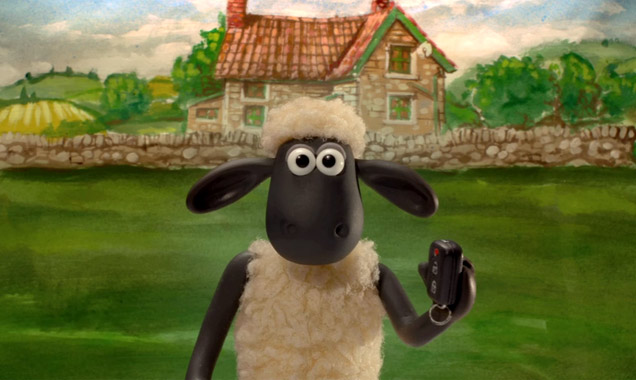
Shaun the Sheep – Feature-length adaptation of the Wallace and Gromit spin-off series that my wife thinks is just the most adorable thing ever.
Love Among the Ruins – An Italian film about the recovery of a lost silent movie that I thought looked kind of interesting but Mike did not like it at all.
Big Father, Small Father and Other Stories – Vietnamese film about the adventures of a sexually ambiguous trio in the lush nightlife of Saigon.
The Wolfpack – Documentary about a family who grew up essentially confined to their New York apartment whose only connection to the world was through movies, and what happened when one of them went outside.
Sleeping with Other People – Romantic comedy with Alison Brie and Jason Sudeikis from Leslye Headland, who directed the very mean and very funny 2012 film Bachelorette.
Que Vive Mexico – The 1979 reconstruction of the film Sergei Eisenstein failed to complete in Mexico in 1932.
Eisenstein in Guanajuato – Peter Greenaway’s fictionalized film about Sergei Eisenstein’s attempt to film Que Vive Mexico in Mexico in 1932.
SIFF 2015: Love Among the Ruins (Massimo Ali Mohammad, 2015)
This is part of our coverage of the 2015 Seattle International Film Festival.
Quello che un uso inutile di cinema. Sounds pretty doesn’t it? But that phrase reads, “What a pointless use of film”. The sentiment and its flowery adornment act as an apt description of Massimo Ali Mohammad’s new movie, Love Among the Ruins. The film begins as a documentary recounting the unlikely discovery of a 90-year-old piece of Italian cinema, found in pristine condition after an earthquake. After fifteen minutes of talking heads and depictions of the restoration process, the documentary cedes the screen to the even more unlikely lost film itself. Unlikely because the whole thing is fake.
Continue reading “SIFF 2015: Love Among the Ruins (Massimo Ali Mohammad, 2015)”
SIFF 2015 Report #2: The Coffin in the Mountain, Haemoo, The Color of Pomegranates, A Hard Day
The Coffin in the Mountain – This first film from Chinese writer-director Xin Yukun presents an impressive and quite funny narrative tangle that builds slowly through three interconnected stories, sparked by a death in the woods. A young couple on the run, an older couple cheating on their spouses, and the village mayor all think the corpse is their responsibility and act accordingly to cover it up or avoid being discovered, with cosmically winky results.
Before settling down in the later sections, the opening third is shot in what has seemingly become the new international style. In recent years it seems we’ve moved away from the “Asian Minimalist” style of long shots and long takes to a more flowing style. Handheld cameras wandering freely around a space, usually too close to the actors. I’m hereby dubbing it “Dardennean Motion”. The first section effectively uses this style to emphasize the desperation and claustrophobia of the young lovers trapped together and on the run, only two open up as the film goes on as Xin’s whimsical blackness grows to encompass a whole universe.
Haemoo – Impressively bleak thriller construction in which everything that can go wrong with a fishing boat smuggling immigrants does. Like Titanic but the iceberg is the captain. Directed by another first-timer, Shim Sungbo, from a screenplay by Shim and superstar director Bong Joonho (Shim was a writer on Bong’s celebrated 2003 film Memories of Murder), the atmosphere is tense from the beginning, as Captain Kang (Kim Yunseok) finds himself with mounting marital and financial difficulties. He takes on the illegal immigration job, but when both he, his crew and his boat prove disastrously inadequate to the task, the film’s vague sense of dread turns increasingly violent. What stands out most in its perspective is the matter of fact ruthlessness of the tragedy at the center of the film, and even more so, the ending, which I won’t spoil, but suffice it to say it is one no Hollywood movie would have attempted.

The Color of Pomegranates – I was a bit concerned as I sat down in the resurrected Harvard Exit for this showing of Sergei Parajanov’s 1968 experimental biopic. The auditorium was packed, essentially sold out, and given the audience reactions to the Bill Morrison and James Benning experiments earlier in the festival, I wondered how many in the audience knew what they were getting themselves into. A mass stampede to the exits would surely prove disruptive. Well, I don’t know if they were especially into it, I can usually tell how much an audience likes a film just by sitting in the auditorium with them, but this crowd was hard to read. There was some scattered laughter, but this is not an unfunny movie. But only a couple of people that I saw walked out, so I’ll take it as a victory.
The restoration, part of the series celebrating Martin Scorsese’s Film Foundation, is lovely, putting the old faded DVD to shame, as one would expect. The film is one of those rare great biopics, telling the life of Armenian poet Sayat Nova through a series of iconographic images, oblique and weird but no less meaningful for it. After the disaster that was SIFF’s failed screening of The Red Shoes, I’m glad to see the archival program back on track.
A Hard Day – Somewhere the dominant strain of the crime movie genre morphed from Woovian tales of moral codes in unjust societies to Rube Goldberg narratives driven by slapstick escalations of violence. Suspense and drama comes not from characters or ideals, but from complications in plot, driving the protagonists into ever more desperate and implausible actions and unlikely camera angles. Laurel & Hardy and Infernal Affairs, Where the Sidewalk Ends and The Big Clock are the reference points for Kim Seonghun’s thriller, about a cop who accidentally runs over a man on an empty street at night and goes to great lengths to cover it up. Things get even more audaciously complicated when it turns out, in shades of The Coffin in the Mountain, that he wasn’t alone and maybe the guy was already dead.
As an aside: star Lee Sunkyun is instantly recognizable from many Hong Sangsoo films. His Oki’s Movie co-star Moon Sunkeun is in Haemoo and Hong’s former assistant Lee Kwangkuk has a movie here at SIFF, A Matter of Interpretation. Even when he doesn’t have a movie playing, Hong Sangsoo dominates film festivals.
SIFF 2015: A Matter of Interpretation (Lee Kwangkuk, 2014)
This is part of our coverage of the 2015 Seattle International Film Festival.
Nothing is more boring than listening to someone else explain their dreams. It’s a wholly selfish act, inflicting a narrative of zero consequence upon a hapless listener who will never, ever connect with it. With this handicap in mind, the success of the delightfully oblique A Matter of Interpretation, which is almost entirely about dreams, is even more astonishing.
Continue reading “SIFF 2015: A Matter of Interpretation (Lee Kwangkuk, 2014)”