Neon Demon (Nicolas Winding Refn, 2016)

 women in underwear

“You ever have a girl screw you out of a job?”
“Yes.”
“What did you do?”
“I ate her.”

Early in Nicholas Winding Refn’s new film, Neon Demon, Jesse (Elle Fanning), a pretty young hopeful from the Midwest and a new arrival to L.A, walks back to her room, down the long balcony corridor of the seedy Pasadena motel where she’s staying. The lighting is lurid, the corridor horribly dark, and when Jesse arrives at her door and the grungy looking lock sticks, an initial feeling of unease rises to panic. Finally force opening the door, she feels for the light, switches it on. Only it doesn’t switch on, and we sense Something is waiting for her in her room. It thuds and moves, and Jesse screams and flees, back down the dark passage. She arrives at a hotel manager’s metal-mesh screen door and cries out for help. A dark, indiscernible figure appears behind the screen, and instead of the relief of the presence of another human being, here, it seems, is another threat. Even when the manager’s figure shifts into the light and we see his face, the menace does not lessen. Hank (Keanu Reeves) leers at Jesse, and when he finally yells for a friend, and the two men escort Jesse back to her room, we fear for her. The men hem her in as they walk, one going before her, one behind. The one in front casually rips away what looks like “Police Do Not Cross” tape. There’s a creeping horror, as we think, Jesse, this naïve innocent, must get out, must get away – and yet she walks on.

Jesse’s room, the three discover when they arrive, has been ransacked by a mountain lion; as the men beat the door open, breaking that sticking lock, the cat looms out of the darkness, a prowling lithe presence. Hank, infuriated, blames Jesse for the destruction of her room. She, he insists, brought the thing into the room. It’s a charge that is horribly unfair; Jesse, surely obviously, didn’t bring the cat into her room. She’s simply an unsophisticated Midwest girl who didn’t realize wild animals roam the hills around L.A., sometimes eating house cats or small pets left outside for the night. Maybe they even enter one’s home at times if a screen door is left open.  Poor Jesse. She doesn’t get it. Continue reading Neon Demon (Nicolas Winding Refn, 2016)”
SIFF 2016: Sunset Song (Terence Davies, 2015)

Chris's wedding song

I’ve heard the liltin at oor yowe-milkin,
Lassies a-liltin before break o day
Now there’s a moanin on ilka green loanin –
The Flooers o the Forest are a’ wede awa
 . . .
We hear nae mair liltin at oor yowe-milkin
Women and bairnies are heartless and wae
Sighin and moanin on ilka green loanin –
The Flooers of the Forest are a’ wede awa
            From “The Flooers of the Forest” (read in full and/or listen to the song here.)

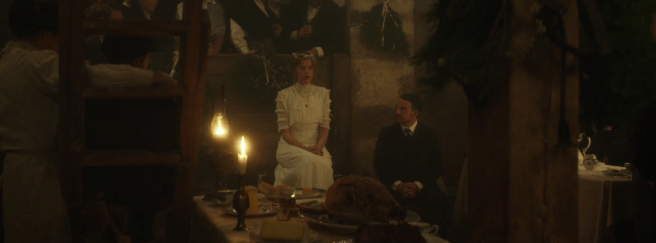
At the center of Terence Davies’s new film, Sunset Song, adapted from Lewis Grassic Gibbon’s 1932 book of the same title, is a wedding. It is a modest affair, a barn for its stage, humble farming folk its participants. It is a celebration of love, a communal joyful gathering, a candle-bright warm pocket in the middle of a dark, snowy New Year’s Eve. And when the bride, Chris Guthrie (Agyness Deyn), sees the barn, prepared by her friends, she says, delighted, “It is like a picture book.” And it is.

In the midst of the merriment, the company calls for a song from the bride, and she sits at their center and sings. It is a sunset song, glowing in the deep colors of grief for the day that has gone, a song for the dead, a song of mourners. It is “Flooers of the Forest,” traditionally a tune played by pipers to commemorate those Scots lost in battle.  A strange choice, it might seem at first, for a wedding, but a choice that gets at the heart of this story, this place, this people, and at the heart of Chris herself. A mournful song is itself a thing of intrinsic paradox: the beauty of its words or music sit, impossibly, within the grief. The song might seem, to a strictly literal mind, to devalue the grief by the very beauty, and yet it is not a devaluation. The grief itself is more grievous, the deeper the beauty of the song. And so such a song defies the intellect, bowing to mystery. Continue reading “SIFF 2016: Sunset Song (Terence Davies, 2015)”

SIFF 2016: Under the Sun (Vitaly Mansky, 2015)

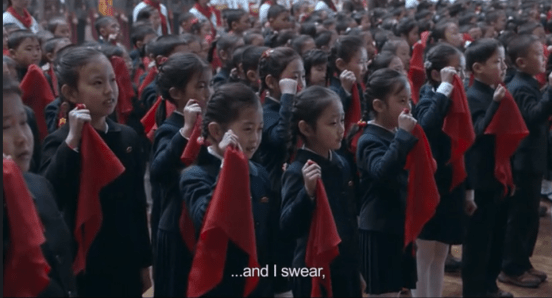
flags

“My father says Korea is the most beautiful country in the eastern part of the globe. Korea is the land of the Rising Sun.”

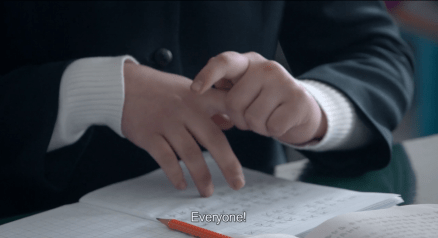
Granted rare access to North Korea, documentary filmmaker Vitaly Mansky follows the story of a young girl who joins the Children’s Union and prepares for the Day of the Sun, birthday of Kim Il-Sung, conqueror of the “American scoundrels.” Working around Korean handlers by filming before “Action!” is called or by lingering on drooping eyelids and fidgeting fingers, the camera captures extraordinary, unscripted moments. Such spontaneity, juxtaposed with the official Korean script that demands its subjects act “with joy” and “patriotism,” offers a complex, poignant portrait of life in a rigid regime.

fingers

Under the Sun screened at the 42nd Seattle International Film Festival.

SIFF 2016: Cameraperson (Kirsten Johnson, 2016)

CAMERAPERSON+CRKirstenJohson.png

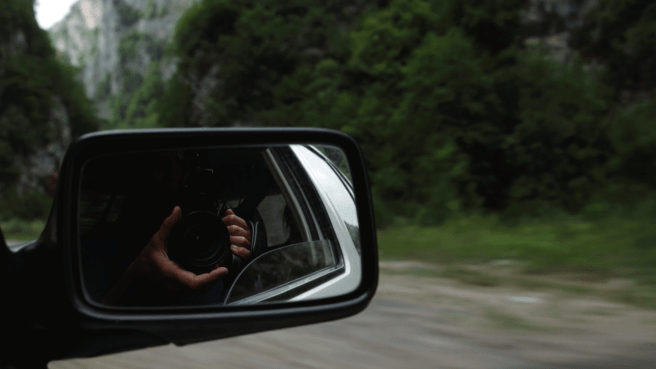
Weaving together footage from two dozen films she has shot over fifteen years, cinematographer Kirsten Johnson constructs a unique, impressionistic documentary that does not possess a comprehensive narrative logline but splinters off into many tantalizing tangents. The theme that rises to the top, however, is an examination and celebration of motherhood, both coming and going. We see babies being born and matriarchs disintegrating. A boxer’s mother consoles him after a bitter loss, a daughter curses her mother in the wake of her suicide. From Brooklyn to Bosnia, Johnson captures connections.

SIFF 2016: Rainbow (Nakesh Kukunoor, 2015)

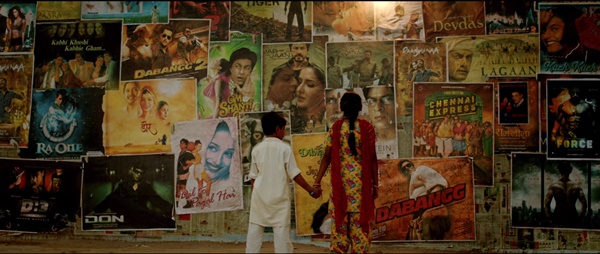
dhanak 1

Dhanak (English title Rainbow), the latest film from director Nagesh Kukunoor, concerns a pair of siblings traveling the deserts of Rajasthan in order to meet Shah Rukh Khan. The reason is sentimental: older sister Pari (the wonderful Hetal Gadda) wishes to help her blind little brother Chotu (Krrish Chhabria) get his eyesight back. Inspired by a poster in her village that has SRK asking for eye donations, and learning that he’s shooting a film 300 km away, she takes her brother and hits the road.

Continue reading “SIFF 2016: Rainbow (Nakesh Kukunoor, 2015)”

SIFF 2016: Alone (Park Hong-min, 2015)

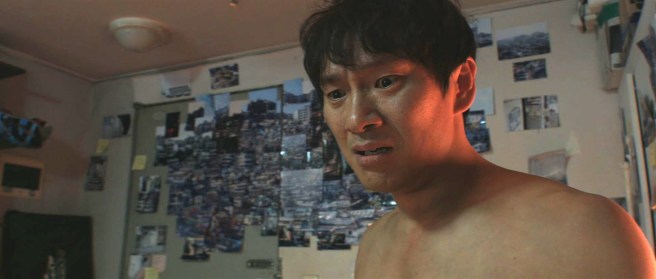
Alone_Still01

The Korean psychological thriller Alone begins with an enticing update on Rear Window. On a rooftop across the street from his apartment, a photographer named Su-min witnesses a woman being attacked by three masked men. He snaps a few shots of the crime but betrays his presence to the perpetrators, who come rushing off the roof and toward his building. Su-min tries to hide but the men soon find him and just as they are about to bash in his head with a hammer, the camera cuts and he wakes up naked in the alleyways that surround his apartment.

At this point–and all the way to its conclusion an interminable 90 minutes later–these labyrinthine alleyways act as purgatory for Su-min. He bumps into his ex-girlfriend and they get into an argument, he finds a childhood facsimile of himself, who brandishes a kitchen knife which he literally uses to kill his father. Each time a scene reaches a traumatic crescendo, Su-min wakes up again, back at the beginning of the alley, before stumbling off into another dream. Or is it memory?

Continue reading “SIFF 2016: Alone (Park Hong-min, 2015)”

SIFF 2016: Tiny: The Life of Erin Blackwell (Martin Bell, 2016)

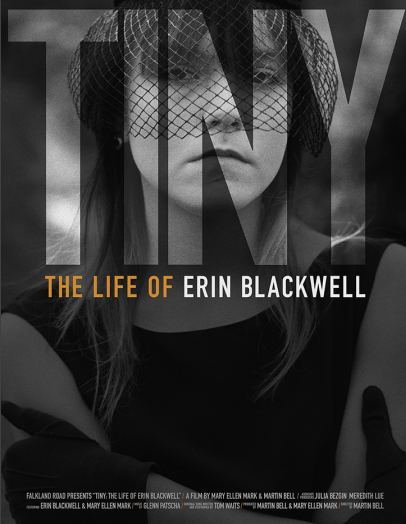
Screenshot 2016-05-27 at 12.58.39 PM

Not quite sure what the purpose is of this 30-year return to one of the subjects from Streetwise, the essential documentary on homeless youth. Turns out life sucks when you have ten kids, some born from prostitution and raised by the state, and are on methadone. Feels like more of a supplement than its own standalone feature, especially since much of it consists of Erin watching and commenting on moments from Streetwise but hey, if it gets Streetwise back into circulation, I’m for it.

SIFF 2016: Long Way North (Rémi Chayé, 2015)

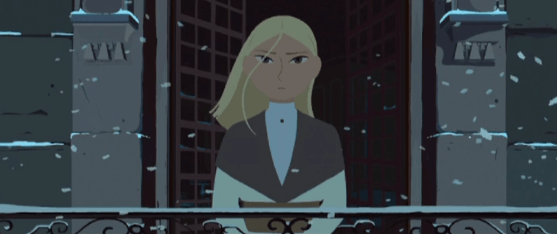
Sacha face on

In his feature debut, artist and director Rémi Chayé, with screenwriters  Claire Paoletti and Patricia Valeix, brings us the animated story of a 19th century Russian girl, the 14 year-old Sacha, whose aristocratic parents’ hopes for her are that she live up to her status as a “real young lady” and appease the political status quo with a suitable marriage. Sacha, however, her childhood imagination set fire by  the stories from her seafaring, explorer grandfather, hasn’t much use for the balls and gowns of fine ladies. Her heart is set on seeking out this same grandfather, declared to be lost at sea in an expedition to the North Pole, but who, she believes, is still waiting for rescue. The story follows her path after she runs away from parents and her St. Petersburg home, and, applying her wits, her navigational knowledge, and her courage in a societal context that doesn’t expect much self-sufficiency from any girl, much less an aristocratic one, she eventually finds a passage on a northbound ship, where Sacha and the crew face the dangerous cold, crushing ice floes, and their own fears and conflicts.

Sacha’s sturdy character is a delight in a film landscape where female characters rarely take center stage, and she recalls the vibrant characters my daughters and I love so much in the Ghibli studio oeuvre: Chihuro of Spirited Away; Satsuki of My Neighbor Totoro; Sheeta of Castle in the Sky; Kiki; Arrietty; Nausicaä. While there is a slight nod to a possible love interest in Sacha’s story, the primary focus has very little to do with her male peers and much more to do with the adventures her deep convictions and life passions bring her. Sacha grows up on her journey north, her understanding of the world, of herself and her capabilities deepening through what she encounters and through those she meets, boys, men, and women alike. In fact, Olga, a gruff and kindly innkeeper, is perhaps the character with whom Sacha has the deepest connection and from whom she learns the most.

Continue reading “SIFF 2016: Long Way North (Rémi Chayé, 2015)”

Belladonna of Sadness (Eiichi Yamamoto, 1973)

belladonna of sadness

Forty years after its original release in Asia and Europe, four decades after this initial commercial failure bankrupted its production studio, the psycho-sexual phantasmagoria, Belladonna of Sadness, finally arrives on American movie screens. The sexually explicit animated film charts one woman’s erotic journey from hamlet to Hell, as she is abused by her village’s male-dominated power structure until she finds some semblance of solace in the arms of Satan himself. Continue reading Belladonna of Sadness (Eiichi Yamamoto, 1973)”

SIFF 2016: Our Little Sister (Hirokazu Kore-eda, 2015)

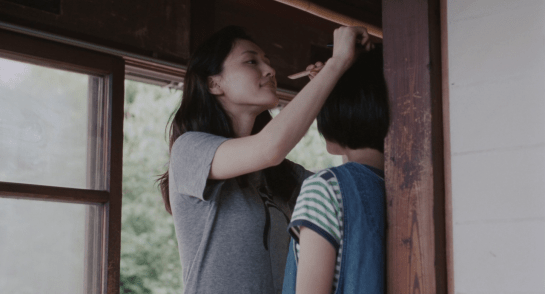
measuring suzo

Our Little Sister tracks a gentle arc, where drama develops through quotidian domesticity, gradually deepening emotion, small personal revelations. Hirokazu Kore-eda dares, in an age of superheroes, to believe audiences want to see something as simple as sisters sharing a series of meals, making family recipes, scratching a height measurement in a door-frame. He trusts these things carry emotional weight that will wrap viewers into the film’s world and hold them. In this slow accumulation of delicate specificity, tastes, and textures, is a gift: a celebration of the very fabric of being.

Our Little Sister screens for the 42nd Seattle International Film Festival at SIFF Cinema Uptown on May 21 and May 22.  (Note: Full review to be published when Our Little Sister opens for its Seattle theatrical run in July.)