Friday July 21 – Thursday July 27

Featured Film:

A Ghost Story at the Egyptian and the Lincoln Square

David Lowery’s Sundance hit is proving to be one of the more divisive art house films of the year, with critics finding its unusual mix of time-bending grief and outright silliness either deeply moving or deeply stupid. Casey Affleck plays the eponymous ghost, covered in a white sheet with cut-out eyeholes. He floats along, haunting his home, watching his wife (Rooney Mara) grieve for him, eat a pie and eventually move away, leaving him to his sad eternity. Ryan was underwhelmed by it in his review, and Evan agreed with him on our SIFF podcast, where I attempted to stick up for the film.

Playing This Week:

Admiral Theatre:

Modern Times (Charles Chaplin, 1936) Tues Only

AMC Alderwood:

Devdas (Sanjay Leela Bhansali, 2002) Sun Only

Central Cinema:

The Princess Bride (Rob Reiner, 1987) Fri-Weds
Blade (Stephen Norrington, 1998) Fri-Mon, Weds
Night of the Living Dead (George Romero, 1968) Tues Only

Crest Cinema Center:

The Hero (Brett Haley) Fri-Thurs
Paris Can Wait (Eleanor Coppola) Fri-Thurs

SIFF Egyptian:

A Ghost Story (David Lowery) Fri-Thurs Our Review

Century Federal Way:

The Black Prince (Kavi Raz) Fri-Thurs
Kiki’s Delivery Service (Hayao Miyazaki, 1989) Dubbed Sun, Subbed Mon Our Podcast

Grand Cinema:

Maudie (Aisling Walsh) Fri-Thurs
The Hero (Brett Haley) Fri-Thurs
The Dark Side of Oz (Victor Fleming, 1939) Sat Only
Manifesto (Julian Rosefeldt, 2015) Tues Only Our Review
Disturbing the Peace (Stephen Apkon & Andrew Young) Thurs Only Free Screening

Grand Illusion Cinema:

Endless Poetry (Alejandro Jodorowsky) Fri-Thurs
The Wild Search (Shine Louise Houston) Thurs Only

Cinemark Lincoln Square:

A Ghost Story (David Lowery) Fri-Thurs Our Review
Fidaa (Sekhar Kammula) Fri-Thurs
Munna Michael (Sabbir Khan) Fri-Thurs
Vikram Vedha (Pushkar and Gayathri) Fri-Thurs
Jagga Jasoos (Anurag Basu) Fri-Thurs
Devdas (Sanjay Leela Bhansali, 2002) Sun Only
Kiki’s Delivery Service (Hayao Miyazaki, 1989) Dubbed Sun, Subbed Mon Our Podcast

Regal Meridian:

City of Ghosts (Matthew Heineman) Fri-Thurs
Jagga Jasoos (Anurag Basu) Fri-Thurs
Devdas (Sanjay Leela Bhansali, 2002) Sun Only
The Ancient Magus Bride (LeSean Thomas) Weds Only

Northwest Film Forum:

Like Crazy (Paolo Virzì) Fri-Sun
Restless Creature: Wendy Whelan (Linda Saffire & Adam Schlesinger) Starts Weds

AMC Oak Tree:

Scales: Mermaids Are Real (Kevan Peterson) Fri-Thurs

AMC Pacific Place:

Meow (Benny Chan) Fri-Thurs

Regal Parkway Plaza:

Jagga Jasoos (Anurag Basu) Fri-Thurs
The Hero (Brett Haley) Fri-Thurs
Devdas (Sanjay Leela Bhansali, 2002) Sun Only
The Ancient Magus Bride (LeSean Thomas) Weds Only

AMC Seattle:

The Little Hours (Jeff Baena) Fri-Thurs Our Review
B-Side: Elsa Dorfman’s Photography (Errol Morris) Fri-Thurs

Seattle Art Museum:

The Bachelor and the Bobbysoxer (Irving Reis, 1947) Thurs Only

SIFF Film Center:

Hoop Dreams (Steve James, 1994) Fri-Sun

Regal Thornton Place:

Kiki’s Delivery Service (Hayao Miyazaki, 1989) Sun & Mon Only Our Podcast

SIFF Uptown:

Maudie (Aisling Walsh) Fri-Thurs
The Little Hours (Jeff Baena) Fri-Thurs Our Review
Abacus (Steve James) Fri-Thurs
Landline (Gillian Robespierre) Starts Thurs Our Review
Brazil/Repo Man (Terry Gilliam, 1985/Alex Cox, 1984) Thurs Only 35mm Double Feature

Varsity Theatre:

Maudie (Aisling Walsh) Fri-Thurs
Neither Wolf nor Dog (Steven Lewis Simpson) Fri-Thurs

In Wide Release:

The Big Sick (Michael Showalter) Our Review
The Beguiled (Sofia Coppola) Our Review
Guardians of the Galaxy 2 (James Gunn) Our Review

Questions of Innovation [THE BIG SICK & A GHOST STORY]

couple

Just past the halfway mark of this year of 2017, it should be apparent to any attentive observer that, at best, this theatrical release year has been subpar, and at worst it appears to be the worst year for film (not to mention the United States) in living memory. Though I won’t come close to claiming that I’ve seen anywhere near every major release – I have not, for example, seen either Edgar Wright’s Baby Driver or Albert Serra’s The Death of Louis XIV, among other presumably worthy titles – there has been a shocking dearth of any wholly satisfying films. Whether it be the usual batch of disappointingly overrated superhero films (Logan, Wonder Woman), a number of fascinating if flawed works from noted auteurs (Personal Shopper, The Beguiled, Staying Vertical), or other sundry curios (Get Out, Your Name, By the Time It Gets Dark), it is somewhat dismaying that my favorite film from this year still remains the admittedly stellar Resident Evil: The Final Chapter. This isn’t to say that certain films haven’t been very good, and I do greatly enjoy a more than a few of the films I just named, but when David Lynch is showing up the entirety of the theatrical selections every week on Showtime with Twin Peaks: The Return, there is more than a little cause for alarm.

Continue reading “Questions of Innovation [THE BIG SICK & A GHOST STORY]”

Friday July 14 – Thursday July 20

Featured Film:

Hermia and Helena at the Northwest Film Forum

The latest in Argentinean director Matías Piñeiro’s films inspired by Shakespeare takes A Midsummer Night’s Dream as its jumping off point. Camila (Agustina Muñoz) goes from Buenos Aires to New York as part of a special school program where she’ll work on translating the play. The Bard is less apparently central to the story than he was in Viola or The Princess of France, instead we track several of Camila’s relationships past and present; romantic, familial, and mysterious. Somewhat more conventional but no less affecting than those previous films, it was one of the highlights at last year’s Vancouver Film Festival.

Playing This Week:

AMC Alderwood:

Jagga Jasoos (Anurag Basu) Fri-Thurs

Ark Lodge Cinemas:

The Fifth Element (Luc Besson, 1997) Fri-Thurs Our Review

Central Cinema:

Nausicaä of the Valley of the Wind (Hayao Miyazaki, 1984) Fri-Weds Our Podcast Subtitled Tues & Weds
Red Sonja (Richard Fleische, 1985) Fri-Tues

Crest Cinema Center:

The Hero (Brett Haley) Fri-Thurs
Paris Can Wait (Eleanor Coppola) Fri-Thurs

SIFF Egyptian:

The Little Hours (Jeff Baena) Fri-Thurs Our Review

Century Federal Way:

Channa Mereya (Pankaj Batra) Fri-Thurs

Grand Cinema:

The Wedding Plan (Rama Burshtein) Fri-Thurs
The Hero (Brett Haley) Fri-Thurs
The Iron Giant (Brad Bird, 1999) Sat Only
Pink Floyd: The Wall (Alan Parker & Gerald Scarfe, 1982) Sat Only
Sacred (Thomas Lennon) Tues Only
The Wizard of Oz (Victor Fleming, 1939) Weds Only

Grand Illusion Cinema:

SCORE: A Film Music Documentary (Matt Schrader) Fri-Thurs
Lake Street Detective (Erik Hammen) Thurs Only

Cinemark Lincoln Square:

Jagga Jasoos (Anurag Basu) Fri-Thurs
Shamantakamani (Venki) Fri-Thurs
Mom (Ravi Udyawar) Fri-Thurs
Ninnu Kori (Shiva Nirvana) Fri-Thurs
Muramba (Varun Narvekar) Sat Only
Chi Va Chi Sau Ka (Paresh Mokashi) Sun Only

Regal Meridian:

Jagga Jasoos (Anurag Basu) Fri-Thurs

Northwest Film Forum:

Hermia & Helena (Matías Piñeiro) Fri-Sun Our Review
Anna Karenina (Angelica Cholina) Sat Only
Like Crazy (Paolo Virzì) Weds-Sun
Stop Making Sense (Jonathan Demme, 1984) Weds Only

AMC Pacific Place:

Our Time Will Come (Ann Hui) Fri-Thurs Our Review
Wu Kong (Derek Kwok) Fri-Thurs

Regal Parkway Plaza:

Jagga Jasoos (Anurag Basu) Fri-Thurs
The Hero (Brett Haley) Fri-Thurs

AMC Seattle:

The Little Hours (Jeff Baena) Fri-Thurs Our Review
Maudie (Aisling Walsh) Fri-Thurs
The Journey (Nick Hamm) Fri-Thurs

Seattle Art Museum:

The Bachelor and the Bobbysoxer (Irving Reis, 1947) Thurs Only

SIFF Film Center:

Glory (Petar Valchanov & Kristina Grozeva) Fri-Sun

SIFF Uptown:

Maudie (Aisling Walsh) Fri-Thurs
The Exception (David Leveaux) Fri-Sun
The Hero (Brett Haley) Fri-Sun
48 Hour Film Project Mon-Weds
ET: The Extra-Terrestrial/Starship Troopers (Steven Spielberg, 1982/Paul Verhoeven, 1997) Thurs Only 35mm Double Feature

Varsity Theatre:

Paris Can Wait (Eleanor Coppola) Fri-Thurs
New York Dog Film Festival Sun Only

In Wide Release:

The Beguiled (Sophia Coppola) Our Review
Guardians of the Galaxy 2 (James Gunn) Our Review
Alien Covenant (Ridley Scott) Our Review

Friday July 7 – Thursday July 13

Featured Film:

Our Time Will Come at the Pacific Place

The only World War II film by a major director you need to see this summer opens this week, on a single screen at the Pacific Place. Ann Hui’s film about a small network of agents working against the Japanese Occupation of Hong Kong stars Eddie Peng, Zhou Xun, Wallace Huo, Jessie Li, Deanie Ip and The Other Tony Leung. With crisp, tense suspense and action sequences and a subtly expansive view of the demographics of heroism, it’s as accomplished and assured a work of popular filmmaking as we’ve seen in Seattle this year. Don’t miss it.

Playing This Week:

AMC Alderwood:

The Hero (Brett Haley) Fri-Thurs

Central Cinema:

Who Framed Roger Rabbit (Robert Zemeckis, 1988) Fri-Tues
Mission: Impossible (Brian De Palma, 1996) Fri-Tues

Century Federal Way:

9 to 5 (Colin Higgins, 1980) Sun & Weds Only
Planet of the Apes Triple Feature (Various) Weds Only

Grand Cinema:

The Wedding Plan (Rama Burshtein) Fri-Thurs
Paris Can Wait (Eleanor Coppola) Fri-Thurs
The Hero (Brett Haley) Fri-Thurs
Xanadu (Robert Greenwald, 1980) Sat Only
TWIST Tops presents Best Short Films Tues Only
Check It (Dana Flor and Toby Oppenheimer) Weds Only

Grand Illusion Cinema:

Night School (Andrew Cohn) Fri-Thurs
Lake Street Detective (Erik Hammen) Thurs Only

Cinemark Lincoln Square:

The Big Sick (Michael Showalter) Fri-Thurs
Mom (Ravi Udyawar) Fri-Thurs
Ninnu Kori (Shiva Nirvana) Fri-Thurs
9 to 5 (Colin Higgins, 1980) Sun & Weds Only
Planet of the Apes Triple Feature (Various) Weds Only
The Iron Giant (Brad Bird, 1999) Weds Only

Regal Meridian:

The Big Sick (Michael Showalter) Fri-Thurs

Northwest Film Forum:

Sacred (Thomas Lennon) Sun-Thurs
Stone Cold (Craig R. Baxley, 1991) Weds Only Live Commentary

AMC Oak Tree:

Paris Can Wait (Eleanor Coppola) Fri-Thurs 

AMC Pacific Place:

Our Time Will Come (Ann Hui) Fri-Thurs Our Review

Regal Parkway Plaza:

Paris Can Wait (Eleanor Coppola) Fri-Thurs
The Hero (Brett Haley) Fri-Thurs

AMC Seattle:

Maudie (Aisling Walsh) Fri-Thurs
The Journey (Nick Hamm) Fri-Thurs

Seattle Art Museum:

Mr. Lucky (HC Potter, 1943) Thurs Only

SIFF Film Center:

Czech That Film Festival Fri-Sun Full Program
Ridicule (Patrice Leconte, 1996) Weds Only

SIFF Uptown:

The Little Hours (Jeff Baena) Fri-Thurs Our Review
Maudie (Aisling Walsh) Fri-Thurs
The Exception (David Leveaux) Fri-Weds
The Hero (Brett Haley) Fri-Weds
The Big Lebowski/Fast Times at Ridgemont High (The Coen Brothers, 1998/Amy Heckerling, 1982) Thurs Only 35mm Double Feature
Bottom Dollars (Jordan Melograna) Thurs Only

Varsity Theatre:

Paris Can Wait (Eleanor Coppola) Fri-Thurs

In Wide Release:

The Beguiled (Sophia Coppola) Our Review
Guardians of the Galaxy 2 (James Gunn) Our Review
Alien Covenant (Ridley Scott) Our Review

Our Time Will Come (Ann Hui, 2017)

img_5782-h_2017

The most anticipated, and almost assuredly the best, World War II film of the summer, by one of the greatest filmmakers of the past forty years, opens here tomorrow exclusively at the Pacific Place: director Ann Hui’s Our Time Will Come. Based on true events in the resistance against the Japanese occupation of Hong Kong, the film is so effective at its generic thrills, the suspense and action sequences and quiet moments of melancholy patriotism and laments for lost comrades that form the core of the resistance/war film, everything from For Whom the Bell Tolls to Army of Shadows, that one almost doesn’t notice that she’s radically revised one of the most masculine of genres into a story about the unbreakability of women.

Continue reading Our Time Will Come (Ann Hui, 2017)”

The Beguiled (Sofia Coppola, 2017)

group

Respectability, at least in the conventional cultural sense, is a slightly odd fit when discussing the idiosyncratic oeuvre of Sofia Coppola. After her breakthrough works, The Virgin Suicides and the Oscar-winning Lost in Translation, Coppola has increasingly moved along her own particular path, making films about well-off disillusioned youth in such disparate locales as 18th-century France (Marie Antoinette), modern Hollywood (Somewhere, The Bling Ring), and the Upper East Side (A Very Murray Christmas). In light of these works, The Beguiled may seem like a departure for the well-acclaimed auteur, who added a Best Director prize at Cannes this year to her not-inconsiderable collection. But the film is very much hers, albeit in a much different vein than before.

For starters, it is a remake, in this case of the 1971 film by the same name directed by Don Siegel and starring Clint Eastwood and Geraldine Page, which itself was based off the novel by Thomas P. Cullinan. The fertile premise, which Coppola’s version follows faithfully, is set during the latter half of the Civil War and involves a wounded Union soldier (John, played by Colin Farrell) who is found and taken care of by a Christian all-girls school in Virginia. Slowly, he begins to forge connections, some of which involve lust, with practically every remaining occupant of the school, including teacher Edwina (Kirsten Dunst), student Alicia (Elle Fanning), and headmistress/matriarch Martha (Nicole Kidman).

Continue reading The Beguiled (Sofia Coppola, 2017)”

Friday June 30 – Thursday July 6

Featured Film:

Hong Kong Cinema at the SIFF Uptown

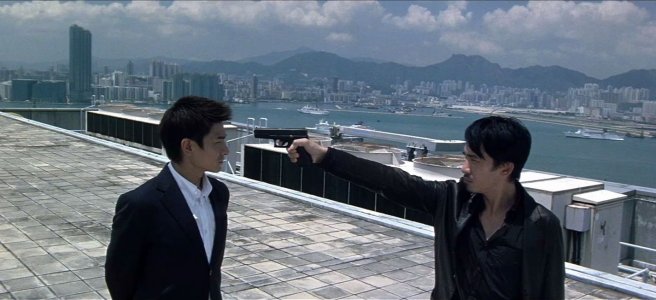
SIFF’s got some cool stuff this week, with 35mm prints of Reservoir Dogs and Jaws (and Jaws 3D too, I guess) and DA Pennebaker’s Monterey Pop, but it would be off-brand for me to select anything but their Hong Kong miniseries as our Featured Film for this week. SIFF’s selected three newish films and two oldish classics to mark the 20th anniversary of the Handover: Infernal Affairs and Shaolin Soccer were two of the biggest hits of the immediate post-Handover period, a time of steep decline in Hong Kong cinema, and they’re playing them on 35mm (I can’t confirm which cut of Shaolin Soccer they’re playing, but they’re advertising it as in Cantonese so hopefully it isn’t the terrible Miramax cut). Less essential are the new films in the series. We have reviews up for all three of them: Cook Up a StormWeeds on Fire and Mad World.

Playing This Week:

AMC Alderwood:

Paris Can Wait (Eleanor Coppola) Fri-Thurs

Central Cinema:

Men in Black (Barry Sonnenfeld, 1997) Fri-Sun, Weds
An American Tail (Don Bluth, 1986) Fri-Sun, Weds

Century Federal Way:

Great Sardaar (Ranjeet Bal) Fri-Thurs
Mr. Smith Goes to Washington (Frank Capra, 1939) Sun & Weds Only

Grand Cinema:

The Exception (David Leveaux) Fri-Thurs
Paris Can Wait (Eleanor Coppola) Fri-Thurs
The Hero (Brett Haley) Fri-Thurs
Buster’s Mal Heart (Sarah Adina Smith) Sat Only
The Best Democracy Money Can Buy (Greg Palast & David Ambrose) Weds Only Free Screening

Grand Illusion Cinema:

The Bad Batch (Ana Lily Amirpour) Fri-Thurs

Cinemark Lincoln Square:

Happy New Year (Pannaga Bharana) Fri-Thurs
Tubelight (Kabir Khan) Fri-Thurs
DJ Duvvada Jagannadham (Harish Shankar) Fri-Thurs
Mr. Smith Goes to Washington (Frank Capra, 1939) Sun & Weds Only

Regal Meridian:

Tubelight (Kabir Khan) Fri-Thurs

AMC Oak Tree:

Paris Can Wait (Eleanor Coppola) Fri-Thurs 

AMC Pacific Place:

Reset (Chang) Fri-Thurs
The Hero (Brett Haley) Fri-Thurs

Regal Parkway Plaza:

Paris Can Wait (Eleanor Coppola) Fri-Thurs
Tubelight (Kabir Khan) Fri-Thurs
Can We Still Be Friends? (Prime Cruz) Fri-Thurs
The Hero (Brett Haley) Fri-Thurs

AMC Seattle:

The Hero (Brett Haley) Fri-Thurs

SIFF Film Center:

Moka (Frédéric Mermoud) Fri-Sun

SIFF Uptown:

I, Daniel Blake (Ken Loach) Fri-Thurs Our Review
Band Aid (Zoe Lister-Jones) Fri-Thurs
The Exception (David Leveaux) Fri-Thurs
The Hero (Brett Haley) Fri-Thurs
Monterey Pop (DA Pennebaker, 1968) Fri, Sun-Thurs Our Review
Reservoir Dogs (Quentin Tarantino, 1992) Fri-Thurs 35mm
Weeds on Fire (Stevefat) Fri Only Our Review
Cook Up a Storm (Raymond Yip) Sat Only Our Review
Shaolin Soccer (Stephen Chow, 2001) Sat Only 35mm
Infernal Affairs (Andrew Lau & Alan Mak, 2002) Sat Only 35mm
Jaws/Jaws 3D (Steven Spielberg, 1975/Joe Alves, 1983) Thurs Only 35mm

Varsity Theatre:

Paris Can Wait (Eleanor Coppola) Fri-Thurs

In Wide Release:

The Beguiled (Sophia Coppola) Our Review
Guardians of the Galaxy 2 (James Gunn) Our Review
Alien Covenant (Ridley Scott) Our Review

Monterey Pop (DA Pennebaker, 1968)

Janis_Joplin_Leg_Up_low_res_l

Ruthlessly cut down to only 80 minutes of a three day festival, DA Pennebaker’s seminal concert film captures in celluloid the moment in 1967 when a whole generation was about to lose its mind, but with a killer soundtrack. As the festival sits in the transition between festivals of the past and the rapidly approaching future (it was the first major rock festival, modeled after various Jazz and Folk fests), so the film has one foot in the past and one in the future. In the rhythm of cutting between performers and audience, interstitial shots of people (with an especial focus on beautiful women, with whom this camera crew seem particularly obsessed) and the festival environment, it’s essentially Jazz on a Summer’s Day, the 1960 concert film of the 1958 Newport Jazz Festival. But at times it breaks into something far stranger, as in the cameraman who stares directly into a light during Otis Redding’s set, the silhouette of the star only occasionally breaking up the blinding whiteness, or in the particularly cruel cut from Canned Heat’s blistering “Rollin’ and Tumblin'” to Simon & Garfunkel’s simple syrup “The 59th Street Bridge Song”. It’s a culture on the edge, one which would reach it’s apotheosis in Woodstock and begin its rapid decline just a few months later with Gimme Shelter (whose co-director, Albert Maysles, served as a camera operator on Monterey Pop).

Most of the bands get only a single track in the film, and some big names are cut out entirely (including, famously, the Grateful Dead, who objected to the commercialism of the project). It’s a particular shame that we only get to see the incandescent finale of Jimi Hendrix’s brilliant set (you see watch most of it, his introduction to American audiences, in Pennebaker’s 1986 film Jimi Plays Monterey). Pennebaker’s decision to devote almost a quarter of the film’s runtime to Ravi Shankar is some kind of perverse genius. But with apologies to Hendrix and Shankar, the MVP of the film is Janis Joplin, without a doubt. Her performance of “Ball and Chain” is the reason we have music.

Weeds on Fire (Stevefat, 2016)

weedsonfire3-1600x900-c-default

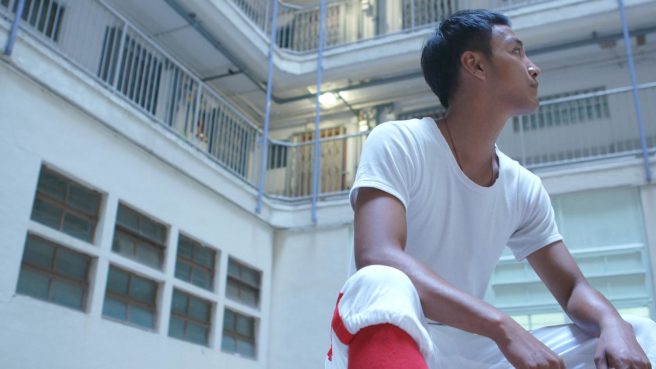
One of the three new films playing at SIFF this weekend as part of their miniseries commemorating the 20th anniversary of the Handover of Hong Kong from Britain to China, along with Mad World and Cook Up a StormWeeds on Fire was one of the surprise hits of 2016 in Hong Kong. The based on true events story follows the founding of the Shatin Martins baseball team, and plays as a more or less conventional, and conventionally uplifting sports story, albeit with a harder edge to its story of high school youth than we see here in America. Think of it as A League of Their Own, but for the kids from Dangerous Encounters – First Kind (the English title is consciously recalling such rebellious Ringo Lam films as City on Fire and School on Fire, the film’s Chinese title means “Half a Step”, which is more generically sports-centric.)

Continue reading Weeds on Fire (Stevefat, 2016)”

Mad World (Wong Chun, 2016)

239de492-136c-11e7-8424-32eaba91fe03_1280x720_145323

For more than a hundred years, all of the world, what is taken to be serious cinema has been defined more often than not by content. Films for grown-ups are supposed to be sober examinations of the social and political issues of the day. These are the movies that win awards. They almost never last, because as society mutates through time, the films remain frozen into irrelevance. Of the social problem films that maintain their greatness, it is almost always because of their secondary characteristics: the craft of directors, actors, writers and others elevate films like The Best Years of Our Lives, I Was a Fugitive from a Chain Gang, On the Waterfront or Bigger than Life beyond the prisons of their own importance. But most fall by the wayside, only unearthed by future generations of box-checkers attempting to watch all the past award winners (for why else would anyone watch Gentleman’s Agreement today?) This dynamic is starkly present in histories of Hong Kong cinema, long haunted by the fact that what the colony/SAR has always been good at are genre films (musicals, martial arts and gangster films, low-brow comedies) featuring an embarrassing lack of social relevance. The narrative around the Hong Kong New Wave has largely been one of selling out: a group of young directors emerge tackling vital issues of the day then become corrupted by mainstream cinema into making impersonal works of goofy entertainment. Going back to the post-war 1950s, when musicals and kung fu serials were incubating a vast array of talent that would dominate the industry for the next 30 years, the films of import were considered to be the social problem films, especially a subgenre of family films revolving around relations between fathers and sons. A look at Taiwan’s Golden Horse Awards, given for more than 50 years to the best in Chinese language film reveals that only a handful of non-war action films have picked up the top prize, the first (as far as I can tell) being Crouching Tiger, Hidden Dragon.

madworld_01

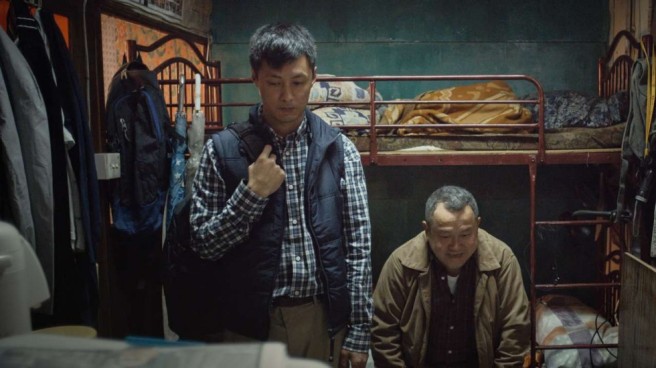
But I may be overstating this. The Hong Kong Film Awards, dating back to 1982, have been much more liberal in their tastes, and last year, confronted with the choice between Trivisa, a serio-comic crime saga from the Milkyway Image studio and Mad World, a Very Important Movie by first-time director Wong Chun about a father and his son and mental illness, they chose the gangsters. Mad World  kicks off a miniseries of Hong Kong films at SIFF this weekend, marking the anniversary of the 1997 Handover of the colony to Mainland China with a trio of new films and a pair of classics. Shawn Yue (an actor and former model last seen here a couple of months ago in Love Off the Cuff) plays a young man suffering from Bipolar Disorder who gets released after a year in a hospital into the custody of his father, an aging truck driver played by Eric Tsang. As Yue attempts to reenter society (and unadvisedly goes off his medication) flashbacks recount the events leading up to his breakdown: he quit his job to care for his elderly mother (Elaine Jin), who appears to have been afflicted with some form of dementia. This strains his relationship with his fiancée and ultimately leads to the mother’s accidental death, for which Yue is charged with manslaughter but found not guilty. The present tense structure of the film follows Yue in a number of attempts to recreate his former life, all of which fail miserably (a former coworker and friend flounders under a financial crisis, his fiancée ambushes him with recrimination at a prayer meeting, a friendship with the boy next door is undermined by the prejudice and gossip of his neighbors). It’s enough to drive anyone nuts.

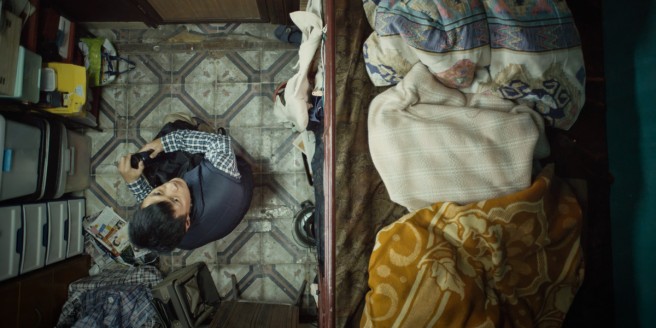
Wong’s film argues that it isn’t so much that there’s anything wrong with Yue, chemically or psychologically, but rather that given the social, material and familial conditions of contemporary society (along with perhaps a genetic inheritance from his mother), depression is not only reasonable, but inevitable. His former friends are materialistic and self-obsessed (and extremely rude at weddings). Everyone he meets makes fun of him for being crazy, there’s even a video of him having a breakdown in a convenience store that goes viral, because apparently everyone in Hong Kong is a monster. His father lives in the tiniest of apartments, an 8×6 room with bunkbed, a TV and a fold-up able, sharing a kitchen and bathroom with half a dozen neighbors. A cramped corner for forgotten people barely serving. With rigid, confining compositions and a sickly melancholic piano score, the film is an unrelenting lecture about the pathology of modern life, illustrated by a melodramatic slideshow demonstrating its devastating effects on a matinée idol.

madworld_05

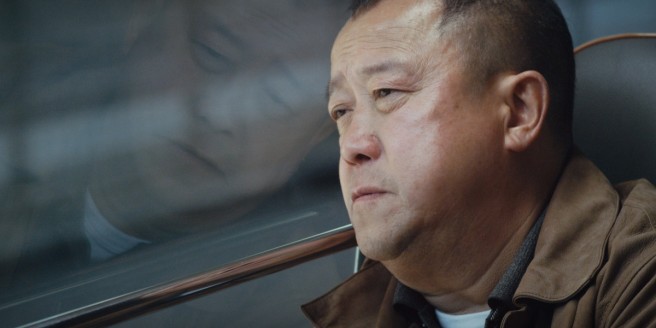
However, Eric Tsang, one of the key figures in Hong Kong cinema for the past 40 years, where he has served as director (Aces Go Places), writer (Tsui Hark’s All the Wrong Clues (for the Right Solution), producer (Drunken Master II, Golden Chicken, After this Our Exile) and actor both comic (as part of Sammo Hung’s Lucky Stars crew) and dramatic (as Maggie Cheung’s husband in Comrades, Almost a Love Story), brings a lived-in reality to the film that compensates for much of its contrivance. Where Yue plays depression as blankness and tears and Jin pushes dementia over the top, Tsang keeps things simple. A good-natured, under-educated man, his attempts to do what’s best for his son are heartbreakingly inadequate (at one point saying what seems exactly the opposite of how one should talk to someone with a mental illness: “Stop being negative. It’s all in your head. Think of something more cheerful. Can’t you be normal?”) At the Hong Kong Film Awards, Tsang won the Best Supporting Actor for his work, while Jin won Supporting Actress and Wong Best New Director. I suspect that, years from now, Tsang’s performance will be the only reason to watch this movie. And it might even be worth it.