VIFF 2016: Never Eat Alone (Sofia Bohdanowicz, 2016)

nea

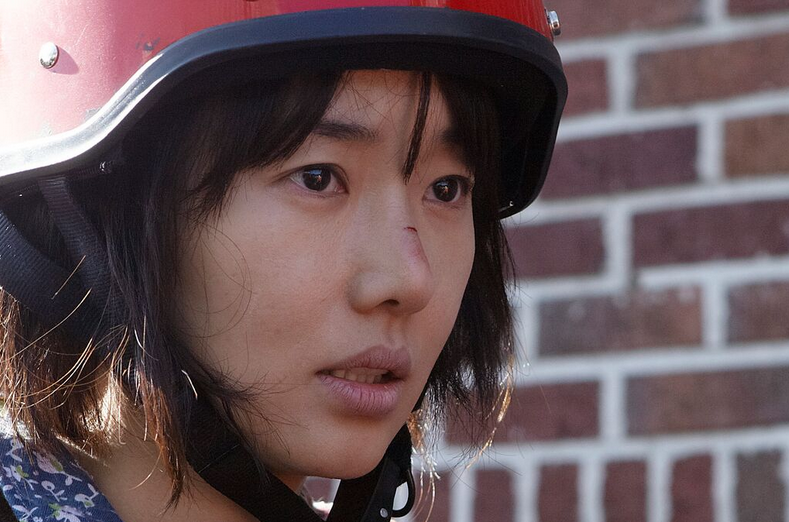
Of the three films in VIFF’s new Future // Present series that I’ve seen thus far, the program Sunday night of Toronto filmmaker Sofia Bohdanowicz’s new feature paired with three of her short films is the standout. The feature is a fictionalization of the story of her maternal grandmother, Joan Benac, playing herself, who in the early 1950s, appeared as a singer and actress on a kitschy television show. Remembering this in a dream, she tasks her granddaughter Audrey (played by Deragh Campbell, in one of her three films at VIFF this year) with finding the show and tracking down the boy she co-starred with and had dated briefly. She does, she thinks, and writes the man a letter. He’s living on the other end of the country, in a small town where he lives alone and teaches a choir. Audrey writes the man a letter, asking him to call, but he never manages to connect with the women in Toronto (he’s played by George Radovics, Bohdanowicz’s producer’s grandfather). The bulk of the film cuts between the three principals, usually as they’re eating, alone. The television episode is interspersed throughout, and there’s a digressive slideshow of the grandmother’s trip to the Bahamas, both of which are actual artifacts. But wholly fictionalized scenes abound as well, such as one where Audrey tries on a bunch of old clothes her grandmother is trying to get rid of while the two delicately balance familial niceness with the desire not to give or receive these gifts. It’s a found-footage film, using bits and pieces of the past to build a collage of a fictionalized history, an alternate reality version of her family’s history. It bears a kind of inverse relationship to Liu Jiayin’s Oxhide films, which use a highly structured script and compositional style to document her family’s life, their work and routines and relationships as they go about various tasks: cleaning the house, making leather goods, cooking dumplings. Bohdanowicz in contrast films with an off-hand directness, emotionally straightforward compositions chronicling wholly improvised interactions (both Campbell and Benac receive screenplay credits).

Even more astonishing though, are the three short films paired with the feature, chronicling Bohdanowicz’s paternal grandmother. The first, A Prayer, is a short documentary, following said grandmother around her house has she does various chores (and eats a meal, alone, naturally). The second, An Evening, is something special: a tour of the grandmother’s house shortly after her death, patiently documenting its spaces while one of her records plays on the stereo, intermittently marred by a broken needle, from late afternoon until the space disappears into the darkness of night. It’s a film Chantal Akerman would be proud of. The third, Another Prayer, replays the first short, but superimposed over the now empty spaces of the woman’s home, completely silent. Each film is prefaced by a poem composed by Bohdanowicz’s great-grandmother, and the cumulative effect of the trilogy together is devastating.

Cameraperson (Kirsten Johnson, 2016)

29003id_002-960x0-c-default

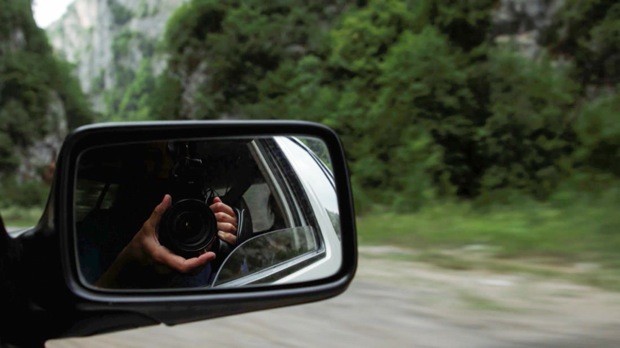
Kirsten Johnson’s Cameraperson provides an extraordinary experience for viewers—those already familiar with her body of work and those new to it alike. Johnson is a documentary cinematographer best known to most for her work on Fahrenheit 9/11 (dir. Michael Moore, 2004), Pray the Devil Back to Hell (dir. Gini Reticker, 2008), and the Oscar-winning Citizenfour (dir. Laura Poitras, 2014). Those who have seen these films will know to expect bracing, sometimes unsettling, sometimes even devastating images, but they might not be as aware of Johnson’s eye for scenes of almost unbearable beauty and joy. The images Johnson assembles in Cameraperson reveal the full range of her remarkable gifts, in all their weight and force and radiance.

Continue reading Cameraperson (Kirsten Johnson, 2016)”

Cameraperson (Kirsten Johnson, 2016)

cameraperson-620x348

When I first heard about the significant buzz surrounding Cameraperson, it seemed heavily reminiscent of Sans soleil, Chris Marker’s 1983 magnum opus that I regard as the greatest film I’ve ever seen. The description, detailing how it was comprised of outtakes from various documentaries all shot by the same cameraperson, Kirsten Johnson, was intriguing, only slightly removed from the other film’s freewheeling examination of the human condition and memory using footage shot mostly in Tokyo, Guinea-Bissau, and San Francisco. But it took me more than half the runtime to realize that the film is not Sans soleil, and that it was just one of the many, many aspects that makes Cameraperson the stunning, quietly revolutionary work that it is.

Continue reading Cameraperson (Kirsten Johnson, 2016)”

De Palma (Noah Baumbach & Jake Paltrow, 2015)

Brian-De-Palma-in-De-Palma-Documentary

Coinciding with the release of a new documentary about the director from Noah Baumbach and Jake Paltrow, the SIFF Film Center is playing a mini-retrospective of Brian De Palma’s films this weekend, June 24-26. Certified Classics Phantom of the Paradise, Carrie, Obsession, Blow Out, Body Double, Scarface and Carlito’s Way present a neat cross-section of some of his Best Work, and they’re all playing digitally at a discounted ticket price (and free for members).

Continue reading De Palma (Noah Baumbach & Jake Paltrow, 2015)”

SIFF 2016: Under the Sun (Vitaly Mansky, 2015)

flags

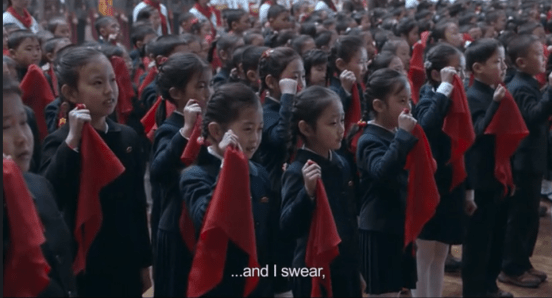
“My father says Korea is the most beautiful country in the eastern part of the globe. Korea is the land of the Rising Sun.”

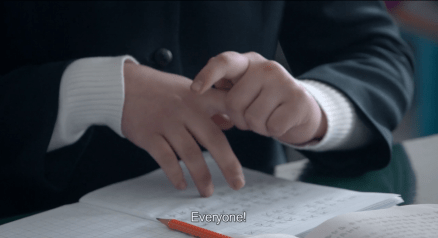
Granted rare access to North Korea, documentary filmmaker Vitaly Mansky follows the story of a young girl who joins the Children’s Union and prepares for the Day of the Sun, birthday of Kim Il-Sung, conqueror of the “American scoundrels.” Working around Korean handlers by filming before “Action!” is called or by lingering on drooping eyelids and fidgeting fingers, the camera captures extraordinary, unscripted moments. Such spontaneity, juxtaposed with the official Korean script that demands its subjects act “with joy” and “patriotism,” offers a complex, poignant portrait of life in a rigid regime.

fingers

Under the Sun screened at the 42nd Seattle International Film Festival.

The Frances Farmer Show #7: SIFF 2016 Midpoint Report

Almost halfway through the marathon that is the Seattle International Film Festival, we take a break to talk about some of the films we’ve seen so far. Movies discussed include: Chimes at Midnight, Sunset Song, Love & Friendship, Long Way North, Our Little Sister, Alone, The Island Funeral, Concerto, A Bride for Rip Van Winkle, Cameraperson, Women He’s Undressed, In a Valley of Violence, The Final Master, Lo and Behold, The Lure, Tiny, The Seasons in Quincy and Scandal in Paris.

You can listen to the show by downloading it directly, or by subscribing on iTunes or the podcast player of your choice.

Some corrections:

The woman in The Island Funeral takes a trip with her brother, not her sister.
The Seasons in Quincy starts in the winter and ends in the autumn, not summer, because that’s how seasons work.

SIFF 2016: Tiny: The Life of Erin Blackwell (Martin Bell, 2016)

Screenshot 2016-05-27 at 12.58.39 PM

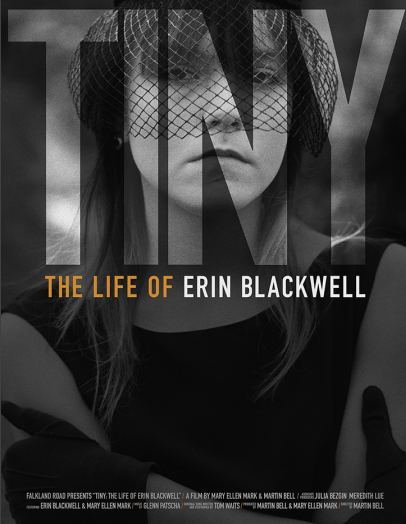
Not quite sure what the purpose is of this 30-year return to one of the subjects from Streetwise, the essential documentary on homeless youth. Turns out life sucks when you have ten kids, some born from prostitution and raised by the state, and are on methadone. Feels like more of a supplement than its own standalone feature, especially since much of it consists of Erin watching and commenting on moments from Streetwise but hey, if it gets Streetwise back into circulation, I’m for it.

Requiem for the American Dream (Peter Hutchison, Kelly Nyks, Jared Scott, 2016)

RequiemfortheAmericanDream

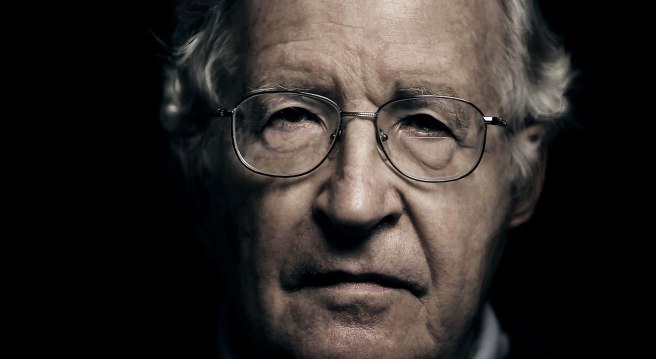
Requiem for the American Dream should be required viewing on every college campus in the nation. This is not just because of the film’s concise and lucid overview of the thinking of its interview subject, American intellectual Noam Chomsky, on a critically important topic, the erosion of American democracy and the subsequent rise of income inequality and decline of individual and communal rights and freedoms. This overview is of enormous value, but the film’s other gift to its audience is a model of what political discourse can sound like. At the present moment of rage politics and deafeningly loud appeals to the lizard-brain of the American voter, Chomsky’s quiet, humane voice and deeply informed, thoughtful perspectives provide a badly needed antidote to the prevailing culture of dumbed-down, amped-up public speech. Continue reading Requiem for the American Dream (Peter Hutchison, Kelly Nyks, Jared Scott, 2016)”

Two Documentaries: Moana with Sound (Robert Flaherty/Monica Flaherty, 1926/1980) and A Ballerina’s Tale (Nelson George, 2015)


mariachis.jpg_large

This is a big week for documentaries on Seattle Screens. The big name, of course is the new Frederick Wiseman film, In Jackson Heights which plays Friday through Thursday at the Northwest Film Forum. We’ll have a review of that sometime soon, once we’ve managed to see it. But two other non-fiction films of interest open this week as well. The Grand Illusion is presenting a 2014 restoration of a 1980 updating of a classic 1926 documentary, Moana, the second feature from Robert Flaherty, the man who more or less legitimated documentary filmmaking as an art form with his first feature, Nanook of the North in 1924, while at the same time muddying for all time the distinction between fiction and non-fiction film. A few blocks south on the Ave, the Varsity is playing director Nelson George’s glowing tribute to Misty Copeland, who just this summer became the first African-American principal dancer at the prestigious American Ballet Theatre.

Continue reading “Two Documentaries: Moana with Sound (Robert Flaherty/Monica Flaherty, 1926/1980) and A Ballerina’s Tale (Nelson George, 2015)”

VIFF Notes: Days 1 & 2

This is part of our coverage of the 2015 Vancouver International Film Festival.

Some brief thoughts on the films I saw over the first 48 hours in Vancouver.

paradise

Paradise (Sina Ataeian Dena, 2015): Iranian film about a young teacher in mourning over the death of her parents. The film follows her through daily life as she attempts to put in a work transfer at the school. Meanwhile two of the students have gone missing. The film was shot illegally with some of the participants not even aware that they were being filmed. While it pulls back a little more of the curtain on women’s lives in modern Iran, it never really finds an engaging entry point. Part of this is due to star Dorna Dibaj, whose depiction of depression comes off frequently as simple disaffection.

thoughts once we had

The Thoughts That Once We Had (Thom Andersen, 2015): Full review.

pearl button

The Pearl Button (Patricio Guzman, 2015): Eye-opening documentary that deftly weaves in the fading history of Chile’s indigenous culture with an examination of more recent genocidal atrocities and a rumination on the vitality of water. The coalescence of these elements is deeply satisfying. The Pearl Button is a beautifully shot documentary that at times plays like The Act of Killing mixed with Herzog’s oddity The Wild Blue Yonder.

erbarme

Erbarme dich – Matthaus Passion Stories (Ramon Gieling, 2015): An artfully staged exploration into the power of Johan Sebastian Bach’s “St. Matthew’s Passion”. Musicians, conductors, artists, and writers recount their personal relationship with the work. The film does this while charting rehearsals for a performance featuring a choir of homeless people. (Jesus is played by a shaggy, overweight tenor with Led Zeppelin shirt.)  The best parts of the documentary are the bits that stray from the conventions of the medium, in particular a series of bold intertitles of philosophical musical musings.

vicki

Victoria (Sebastian Schipper, 2015): Full review.

alice

Alice in Earnestland (Ahn Gooc Jin, 2015): A woman works tirelessly to care for her deaf, fingerless husband in a coma when she finds out that redeveloping the neighborhood could be her ticket to financial stability. So she does what any normal person would do and ties a therapist to a chair and feeds her poisoned blowfish. It’s a self-consciously quirky mix of the macabre and the mundane that falls squarely in the latter category, despite the blood and explosions.