SIFF 2017: Vampire Cleanup Department (Yan Pak-wing & Chiu Sin-hang, 2017)

vampirecleanupdepartment_08_34016280095_o

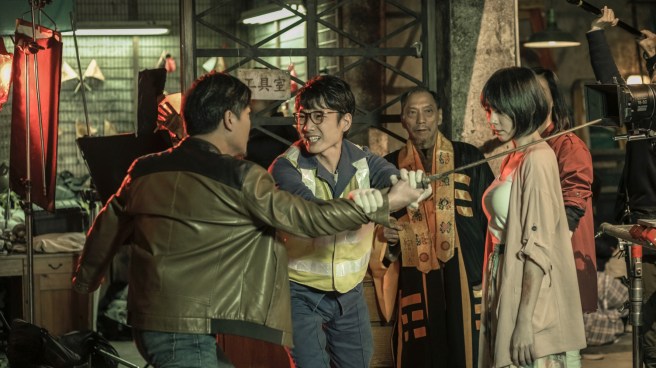
In loving homage to classic 1980s Hong Kong vampire films like Sammo Hung’s Encounters of the Spooky Kind, The Dead and the Deadly and the Mr. Vampire series, first-time directors Yan and Chiu have built an effects heavy update of the old lore: the vampires still hop and are still immobilized by Taoist amulets (pieces of yellow paper with magic characters written on them) but they also vaporize when stabbed by wooden swords. Babyjohn Choi plays a young man who joins the eponymous department led by none other than comedy legend Richard Ng, Chin Siu-ho (one of the students in the original Mr. Vampire) and Yeun Cheung-yan (one of Yuen Woo-ping’s younger brothers). But rather than merely update the old formula with new effects, along the lines of last year’s Ghostbusters remake, the film instead becomes a cute romance, as Babyjohn accidentally turns a pretty vampire girl almost human. Lin Min-chen, a Malaysian actress whose previous credits amount to eleven episodes of the Taiwanese TV series Prince of Wolf and being a “Instagram sensation. . . known for her angelic face and killer body”, plays the vampire girl in a performance that owes at least a little bit to Bae Doona’s work in Kore-eda Hirokazu’s Air Doll. She can’t talk, or walk, or go out in the sunlight, but she’s got big eyes. The romance such as it is, is the nicest thing in the film, and there are some other funny moments, but despite the local pedigree in genre and in the veteran talent on-screen feels weirdly unrooted, like so many Hong Kong films trying to appeal to audiences outside the (former) colony. There’s a training montage joke, but rather than reference local films, it calls back to Rocky and The Karate Kid. There’s a subplot about a rival government organization, but it’s totally undeveloped, perhaps because of the political implications of a local group being forced to submit to the rigid amoral hierarchy of a bureaucratic power. So rather than make something specific, Yan and Chiu opt for the blandly general. Those 80s films, especially Sammo Hung’s, had a real misanthropic bleakness to them, a sense of horror as much existential as violent. There’s none of that here, only cuteness.
SIFF 2017: Week Two Preview

1493274093149043697

Eight days into the festival and the SIFF is beginning to pick up steam, ready to plow through unheard of 80 degree weather this Memorial Day weekend and on into June. Here are some of the movies we’re looking forward to this week, May 26-June 1.

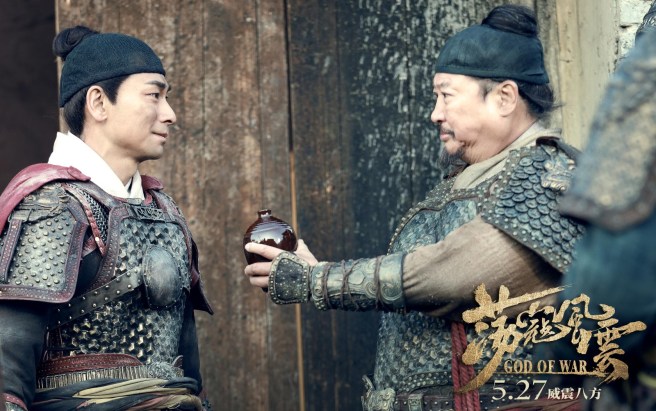
God of War – Sammo Hung and Vincent Zhao vs. Pirates. I should not need to say more.

Rumble: The Indians Who Rocked the World – Documentary on the contributions of Native Ameircans like Link Wray, Buffy Sainte-Marie and Robbie Robertson to popular music.

Chronicles of Hari – Indian film about an actor who specializes in female roles on stage. Jhon reviewed it for us here.

Girl without Hands – French animated adaptation of a Grimm Brothers tale about a girl who, well, loses her hands, trying to escape from the Devil.

Finding Kukan – Doc about the search for the woman who may have been the primary creative force behind, a documentary on World War II China that won an Academy Award in 1941. Melissa reviewed it for us here.

The Little Hours – Aubrey Plaza, Alison Brie and Kate Micucci as a gang of foul-mouthed nuns. I should not need to say more.

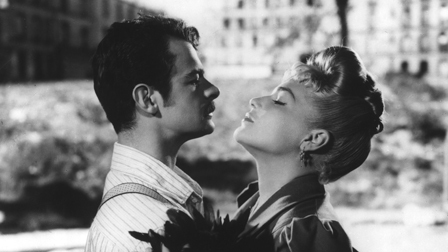
The Marseille Trilogy – As they did two years ago with Satyajit Ray’s Apu Trilogy, SIFF presents new restorations of three classic films on three consecutive days. This time it’s Marcel Pagnol’s early 1930s French series following the complicated lives of Marius and Fanny, two shopkeepers in love who can’t seem to end up together.

Godspeed – Taiwanese direct Chung Mong-hong’s blackly comic thriller about a taxi driver and a drug courier stars Hong Kong legend Michael Hui, in a performance that earned him several Best Actor nominations throughout Asia.

By the Time it Gets Dark – Thai director Anocha Suwichakornpong’s mysterious exploration of the fracturing effects of the 1976 Thammasat University massacre. Evan reviewed it for us here.

The Ornithologist – Portuguese director João Pedro Rodrigues’s oddball quest film starts as the story of a man lost in the woods and somehow becomes an adaptation of the story of St. Anthony. Along the way he’s tricked by Chinese backpackers, falls in love with a young man named Jesus and stumbles across a primitive tribe of demons.

SIFF 2017: Beach Rats (Eliza Hittman, 2017)

img_1483-1

Note: as this film is under embargo until its release in the Seattle area, here are exactly 75 words.

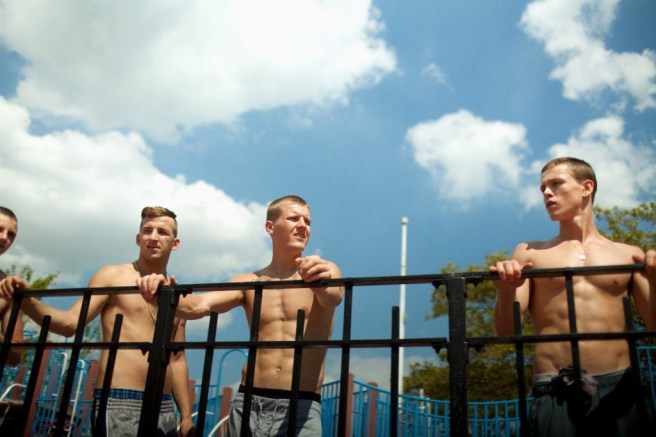
Abstracted images of abs and biceps open Beach Rats, appearing to the flashbulb rhythm of iPhone selfies. The body is Frankie’s, a closeted teenager whose father dies outside his bedroom while his attraction to virile middle-aged men awakens. Director Eliza Hittman mingles thanatos and eros, ethnography and moralism unproductively, aiming for balance but arriving at regressive parallelism. Beach Rats instructs Frankie about the dangers of living in the middle. Hittman should take her own advice.

SIFF 2017: Bad Black (Nabwana IGG, 2016)

badblack

It is perhaps not incorrect to say that the goal of any film festival should be to highlight the most interesting and fascinating works of world cinema, especially those which are unfairly underseen. Such is the case with Bad Black, one of the newest films from the immensely prolific Nabwana IGG, the auteur of the Ugandan film unit lovingly referred to as Wakaliwood. Nabwana IGG first came to prominence in 2010, when the trailer for his film Who Killed Captain Alex? went viral on YouTube for its insane and seemingly amateurish action and special effects. Bad Black, as far I can tell, is the only Wakaliwood film that has actually shown in theaters in the United States, premiering at Fantastic Fest last year.

The aim of Wakaliwood films hews closely to the action comedy, as does the overall arc of the narrative, but the means of achieving this are entirely different. Nabwana IGG’s aesthetic is proudly low-grade, immersing the viewer the slums of Kampala, Uganda as seen through blurry digital video and overflowing with quick cuts and rapid-fire action scenes interspersed with the most archetypal, blatant narratives.

Continue reading “SIFF 2017: Bad Black (Nabwana IGG, 2016)”

SIFF 2017: Finding Kukan (Robin Lung, 2016)

Li Ling-Ai and Rey Scott

Finding Kukan, a feature film debut from Robin Lung, is a documentary that tells the story of one of the first documentaries to win an Academy Award, Kukan: The Battle Cry of China (1941). Positioned in China and operating from a Chinese perspective, a perspective unknown to most white Americans at the time, Kukan aimed at documenting the Chinese experience of World War II and was noted on its initial release for its stunning ground level footage of the devastating bombing of Chungking (now Chongqing). Photojournalist Rey Scott received the Oscar for the film -“For his extraordinary achievement in producing Kukan, the film record of China’s struggle, including its photography with a 16mm camera under the most difficult and dangerous conditions” – but Lung, as she tells us in her documentary, discovered another person central to the creation of Kukan, a person who had gone essentially overlooked: a Chinese-American woman named Li Ling-Ai.

Li Ling-Ai is credited only as “technical advisor” to Kukan, but, as Lung discovers from a 1993 TV interview, Li Ling-Ai seemed to regard the film as her own, a story she herself, not Rey Scott, needed to tell: “I wanted to tell the story of China, the battle cry of the people of China, heroic under suffering.” It’s a curious way to speak about a film for which one is only “technical advisor.” Was she, in fact, more than the technical advisor?

For Lung, the mystery of Li Ling-Ai’s involvement demanded solving, and it set her on what would be a seven year journey. The content of Kukan, Lung quickly found, too, promised to be, in itself, extraordinary, and its print history made the content all the more tantalizing, for, as documentary curator Ed Carter notes, it is the only academy award winning documentary without an extant print. Consequently, Lung’s film and the search her film documents is guided by two questions: 1) who is Li Ling-Ai and why is she so little known, and 2) is there, in fact, some surviving print of Kukan yet to be discovered that might be restored and shown to the world?   Continue reading “SIFF 2017: Finding Kukan (Robin Lung, 2016)”

SIFF 2017: Manifesto (Julian Rosefeldt, 2015)

maxresdefault

Note: as this film is under embargo until its release in the Seattle area, here are exactly 75 words.

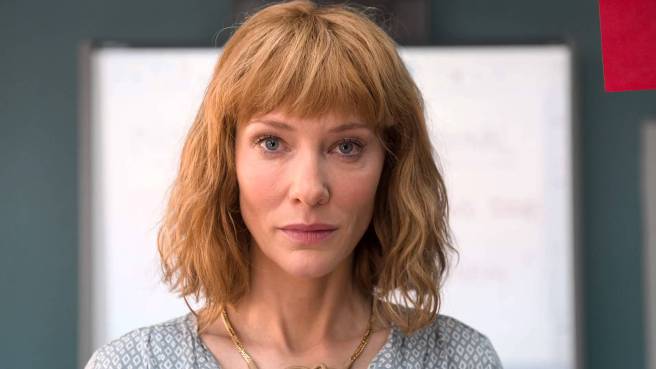
Cate Blanchett plays 13 characters reciting dozens of artistic manifestos, from Marx to Dogma ’95 and everything in-between. It isn’t literally watching a favorite actor read the phone book, but the spliced-together manifestos are too many, too jumbled and too contextless to pull any kind of coherent meaning from the project. Instead, it’s at its best when Blanchett plumbs humor from the (necessarily) self-important and incandescent material, as with her Dada funeral oration and diction-perfect Conceptualist/Minimalist newscasters.

SIFF 2017: By the Time It Gets Dark (Anocha Suwichakornpong, 2016)

BYTHETIMEITGETSDARK_05

Note: as this film is under embargo until its release in the Seattle area, here are exactly 75 words.

Boundaries are under attack in Anocha Suwichakornpong’s Thailand. The 1976 Thammasat University massacre infiltrates past and present, people and personhood, eating away at the tissue that divides. What’s left over is anyone’s guess: By the Time It Gets Dark shape-shifts into a unclassifiable design, the root contagion ultimately wreaking havoc beyond Suwichakornpong’s control. A kaleidoscopic final shot throws acid, though it seems that the film might spore on, finding forms both banal and beautiful forever.

SIFF 2017: Chronicles of Hari ( Ananya Kasaravalli, 2016)

The film begins with a series of Yakshagana artists readying themselves for the show. They sit still and silent as makeup is applied to their faces, and rituals are performed to bless their performances. In an interview, a man backstage explains that in a Yakshagana performance, men play the female roles. He extols that some performers’ movements are so feminine that they are mistaken for women. He is questioned off-camera about a particular performer who might or might not have worn women’s clothing at all times, and committed suicide. After a few more questions, the camera gives us the reverse shot, showing two young filmmakers huddled over a camera, listening to the interview subject.

These early sequences depict the film’s strengths and also its limitations: its fascination with these performers and their pathologies is earnest and often illuminating, but the film layers on a critical distance which feels unproductive and tacked on, rather than organic in approach. It posits the main character, Hari (Shrunga Vasudevan), as a sort of enigma – the film’s narrative does a great job of shading in the detail of this particular person, but the film’s conception casts him as a host of contradicting details and stories, reduced to what might or might not have happened to him.

still-hari-1_orig

Hari is a young star in his rural theater troupe who specializes in playing female roles. However, after his request to play male roles is rebuffed, he becomes more unsure about who he is. He begins to wear a skirt which causes trouble at home (his younger’s brother marriage proposal is laughed off because of Hari’s reputation). He finds himself sharing a house with another man so the neighbors threaten to take them to the authorities. His struggles with his identity haunt him and Vasudevan’s performance is wonderfully mopey, but more often than not the film sits there on the screen, its dynamics and conclusions set in stone.

This is the first film of  Ananya Kasaravalli, the daughter of famous Kannada filmmaker Girish Kasaravalli, and she acquits herself well for the most part. Most of the interest here is in Vasudevan’s performance, the slow rhythms of the rural villages of Karnataka, and the strange, stylized rituals of the Yakshagana art. But the film truly sabotages itself with the frankly useless conceit of the filmmakers trying to find out more about Hari and his life. The ending is as ill-judged as I’ve seen in a long time, essentially commenting on the film’s emotional high point (a long shot of a character walking into the middle of a lake, followed by a stunning look at the camera) and rendering the emotional fallout of these images as meaningless. The film’s failures are crystallized in its final image: two useless characters stare out at the ocean, deflating the drama, and putting the whole thing in quotation marks. Why wasn’t Hari’s story enough?


SIFF 2017: The Unknown Girl (Jean-Pierre & Luc Dardenne, 2016)

Jenny

Note: as this film is under embargo until its release in the Seattle area, here are exactly 75 words.

Unfairly dismissed last year at Cannes, the latest Dardenne Brothers movie is another iteration of their fiercely humanistic, engrossing filmmaking, for once wrapped in a more conventional mystery. Adèle Haenel stars as a doctor who becomes obsessed with discovering the identity of a young woman found dead near her practice. The Dardennes’ style is as keenly focused as ever, and if the emotions are slightly muted this time around, the film pulls no punches nonetheless.

My Journey through French Cinema (Bertrand Tavernier, 2016)

Film_270w_CasqueDOr_original

Note: as this film is under embargo until its release in the Seattle area, here are exactly 75 words.

Director and critic Tavernier amiably narrates, with ample clips and sharp insights, a history of his cinephilia. After a formative encounter with Becker, we circle magically from Renoir through Gabin, Carné and Prévert, Jaubert and Kosma, then outward to find Constantine, Berry, Gréville and more. Each discovery leading to a new object of obsession. The last hour (Melville-Godard-Sautet) is more scattershot, reflecting the happy chaos of a young adulthood spent haunting Paris’s ciné-clubs and journals.