Nocturama (2016, Bertrand Bonello)

group

Cultural context, even as it relates to single films, is a difficult issue to fully unpack. In the case of Bertrand Bonello’s Nocturama, which plays this week for one night only at the Northwest Film Forum, this idea is especially relevant, given the curious nature of its reception both here and across the pond in its home country of France. This is perhaps to be expected, on account of its incendiary subject matter, but all of these reactions, praise and criticism alike, stem from the extravagance, the seemingly inappropriate ways in which the film presents its ideas. But, crucially, Nocturama is less a film of ideas than of images, of mindsets that remain just out of focus.

The scenario itself is fairly simple: a group of terrorists – all of whom are young adults, half white upper-class and half Arabic lower-class – execute a highly coordinated series of simultaneous attacks around Paris, and hole up for the night in a popular, cavernous shopping mall, à la Dawn of the Dead. The motivations are purposefully left largely unstated: many mentions of capitalism and its ill-effects are made in two extended flashbacks during the film’s first half (there is even a statement that states that the existence of capitalism is a precondition for the downfall of capitalism) but no affiliation with any specific ideology is otherwise named, and each and every member of the crew slowly succumbs to the decadent pleasures of the mall’s many products and accoutrements. In a structural gambit that pays many dividends, especially during the harrowing climax, Nocturama is conducted from so many perspectives that the action is somewhat jumbled; despite the frequent use of on-screen timestamps, the main thread of coherence lies in the rush of movement and motivation from the cast (all of whom possess astonishingly emotive faces, presenting varying levels of fear and determination).

mask

Such a bare-bones description is fundamentally inadequate for any competently-directed film, but especially for this movie and the films of Bertrand Bonello in general. Bonello, as evinced in previous works such as House of Tolerance and Saint Laurent, is known and justly praised for his sense of space and flair, largely expressed through snaking Steadicam long takes. While those other two movies are all about languor (I cannot speak to the contents of his films prior to those), Nocturama takes tension and mounting dread as its modus operandi, in both the first half, dedicated to the execution of the bombings, and the second, which takes place almost entirely inside the mall, with only a few brief sojourns to the eerily quiet city just outside the soundproofed walls. At least in a film this focused, such an approach fits like a glove, moving with a precision that often mirrors that of the characters, at least until they slip up.

It was almost inevitable that Nocturama would come under some form of scrutiny for utilizing such flagrant cinematic techniques, including the use of both Bonello’s own pulsing electronic score and some choice cuts that run the gamut from a show-stopping lip sync of Shirley Bassey’s rendition of “My Way” to Chief Keef’s “I Don’t Like” to Willow Smith’s “Whip My Hair.” But it is as much a victim of poor timing: attacks occurred in Paris both during production (which caused the change in title from the phenomenal Paris Is a Party) and leading up to the release, and as a result it was received with roundly mixed reviews in that country, with some labeling the film as irresponsible. These reactions were much less prevalent when the movie opened here, perhaps because no “significant” attack has occurred in the past few months.

But at the same time, there is an increased urgency in the present, modern moment, a darkness and pessimism that is mirrored and amplified in this film. After my slightly more mixed view of the film when I saw it at SIFF, I rewatched it this past week in New York, and I was struck anew by how vivid, how confidently sleek Nocturama feels, on its own and in comparison to many of the more pedestrian films this year. Seen in a city whose intestines are made of subways not so different from the ones that are so crucial to the first half of the film, more and more resonances emerge from the elegant surfaces, whether it be thematic or purely on a gut level. And, at the end of the day, perhaps only the body matters, whether it is alive in ecstatic motion or silenced by the efficient crack of a gunshot.
SIFF 2017: Beach Rats (Eliza Hittman, 2017)


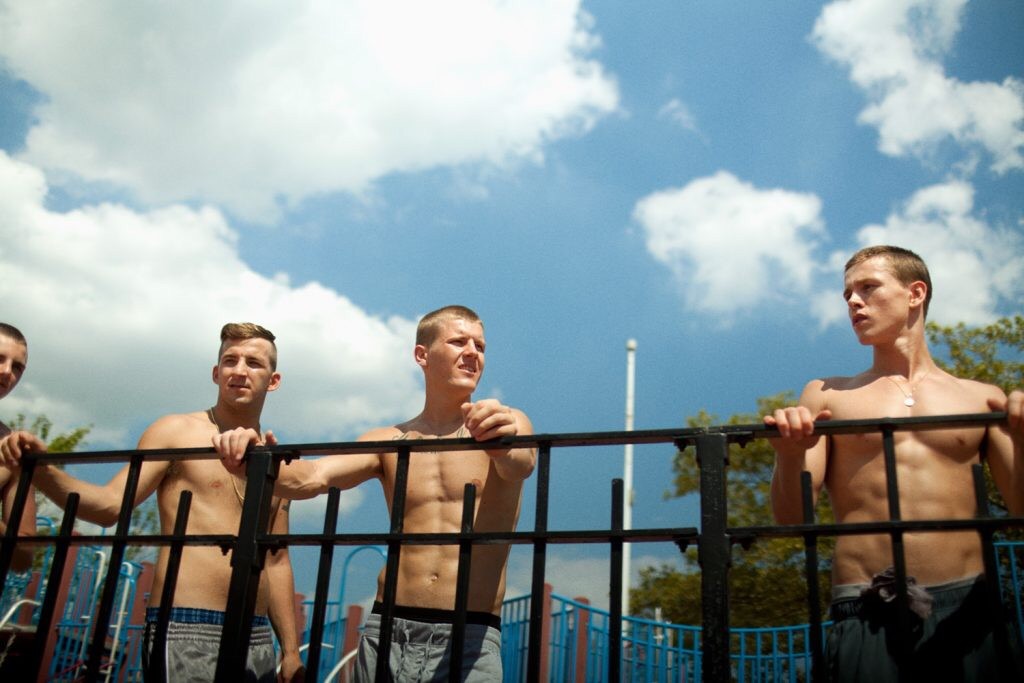
Eliza Hittman’s Beach Rats seems unaware of, or unwilling to acknowledge, the tensions that lie at the very heart of its premise. Abstracted images of abs, biceps, and one well-maintained Apollo’s belt open the film, each appearing on screen to the flashbulb rhythm of iPhone selfies. From the get-go, Hittman positions her film as ethnography; this body is anatomical subject first, person second. It happens to belong to Frankie, a closeted teenager charting the dawning realization of his sexuality, but more essential to Hitmann’s project is the material culture to which he and his corpus belong. Everything exists in the context of 21st century white youth culture. Nights start on the web but seamlessly extend into the streets, the same neon glow bathing both the bedroom and the boardwalk. Frankie and his friends exist to satiate their bodily hungers night after night, the fundamental corporeality of this subculture made manifest. Ditto the pervasive drug lust, which Hittman treats as both physiological need and social performance. Located quite specifically at Brooklyn’s dead-end—“Avenue Z”—and shot in blown out chiaroscuro that, at times, might make Philippe Grandieux flush with envy, Beach Rats checks itself constantly, a little like a vain teenager, to ensure that it signals thereness at every moment.

Aside from the fact that Spring Breakers already vivisected and laid bare this culture, Hittman’s ethnographic impulse is in and of itself benign. Tired perhaps, but harmless. More troubling are the narrative beats that pulse beneath the style. Frankie’s sexual awakening draws him to older men through the internet, each encounter laced with a hint of predatory danger. Intentionally or not, thanatos and eros are conjured up simultaneously, a fact underlined by the comatose presence of Frankie’s cancer-ridden father who literally functions as stumbling block en route to the bedroom. The film never draws an explicit parallel between Frankie’s fondness for virile middle-aged men and the bodily decay afflicting his father, but it’s an uncomfortably Freudian set-up for a queer film in 2017. Hittman’s conception of gay sexuality as death-tinged in some unconscious way gets compounded by the narrative jerry-rigging that traps Frankie and compels his most reprehensible actions. 

That the film finally reveals itself to be a morality play at core is, again, not a deal-breaker on its own terms. Like ethnography, moralism is an aesthetic (and ethical) choice. Mingling the two, however, makes for an unproductive tension: the here-and-now signifiers absolve Hittman of the burden of judgement, the narrative moralism requires it. It’s just too easy to play the middle against the sides and in the end commit to nothing. Beach Rats instructs Frankie about the dangers of living in the middle. Hittman should take her own advice.

The Seattle Screen Scene Top 100 Films of All-Time Project

When the new Sight & Sound poll came out in 2012, Mike and I each came up with hypothetical Top Tens of our own. For the next few years, we came up with an entirely new Top Ten on our podcast, The George Sanders Show every year around Labor Day. The podcast has ended, but the project continues here at Seattle Screen Scene.

The idea is that we keep doing this until the next poll comes out, by which time we’ll each have a Top 100 list. Well, I will. Mike will have only 98 because he repeated two from his 2012 list on the 2013 one.

Here are Mike’s Top Ten Films of All-Time for 2017:

380200334_1280x720

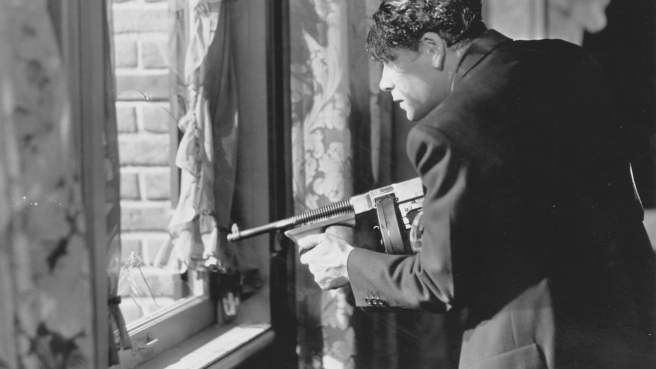
1. Scarface (Howard Hawks, 1932)

tumblr_m56jn44cf81qf7r5lo1_1280.jpg

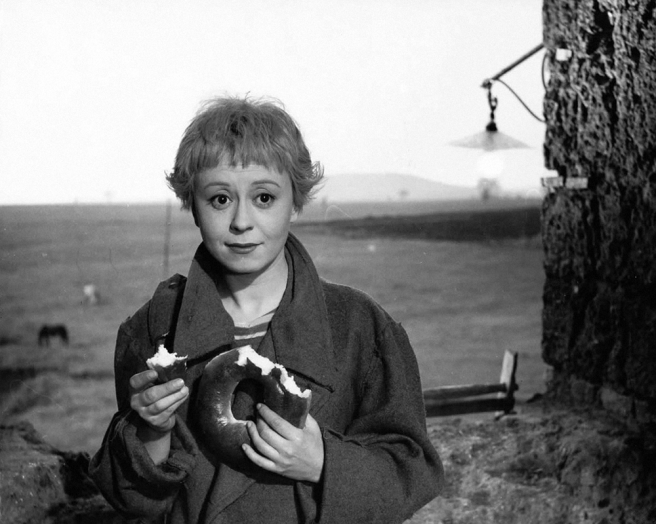
2. La Strada (Federico Fellini, 1954)

87202853_o

3. Toute la mémoire du monde (Alain Resnais, 1957)

ride-the-high-country-1962

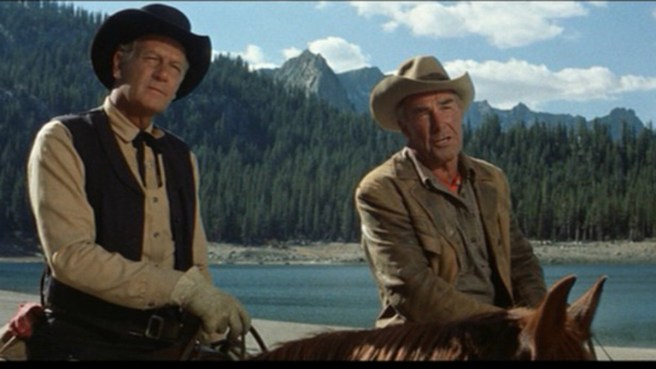
4. Ride the High Country (Sam Peckinpah, 1962)

wavelength-featured.jpg
5. Wavelength (Michael Snow, 1967)

28723id_036_w1600

6. Lone Wolf and Cub: Baby Cart at the River Styx (Kenji Misumi, 1972)

Bill-and-Ted-Bogus-Journey-Keanu-Reeves-Alex-Winter

7. Bill & Ted’s Bogus Journey (Peter Hewitt, 1991)

ratatouille8

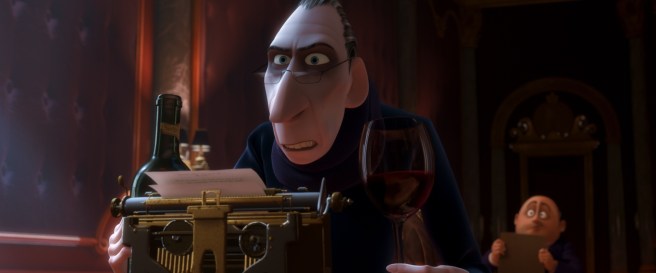
8. Ratatouille (Brad Bird, 2007)

Diane-Kruger-in-Inglorious-Basterds

9. Inglourious Basterds (Quentin Tarantino, 2009)

the-forbidden-room-2-xlarge

10. The Forbidden Room (Guy Maddin & Evan Johnson, 2015)


And here are Sean’s Top Ten Films of All-Time for 2017:

annexmarxbrothersducksoup_nrfpt_03.jpg.CROP.promo-xlarge2

1. Duck Soup (Leo McCarey, 1933)

children-of-paradise

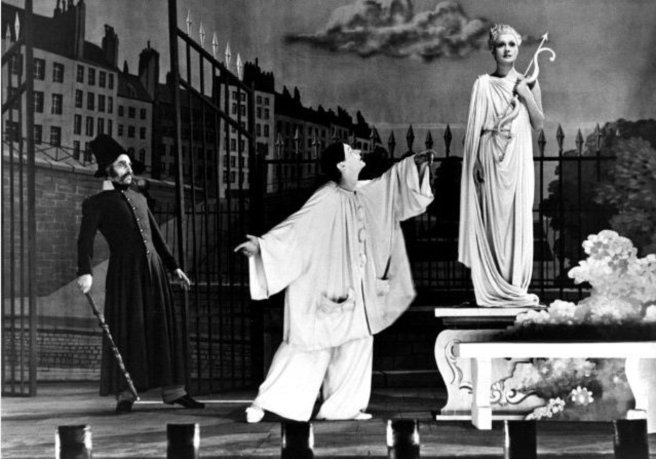
2. Children of Paradise (Marcel Carné, 1945)

TIPPI_THE_BIRDS_03LRG

3. The Birds (Alfred Hitchcock, 1963)

younggirlsrochefort-header-1800x800

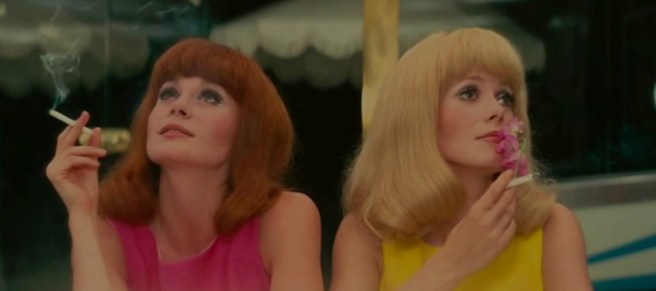
4. The Young Girls of Rochefort (Jacques Demy, 1968)

A-NEW-LEAF2050

5. A New Leaf (Elaine May, 1971)

tumblr_mlaxteZvae1qztstdo1_1280

6. Celine and Julie Go Boating (Jacques Rivette, 1974)

maxresdefault

7. Wheels on Meals (Sammo Hung, 1984)

broadcast-news-12

8. Broadcast News (James L. Brooks, 1987)

Hjyaw

9. Fire Walk With Me (David Lynch, 1992)

img_0475

10. Dead Man (Jim Jarmusch, 1995)

I Do . . . Until I Don’t (Lake Bell, 2017)

IDoUntilIDon_t

Lake Bell’s comedy I Do . . . Until I Don’t opens with a God’s eye view of a funeral. Mourners hold oddly colorful umbrellas while a drizzle falls and, in voice-over, a woman with an English accent intones a jeremiad against the “‘til death do us part” prison of marriage. There are several visual and thematic cinematic nods here, from The Umbrellas of Cherbourg to Four Weddings and a Funeral to, winkingly, Bell’s own In a World . . . (2013), a film about a woman breaking into the male-dominated world of voice-over narration. The tone of I Do . . ., however, is different from any of these—at least at first. Among the funeral-goers are Cybil (Mary Steenburgen) and Harvey (Paul Reiser), a married couple who spend most of their time sniping at each other about petty grievances. They are soon to be among the subjects of a documentary by filmmaker Vivian Prudeck (Dolly Wells), whose voice we heard over the opening shot. Prudeck is determined to expose what she sees as the bankruptcy of the institution of marriage by filming unhappy married couples and contrasting them with one happy unmarried couple in an open relationship. And so, as the film gets underway, we watch married people take potshots at each other, make brittle wisecracks at each other’s expense, lie to each other, and generally prove Prudeck’s thesis. We will have to wait for anything like the joy, warmth, or melancholy of Cherbourg or Four Weddings—or even the oddball wit of In a World . . .—until after Vivian’s monomania has nearly wrecked several relationships. Fortunately, the payoff is worth the wait.

Continue reading I Do . . . Until I Don’t (Lake Bell, 2017)”