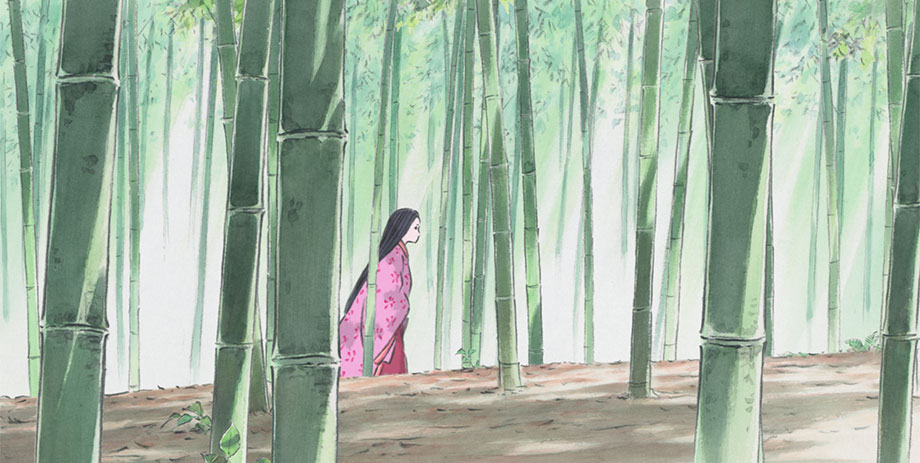
It is certainly a shame that The Tale of the Princess Kaguya lost to the pleasant if disposable Big Hero 6 in the Best Animated Feature category at last week’s Academy Awards, but it’s even more of a travesty that the film was not nominated for the biggest category, Best Picture. Yes, the Oscars are silly but there’s a special circle of silliness for the continued separation of films solely because they are animated or in a foreign language. Sure, the occasional film sneaks out of its categorical ghetto and garners larger attention, such as Toy Story 3, but by and large these vital films are given their token nod in these subcategories and forgotten. To extrapolate, if we are to have a category called Best Animated Feature, its nominees should only be judged on their animation, not their story nor their music nor their editing. Continue reading “The Tale of the Princess Kaguya (2013, Isao Takahata)”→
Last year, Jim Jarmusch reestablished himself in many eyes with the existential ennui of Only Lovers Left Alive. The film interrogated the realities of being a vampire, looking at the practical ramifications of living for hundreds of years. How do the centuries affect one’s outlook on life, love and art? Now an unlikely companion piece arrives from New Zealand with the mockumentary, What We Do in the Shadows, from Eagle vs. Shark director Taika Waititi and frequent collaborator, Jemaine Clement of Flight of the Conchords.
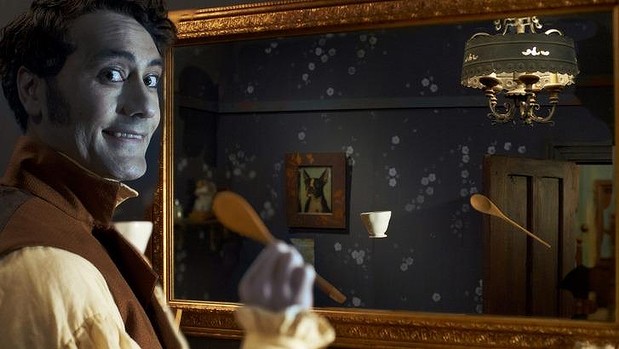
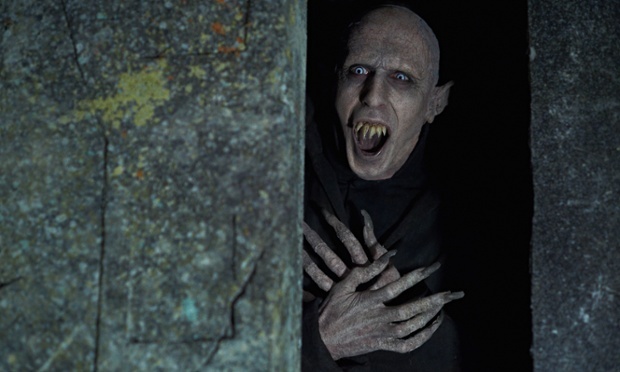
What We Do in the Shadows follows the daily humdrummery of a household of vampires, all of various vintages and dispositions. There’s the dandy, the slob, the troubled one, and Nosferatu. House meetings are called to revisit the neglected chore wheel which has resulted in a stack of blood-drenched dishes in the sink. The film is basically variations on this joke for 80-odd minutes and somewhat surprisingly, it works. It’s a slight but amiable feature, low-key but consistently fun.
In keeping with the documentary facade, much of the film is shot closely with a spotlight shining directly on the leads, leaving their surroundings bathed in titular darkness. This style is particularly effective when the film introduces special effects such as flying and mutation, all of which are blended seamlessly and provide an occasional jolt amongst the chuckles. And it is mostly chuckles. But they’re consistent chuckles.
The funniest scenes occur when Clement and Waititidecide to go for broke. Despite being a low budget comedy, the film doesn’t shy away from its horrific roots, occasionally doubling down on gore with fountains of deep red blood. Sure, they lay down a newspaper first but come on, that stuff gets everywhere.
(What We Do in the Shadows is now playing at the Sundance Cinemas, The Majestic Bay Theatre, and the SIFF Uptown.)
Takafumi Katayama likes it kinky. He works all day in a furniture store and comes home to an adorable son who proudly proclaims he is now the third shortest kid in his class. In between this life of domestic drudgery, Takafumi enjoys getting the snot kicked out of him by dominatrixes dipped in leather. When he discovers that a club provides subscription-service public humiliations, he is nothing but eager to register. But soon the beatings begin encroaching on his normal life and he wants to cancel. Sorry, Takafumi, no refunds.
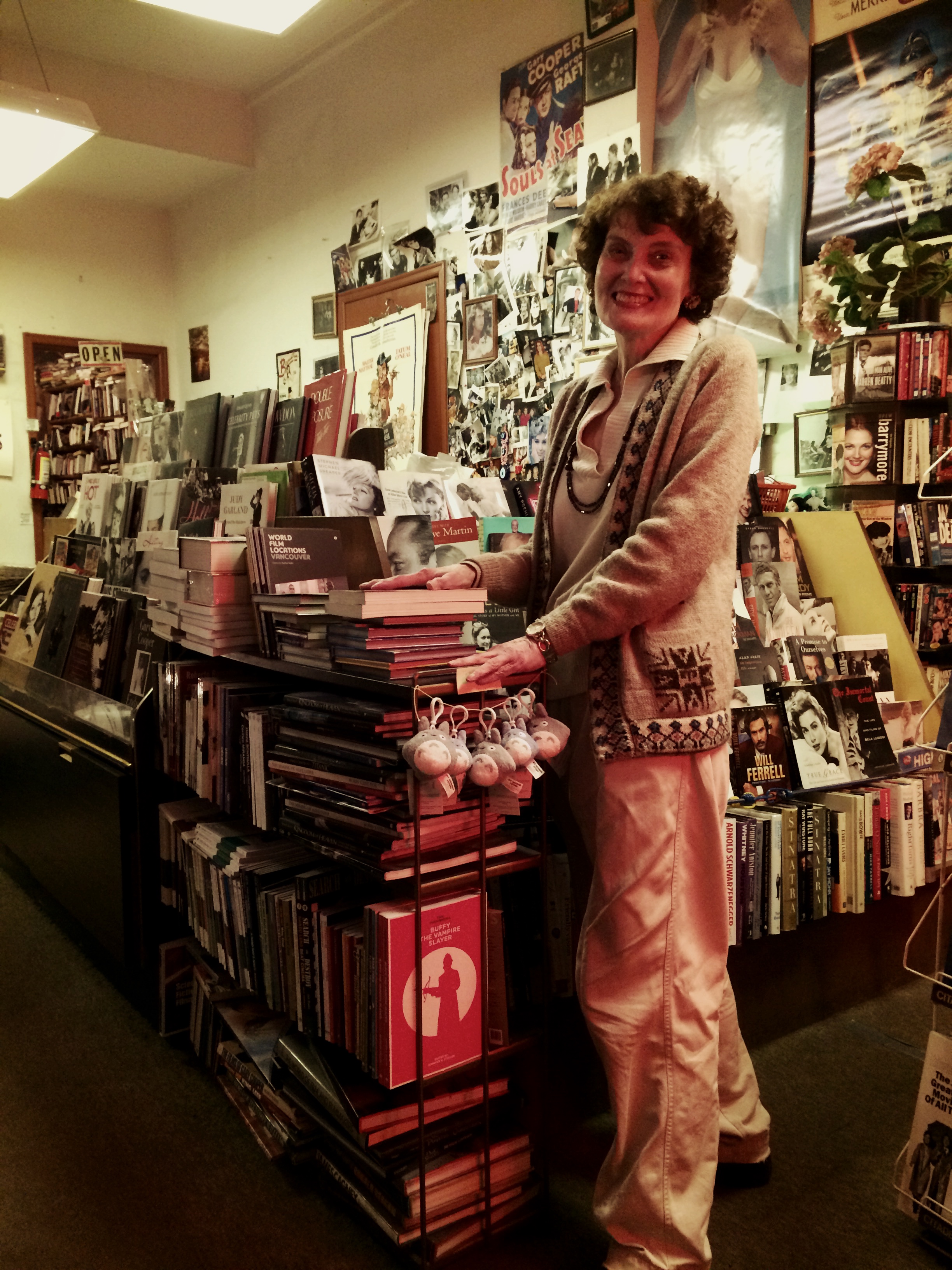
Update June 11th, 2015: Last week, Stephanie Ogle announced she would be closing her beloved store, Cinema Books, later this summer. We’ve long been fans and patrons of the store (it was, in fact, the very first place I went the day I moved to Seattle almost 17 years ago), and Stephanie has always been helpful to us in our various projects, either in finding books on Hou Hsiao-hsien, photos of Hollywood starlets or in providing prizes for our old Metro Classics trivia contests (she mentioned that one of those old gift certificates was used this week, in fact). We’ll be sad to see the store go, the latest in a string of closings and transformations that has turned the Seattle movie scene I knew into something else entirely. Shortly after we launched the site here, Mike interviewed Stephanie, and we’re rerunning that below in place of our Featured Film this week.
Seattle is a unique and vibrant film town. We have the best video store in the world in Scarecrow, which carries over 120,000 titles. Our film festival began in 1976 and is now the largest in the country, playing more films per year than any other. A year after SIFF premiered, our local film noir series debuted and it is just as popular now as it was four decades ago. Also in 1977, a specialty bookstore opened on Capitol Hill that was dedicated solely to film.
Photos by stupidhead
Now located in the University District, Cinema Books is owned and operated by the invaluable Stephanie Ogle. Stephanie is the key to the glorious, overflowing stacks of her store. Classic stills of John Wayne in Red River are buried in a backroom and only Stephanie knows where. Little Totoros pop up here and there. There are posters, postcards and imported magazines but most of all, there are books. Cinema Books carries every conceivable type of writing on film. There are screenplays, coffee table books on Disney animation, and in-depth interviews with directors.
Stephanie graciously agreed to sit down with Seattle Screen Scene to talk about her shop’s history, the diversity of film obsessions, and of course, submarines.
Which Beatle came up with the title A Hard Day’s Night? Which Beatle was later cast in such meaty roles as Merlin the Magician, The Pope, and Frank Zappa? Which Beatle never wrote a bad song while a member of the band? Which Beatle is the true lead of A Hard Day’s Night?
Bingo, it’s all Ringo.
Ringo-bashing has been a pastime for so long that it’s no longer considered contrary and hip to be a staunch defender of the man. No matter, I will fight for Ringo’s honor until he garners the respect he truly deserves, not only for his contributions to the band but for his general, all-around awesomeness. All of this malarkey against Richard Starkey is baseless and unfair. He is a good drummer. He is hilarious. He is a downright cool rock ‘n’ roll star. There is no better example of Ringo’s worth than the entirety of A Hard Day’s Night. Continue reading “A Hard Day’s Night (Richard Lester, 1964)”→
The great achievement of David Cronenberg’s Naked Lunch is that it proves an adaptation need not be faithful to the original text to be successful. Of course, in this instance a straightforward adaptation would be all but impossible as William S. Burroughs’ hallucinogenic novel is one of the most infamously unfilmmable books. Instead, Cronenberg cleverly combines elements of the novel with pieces from Burroughs’ more straightforward work, as well as events from the author’s real life, to construct a feature that captures the essence of Naked Lunch, if not the literal plot.
Neil Young has a habit of changing course just when everybody starts to get on his wavelength. He’ll follow up an acclaimed album of pretty acoustic songs like Harvest with some loud fucked up sadness like On the Beach and Tonight’s the Night. It’s becoming apparent that Paul Thomas Anderson is a little like that, too. Early in his career, Anderson made a name for himself as the guy who wove dozens of disparate characters into the sweeping tapestries of Boogie Nights and Magnolia. He then abandoned his templates for the anger and intimacy of Punch-Drunk Love. Now Anderson, the zig-zag wanderer, has done it again, following up two raw portraits of American ego with an adaptation of Thomas Pynchon’s Inherent Vice, a goofy escapade to the paranoid summit of Stoner Mountain. If the Coen Brothers’ Inside Llewyn Davis was the album cover of The Freewheelin’ Bob Dylan come to life, Inherent Vice is the cover and title of Young’s Everybody Knows This is Nowhere. It’s the death knell of the ‘60s being banged on a dimestore gong. Continue reading “Inherent Vice (Paul Thomas Anderson, 2014)”→







 Seattle Screen Scene
