VIFF 2015: Victoria (Sebastian Schipper, 2015)

victoria

Part of our coverage of the 2015 Vancouver International Film Festival.

Gimmicks have long been used to get butts in theatre seats. From the blatantly crass attempts of William Castle, who deployed live effects in the theatres during his B-movie screenings, to the formal constraints of Alfred Hitchcock, who dared himself to film entirely in a boat or an apartment, or in reel-length unbroken takes. Gimmicks are exciting, they pique an audience’s curiosity. But transcending them and delivering a worthwhile work of art at the end is one of the most difficult tasks a filmmaker has. Gimmicks are both blessing and curse.

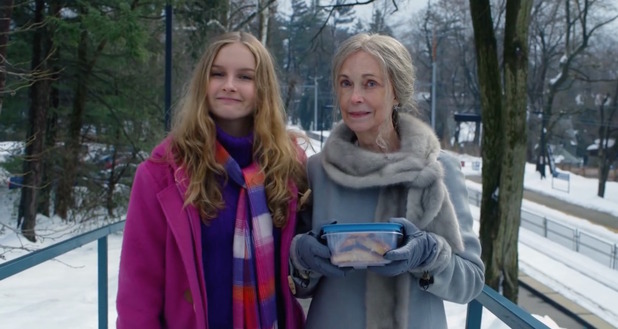
The aforementioned unbroken take has been tried many times before, including a faux example in last year’s Best Picture winner, Birdman. Now comes the German film Victoria, which manages an honest-to-goodness, no-strings-attached single take as the titular woman, a Spanish transplant, joins a group of guys on a drunken night in Berlin. What begins with the bravado of belligerent boys and the tentative mating dance of the deeply intoxicated, eventually turns sour as Victoria gets enlisted in a foolish and irrevocable act.

Continue reading “VIFF 2015: Victoria (Sebastian Schipper, 2015)”
Attack on Titan (Shinji Higuchi, 2015)

vlcsnap-2015-08-22-09h05m22s226

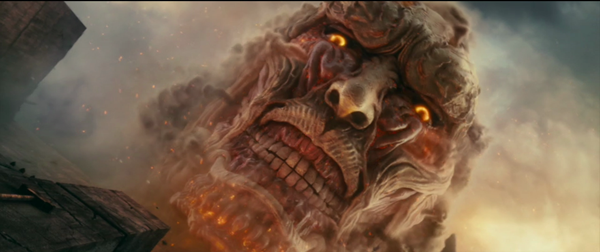
The Attack on Titan franchise has been a juggernaut in Japan for the last few years. The original manga has now spawned an anime series (a huge hit that can be seen on Instant Netflix), several light novels, other spin-off manga and video games as well. Since the Japanese film industry basically thrives on manga/anime adaptations these days, it’s not surprising to find the property now adapted into two parts and treated like a big event. It’s the Death Note movies all over again.

About 100 years ago, giant humanoid creatures named titans showed up and ate just about everyone in the world. Humanity was barely able to escape extinction by building three giant walls that kept the titans out. But then one day they disappeared. Humanity has since been living in peace. Starring young fashionable actors like Haruma Miura, Kiko Mizuhara and Satomi Ishihara, Attack on Titan tells the story about what happens when the titans attack again.

Continue reading “Attack on Titan (Shinji Higuchi, 2015)”

VIFF 2015: The Thoughts That Once We Had (Thom Andersen, 2015)

millennium-mambo-still

Part of our coverage of the 2015 Vancouver International Film Festival.

Thom Andersen’s new essay film, The Thoughts That Once We Had is a proudly idiosyncratic interpretation of French philosopher Gilles Deleuze’s thoughts on cinema. Deleuze’s two volume set, The Movement Image and The Time Image, are the springboard for Andersen’s patented excursions into cinema’s past, built on a foundation of film clips both obscure and ingrained. Andersen’s film flits around Deleuze’s dense concepts, often teasing the first portion of a line with a resulting set-up clip, before transcribing the larger idea and presenting a montage representing it. I wouldn’t claim to understand what the hell Deleuze (and by extension, Andersen) is going on about half the time–it’s all very abstract and anyway, the quotations are onscreen for the briefest of seconds–but by gum, the thing works wonders despite the less learned background of the viewer. (In fact, the film’s biggest drawback will be the inevitable embrace by the high-falutin’ intellectual cognoscenti.)

Continue reading “VIFF 2015: The Thoughts That Once We Had (Thom Andersen, 2015)”

Hit 2 Pass (Kurt Walker, 2014)

vlcsnap-2015-09-23-21h20m24s31

Hit 2 Pass is a documentary which takes at its focus not just its subject (a demolition derby race – you have to hit to pass your opponent – and the community surrounding it), but the film grammar required to tell its story. Beginning with a surreal black & white bit with some kind of Jerry Lewis or Professor Pluggy-inspired MC that announces that the film will be presented in 4:3 and then pointing out that the image the viewer is watching is, in fact, a 4:3 image, the film explains its subject and how it will explore it. From the start, we’re conditioned to interrogate every image not just for what it’s showing, but also for what it’s saying about the people doing the shooting.

Continue reading “Hit 2 Pass (Kurt Walker, 2014)”

Office (Johnnie To, 2015)

office 4

The world of Office, the latest from director Johnnie To, is a world without walls. Or, rather, a world where walls do nothing to differentiate space. It’s hard to tell where one place begins and another ends. Each scene takes place in a largely artificial environment where geometric figures and shapes suggest the outline of a room; this strategy essentially means that at any given moment there’s tons of action happening on multiple planes of the frame. Whether it’s a hospital room, a character’s apartment, there is no personal space. There’s only a series of transparent chambers where only emotional/financial transactions can take place.

Chow Yun Fat plays Chairman Ho. While his wife is in a coma, he’s been having an affair with CEO Chang for the last 20 years (played by Sylvia Chang, the film is an adaptation of her 2009 play, Design for Living), and his daughter, Kat, is now working at an entry-level position to gain knowledge of the business. One of his underlings tries to get an accountant to cook the books. Meanwhile Lee Xiang, played by Wang Ziyi (Lee for Ang Lee, Xiang for Dream – aspirational!), also starting at the company, just wants to make a good impression, achieve his dreams and ride that direct elevator to the 71st floor. The film uses all of them to explore certain attitudes and ways of living in capitalist society by testing their bonds after the 2008 crash.

Continue reading Office (Johnnie To, 2015)”

Dragon Blade (Daniel Lee, 2015)

dragon-blade

A historical epic with Jackie Chan, John Cusack and Adrian Brody, set along the Silk Road as a fugitive Roman legion encounters a Chinese security force, this was even worse than I imagined it would be. Let’s set aside the complete and utter ahistoricality of it all (despite the “based on real events” title card at the start), (OK, one point: it’s set in 48 BC, but all the Romans refer to themselves as being part of the Roman Empire: Julius Caesar was assassinated in 44 BC, and the Empire not really established until 27 BC, and even then it wasn’t called that for quite awhile later) or the simplistic naiveté of Jackie Chan’s vision of interracial harmony, the uplifting and apparently inevitable side effect of manly exercises like play-fighting and building stuff, and just focus on the action, which is ostensibly all one looks for in a Jackie Chan film. It’s pretty boring. Chan looks old and tired, the costuming pads him out (the better to absorb blows he would have taken bare-chested 30 years ago?) and slows him down. The choreography occasionally makes creative use of found objects, but that only reminds one of better scenes in other Chan films. The editing has the same peripatetic rhythm of 21st century wuxia, but with none of the surreal flair that CGI effects can give such films (Chan remains the most committed to actuality of his peers). Most absurdly though, director Daniel Lee continually frames Chan as an angelic figure, beaming beatifically on the men he has lectured and unified, awkward grin on his poorly-coiffed head (some things never change) as he is haloed by the backlighting sun. It makes one long to return to the striking image of a crucified, eyeless, John Cusack, if only out of a longing to take his place.

Dragon Blade continues, somewhat surprisingly, at the Varsity Theatre.

Horse Money (Pedro Costa, 2014)

horse-money1
Horse Money opens this week at the Grand Illusion. The following is a slightly modified version of my capsule review from the 2014 Vancouver International Film Festival.

Pedro Costa’s Horse Money is possibly the richest and most-baffling film of the entire festival. A trip through the underworld, or purgatory at least, as one man, Ventura, relieves his past through the black and brown industrial landscapes of Lisbon’s Fontainhas district. A haunted, ghostly presence, Ventura slips in and out of memories and hospitals, wandering through impossible black spaces, both above and below the industrial ruins that pass as living spaces for much of the world’s forgotten classes and talking to acquaintances and friends, obliquely recounting crimes committed, mistakes made and losses witnessed. Dominated by shadow, splitting the screen, creating ancient irises, forming a primal void from which yellow apartment lights float like islands of life in a universe of emptiness, with vertical lines relentlessly drawing our eye upwards and out of the archaic 1.33 frame. It’s an astonishing film, unique and yet deeply cinephilic, forging connections across a century of cinema, not just The Man Who Shot Liberty Valance. Here is a partial list of the movies I thought of while watching Horse Money: The Phantom Carriage, Goodbye Dragon Inn, It’s a Wonderful Life, Pedicab Driver, The Thin Man, A Matter of Life and Death, Apocalypse Now, Ikiru, The Phantom of the Opera, Occurrence at Owl Creek Bridge and well, just DW Griffith in general. After watching it, I was overwhelmed, but sure that this would be a one-time experience, so draining and difficult was it to watch at times. After a couple of days though, all I really wanted to do was see Horse Money again.

Horse Money opens Friday, September 18 at the Grand Illusion Cinema.

Queen of Earth (Alex Ross Perry, 2015)

Moss laughing with finger in mouth

“My face hurts.”

“My face hurts all the time.”

Alex Ross Perry, in his new film, Queen of Earth, trains his camera on faces – and on interior and exterior spaces – in such a way that these faces and spaces take on an alien quality. The women’s faces are beautiful; the outdoor world location – shimmering water, sunlit leaves – is breathtaking; the rooms inside the film’s vacation home setting are spare and pleasing. But in the same way that a horror film might take a very mundane, ordinary space and fill it with inexplicable Otherness and dread, Perry’s efforts accomplish a similar effect. A lovely face, an ordinarily refreshing lake, a tastefully refined home – these all set my teeth on edge, or, at least, disrupt my usual sense of their essence. If horror is often a startling, unsettling defamiliarization of the everyday, then Perry’s film is that – and he uses discordant music, odd camera angles, and lingeringly long takes to achieve a sense of horror.  But comedy might be described in a similar way – for it sets something very ordinary in a new, surprising frame – and the thing becomes ridiculous, even hilarious. Queen of Earth straddles that line between horror and comedy delightfully, making it something like black comedy but evading that definition just enough – perhaps because there is a certain poignancy running through it all – to make it one of the most unique film experiences of the year. Continue reading Queen of Earth (Alex Ross Perry, 2015)”

This Is Spinal Tap (Marty DiBergi, 1984)

“Have a good time, all the time.” — Viv Savage

viv zombie

Much has been written about the career of Spinal Tap, the second greatest rock band to ever come out of England, apologies to The Rolling Stones. The longevity of the band, their expert songwriting, and their general loudness have all become the gold standard for nearly every musician that has followed in their wake. Often referred to as “Heavy Metal’s Susan Lucci”, Spinal Tap’s annual snubbing by the Rock ‘n’ Roll Hall of Fame is a travesty of monumental proportions, especially considering the band has written two of the very best songs with the Hall’s name in the title, Rock ‘n’ Rolls “Creation” and “Nightmare”.

While the core personnel has been the same since the 1960s, and principal songwriters David St. Hubbins and Nigel Tufnel have a relationship going “all the way home” back to childhood, one of the most famous elements of the band is their constant retinue of replacement players. Drummers in particular. And while these performers have ranged from the perfunctory (“Gimme Some Money” percussionist John “Stumpy” Pepys) to the incongruously virtuosic (Nigel’s temporary replacement, Ricky, “the hottest lead guitarist in San Francisco”), some of these musicians made lasting contributions with the band and they deserve to be remembered. None more so than keyboardist Viv Savage.

Continue reading This Is Spinal Tap (Marty DiBergi, 1984)”

The Visit (M. Night Shyamalan, 2015)

movies-the-visit-01

After a decade or so of wandering in the big-budget wilderness, a victim as much of hype as hubris, M. Night Shyamalan has made perhaps his most perfect film, or at least his best film since the 1999-2002 run that made him a household name. Ingeniously adapting to the budgetary and compositional constraints of the found-footage horror genre, turning an archetypally generic story into a jump scare machine both hilarious and deeply sad. Two kids, Becca age 15, an aspiring filmmaker, and Tyler age 13, an aspiring rapper, leave home to visit their grandparents for the first time. Their mother (the ubiquitous but nevertheless always great Kathryn Hahn) ran away from home at age 19 and hasn’t spoken to her parents since. But the kids being older now, a rapprochement is in order. The kids head to the country via Amtrak while mom goes on a cruise with her boyfriend. Becca has a dual purpose: she’s also going to make a film about the trip and her family, and this film in progress is the movie we’re watching.

Continue reading The Visit (M. Night Shyamalan, 2015)”