Friday November 2 – Thursday November 8

Ug80ZiiiXhpR7LUOLJVrBJygTb-1400x788

Featured Film:

Jim Jarmusch at the Grand Illusion

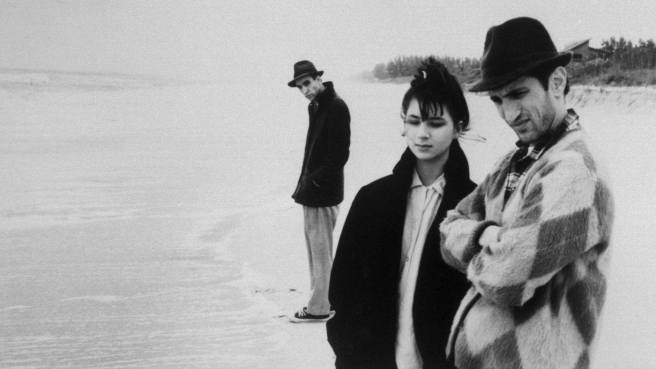
There are a couple of excellent post-Halloween scary movies opening this week, John Carpenter’s The Fog in a new restoration at the Northwest Film Forum and the Brazilian werewolf/child-rearing thriller Good Manners (directed by Marco Dutra & Juliana Rojas), at the SIFF Film Center, but there’s no doubt about what the must-see film event of this week on Seattle Screens is: the start of a two week retrospective on the films of Jim Jarmusch at the Grand Illusion. This week they’ve got his first three features: his debut, Permanent Vacation, on 16mm and his next two, Stranger than Paradise and Down by Law on 35mm. Stranger is the masterpiece of the bunch, a minimalist comedy of manners about a Hungarian woman who comes to visit her cousin in New York City where the two do almost nothing. Then they go to Cleveland. Then they go to Florida. It’s one of the few great American films of the 1980s. It puts a spell on you. Down By Law is more expansive, with a trio of convicts (John Lurie, Tom Waits and Roberto Benigni) escaping prison into the Louisiana woods. Next week, the retrospective continues with Night on EarthMystery Train and Dead Man, which is probably Jarmusch’s greatest film, if it isn’t Stranger than Paradise. Or Paterson. Or Ghost Dog. . . .

Playing This Week:

AMC Alderwood:

The Happy Prince (Rupert Everett) Fri-Thurs
Rampant (Kim Sunghoon) Fri-Thurs Our Review

Central Cinema:

My Neighbor Totoro (Hayao Miyazaki, 1988) Fri-Tues Subtitled Fri, Sat, Tues, Check Listings
V for Vendetta (James McTeigue, 2005) Fri-Tues
Dune (David Lynch, 1984) Thurs Only Hecklevision

SIFF Egyptian:

Can You Ever Forgive Me? (Marielle Heller) Fri-Thurs

Century Federal Way:

Rampant (Kim Sunghoon) Fri-Thurs Our Review

Grand Cinema:

Can You Ever Forgive Me? (Marielle Heller) Fri-Thurs
Tea with the Dames (Roger Michell) Fri-Thurs
Noche de Animas. Tzintzuntzan Sat Only Free Screening, In Spanish with No Subtitles
The Dead Zone (David Cronenberg, 1983) Sat Only
Lizzie (Craig William Macneill) Tues Only

Grand Illusion Cinema:

Stranger than Paradise (Jim Jarmusch, 1984) Fri-Sun, Mon & Weds 35mm
Down by Law (Jim Jarmusch, 1986) Fri-Sun, Mon & Weds 35mm
Permanent Vacation (Jim Jarmusch, 1981) Sat & Tues Only 16mm
The Public Image is Rotten (Tabbert Fiiller) Sat & Tues Only

Cinemark Lincoln Square:

Can You Ever Forgive Me? (Marielle Heller) Fri-Thurs
Suspiria (Luca Guadagnino) Fri-Thurs
Kayamkulam Kochunni (Rosshan Andrrews) Fri-Thurs
Andhadhun (Sriram Raghavan) Fri-Thurs
Badhaai Ho (Amit Sharma) Fri-Thurs
Savyasachi (Chandoo Mondeti) Fri-Thurs
The Villain (Prem) Sat & Sun Only

Regal Meridian:

Wildlife (Paul Dano) Fri-Thurs
What They Had (Elizabeth Chomko) Fri-Thurs

Northwest Film Forum:

The Fog (John Carpenter, 1980) Fri-Sun Our Review Our Other Review
The Price of Everything (Nathaniel Kahn) Fri-Thurs Discussion Fri
Chris Marker’s Cat Films (Chris Marker) Sat Only
Jack Straw Shorts (Various) Weds Only

AMC Pacific Place:

Suspiria (Luca Guadagnino) Fri-Thurs
Late Life: the Chien-ming Wang Story  (Frank W. Chen) Fri-Thurs
Viper Club (Maryam Keshavarz) Fri-Thurs

Regal Parkway Plaza:

Badhaai Ho (Amit Sharma) Fri-Thurs
Baazaar (Gauravv K. Chawla) Fri-Thurs
The Happy Prince (Rupert Everett) Fri-Thurs

AMC Seattle:

Suspiria (Luca Guadagnino) Fri-Thurs
Wildlife (Paul Dano) Fri-Thurs
Viper Club (Maryam Keshavarz) Fri-Thurs

Seattle Art Museum:

Wicked Woman (Russell Rouse, 1953) Thurs Only 35mm

SIFF Film Center:

Good Manners (Marco Dutra & Juliana Rojas) Fri-Sun

AMC Southcenter:

Suspiria (Luca Guadagnino) Fri-Thurs

Regal Thornton Place:

Suspiria (Luca Guadagnino) Fri-Thurs

SIFF Uptown:

Suspiria (Luca Guadagnino) Fri-Thurs
Romanian Film Festival 2018 Fri-Sun Full Program
The Reluctant Radical (Lindsey Grayzel) Tues & Weds Only

The Fog (John Carpenter, 1980)

john-carpenters-classic-horror-film-the-fog-to-get-a-4k-theatrical-re-release-social

This guest review comes courtesy of critic Jaime Grijalba.

John Carpenter seems to be the most prominent living horror director, even if he hasn’t made a film since 2010. His presence in the modern landscape of the genre is mostly due to his legacy, and the permanent mark he’s left behind with his films, from classics like Halloween, which defined the slasher genre, to cult films that have marked generations like They Liveand Big Trouble in Little China. His presence is unavoidable on the landscape of horror to this day, from his constant touring in support of his fascinating musical abilities, to his more active association with films associated with his brand, like the new Halloween, a continuation of the original, directed by David Gordon Green, for which he served as executive producer and score composer.

Although his fourth theatrical outing, The Fog, was commercially successful (more due to the very low budget it had), it was far from being critically well-received at the time, and even if it warranted a lackluster remake in 2005, it still remained one of the least discussed films in Carpenter’s filmography until recently. Now, thanks to a restoration done by Studiocanal in 4K and a re-release through Rialto Pictures, there’s a way to re-experience or enjoy for the first time on a big screen the Lovecraft-inspired and Stephen King-flavored horrors that are still completely owned by Carpenter.

The film opens, fittingly, with an old man telling kids some ghost stories, which fits the overall tone of the film, which follows the events of the 100th anniversary of Antonio Bay, a coastal town in California. In the same way as the old man tells these old tales, we are introduced to a voice that seems to narrate the life of the town, DJ Stevie Wayne (played by Adrienne Barbeau), who has a radio station at the lighthouse that she also commands. Her tone, verging on eroticism while at the same time assured of her position of power (she’s “above” the town, as she’s on the lighthouse, and at the same time separated from it), accompanies various characters that will eventually come together under the threat of the fog.

And it’s the DJ, from her vantage point, who is the first to see the threat of the fog, as it approaches a nearby ship, just as midnight strikes. Through clever parallel editing, all of it linked through her voice, we see many supernatural events happen around the town, from the discovery of an old diary written by one of the original settlers of Antonio Bay, to the shattering of all the windows on a truck, all of which builds up to showing what’s behind the bright fog that envelops the coast: vengeful ghosts that a hundred years ago were killed by the founders of the town, and not only that, were robbed from the gold they carried on their ship, which eventually was used to build the church and the rest of the structure of the village.

So, the film becomes more an exploration on the subject of moral living, which resonated with me in ways that I wouldn’t suspect. What’s our responsibility to our ancestors, colonizers who killed or displaced people that originally lived there? Is there any moral dwelling possible in colonized territory? Now, of course, in the story of The Fog, the vengeful ghosts weren’t actually living in the territory of Antonio Bay, but it’s as if it were the cause. We see the next night a massive event in which the founders are honored on the 100th anniversary, and knowing what we already know, we can feel the rage of these ghosts as they maim and kill and gut people, maybe not strictly related to the founders, but it’s their way of exacting revenge on a town that doesn’t know on which crimes it was founded, and even celebrates those who committed the murders.

Visually, the film is a treat, and even with the low budget it manages to create a chilling atmosphere that goes beyond the idea of just pumping lots of fog onto exteriors and interiors. There’s a blue tone that, I assume, the new restoration will hinge on to bring forward the spooky imagery of the shadowy figures that in a brute manner slit throats, decapitate heads and dismember bodies. Much like in Halloween, Carpenter conjures a sense of dread out of the emptiness of the frame, devoid of human figures–we often just see empty streets, houses and the church from outside, slowly being surrounded by the bright fog, just as we see the sea, flowing, coming and going. We only hear the tones of Carpenter’s magnificent score, as if it were the fog itself, creeping into the frame, slowly building toward the final confrontation.

What one appreciates more about a film like The Fog is that although it is only 85 minutes long, it seems to live beyond the opening crawl and its final frame, the town exists beyond this horrifying event, and what helps build that is a sense of place, which is built through the landscape shots as well as the assured nature of the performances, where we seem to know everyone from the moment they open their mouths and that’s because they know each other beforehand. The only progression the film has, as it barely even has what one could call a character arc, is with the two characters that meet each other on the midnight of the anniversary, played by Jamie Lee Curtis and Tom Atkins.

Beyond their travels, in which they first find each other (him, a truck driver, her, a hitchhiker looking for a ride) and then find out what’s happening in the town, the film is pretty much free-form, as it seems to be made out of patches of lived life in town, a special day that is, but one that is given its sense of normalcy through the voice of the DJ that keeps on commenting through the night, through the attacks and even is confronted with the ghosts themselves as she is both at a point where she can give information to others, but at the same time is alone and isolated, incapable of defending herself. It’s that lived-in quality what gives the supernatural a child-like wonder that makes it one of the most fascinating horror films of the 1980s.

Rampant (Kim Sunghoon, 2018)

Rampant_2

Billed as coming from the same studio (Next Entertainment World) as the breakout 2016 zombie thriller Train to Busan, Kim Sunghoon’s Rampant has a fine pedigree and a promising premise: what if zombies, but in medieval Korea? Set in what appears to be the 17th or 18th Century, a complex conspiracy works to both topple the sitting Joseon King (and his son the Crown Prince) while also introducing a horde of zombies among the dissatisfied and rebellious populace (rebellious because they resent the neighboring Chinese Qing dynasty’s suzerainty over Korea). This sets the stage for lots of fun fights between mindless armies of bloodthirsty undead and warrior heroes armed with arrows and big swords.

Alas, apparently that wasn’t enough for Kim and his writers, because they’ve decided to pack their zombie movie with lengthy scenes of palace intrigue, discourses on the requirements of filial and fraternal piety, and the true source of governmental legitimacy  (the sovereign or the people). Where the fights scenes are fluid and exciting (these zombies are of the fast-moving variety, though they are vampirically afraid of sunlight), the court drama plays out like one of those palace rivalry soap operas that seem to be ubiquitous nowadays in Chinese television (if not Korean). Rather then the increasing tension of the set-piece upon set-piece constriction of Train to Busan, which spends only a few quiet moments fleshing out its characters and hints at broader themes in-between the fights, Rampant spends the first 90 minutes or so of its two hour(!) run-time acquainting us with the various rivalries at court, with only occasional breaks for zombie mayhem.

That would, of course, be fine if the palace intrigue stuff was the least bit interesting. But it’s rote genre stuff played like serious drama (there’s a hint of an idea about the zombies coming from European traders, and so being a metaphor for Western influence on the country, but it doesn’t go anywhere and more time is spent bemoaning China’s relation to the country instead). It’s basically Pride & Prejudice & Zombies, but without the humor. Zhang Yimou’s upcoming Shadow has a similar problem: it desperately wants to be a silly action movie, but it plays its non-fight scenes so straight they simply come off as overwrought, repetitive and dull. But, as with Shadow, the final half hour or so of Rampant, once all the masks are dropped and there’s nothing left to do but kill the unkillable, is a lot of fun. Director Kim stages his fights well, with a hint of CGI wuxia wirefu amid the beige and grey, while lead actors Hyun Bin and Jang Donggun are solid: Hyun as the happy-go-lucky second son of the King turned People’s Hero and Jang especially as the power-hungry villain. And for Hong Sangsoo fans there’s even a special treat: the King is played by Kim Euisung, star of Hong’s first film and featured actor in many of his later ones (and also Train to Busan), and the Crown Prince is played by Kim Taewoo, star of Woman is the Future of Man, Like You Know it All and Woman on the Beach.

The Fog (John Carpenter, 1980)

6a017d4117b2c6970c01a73dba5dc8970d

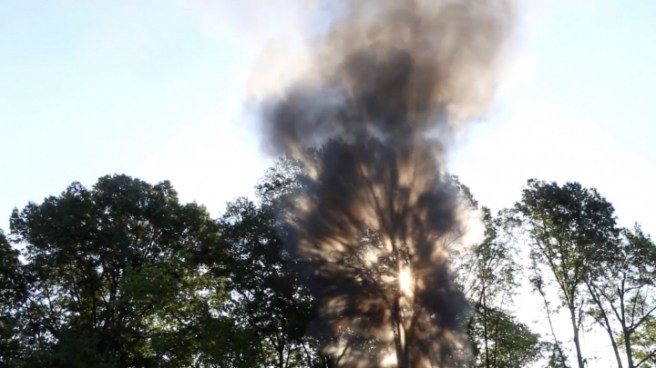
There’s something fitting about the new restoration of John Carpenter’s The Fog rolling onto Seattle screens the day after Halloween. Everything about it is just a little off the beat, a little bit odd. Which is, of course, what makes it, almost 40 years after its release, continue to be one of his better works. It lingers in the back of your brain, long after its brief running time has elapsed. Clocking in at a mere 89 minutes, and taking place over a single 24 hour period in the life of a small coastal community, The Fog is the leanest work of modern Hollywood’s most efficient great director (one of the many qualities that links him to Howard Hawks).

It begins at a campfire, with a village elder (John Houseman in old-timey fisherman drag) telling the story of the tragedy that accompanied the village’s founding exactly one hundred years earlier. Quickly we will learn the truth behind the legend, that the ship that tragically crashed in the fog one night was lured there intentionally, part of a scheme by the great men of the town to steal gold from a rich leper and his diseased companions: they murdered them and built their town atop their ruins. One hundred years later, the dead men return to balance the karmic scale.

Arrayed against the forces of darkness are Jamie Lee Curtis (a hitchhiker passing through town), the solid blond guy she hooks up with, Janet Leigh (wife of a fisherman and leader of the town’s anniversary festivities), Adrienne Barbeau (single mom from Chicago and operator of the town’s radio station/lighthouse) and Hal Holbrook (drunken priest whose grandfather was integral in the murders and whose diary tells the whole secret). They’re all pretty quick to figure out what is happening, though each of them has only a piece of the puzzle. The fog itself, what with its eerie glow and hidden frozen sailors, is pretty obviously the danger.

It’s a simple story built out of small, perfectly crafted suspense sequences. And while a lot of the horror movies of the era, including Carpenter’s own Halloween, seem to be designed in response to second wave feminism and The Pill, with their Final Girls surviving while their more promiscuous friends get the knife, The Fog is part of another strand of New Hollywood horror, one inspired more by the crises of the 1960s (the Vietnam War and its attendant atrocities in particular) and a kind of generational awakening to the sins of America’s past. Nightmare on Elm Street about a suburban lynching, Poltergeist about building suburbia on the graves of our ancestors, and so on. The Fog equates the foundation of the American community with the literal theft of capital, a town built on blood money. But then Carpenter complicates it further. In the film’s final moments, the priest reads the next few pages of his grandfather’s diary and finds out that the conspirators were actually betrayed: they never even got the money they were trying to steal. Their murder was ultimately pointless, their conspiracy undermined from within. But they founded the town anyway. That’s America for you: immoral, cruel, murderous, hypocritical, and totally incompetent.

Friday October 26 – Thursday November 1

hale-county-idiom-film-4-720x405

Featured Film:

Hale County This Morning, This Evening at the Northwest Film Forum

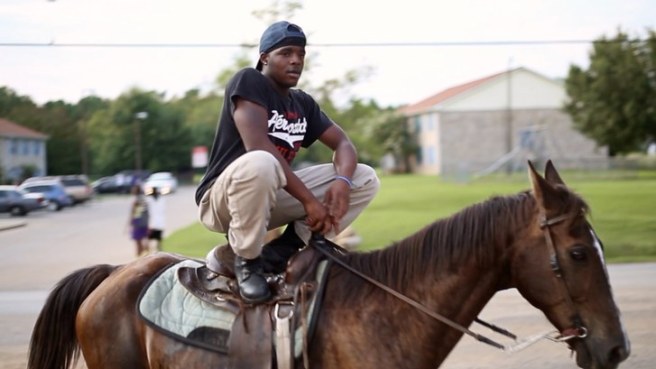
Counter-programming against the scary movies this week, the Film Forum has the local premiere of RaMell Ross’s remarkable documentary about a few years in the life of a few of the residents of the eponymous county. Told in fleeting glimpses of quotidian life, with occasional extended sections and direct addresses, chronological but structured as much by image and idea as by narrative, it’s a singular, fascinating work. Like a Frederick Wiseman film edited by Terrence Malick.

Playing This Week:

AMC Alderwood:

Hocus Pocus (Kenny Ortega, 1993) Fri-Weds
Badhaai Ho (Amit Sharma) Fri-Thurs

Central Cinema:

Evil Dead II (Sam Raimi, 1987) Fri, Sat, Tues & Weds Hecklevision Tues
Hocus Pocus (Kenny Ortega, 1993) Fri-Weds
The Nightmare Emporium (Anthology) Part 1 Sun &  Part 2 Mon

SIFF Egyptian:

Collide-O-Scope Halloween 2018 (Shane Wahlund & Michael Anderson) Weds Only

Century Federal Way:

Ranjha Refugee (Avtar Singh) Fri-Thurs
Spirited Away (Hayao Miyazaki, 2001) Sun, Mon & Tues Only Subtitled Tues

Grand Cinema:

Final Girls Berlin Film Festival (Various) Sat Only
Love, Gilda (Lisa Dapolito) Tues Only

Grand Illusion Cinema:

The Cabin in the Woods (Drew Goddard, 2012) Fri-Tues 35mm
Tucker & Dale vs. Evil (Eli Craig, 2010) Fri, Sat, Mon & Tues Only 35mm
Alien Invasion 35mm Triple Feature Pizza Party Sun Only 35mm
Frankenstein Unbound (Roger Corman, 1990) Weds Only 35mm Plus a Secret Second Film (16mm)
The Public Image is Rotten (Tabbert Fiiller) Thurs, Next Sat & Next Tues Only

Cinemark Lincoln Square:

Kayamkulam Kochunni (Rosshan Andrrews) Fri-Thurs
Badhaai Ho (Amit Sharma) Fri-Thurs
Hello Guru Prema Kosame (Trinadha Rao Nakkina) Fri-Thurs
Aravindha Sametha…Veera Raghava (Trivikram Srinivas) Fri-Thurs
Baazaar (Gauravv K. Chawla) Fri-Thurs
Andhadhun (Sriram Raghavan) Fri-Thurs
Genius (Susienthiran) Fri-Thurs
Vada Chennai (Vetrimaaran) Fri-Thurs
Spirited Away (Hayao Miyazaki, 2001) Sun, Mon & Tues Only Subtitled Tues

Regal Meridian:

The Happy Prince (Rupert Everett) Fri-Thurs
The Nightmare Before Christmas (Henry Selick, 1993) Fri-Thurs

Northwest Film Forum:

Hale County This Morning, This Evening (RaMell Ross) Fri-Weds Our Review
306 Hollywood (Elan & Jonathan Bogarín) Fri-Sun
Milford Graves Full Mantis (Jake Meginsky) Sat Only
And Then They Came for Us (Abby Ginzberg & Ken Schneider) Sat & Sun Only w/Post-Film Discussion
North Pole, NY (Ali Cotterill) Sun Only Director Q&A
Society (Brian Yuzna, 1989) Weds Only
A Tuba to Cuba (T.G. Herrington & Danny Clinch) Thurs Only
The Fog (John Carpenter, 1980) Starts Thurs Our Review

AMC Pacific Place:

Project Gutenberg (Felix Chong) Fri-Thurs

Paramount Theatre:

The Cat and the Canary (Paul Leni, 1927) Mon Only Live Score

Regal Parkway Plaza:

Badhaai Ho (Amit Sharma) Fri-Thurs
Baazaar (Gauravv K. Chawla) Fri-Thurs
First Love (Paul Soriano) Fri-Thurs

Seattle Art Museum:

Sudden Fear (David Miller, 1952) Thurs Only 35mm

SIFF Film Center:

Seattle Polish Film Festival Fri-Sun Full Program
The Night of a Thousand Scares (Rachel Carlson & Kim Douthit) Tues Only

AMC Southcenter:

Hocus Pocus (Kenny Ortega, 1993) Fri-Weds

Regal Thornton Place:

The Nightmare Before Christmas (Henry Selick, 1993) Fri-Thurs
Spirited Away (Hayao Miyazaki, 2001) Sun, Mon & Tues Only

SIFF Uptown:

NFFTY 2018 Fri-Sun Full Program

Varsity Theatre:

Big Fish and Begonia (Liang Xuan & Chun Zhang) Mon Only
Spirited Away (Hayao Miyazaki, 2001) Tues Only

Hale County This Morning, This Evening (RaMell Ross, 2018)

Brody-Hale-County-This-Morning-This-Evening

Shot over several years while he lived in Hale County, Alabama working as a teacher in the area, RaMell Ross’s debut film Hale County This Morning, This Evening is without a doubt one of the essential documentaries of 2018, and it plays this week exclusively at the Northwest Film Forum. It’s an interesting companion to What You Gonna Do When the World’s on Fire?, one of the highlights of this year’s Vancouver Film Festival (Seattle release date unfortunately unknown). Both are portraits of Southern, African-American communities, but from vastly different perspectives. As much as Roberto Minervini did to embed himself with his subjects and befriend them, he is necessarily an outsider, an Italian immigrant in America. And his film is more focused on rhetoric and event than on individual moments or the environments of the communities he’s depicting.

RaMell Ross, on the other hand, is documenting people he lived among for years. He’s filming from inside the room, and Hale County is made up of the kind of off-hand, minor moments that make up life, often devoid of any kind of narrative context (though there is a spine of a story about two young men, one of whom goes to college while the other stays home after high school). His tendency is toward the impressionistic (unlike, say, a Frederick Wiseman film), structured as much by image as theme. Ross even gives Apichatpong Weerasethakul a “creative advisor” credit, to give a hint of what the film’s rhythms are like. Though it’s world is far from dreamlike, it does have a certain potent magic. The presence of landscape (and its absence in the film’s interior spaces) is as deeply felt as any film of the year. Still, Hale County is no less political than Minervini’s film, of course, in its expressed intent to reconfigure stereotypical images of African-Americans, and in reclaiming the land they live in (the white residents of which were documented in the 30s by Walker Evans). Simply showing the way people live, in all their joy, wonder, tragedy and fear, is a revolutionary act.

The Frances Farmer Show #19: VIFF 2018

GrandBizarre

Sean and Evan discuss some of the films they saw at this year’s Vancouver International Film Festival, including Christian Petzold’s Transit, a variety of Moody Asian Noirs (Manta Ray, Lush Reeds, A Land Imagined), Bi Gan’s Long Day’s Journey Into Night, Ulrich Köhler’s In My Room, Derek Chiu’s No. 1 Chung Ying Street and Jodie Mack’s The Grand Bizarre.

You can listen to the show by downloading it directly, or by subscribing on iTunes or the podcast player of your choice.

Friday October 19 – Thursday October 25

Featured Film:

Seattle Polish Film Festival at the SIFF Uptown

As anyone who listens to the Frances Farmer Show knows, I’m not generally a fan of Contemporary European Cinema. But despite that, at VIFF this year I found myself at a screening of Polish director Pawel Pawlikowski’s Cold War, the follow-up to his Oscar-winning Ada. Much to my surprise, I loved it. It’s a sweeping romantic epic about a singer and a pianist set against the backdrop of the eponymous Cold War and told with astonishing speed an narrative drive. Three hours worth of Dr. Zhivago in less than 90 minutes. It reminded me of both A Star is Born and Visconti’s White Nights. It’s playing Friday only on the opening night of SIFF’s annual Polish Film Festival (though it will surely have a wider release later this year or early next. The only other film I’ve seen from this year’s festival plays on Saturday, Andrzej Wajda’s 1958 post-war/post-apocalypse masterpiece Ashes and Diamonds.

Playing This Week:

Admiral Theater:

Night of the Living Dead (George Romero, 1968) Weds Only

AMC Alderwood:

The Oath (Ike Barenholtz) Fri-Thurs

Central Cinema:

Psycho (Alfred Hitchcock, 1960) Fri-Mon, Weds
The Craft (Andrew Fleming, 1996) Fri-Tues

SIFF Egyptian:

Beautiful Boy (Felix Van Groeningen) Fri-Thurs

Century Federal Way:

Aate Di Chidi (Harry Bhatti) Fri-Thurs
Twilight (Catherine Hardwicke, 2008) Sun & Weds Only

Grand Cinema:

Goosebumps (Rob Letterman, 2015) Sat Only Free Screening
MFKZ (Shojiro Nishimi) Sat Only
The Last Suit (Pablo Solarz) Tues Only
Imagine (John Lennon & Yoko Ono, 1972) Weds Only
The Doors: Live at the Bowl ’68 (Ray Manzarek, 1971) Thurs Only
A Plastic Ocean (Craig Leeson) Thurs Only Free Screening

Grand Illusion Cinema:

Ninja Zombie (Mark Bessenger, 1992) Fri Only
Body Melt (Philip Brophy, 1993) Fri & Sun Only 35mm
The Most Dangerous Game (Irving Pichel & Ernest B. Schoedsack, 1932) Fri-Sun, Tues 35mm
King Kong (Merian C. Cooper & Ernest B. Schoedsack, 1933) Sat, Sun, Tues & Thurs 35mm
Final Girls Berlin Film Festival “Best of” Night Sun Only
Schlock (John Landis, 1973) Sun, Weds & Thurs
Sonic Youth: 30 Years of Daydream Nation Mon Only Drummer in Attendance
Sisters (Brian DePalma, 1973) Weds Only

Cinemark Lincoln Square:

Beautiful Boy (Felix Van Groeningen) Fri-Thurs
Badhaai Ho (Amit Sharma) Fri-Thurs
Hello Guru Prema Kosame (Trinadha Rao Nakkina) Fri-Thurs
Aravindha Sametha…Veera Raghava (Trivikram Srinivas) Fri-Thurs
Namaste England (Vipul Amrutlal Shah) Fri-Thurs
Andhadhun (Sriram Raghavan) Fri-Thurs
Sandakozhi 2 (N. Lingusamy) Fri-Thurs
Vada Chennai (Vetrimaaran) Fri-Thurs
Twilight (Catherine Hardwicke, 2008) Sun & Weds Only

Regal Meridian:

The Oath (Ike Barenholtz) Fri-Thurs
Beetlejuice (Tim Burton, 1988) Sat & Weds Only
Twilight (Catherine Hardwicke, 2008) Sun & Tues Only

Northwest Film Forum:

Kusama: Infinity (Heather Lenz) Fri Only
Sadie (Megan Griffiths) Fri-Thurs Filmmaker Q & A Fri & Sat
From the Zapatistas and Beyond (Various) Sat Only
Blood and Steel: Cedar Crest Country Club (Michael Maniglia) Sat, Sun & Weds Only
Evil Dead II (Sam Raimi, 1987) Weds Only

AMC Pacific Place:

Project Gutenberg (Felix Chong) Fri-Thurs

Regal Parkway Plaza:

Badhaai Ho (Amit Sharma) Fri-Thurs

AMC Seattle:

The Oath (Ike Barenholtz) Fri-Thurs

Seattle Art Museum:

On Dangerous Ground (Nicholas Ray, 1951) Thurs Only 35mm

SIFF Film Center:

KINOFEST Seattle Fri-Sun

AMC Southcenter:

The Oath (Ike Barenholtz) Fri-Thurs

Regal Thornton Place:

The Oath (Ike Barenholtz) Fri-Thurs
Beetlejuice (Tim Burton, 1988) Sat & Weds Only
Twilight (Catherine Hardwicke, 2008) Sun & Tues Only
Night of the Living Dead (George Romero, 1968) Weds & Thurs Only

SIFF Uptown:

The Guilty (Gustav Moller) Fri-Thurs
Seattle Polish Film Festival Fri-Sun

Varsity Theatre:

Tea with the Dames (Roger Michell) Fri-Thurs

VIFF 2018 Index

asako

This is an index of our coverage of the 2018 Vancouver Film Festival. To be updated as new reviews and such are posted.

Sean:

Preview: Grass, People’s Republic of Desire, Girls Always Happy, Microhabitat, Matangi/Maya/MIA – Sept 29, 2018
Spice It Up (Lev Lewis, Yonah Lewis, & Calvin Thomas, 2018) – Oct 1, 2018
Diamantino (Gabriel Abrantes & Daniel Schmidt, 2018) – Oct 3, 2018
Asako I & II (Ryūsuke Hamaguchi, 2018) – Oct 3, 2018
Mirai (Mamoru Hosada, 2018) – Oct 4, 2018
Long Day’s Journey Into Night (Bi Gan, 2018) – November 10, 2018

Evan:

Fausto (Andrea Bussmann, 2018) Sept 29, 2018
Sofia Bohdanowicz’s Shorts – Oct 2, 2018
The Load (Ognjen Glavonić, 2018) – Oct 6, 2018
Non-Fiction (Olivier Assayas, 2018) – Oct 8, 2018
Asako I & II (Ryūsuke Hamaguchi, 2018) – Oct 9, 2018

Lawrence:

La Flor (Mariano Llinás) – Oct 14, 2018

Podcast (Sean and Evan):

The Frances Farmer Show #19: VIFF 2018 – Oct 18, 2018

Bisbee ’17 (Robert Greene, 2018)

Oral-Visual-History-Bisbee-17-Robert-Greene-Talkhouse-Film-880x369

In July of 1917, 2,00 deputized citizens of Bisbee, Arizona, under direction of the county sheriff (and almost certainly the copper mining interests that ran the town), rounded up at gunpoint 1,200 striking mineworkers, members of the IWW, marched them four miles out of town, loaded them onto boxcars, and transported them into the New Mexico desert, to be left to die in the middle of nowhere. The one-hundredth anniversary of this event, and the town’s attempt at reckoning with it, is the subject of the latest film from documentarian Robert Greene, which opens today at the SIFF Film Center.

Questioning the nature of truth as it is presented in non-fiction film is the guiding mission of Greene’s work, in acclaimed films like Actress and Kate Plays ChristineBisbee ’17 too is explicitly about the recreation of historical events, as the town organizes a kind of dramatization of the Deportation (as it has come to be known), with various townspeople, some of them fairly recent arrivals to the community, some with family members who fought on either side (or both sides) in 1917. We meet the various locals who will be taking part in the reenactment, and learn a little bit about their current lives, though the emphasis is on their thoughts about the strike and its bloody conclusion.

That the consciousness of an American community has not changed much with regard to labor rights in the past hundred years should come as no surprise. But even some of those who say they still support the mining company’s actions notably feel pangs of regret as they watch their fellow citizens rounded up and shipped away. There’s a lot of good old fashioned American excuse-making on the pro-capital side, especially ubiquitous is that most despicable of all arguments: that the actions of these cruel men were on some level acceptable simply because they believed they were doing the right thing. I don’t know where this idea comes from (I suspect Evangelical Protestantism, but I can’t say for sure), that what you do in life doesn’t matter as long as your intentions are good, that any evil is justifiable in the name of belief, but it is long past time it was discarded. Let us send it to the desert to die.

Stories like that of Bisbee are increasingly necessary, not simply for their obvious parallels to the political issues of the present day (Bisbee is only a handful of miles from the Mexican border, and Deportation today has all kinds of new though not-so different resonances). Somewhere in the immediate post-war era, with the mass expansion of public education at the high tide of Cold War propaganda, America lost a sense of its own labor history, of the crimes committed by capital in the creation of our communities and our nation. As the great factory and mining towns that built the foundations for our national wealth have been abandoned over the last 40 years (Bisbee in most respects looks identical to the mining towns my parents grew up in in Northern Idaho), whole generations have been adrift, without a coherent narrative to explain how things got to be so bad or what we can do to get from here to a better place. Watching the residents of Bisbee grapple with basic truths about capital, its exploitation of labor and its manipulation of racism in the creation of an all-white community (the vast majority of the deported mine workers were Latino or Eastern European), one can, with hope, see the beginnings of a reborn class consciousness.

But compared to Peter Watkins’s La Commune (Paris 1871), which similarly reenacted a historical event and mixed in coverage of the past with discussions among the performers about their own feelings regarding the events they were depicting, highly energized, engaged and informed discussions of labor, sexual and racial politics as they stood in the last century and continued into the present, one can see just how much our educational system, our culture, our politics, have let us down. We’re playing catch-up, but it’s starting to look like we might finally be back in the game.