The Monkey King 3 (Soi Cheang, 2018)

monkey_king_three_ver2_xlg

The latest in director Soi Cheang’s saga inspired by the classic novel Journey to the West might be the strangest one yet. The franchise blockbuster has always been a weird fit for the former director of indie horror movies and slick crime dramas, and Cheang’s first Monkey King was kind of a mess, taking place in an almost parodically artificial computer-generated environment when it wasn’t populated by humans in sub-Cats animal costumes, and led by a distractingly fidgety performance by an unrecognizable Donnie Yen. The second film was a big improvement, as the effects were higher quality and more strikingly original, the acting, with Aaron Kwok taking over the title role and Gong Li playing the primary villain, much improved and the story much more in Cheang’s comfort zone. The second one was the first to follow the Journey to the West itself, with the Monkey King designated to help Xuanzang, a Buddhist monk from Tang Dynasty China, travel to India in order to bring back essential scriptures. The plot involves the Tang monk’s efforts to reform the White-Bone Demon (Li), a malevolent creature whom everyone else would prefer to simply destroy. The Monkey King must learn to submit his violent impulses to his master’s compassion, despite his firm belief that he knows best.

The third film in the series opens with an image from the second, the massive skeletal incarnation of the White-Bone Demon glowering over the Earth, and flips it, literally, as we plunge into a film wholly opposite its predecessor. Where the second film was dominated by mountain snow, dark nights, and cruel, demonic violence, this one takes place in lush green riverlands, and its concerns will be romantic and all-too human. Escaping an angry river god in the film’s first moments, the monk and his party (the Monkey King, the reformed pig demon Bajie, the blue-skinned muscle-man Sha, and their magical White Dragon Horse) are thrown, thanks to a wormhole helpfully provided by Buddha himself, into a secluded kingdom populated entirely by women. Men are banned from the kingdom, and the heroes are to be executed on sight but are saved by the young queen (Zanilla Zhao, an earnest waif last seen here in Duckweed), who has fallen in love with the monk. With a few sidetracks (including an ill-considered subplot about obtaining abortions for the men who become pregnant and some spectacular water effects as the river god reveals his own unrequited love story), the rest of the film is about Xuanzang’s desire to remain with the woman he now loves and his need to abandon her to continue his quest.

This is one of the more interesting aspects of the monk’s story, and he really takes center stage here, with the Monkey King relegated to a supporting role. William Feng builds on his strong work in the second film with his most soulful performance yet. The Kingdom of Women story in the novel plays out very differently, with the monk pretending to marry the Queen and then sneaking away, and it’s not one I’ve ever seen adapted before. Though Stephen Chow’s Journey to the West: Conquering the Demons has the monk come to the same realization, that you can’t really renounce anything if you don’t have any attachments in the first place, as the final step in his enlightenment. Choosing this as the next story in the saga I think is a telling choice, especially when one might have expected a more famous subject like the Cave of the Spider Women, in which female demons lure the heroes with the promise of sex and then try to eat them. That would have been more in line with the White-Bone Demon story of the second film. But instead Cheang zigzags into completely the opposite type of story, neatly subverting the misogyny inherent in both the original Kingdom of Women chapter and the popular Spider-Women stories. Once again, Soi Cheang has utterly defied expectations within a single blockbuster film series: from goofy cartoon to bleak action horror to gorgeous romantic tragedy.


Friday February 16 – Thursday February 22

Featured Film:

Noir City at the SIFF Egyptian

Lunar New Year kicks off this week with three highly anticipated sequels from China, all of which are playing at the Pacific Place, with a couple titles playing at other theatres around town, but I’d be remiss not to declare Noir City the film event of this week in Seattle. Impressario Eddie Muller is back with his usual eclectic blend of A and B features from that perennially popular period of post-war policiers. Eighteen features in all, most of which are playing on 35mm, ranging from well-known classics like The Maltese Falcon, The Big Sleepand Mildred Pierce, to relative unknowns like I Walk AloneThe Man Who Cheated Himself and Flesh and Fantasy. But you know what, I’m sure Mr. Muller wouldn’t mind if you snuck in a screening of Detective Chinatown 2 as well.

Playing This Week:

AMC Alderwood:

Detective Chinatown 2 (Chen Sicheng) Fri-Thurs

Central Cinema:

The Gold Rush (Charles Chaplin, 1925) Fri-Mon
The Thing (John Carpenter, 1982) Fri-Mon

SIFF Egyptian:

Noir City 2018 Fri-Thurs Full Program

Century Federal Way:

Detective Chinatown 2 (Chen Sicheng) Fri-Thurs
Laavan Phere (Smeep Kang) Fri-Thurs
The Philadelphia Story (George Cukor, 1940) Sun & Weds Only

Grand Cinema:

Paddington (Paul King, 2014) Sat Only Free Screening
Idiocracy (Mike Judge, 2006) Sat Only
2018 Oscar Nominated Animated Shorts (Various) Tues Only
The Sound of Music (Robert Wise, 1965) Weds Only Our Podcast
The Trials of Muhammad Ali (Bill Siegel 2013) Thurs Only Free Screening
Mon oncle (Jacques Tati, 1958) Thurs Only

Grand Illusion Cinema:

Have a Nice Day (Liu Jian) Fri-Thurs Our Review
The Insult (Ziad Doueiri) Sat, Sun, & Tues-Thurs
Saturday Secret Matinee: Twisted Intrigues Sat Only 16mm
Canyon Cinema 50: Continuum Sat Only 16mm

Cinemark Lincoln Square:

Awe (Prashanth Varma) Fri-Thurs
Toliprema (Venky Atluri) Fri-Thurs
Padman (R. Balki) Fri-Thurs
Aiyaary (Neeraj Pandey) Fri-Thurs
Padmaavat (Sanjay Leela Bhansali) Fri-Thurs
The Philadelphia Story (George Cukor, 1940) Sun & Weds Only

Regal Meridian:

Padman (R. Balki) Fri-Thurs
Monster Hunt 2 (Raman Hui) Fri-Thurs

Northwest Film Forum:

Through the Repellent Fence (Sam Wainwright Douglas) Sun Only
The Gentleman Bank Robber (Julie Perini) Sun Only Fundraiser, Discussion After
Canyon Cinema 50: Decodings Weds Only 16mm
The Departure (Lana Wilson) Weds Only Discussion After

AMC Pacific Place:

Detective Chinatown 2 (Chen Sicheng) Fri-Thurs
Monkey King 3 (Soi Cheang) Fri-Thurs
Monster Hunt 2 (Raman Hui) Fri-Thurs
Double Lover (François Ozon) Fri-Thurs

Regal Parkway Plaza:

Padmaavat (Sanjay Leela Bhansali) Fri-Thurs
Ang Dalawang Mrs. Reyes (Jun Lana) Fri-Thurs
Bilal: A New Breed of Hero (Ayman Jamal & Khurram Alavi) Fri-Thurs

AMC Seattle:

Film Stars Don’t Die in Liverpool (Paul McGuigan) Fri-Thurs
2018 Oscar Nominated Documentary Shorts (Various) Fri-Thurs
2018 Oscar Nominated Animated Shorts (Various) Fri-Thurs
2018 Oscar Nominated Live-Action Shorts (Various) Fri-Thurs

Seattle Art Museum:

The Virgin Spring (Ingmar Bergman, 1960) Thurs Only

SIFF Film Center:

Birdboy: The Forgotten Children (Pedro Rivero & Alberto Vázquez) Fri-Sun
We Need to Talk About Kevin and The Messenger (Lynne Ramsay, 2011 and Oren Moverman, 2009) Thurs Only Double Feature

AMC Southcenter:

Detective Chinatown 2 (Chen Sicheng) Fri-Thurs
La Boda de Valentina (Marco Polo Constandse) Fri-Thurs In Spanish with No Subtitles

Regal Thornton Place:

The Philadelphia Story (George Cukor, 1940) Sun & Weds Only

SIFF Uptown:

2018 Oscar Nominated Animated Shorts (Various) Fri-Thurs
2018 Oscar Nominated Live-Action Shorts (Various) Fri-Thurs

Varsity Theatre:

Looking Glass (Tim Hunter) Fri-Thurs
The Philadelphia Story (George Cukor, 1940) Weds Only

In Wide Release:

The 15:17 to Paris (Clint Eastwood) Our Review
Fifty Shades Freed
 (James Foley) Our Review
Phantom Thread (Paul Thomas Anderson) Our Review
Hostiles (Scott Cooper) Our Review
The Post (Steven Spielberg) Our Review
The Last Jedi (Rian Johnson) Our Review Our Podcast
The Shape of Water (Guillermo del Toro) Our Review
Lady Bird (Greta Gerwig) Our Review
Three Billboards Outside Ebbing, Missouri (Martin McDonagh) Our Review

The 15:17 to Paris (Clint Eastwood, 2018)

maxresdefault

Apparently the latest Clint Eastwood film isn’t considered to be very good. The studio behind it didn’t bother to screen it for critics here in Seattle, and while I haven’t read any other reviews, I’ve been exposed to the usual inane twitter chatter, in this case people seem to be upset about a poster that appears a year before it should have. But the Saturday afternoon show I caught at my local mall was packed, and the audience seemed to be into it, so I don’t know. I liked it, as I’ve liked all of Eastwood’s recent work (I’ve seen all of them going back to 2011). Like his last two films, it’s specifically a look at what it means to be an American hero, more sophisticated than it appears on the surface, while at the same time pandering to the basest levels of patriotism.

The most obviously striking thing about The 15:17 Paris of course is that it is a recreation of actual events performed by the actual people involved in them, a trio of Americans (Spencer Stone, Alek Skarlatos and Anthony Sadler), two of them serving in the military, who foiled a terrorist attack on a train in France in 2015. The film begins with the prelude to the attack, close-ups of the feet and pants of the terrorist as he walks through the terminal and gets on the train, and we’ll see flashes of the event itself throughout the rest of the movie, but first it skips back in time to when the three met as middle schoolers. This early section of the film is the least interesting, mostly because the script is extraordinarily artless (poor Judy Greer and Jenna Fischer, saddled with lines like “My God is bigger than your statistics!”, which is probably something that that character would actually say, but just sounds phony in a motion picture). But once the kids grow up and the real people take over the roles, the movie takes off.

Stone is the best of them, and his story gets the most focus. He joins the Air Force, utterly sincere in his desire to help people the best way he can, but keeps flunking out of the various specialties he tries. He never does see any action, as far as we can tell, and Skarlatos, also in the military and stationed in Afghanistan, doesn’t seem to be doing much better: the lone scene we get of his deployment is a bit of excitement caused by his leaving his backpack behind in a village. The two men agree to meet up in Germany, and Sadler goes along with them, for the adventure of seeing Europe. Despite the utter ineffectuality of his service thus far, Stone, he tells Sadler, remains convinced that he is meant to do something meaningful in the world, that his whole life has been leading him to a decisive point.

And of course it is. We know that because we know the story already (if we didn’t before walking into the theatre, those flash-forwards have explained it for us). Stone is able to be so convincing in his performance because he isn’t acting, it isn’t at this point a matter of faith or belief for him: he knows for a fact that he will accomplish something great that will save people’s lives. This is different from the kind of performance required of Bradley Cooper in American Sniper, a movie about a man who also believed he was destined to save people, but whom the means of that saving (namely shooting a great many other people) took a toll on his psyche that he himself may not have understood. It’s different as well from the performance of Tom Hanks in Sully, about a different kind of heroism, the pragmatic working class “just doing my job” non-chalance that is the ideal of a different, less faith-based American masculinity. Stone and his friends’ uniqueness is their unwavering confidence, a confidence that comes from knowing that the ending to their story will be a happy one. It bleeds into every scene in the film, whether they’re making smoothies, failing a medical training class, telling lame jokes in Italy or hungover in Amsterdam. An actor could never convey the truth of their belief, only the real people could have done it.

Eastwood doesn’t critique this ideal, this vision of ultra-confident, beneficent American masculinity, as he might have done in American Sniper, depending on who you ask, or as he’s done in films like Unforgiven or even J. Edgar. But he does capture its essence, and that’s not nothing.

Friday February 9 – Thursday February 15

Featured Film:

The Seattle Screen Valentine’s Scene

Nothing really stands out as the must-see Film to Feature this week, but there are a number of romantic options for your Valentine’s Week plans. In repertory: the Ark Lodge has a pair of criminal duos with Bonnie & Clyde and Thelma & Louise, while the Central Cinema has Moonstruck (RIP John Mahoney) and Before Sunrise, and the Grand plays Harold & Maude and Say Anything… (RIP John Mahoney). If you’re tastes are more. . . unconventional, there’s 9 1/2 Weeks at the Grand Illusion and, in wide release, The Shape of Water, Phantom Thread, and Fifty Shades Freed. And if you just want to see something great, there’s Edward Yang’s newly restored classic Taipei Story playing at the Pickford in Bellingham.

Playing This Week:

AMC Alderwood:

Padmaavat (Sanjay Leela Bhansali) Fri-Thurs
2018 Oscar Nominated Animated Shorts (Various) Fri-Thurs
2018 Oscar Nominated Live-Action Shorts (Various) Fri-Thurs

Ark Lodge Cinemas:

Bonnie & Clyde (Arthur Penn, 1967) Fri-Weds
Thelma & Louise (Ridley Scott, 1991) Fri-Weds

Central Cinema:

Moonstruck (Norman Jewison, 1987) Fri, Sat, Tues & Weds
Before Sunrise (Richard Linklater, 1995) Fri, Sat, Tues & Weds

SIFF Egyptian:

Depth Perception (Christopher Murphy & Justin Taylor Smith) Fri-Thurs

Century Federal Way:

Mazinger Z: INFINITY (Junji Shimizu) Sun & Mon Only

Grand Cinema:

Harold & Maude (Hal Ashby, 1971) Sat Only
2018 Oscar Nominated Live-Action Shorts (Various) Fri-Thurs
Say Anything… (Cameron Crowe, 1989) Weds Only
Siblings are Forever (Frode Fimland, 2013) Thurs Only

Grand Illusion Cinema:

The Insult (Ziad Doueiri) Fri-Thurs
Saturday Secret Matinee: Very Bad Deals Sat Only 16mm
Erased Etchings (Linda Fenstermaker) Tues Only 16mm & Digital
9 1/2 Weeks (Adrian Lyne, 1986) Weds Only

Cinemark Lincoln Square:

Chalo (Venky Kudumula) Fri-Thurs
Toliprema (Venky Atluri) Fri-Thurs
Padman (R. Balki) Fri-Thurs
Intelligent (V. V. Vinayak) Fri-Thurs
Gayatri (Madan) Fri-Thurs
Bhaagamathie (G. Ashok) Fri-Thurs
Padmaavat (Sanjay Leela Bhansali) Fri-Thurs
Mazinger Z: INFINITY (Junji Shimizu) Sun & Mon Only

Regal Meridian:

Padman (R. Balki) Fri-Thurs
Mary and the Witch’s Flower (Hiromasa Yonebayashi) Fri-Thurs Our Review
Padmaavat (Sanjay Leela Bhansali) Fri-Thurs

Northwest Film Forum:

The Cage Fighter (Jeff Unay) Fri-Thurs Director Q&A Fri & Sat
Infinity Baby (Bob Byington) Fri-Sun Editor Q&A Fri
Children’s Film Festival Seattle 2018 Sat Only
I Don’t Hate Las Vegas Anymore (Caveh Zahedi, 1994) Sat Only

Regal Parkway Plaza:

Padmaavat (Sanjay Leela Bhansali) Fri-Thurs
Ang Dalawang Mrs. Reyes (Jun Lana) Fri-Thurs
Bilal: A New Breed of Hero (Ayman Jamal & Khurram Alavi) Fri-Thurs

Pickford Film Center:

Taipei Story (Edward Yang, 1985) Tues Only
Nanook of the North with In the Land of the War Canoes (Robert Flaherty, 1922 and Edward Curtis, 1913) Sun Only

AMC Seattle:

2018 Oscar Nominated Documentary Shorts (Various) Fri-Thurs
2018 Oscar Nominated Animated Shorts (Various) Fri-Thurs
2018 Oscar Nominated Live-Action Shorts (Various) Fri-Thurs

Seattle Art Museum:

From The Alphabet to Eraserhead (David Lynch) Fri Only

SIFF Film Center:

Big Sonia (Leah Warshawski & Todd Soliday) Fri-Thurs Q&A Fri & Sat
Elvis, Evergreens, and Umbrellas: 50 Years of Seattle on the Big Screen Sun Only
Love Street (Patrice Leconte, 2002) Weds Only

AMC Southcenter:

La Boda de Valentina (Marco Polo Constandse) Fri-Thurs In Spanish with No Subtitles

SIFF Uptown:

2018 Oscar Nominated Animated Shorts (Various) Fri-Thurs
2018 Oscar Nominated Live-Action Shorts (Various) Fri-Thurs

Varsity Theatre:

Permission (Brian Crano) Fri-Thurs
Mazinger Z: INFINITY (Junji Shimizu) Sun & Mon Only

In Wide Release:

Fifty Shades Freed (James Foley) Our Review
Phantom Thread (Paul Thomas Anderson) Our Review
Hostiles (Scott Cooper) Our Review
The Commuter (Jaume Collet-Serra) Our Review
The Post (Steven Spielberg) Our Review
The Last Jedi (Rian Johnson) Our Review Our Podcast
The Shape of Water (Guillermo del Toro) Our Review
Lady Bird (Greta Gerwig) Our Review
Three Billboards Outside Ebbing, Missouri (Martin McDonagh) Our Review

Fifty Shades Freed (James Foley, 2018)

4IXOP54CXVCGNFNXXVXLUW4WQU

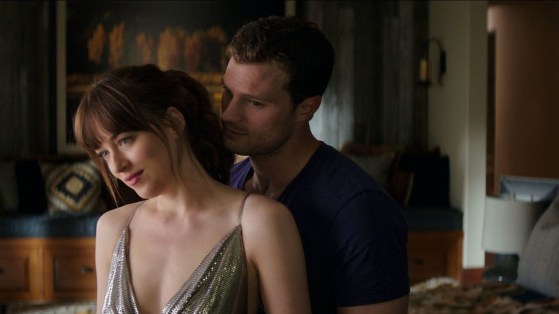
Fifty Shades Freed, the latest and supposedly final entry in the continuing story of a young beautiful sub and her filthy rich dom, sees the happy couple finally married but finding the bonds of marriage significantly more uncomfortable than the handcuffs they use in their tepid sex. Ana’s mad that the architect designing their new home has the hots for Christian and struggles to fit in at a new job (that he gave her) which doesn’t seem to involve any actual work (except for the part where she tells someone to “increase the font size two points”). Christian doesn’t really want kids but he seems to do very little else but think about screwing his wife, which tends to have certain results. You can see where this is headed. They go on several vacations and eventually the creepy stalker boss from the last movie turns up and some kidnapping hijinks ensue. In very occasional spots, with Christian’s servants adjusting to their new mistress and the young bride adjusting to her secretive, paranoid husband, it almost resembles a wannabe poptimist Rebecca, only with a completely uninvestigated, bizarrely aspirational streak. As if we were expected to find it really romantic that the new Mrs. de Winter secretly hoped Maxim would eventually shoot her too.

As mainstream sexploitation goes this series is mostly inadequate, serving up more lifestyle porn than actual sex, let alone anything that any decent pervert would consider outré. It’s sadomasochism described by someone who wouldn’t even dream of being tied up in bed. One wonders if the alleged kink on display is meant to ground the wealth of these incredibly rich blanks in something supposedly relatable or if their wealth is meant to make the kink seem in some small way exotic. Either way, it’s kind of amazing that a woman who can’t even handle someone flirting with her husband and a man who suspects he’s being abandoned after a few missed phone calls could somehow manage the serious trust required for a sexual relationship in which someone asks you to hurt them while you fuck.

Friday February 2 – Thursday February 8

Featured Film:

A Brighter Summer Day at the Pickford Film Center

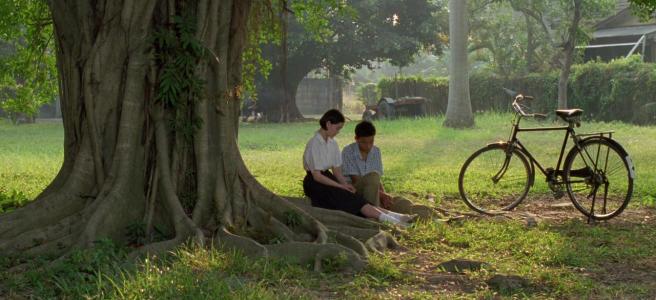
The SIFF Film Center’s Thursday night documentary triple feature of Los Sures, Stations fo the Elevated and Dark Days certainly looks cool, and the Canyon Cinema series being presented by the Grand Illusion and Northwest Film Forum looks to be one of the more exciting experimental film events of the year, but it’s been awhile since we looked at our neighbor to the far north, Bellingham, and their outstanding independent theatre, the Pickford Film Center. And this weekend they’re playing Edward Yang’s monumental A Brighter Summer Day, which we talked about way back on Episode Five of The Frances Farmer Show and which I reviewed at the sadly now-defunct Movie Mezzanine (you can read the review now at The Chinese Cinema. It’s a great movie, of course, and one of the neat things about it is that its running time is longer than the time it probably takes you to drive from Seattle to Bellingham and back again. The Pickford also has Nanook of the North on Sunday, and Yang’s Taipei Story next weekend.

Playing This Week:

AMC Alderwood:

Padmaavat (Sanjay Leela Bhansali) Fri-Thurs

Ark Lodge Cinemas:

The Florida Project (Sean Baker) Fri-Weds Our Review Our Other Review
North by Northwest (Alfred Hitchcock, 1959) Fri-Thurs
To Catch a Thief (Alfred Hitchcock, 1955) Fri-Thurs
The Violent Years (William Morgan, 1956) Thurs Only

Central Cinema:

Groundhog Day (Harold Ramis, 1993) Fri, Sat & Mon
The Grand Budapest Hotel (Wes Anderson, 2014) Fri-Tues Our Review

Grand Cinema:

Groundhog Day (Harold Ramis, 1993) Sat Only
Django (Etienne Comar) Tues Only
Santa & Andres (Carlos Lechuga) Thurs Only

Grand Illusion Cinema:

Vazante (Daniela Thomas) Fri-Thurs
Canyon Cinema 50: Associations (Various) Sat Only 16mm
Saturday Secret Matinee: Very Bad Deals Sat Only 16mm

Cinemark Lincoln Square:

Chalo (Venky Kudumula) Fri-Thurs
Humble Politician Nograj (Saad Khan) Fri-Thurs
Oru Nalla Naal Paathu Solren (Arumuga Kumar) Fri-Thurs
Touch Chesi Chudu (Vikram Sirikonda) Fri-Thurs
Bhaagamathie (G. Ashok) Fri-Thurs
Padmaavat (Sanjay Leela Bhansali) Fri-Thurs

Regal Meridian:

Til the End of the World (Wu Youyin) Fri-Thurs
Mary and the Witch’s Flower (Hiromasa Yonebayashi) Fri-Thurs Our Review
Padmaavat (Sanjay Leela Bhansali) Fri-Thurs

Northwest Film Forum:

The Road Movie (Dmitrii Kalashnikov) Fri & Sun Only
Children’s Film Festival Seattle 2018 Fri-Sun
Infinity Baby (Bob Byington) Starts Weds Editor in Attendance
Canyon Cinema 50: Studies in Natural Magic (Various) Thurs Only 16mm
The Cage Fighter (Jeff Unay) Starts Thurs Director Q&A Thurs-Sat

Regal Parkway Plaza:

Padmaavat (Sanjay Leela Bhansali) Fri-Thurs
Ang Dalawang Mrs. Reyes (Jun Lana) Fri-Thurs
Bilal: A New Breed of Hero (Ayman Jamal & Khurram Alavi) Fri-Thurs

Pickford Film Center:

A Brighter Summer Day (Edward Yang, 1991) Sat Only Our Podcast Our Review
Nanook of the North with In the Land of the War Canoes (Robert Flaherty, 1922 and Edward Curtis, 1913) Sun Only

AMC Seattle:

In the Fade (Fatih Akin) Fri-Thurs

Seattle Art Museum:

The Magician (Ingmar Bergman, 1958) Thurs Only

SIFF Film Center:

A Ciambra (Jonas Carpignano) Fri-Thurs
Song of the Sea (Tomm Moore) Sat Only
Los Sures, Stations of the Elevated and Dark Days (Diego Echeverria, 1984; Manfred Kirchheimer, 1981; and Marc Singer, 2000) Thurs Only Triple Feature

In Wide Release:

Phantom Thread (Paul Thomas Anderson) Our Review
Hostiles (Scott Cooper) Our Review
The Commuter (Jaume Collet-Serra) Our Review
The Post (Steven Spielberg) Our Review
The Last Jedi (Rian Johnson) Our Review Our Podcast
The Shape of Water (Guillermo del Toro) Our Review
Pitch Perfect 3 (Trish Sie) Our Review
Lady Bird (Greta Gerwig) Our Review
Three Billboards Outside Ebbing, Missouri (Martin McDonagh) Our Review


The Grand Budapest Hotel (Wes Anderson, 2014)

3042014-poster-p-1-behind-the-scenes-of-the-oscar-nominated-production-design-of-the-grand-budapest-hotel

The Andersonian hero makes his own world. Not exactly a fantasist, he (and it’s almost always a he) is a man out of time. An aspiring thief (Bottle Rocket), a master thief (Fantastic Mr. Fox), wildly impractical teenagers (Rushmore, Moonrise Kingdom), a discoverer of hidden worlds (Life Aquatic), families of prodigies (Royal Tenenbaums, Darjeeling Limited). Their opponents are the depressing realities of everyday life, the warn-down depressions of middle-age (Moonrise Kingdom, Rushmore), the accumulated disappointments of unrealized dreams (Life Aquatic, Darjeeling Limited, Royal Tenenbaums), or simply friends and family who lack their creative ambition and would rather settle down for a quiet life (Fantastic Mr. Fox, Bottle Rocket, Life Aquatic).

Ralph Fiennes’s M. Gustave is The Grand Budapest Hotel‘s explicitly designated man out of time. A lone patch of civilization in the barbarous world of a fictionalized inter-war Central Europe. Dandyish and perfumed, prissy and effete, he swears like a drunken Marine and is very committed to his duties as concierge, going so far to please his guests as to sleep with all the rich, elderly ladies who come to stay at the palatial hotel (for he is their holding action against the inevitable declines of age). Against him stands not merely a personification of the real world or a more practical counterpart, but rather the systemic decline of civilization itself, murderous greed and the rise of fascism. Set against not merely the greedy inheritors of one of Gustave’s lover’s fortunes, but the increasingly menacing martial forces of a Nazi-like state, Grand Budapest Hotel is, I think, the first Anderson film to acknowledge an outside political reality whatsoever (rather than simply politics as family and personal relationships). That it deals with a phony version of an 80+ year old movement should come as no surprise.

Continue reading The Grand Budapest Hotel (Wes Anderson, 2014)”

Friday January 26 – Thursday February 1

Featured Film:

Hitchcock at the Ark Lodge Cinemas

With the Oscar nominations out, the theatres are packed with contenders, many of which have already been playing for several weeks, some of which are back on Seattle Screens (like The Florida Project, also at the Ark Lodge). That means pickings are slim for repertory this week. There’s the Children’s Film Festival at the Northwest Film Forum, or a nice double feature of The Fits and Polina at the SIFF Film Center, or even Wild Strawberries at SAM, if you’re a fan (I am not). But it’s hard to top the pair of Psycho and The Birds at the Ark Lodge, part of the series of Hitchcock masterpieces they’ve been playing all month long. And as a special treat, Thursday night only they’re showing his (literally) atmospheric and creepy silent The Lodger: A Story of the London Fog.

Playing This Week:

AMC Alderwood:

Padmaavat (Sanjay Leela Bhansali) Fri-Thurs

Ark Lodge Cinemas:

The Florida Project (Sean Baker) Fri-Thurs Our Review Our Other Review
Psycho (Alfred Hitchcock, 1960) Fri-Thurs
The Birds (Alfred Hitchcock, 1963) Fri-Thurs
The Lodger (Alfred Hitchcock, 1927) Thurs Only Our Review

Central Cinema:

Coraline (Henry Selick, 2009) Fri-Mon
Leon: The Professional (Luc Besson, 1994) Fri-Mon

Century Federal Way:

1987: When the Day Comes (Jang Joonhwan) Fri-Thurs

Grand Cinema:

The Thing (John Carpenter, 1982) Sat Only
Kangaroo: A Love-Hate Story (Mick McIntyre & Kate McIntyre Clere) Sun Only Filmmaker Q&A
Wait for Your Laugh (Jason Wise) Tues Only
Our Little Sister (Koreeda Hirokazu, 2015) Thurs Only Our Review

Grand Illusion Cinema:

Freak Show (Trudie Styler) Fri-Thurs
The Final Year (Greg Barker) Sat-Mon Only
Saturday Secret Matinee: Swashbuckling Heroes! Sat Only 16mm

Cinemark Lincoln Square:

Bhaagamathie (G. Ashok) Fri-Thurs In Tamil or Telugu, Check Listings
Padmaavat (Sanjay Leela Bhansali) Fri-Thurs
Yere Yere Paisa (JSanjay Jadhav) Sun Only

Regal Meridian:

Mary and the Witch’s Flower (Hiromasa Yonebayashi) Fri-Thurs Our Review
Padmaavat (Sanjay Leela Bhansali) Fri-Thurs

Northwest Film Forum:

Tom of Finland (Dome Karukoski) Fri & Weds Only
The Road Movie (Dmitrii Kalashnikov) Start Weds
Children’s Film Festival Seattle 2018 Fri-Sun & Weds
As Far As the Eye Can See (David Franklin) Thurs Only Director in Attendance

Regal Parkway Plaza:

Padmaavat (Sanjay Leela Bhansali) Fri-Thurs
Ang Dalawang Mrs. Reyes (Jun Lana) Fri-Thurs
The Disaster Artist (James Franco) Fri-Thurs Our Review

Seattle Art Museum:

Wild Strawberries (Ingmar Bergman, 1957) Thurs Only Our Review

SIFF Film Center:

Dirtbag: The Legend of Fred Beckey (Dave O’Leske) Fri-Weds
Song of the Sea (Tomm Moore) Sat Only
The Fits and Polina (Anna Rose Holmer, 2015 and Angelin Preljocaj & Valérie Müller, 2016) Thurs Only Double Feature

Varsity Theatre:

American Folk (David Heinz) Fri-Thurs
The Clapper (Dito Montiel) Fri-Thurs

In Wide Release:

Phantom Thread (Paul Thomas Anderson) Our Review
Hostiles (Scott Cooper) Our Review
The Commuter (Jaume Collet-Serra) Our Review
The Post (Steven Spielberg) Our Review
The Last Jedi (Rian Johnson) Our Review Our Podcast
The Shape of Water (Guillermo del Toro) Our Review
Pitch Perfect 3 (Trish Sie) Our Review
Lady Bird (Greta Gerwig) Our Review
Three Billboards Outside Ebbing, Missouri (Martin McDonagh) Our Review


The Paris Opera (Jean-Stéphane Bron, 2017)

the-paris-opera

It’s apparently impossible to make a film about an institution and not fall into comparison with Frederick Wiseman. Especially if that institution is a creative one and doubly so if Wiseman already made a film about it, one of the best documentaries of the last ten years, La danse: The Paris Opera Ballet. Yet Jean-Stéphane Bron has done it, with this film about The Paris Opera, and while it isn’t Wiseman, lacking both his exact sense of rhythm and his patience, it’s not bad. Skipping along among the massive company over a season as it puts on nine operas and eight ballets, from high level meetings with the company director involving everything from fundraising to the size of the programs to where Natalie Portman should sit during a performance (she is married to Benjamin Millipied, who was director of the ballet during filming: we’ll catch a glimpse of the fallout from his resignation in 2016). There are interstitial shots, as in Wiseman, of the craftspeople at work: preparing costumes and wigs, wrangling an enormous bull for the opera Moses und Aron, cleaning up the stage and the auditorium after the show. And of course we see the performers in rehearsal: opera singers, dancers, and a young group of violinists in an outreach program. It packs so much into less than two hours, you begin to understand why Wiseman needs four or more for his films: there’s not enough of any one thing, just as you begin to understand a performers struggle with a line, or a step, we’ve moved on to something else.

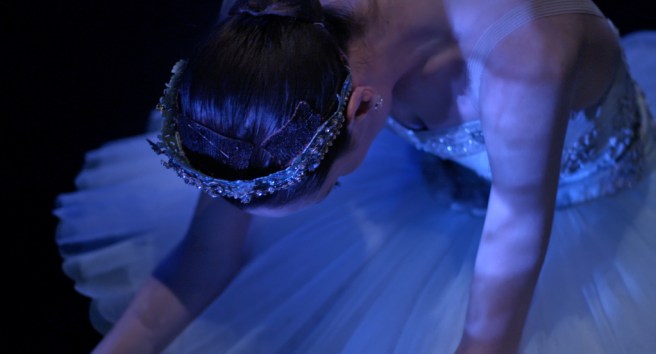
Jody Lee Lipes’s documentary Ballet 422 solved the Wiseman problem by focusing intently on a single artist, a choreographer prepping his first ballet. We follow him throughout the process and see it begin to take shape, while learning about the backstage aspects of the company in breaks between rehearsals and other dramatic high points. Bron attempts something like that with the story of a mop-haired young Russian opera singer, who joins the company with evident talent, yet has to learn both how to speak French (he already manages pretty well in English and German) and sing to the company’s lofty standards at the same time. But he largely disappears through the second half of the film, which is true to life (not everyone’s life is always dramatically interesting) but makes for a disjointed through-line for a feature film. The film suffers from a lack of performance footage as well: we catch only peeks from the wings of the final productions, it’s almost like they didn’t have permission to properly film the shows and so had to content themselves with stolen sidelong glances. What performances we do see are very good, though heavily weighted toward the opera side (perhaps because Wiseman covered the ballet already). The film is at its best in small, intimate moments: a singer stands just behind the curtain, her body drenched with sweat which she dries with handfuls of Kleenex; a moment of silence on-stage and for the audience for the victims of a terrorist attack, which extends backstage, to the security office and even to the kitchens; a ballerina dances beautifully offstage then collapses to the ground, heavily panting with the effort, catching her breath just in time to dance some more.

Mary and the Witch’s Flower (Hiromasa Yonebayashi, 2017)

mary_and_the_witchs_flower600_size3

With his third feature film as a director, Hiromasa Yonebayashi has yet to develop an identity for himself outside of Studio Ghibli, where he began his career and made his debut, The Secret World of Arrietty, eight years ago. His films are technically impeccable, with the kind of detail and beauty that Hayao Miyazaki is known for, but something is missing. And it’s that something extra that marks Miyazaki as a great artist, while Yonebayashi is merely a skillful animator. Mary and the Witch’s Flower proves an excellent case-in-point. A young girl, bored while living with older relatives in the countryside, accidentally stumbles into a magical world above the clouds. Finding a flower that temporarily grants her magical powers, she’s mistaken for a new student and rushed into a wondrous school of wizardry by a magical broomstick. But it turns out the headmistress and the school’s resident scientist have been conducting mad experiments in interspecies hybrids, jeopardizing the girl and her friend Peter. Mary has to rescue the boy and defeat the evil sorcerers before it’s too late*.

The look owes everything to Miyazaki joints like Kiki’s Delivery ServiceCastle in the Sky (which you can catch this week at the Egyptian, kicking off the Northwest Film Forum’s annual Children’s Film Festival) and Howl’s Moving Castle. Mary is a headstrong girl with a mess of unruly red hair and a strong moral center. The magic school is made of gently steampunkish castles floating in seas of green, and the herds of experimented-upon animals recall the armies of forest creatures in Princess Mononoke. It’s all very beautiful, with some nice fantastical images and one quiet moment of repose. But where in Castle in the Sky the quiet moment is an oasis of beauty in an otherwise non-stop adventure, a pause to remind the heroes of what they’re fighting to defend and what the world has lost, and in Spirited Away the quiet moment leads to a soft deflation of all the expected action film anxiety right before it should have burst, in Mary it merely serves as a location for the delivery of flashbacked backstory before the final, rote, chase/battle sequences.

Yonebayashi’s last film, When Marnie Was There, was much more successful in breaking out of the Miyazaki template, bringing a ghostly Gothic romance edge to its story of a young girl coming of age. Mary, though, is a recapitulation, a kind of remix of Miyazaki without any of the idiosyncrasy. The scenario isn’t much more complex than that of Howl’s, or Ponyo, but Miyazaki is incapable of making an impersonal work and those films, targeted as they are (especially the later) toward the littlest kids, abound in the kind of small oddities and plot-free idylls that make a movie world come to life. Mary and the Witch’s Flower is a beautiful movie, and God knows it’s better than at least 90% of what passes for children’s entertainment in American multiplexes, but it’s a ghost.

*Note that I watched the English dub of this Japanese film. It’s what was available on the press screener and, as far as I can tell, the English version is the only one that will be playing during the film’s run at the Meridian. But Regal is haphazard in noting dubbing or subtitling on their animated films. The English dub is quite good though, with Kate Winslet and Jim Broadbent adding some degree of star power. The film’s source and setting, it’s based on a novel by British writer Mary Stewart, are perfectly consistent with English accented voices, with none of the discordances caused by the dubbing of Isao Takahata’s very Japanese Only Yesterday a few years ago.