SIFF 2017: Dawson City: Frozen Time (Bill Morrison, 2016)

images

Note: as this film is under embargo until its release in the Seattle area, here are exactly 75 words.

Superficially more conventional than Beyond Zero: 1914-1918 and Back to the Soil, in its clear and direct narrative about the discovery of buried nitrate film in the Yukon. But in circling back to tell the simultaneous stories of cinema, Gold Rush, and the rise and fall of a western town, it contains multitudes. Dawson City is either a remarkable locus point of history or it’s not: who knows what forgotten histories lurk beneath our swimming pools.

SIFF 2017: Sami Blood (Amanda Kernell, 2016)

Outsider status in gymnI long for the land that isn’t
For all that is I’m tired of wanting

Sami Blood, Sami-Swedish writer-director Amanda Kernell’s debut feature, opens on a black screen and the sound of a lonely, whistling wind. Then, a knocking, as the introductory credits, white on black, appear, and a man’s voice: “Mom?” More knocking. The same voice: “Christina?” The first image appears, an elderly woman, alone, in close-up profile, lighting a cigarette, looking out a window, ignoring the voice. It’s a haunted space with that blackness, the wind, the disembodied voice, and the woman, turned away, hiding from both the voice of her son and our public prying eyes. It’s a space that sets the stage for the film to follow, the story of the girl who becomes that woman, a woman who is, indeed, haunted, hiding, and alienated from those closest to her and from the larger world, too, a world, she fears, might stare at her too much and too long.

Christina

In the opening scenes, the elderly Christina (Maj-Doris Rimpi), reluctantly guided by her son and accompanied by her granddaughter, attends the funeral of her long estranged sister. It is a Sámi funeral, following the traditions of that complex and internally diverse people group indigenous to Sweden, and it is clear that Christina, living in Swedish dress and speaking the Swedish language, feels deeply uncomfortable within the Sámi community. She speaks to no one and even shields her face with her hand while she sits silently at the post-funeral meal, away from her son and granddaughter, who are eating and talking with ease with those around them. The intimacy of family-community bonds juxtaposed with the individual isolation of Christina, separate and silent, is what strikes us most immediately. It is one thing to feel alone among strangers, wholly another to be alone among kin. Continue reading “SIFF 2017: Sami Blood (Amanda Kernell, 2016)”

SIFF 2017: Knife in the Clear Water (Wang Zuebo, 2016)

knife-in-the-clear-water-busan

What does it mean to program a film like Knife in the Clear Water in 2017? And lest there be any confusion, Wang Xuebo’s film is not, as the title suggests, a Polanskian exercise in triangulated sexual tension. There aren’t even enough points here to form a triangle; the only relationship of note is between man and cow. I’ll resist the flippant impulse to label the movie itself as bovine, but suffice it to say that if you’ve been to a film festival in the last 30 years, you’ve encountered Wang’s chosen mode: the lumbering, slow, dull art movie, the kind of cinema constructed around underrepresented peasant classes, devoid of incident save the barest whisper of conflict, composed exclusively in long take, and, bonus points, in 4:3.

The film follows a farmer who resists sacrificing his beloved beast of burden in order to fulfill the burial rites initiated by his wife’s death. Shot in China’s harsh mountain region Ningxia, Knife in the Clear Water understands itself to be a hard-eyed glimpse into the lives of the Hui people who call this place their home. At least in terms of texture, the film does manage to capture something: the way that atmosphere, earth, and skin mingle together as if cut from the same ashen cloth suggests the bond shared between the landscape and its inhabitants. On the other hand, I wonder the extent to which any of the filmmaking choices here emerge from lived experience. I cannot presume to know how the Hui community in the film would choose to depict themselves, either collectively or through the peculiar eye of a homegrown artist, and for all I know what’s on display here is that vision, but the fealty with which Knife in the Clear Water adheres to every stylistic cliche of the festival circuit, its total alignment with the demands of the market (and let’s be clear, it is a market), raises some doubts. Hou Hsiao-hsien and co.—inarguably the progenitors of the style—can count many sons and daughters among the filmmakers most favored by programmers worldwide, which must be considered a coup given the initial modesty of their project, and yet by transforming an economic limitation into an aesthetic they bequeathed to a generation of cash-strapped artists a safe, bankable blueprint. The blame for slow cinema’s status as a lazy generic default can’t be laid at their feet or even Wang’s, really. But après Hou, le déluge; year after year the market is flooded.

A film like Knife in the Clear Water exists because filmmakers and festivals lack a vision of the future. Both ran the numbers, looked at what got slotted before, and traded in the danger of artistic risk for the well-worn laws of supply and demand. There’s a reasonable hope that, like any economy, the glut of product might be cut short if we stopped consuming it. But alas: to program Knife in the Clear Water in 2017 means programming it, under a different and presumably less tantalizing title, again and again and again.

2017 SIFF Preview

siff17

The time has come once again for the month-long extravaganza across this city known as the Seattle International Film Festival. This is my second time attending but the first covering it as a member of the press, and while I can’t say that there is an overflowing multitude of films I am absolutely dying to see, there are enough curiosities to satisfy.

As a means of organization, I will be listing out many of the most notable titles roughly by order of interest. It should be noted that my views (based solely on a fairly light perusal of the film guide) on what are the most noteworthy films may diverge wildly from yours, and should thus be take with a grain of salt – The Big Sick, tonight’s opening gala film, isn’t on this list for instance. But otherwise, on to the films.

Almost certainly the most noteworthy and delightful inclusion is one of the latest works from the South Korean auteur and master filmmaker Hong Sang-soo, entitled Yourself and Yours. His wholly idiosyncratic and hilarious style, filmed in long takes with obtrusive zooms and bountiful amounts of soju, typifies some of the best and most intelligent films of world cinema. Equally noteworthy is his quick working method: since Yourself and Yours premiered last year at the Toronto Film Festival he has completed three films, including two that are set to debut at Cannes in the next few days. It should be noted that this particular incarnation of Hong’s pet obsession, the fraught relationship between men and women, has been reported to be more abtruse than much of his previous work, so a prior immersion in his work is recommended, something like his great film last year Right Now, Wrong Then.

Nocturama is the latest film by French director Bertrand Bonello, who has garnered much praise for his meticulous, hypnotic brand of direction. This film in particular has been received with a great deal of controversy, as it deals with a terrorist attack perpetuated by a group of teenagers, who spend the second half of the film hiding out in a mazelike shopping mall in the heart of Paris. Also very noteworthy are João Pedro Rodrigues’ The Ornithologist, a Portugese jungle exploration into the erotic and the spiritual, A Ghost Story, David Lowery’s tale of semi-supernatural romance starring returning collaborators Casey Affleck and Rooney Mara, and Person to Person, a New York multiple-storyline “network film” starring, among many, Michael Cera, Abbi Jacobson, and Phillip Baker Hall.

On the repertory side of things, the most noteworthy inclusion is Abbas Kiarostami’s Taste of Cherry. The film for which the late director, perhaps the greatest of all modern artists, won the Palme d’Or at Cannes, it attracted strongly divided critical responses and has emerged as one of his most definitive works, an immensely contemplative work on suicide and the human condition that takes place, as with many of Kiarostami’s works, mostly over a series of car rides. Other intriguing repertory titles include The Marseille Trilogy, a series of films about a love triangle written and conceived by Marcel Pagnol, Maurice, a gay Merchant-Ivory romance, and Love and Duty, a silent drama starring Chinese film icon Ruan Lingyu.

There are, of course, other notable films showing during the next month, and here are just a few more.

  • After the Storm, the latest film by Japanese auteur Hirokazu Koreeda
  • By the Time It Gets Dark, a Thai film that plays with notions of reality and cinema
  • Columbus, the debut film of noted video essayist kogonada
  • The Unknown Girl, the new Dardennes Brothers movie
  • Beach Rats, an exploration of sexuality on the beaches of Brooklyn
  • Bad Black, an explosive, crazed no-budged action film from Wakaliwood in Uganda
  • Afterimage, the final film by Polish direct Andrzej Wajda
  • I, Daniel Blake, the second Palme d’Or winning film by Ken Loach
  • Manifesto, a series of monologues performed by Cate Blanchett in 13 different roles
  • Wind River, the directorial debut of Taylor Sheridan, script writer of Sicario and Hell or High Water
  • Searchers, a Canadian Inuit film based partly on the legendary John Ford movie

This list forms a good portion of the truly noteworthy and worthwhile works showing at this year’s Seattle International Film Festival, but it is naturally incomplete. The rest is up to the viewer.

SIFF 2017: Cook Up a Storm (Raymond Yip, 2017)

COOK-UP-A-STORM-copy

One of only two Hong Kong films to be playing at SIFF this year is this cooking film from star Nicholas Tse and director Raymond Yip. It’s a Lunar New Year film, opening a week after the holiday both at home and abroad, to avoid box office competition from Tsui Hark and Stephen Chow’s Journey to the West: Conquering the Demons. It played here briefly at the Pacific Place, but SIFF is reviving it for the festival. I’m not exactly sure why, probably because of the food. Director Yip is strictly workmanlike, the guiding force behind the film is Tse, who has been one of the more figures in Hong Kong over the past twenty years. The son of star actor Patrick Tse (Story of a Discharged Prisoner), he began as a popular singer before moving into movies (Time and Tide, Jade Goddess of Mercy, Bodyguards & Assassins) and television (where he hosts and cooks on a popular foodie show called Chef Nic) and a series of romantic entanglements with Faye Wong and Cecilia Cheung. Cook Up a Storm appears to be an attempt to extend the Chef Nic brand, as Tse plays a local Cantonese chef challenged by a European-trained, Michelin-starred chef who opens an upscale restaurant across the street. Both Nic and the new chef (a truly international man: half-Korean and half-Chinese, raised and trained in Europe, he’s played by Korean singer/actor Jung Yong-hwa) have secrets which they must overcome to win a game show-style culinary competition.

Continue reading “SIFF 2017: Cook Up a Storm (Raymond Yip, 2017)”

SIFF 2017: Week One Preview

dawsoncity3-1600x900-c-default

That occasional glimpse of sun in our dank gray skies signals not only the rebirth of allergy season but also that it is time once again for Seattle’s annual migration to the margins of international art house cinema. The Seattle International Film Festival begins this Thursday, kicking off another epic 25 day march around the world of contemporary and archival cinema. We at Seattle Screen Scene will once again have extensive coverage, and here are some of the films we’re looking forward to this first week, May 18-25. We’ll add links to our reviews of the films we see here as we write them.

After the Storm – The latest from acclaimed Japanese director Kore-eda Hirokazu is another in his series of quiet family dramas, following Still Walking and Our Little Sister. Hiroshi Abe plays a dilapidated father, a novelist moonlighting as a private detective while he struggles with his second book. He tries to reunite with his ex-wife and connect with his young son. Slight, but warm, Kore-eda could probably churn out films like this for another 20 years and I’d be OK with that. I wrote a short review of it last fall at VIFF. Plays May 19 & 20.

The Unknown Girl – An unusual film from the Dardenne Brothers, in that it’s generically conventional: a nurse investigates the identity of a young woman who knocked on her door one night and wound up dead in the morning. The Dardennes’ Catholic vision of collective guilt meshes naturally with the film’s noir vibe. Evan reviewed it at VIFF. Plays May 19 & 21.

Dawson City: Frozen Time – Experimental documentarian Bill Morrison’s Beyond Zero 1948-1918 was one of my favorites of SIFF 2015, so I’m very much looking forward to this new film, which uses uncovered, decaying nitrate film to chronicle the transformations of a gold rush town around the beginning of the 20th Century. Plays May 19 & 20.

Animal Crackers – “The beginning of the end. Drab dead yesterdays shutting out beautiful tomorrows. Hideous, stumbling footsteps creaking along the misty corridors of time.” Plays May 20.

Hello Destroyer – Canadian director Kevan Funk’s chronicle of a hockey player wrestling with the consequences and ideology of violence after he puts a vicious hit on another player. It didn’t technically play as part of the Future // Present program at VIFF last fall, but it might have. Plays May 20 & 21.

The Trip to Spain – Steve Coogan and Rob Brydon continue their travels through Europe, along with the third installment of Michael Winterbottom’s series of improvisational fake documentaries about celebrity impressions and the angst of being rich, middle-aged men. Plays May 20 & 21.
yourselfandyours_06

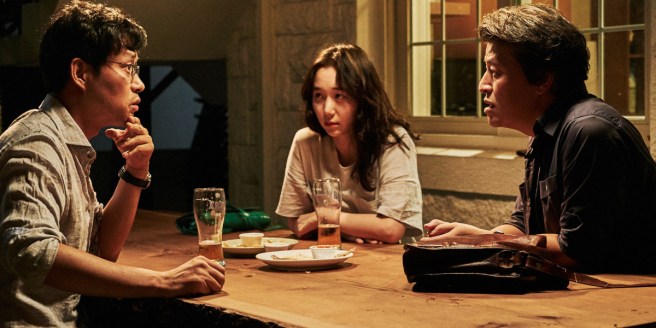
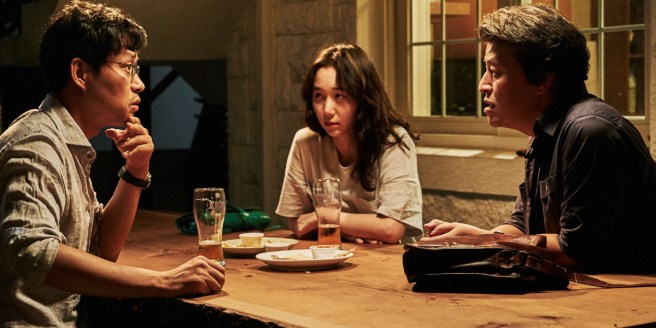
Yourself and Yours – One of four Hong Sangsoo films to be released in the past nine months, this one is about a woman who, after her boyfriend tells her she drinks too much, spends a few days flirting with other men, or doesn’t but in fact has a twin who drinks and flirts a lot. Evan reviewed it at VIFF, and I reviewed it earlier this year. Plays May 21, 22 & 24.

Cook Up a Storm – One of only two Hong Kong films at this year’s SIFF, and back after a brief run at the Pacific Place in February, Raymond Yip’s foodie clash show stars Nicholas Tse, famous actor and host and primary chef on a popular cooking show. Chef Nic plays a Cantonese street cook competing against a Michelin-starred chef in a culinary competition. Anthony Wong plays Nic’s dad. I’m expecting a flashier, less soulful take on Tsui Hark’s The Chinese Feast, with less of the romantic charm of the now-playing This Is Not What I Expected. Plays May 21, 28 & 31.

Manifesto – Cate Blanchett plays thirteen different roles reciting famous artistic statements in this adaptation of Julian Rosefeldt’s installation. Plays May 22 & 26.

Bad Black – A DIY action comedy from Uganda and producer/director/writer/editor Nabwana IGG that looks to promise as many joy of making exploitation cinema thrills as anything likely to be found in this year’s festival. Plays May 20, 22 & 25.

Vampire Cleanup Department – The other Hong Kong film at SIFF this year, it’s a kind of reboot of the classic 80s hopping vampire films (Mr. VampireThe Dead and the Deadly), with a young man learning the ropes of vampire removal while protecting the vampire woman he loves. Plays May 23, 25 & 26.


Yourself and Yours (Hong Sangsoo, 2016)

yourselfandyours_06

Yourself and Yours isn’t the latest film from South Korean director Hong Sangsoo, that would be On the Beach at Night Alone, which premiered a few weeks ago at the Berlin Film Festival (where it picked up a Best Actress award) and which Evan wrote about here last week (Evan has also written here about both Yourself and Yours and its trailer). Yourself and Yours may still come to Seattle Screens, Hong’s Right Now, Wrong Then played here last summer, almost a year after its festival premiere in 2015. It’s probable that if it does, it won’t be until after another new Hong movie plays the Cannes Film Festival, as his Claire’s Camera is rumored to be finished by that time. With a director this prolific (since taking a year off in 2007, Hong has directed thirteen feature films in ten years) it’s easy for a film here or there to get lost in the mix, especially given the lethargic pace at which films today move from the festival circuit to the theatrical art house. The system simply isn’t designed, at present, for a director who releases a new film every nine months. This isn’t unique to Hong (the similarly prolific Johnnie To has had equally haphazard distribution) nor is it unique to the present (take a look sometime at the distribution schedule of Jean-Luc Godard’s 1960s period). But don’t let these institutional vagaries obscure the fact that Hong is in the midst of one of the great cinematic winning streaks, a frenetic burst of creative energy that comes along only a few times in a generation. And Yourself and Yours, seemingly already forgotten though it premiered just six months ago, epitomizes the greatness of that streak as well as anything.

Continue reading Yourself and Yours (Hong Sangsoo, 2016)”

VIFF 2016: After the Storm (Kore-eda Hirokazu, 2016)

6b2ee282-4e5c-11e6-ba91-9b331c0ddad9_1280x720

Beginning with a shot out of the canon, a small Japanese kitchen, mother and daughter at work, receding into the distance on the left side of the screen are a series of rectangular spaces, the right angles of doorways leading to doorways, director Kore-eda Hirozaku states his intention to work in the mines first exploited by Yasujiro Ozu in a series of domestic comedies and dramas from the 1930s through the 1960s. This seems to be Kore-eda’s increasingly preferred mode of work, it’s been a long time since the minimalist fantasy of Afterlife, or even the bizarre Doona Bae vehicle Air Doll (in which the one of the great actresses working today plays a sentient sex doll who learns what it means to be human, and to kill). Since that film, Kore-eda has been following the vein of his 2008 masterpiece Still Walking, with a handful of films about families told in a patient, superficially Ozuvian style (no director has ever made a film completely in Ozu’s style: his editing and framing system is simply too idiosyncratic, most, like Kore-eda, recall the shapes of his sets and seek to recreate the pace of his movies with longer shot lengths). If this period of his work is as strong as After the Storm, I for one am content to let Kore-eda keep churning out these movies indefinitely.

Hiroshi Abe plays an acclaimed writer who, blocked in the creation of his second novel and succumbing to his gambling addiction, is working as a shady private investigator. He’s recently divorced and trying to keep the affection of his young son and win his wife back as she moves on to another man. The old woman in the opening scene is his mother, played by Kirin Kiki, who was exceptional as the matriarch in Still Walking and just as good here, the woman was his sister, like him a mooch and a bit of a failure. Hanging over everything is their recently deceased father, a compulsive gambler, an unliterary man who nonetheless took great pride in his penmanship. The various threads weave together during the eponymous storm, the latest in an unusually large number of typhoons (I write in the midst of a typhoon here in Tacoma) to hit Japan that year. After the storm, things aren’t resolved, as they can’t ever be in movies like this, where the recognition of irresolvability is always the resolution, but the air is a little cleaner.

VIFF 2016: Yourself and Yours (Hong Sang-soo, 2016)


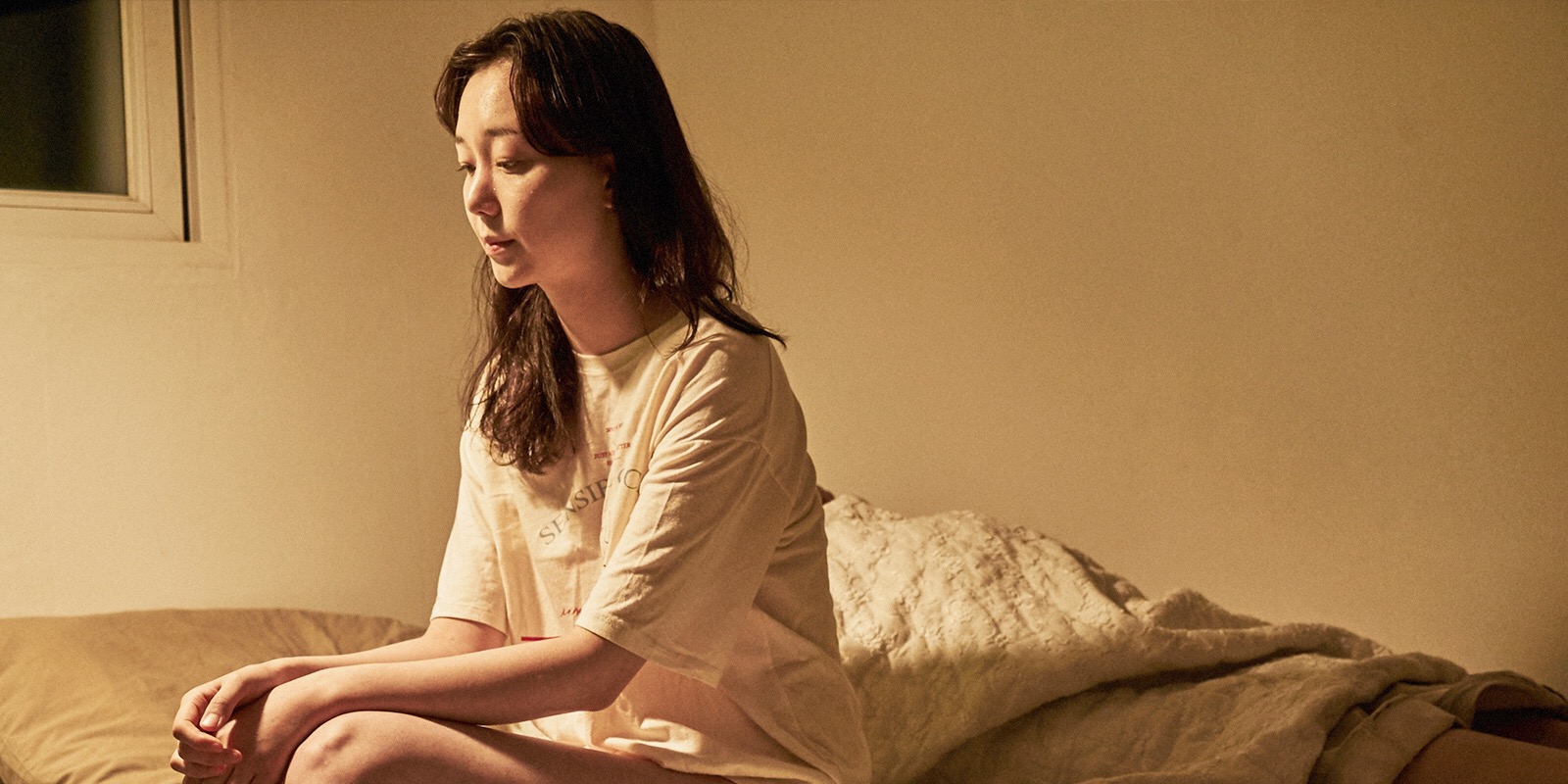
A comedy of remarriage as only Hong Sang-soo could imagine it, Yourself and Yours rearranges the familiar building blocks of social anxiety, sex, and—most of all—soju to tell the story of one couple’s breakup and reunion. Or, given that this is Hong’s protean world, perhaps it’s not a reunion at all but a new couple, newly formed. Key to this Hongian puzzlebox is Minjung, a young woman with a well-known love of drink recently sworn off the sauce at the behest of her boyfriend. Rumors of soju recitivism split the couple up and Minjung encounters two different men who profess to know her from the past. Minjung, for her part, claims no memory of them, offering up a suspicious twin sister look-a-like story or blank stares in response. The exact nature of these  misidentifications forms the film’s core mystery. It’s certainly possible that Minjung’s penchant for drink has obliterated these men from her mind, though it’s equally plausible that the self is an infinitely branching set of traits, often repeated and therefore identifiable, but always shifting emphasis, shape, and order, so also essentially unstable. Sounds like Hong’s movies.

Unlike his other recent features, Yourself and Yours offers no structural blueprint at the outset. Hill of Freedom‘s jumbled letters explain that film’s disorganized narration and Right Now, Wrong Then‘s initial title card (the inverted Wrong Then, Right Now) clues the attentive Hong viewer into the game being played. The dissipated dreaminess that governs Nobody’s Daughter Haewon comes closest, but with a crucial difference: Minjung does not appear to be dreaming. None of the strange happenings emanate from her consciousness. If anything, the unblinking earnestness of actress You-Young Lee’s performance ensures that Minjung remains a fixed point, no matter the cognitive dissonance she inflicts on the men around her. She is a mystery to others but never to herself.

That self-assurance allows Minjung to act the Hongian sage, the one character with sufficient wisdom to proffer extra-filmic advice: “Knowing is not as important as we think.” Perhaps that’s the only explanation for this hall of mirrors, though if this is a Stanley Cavellian comedy, as the final moments suggest, it’s one that takes his idea of transformation literally: “I am changed before your eyes, different so to speak from myself, hence not different. To see this you will have to correspondingly suffer metamorphosis.” Is Minjung’s mutable personhood just a screwball game to win back her lover, to make him transform? He can’t deny his partner’s true self (I drink therefore I am) and expect to keep her. So she wins. Is her victory a consequence of drunken forgetfulness, a spatiotemporal rupture, farcical roleplay? The beauty of Hong’s cinema lies in never having to choose.

VIFF 2016: The Unknown Girl (Jean-Pierre and Luc Dardenne, 2016)

unknowngirlthe

The architecture of the thriller suits the Dardennes more comfortably than it might first appear. In spite of their naturalism, the Belgian brothers construct intricate scaffolding for their films to rival many of their more outwardly formalist peers, and The Unknown Girl is perhaps more open about the structural blueprint than anything they’ve produced recently. A generic—in every sense of the word—tale of bad conscience gets the trademark handheld treatment in the dreary world of Liège, but it could just as well emerge from the wet streets of a 40s noir.

Guilt comes knocking, as it must, at the door of Dr. Jenny Davin. An unidentified African girl running from something sinister pleads entry into the safety of Davin’s clinic, though the young doctor is too busy lecturing her intern on the finer points of the profession to bother with the noise down the hall. The girl’s body is found nearby, and distraught at the consequences of her indifference, Davin hits the detective beat, searching for the girl’s name in an effort to offer her a modicum of dignity in death that the final moments of her life denied. Ratiocination unveils a web of guilt ensnaring everything in the doctor’s orbit, as if all of Liège harbors some complicity in this original sin, which, given the ethnic lines that divide here, suggests a reckoning with Belgium’s colonial past and present woes, though the capital ‘C’ Catholic Dardennes make it clear that no one escapes the fearful symmetry of guilt’s trap.

Trapped, certainly, but not unmovable. Jean-Pierre and Luc Dardenne may be clandestine formalists, but they’re also heart-on-the-sleeve humanists. The maze-like geometry of The Unknown Girl points towards noirish cynicism only to refute it. An embrace—with responsibility, with other people—is enough to open up a way out.