2016 Oscar-Nominated Animated Short Films

world of tomorrow

We are living in a glorious age of animation. Some of the best programs on television are animated. From the great Gravity Falls to the always awesome Adventure Time and on to the fractured genius of Rick and Morty, animation has been fertile ground for visionary storytellers as of late. Cinema has not been ignored either. Heralded auteurs Wes Anderson and Charlie Kaufman have both made the move to stop-motion features. Kaufman’s Anomalisa is one of five films duking it out in this year’s Best Animated Feature race. For all of the flack the Academy has received for its homogenized choices this year, the Oscars should be commended for their Animated Feature field which sports five idiosyncratic films, only one with talking animals. Three of the five nominees come from foreign countries, two are stop motion and only one is completely computer generated. One! The days of dominance from the big studios like Dreamworks and Disney are over, at least temporarily.

bear story

Then why are most of this year’s five nominees for Best Animated Short so pedestrian? It’s odd that the features are more adventurous in their narratives and visual style than the shorts. There are certainly novel elements to the short films, whether it is the fluid “one-shot” look of the hand-drawn Prologue or the eye-popping color of Sanjay’s Super Team from Pixar. But some of these films feel like half an idea or their mission statement overwhelms the narrative itself. Both are the case with Bear Story from Chilean director Gabriel Osoro. The film is about a toy-making bear who builds a box that cranks out a mechanical version of his imprisonment in the circus and eventual escape back to his family. The animation is solid for the toy sequences but a little too flashy at other spots (Osoro really likes showing off the computer’s ability to generate dust floating in sunbeams) and the whole thing doesn’t quite gel.
prologue

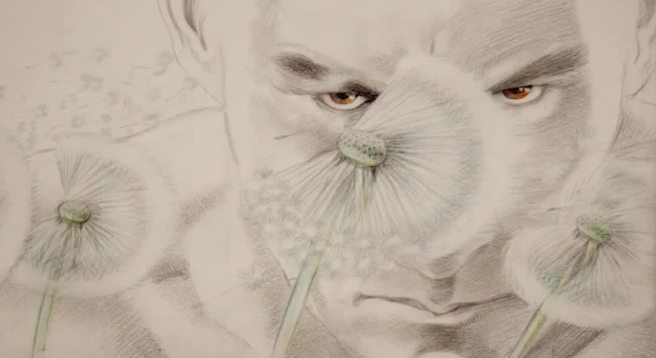
While Osoro’s well-placed abhorrence of the circus can be seen as heavy-handed in Bear Story it’s got nothing on Prologue‘s clunky treatise on the inhumanity of war. Director Richard Williams tells a silent tale with just pencil and paper that begins with a leaf before flying across the page to a centuries-old battle with shields and swords. Naked men thrust at one another, slicing arteries and severing genitalia, all gruesome images seen by a young child who runs back to the safe confines of their mother’s dress. The end. There isn’t anything more to it than that. And while the hand-drawn style is sweeping in its motion, freezing any frame in the battle would just look like something out of that stoner kid in high school’s notebook.
We Can't Live Without Cosmos short film


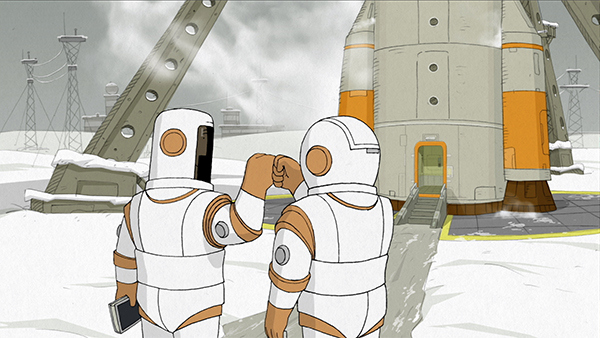
More effective and affecting is the Russian curio We Can’t Live Without Cosmos from Konstantin Bronzit. The film is about two cosmonauts who are inseparable. They share a deep love of space and one another. The film begins with some goofy humor as the duo work their way through their rigorous training regimen before the film turns into an exploration of loss. There are some indelible images contained within, if not any impressive animation. The turn of events from the thrill of exploration to the dull of devastation is interesting but not necessarily better than the deadpan antics that came before it.
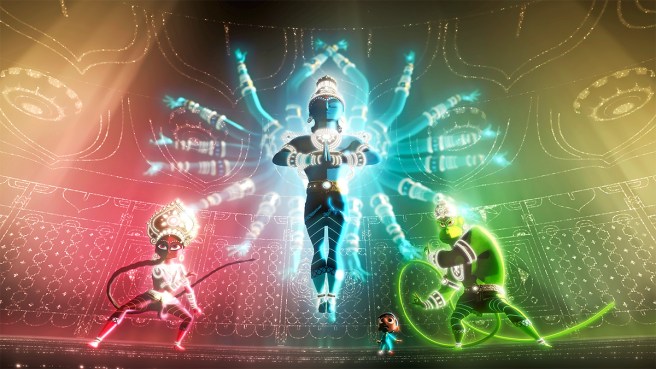
sanjay

Longtime Pixar animator Sanjay Patel gets his first directing credit on the personal Sanjay’s Super Team. The title character is a restless boy who daydreams that he teams up with Hindu gods to defeat a villain demolishing a temple. It’s no surprise coming from Pixar that the short looks fantastic. The sound design is equally stunning with a great blending of the musical score with the action onscreen. If anything Sanjay’s Super Team should have been longer than its seven minutes, as the film brings up some great possibilities that are left mostly unexplored. If you’re searching for an animated look at the complexity of Hindu culture, stick with Nina Paley’s Sita Sings the Blues.

world of tomorrow snow

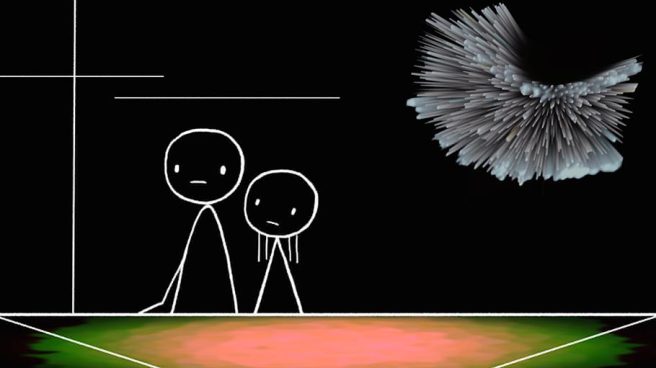
Which leaves us with Don Hertzfeldt’s World of Tomorrow. Hertzfeldt’s film, about a young girl being visited by a clone of herself from the future, is the only nominee that can hold its own with the aforementioned animated features. In a mere 16 minutes World of Tomorrow manages to cram in meditations on love, identity, and loss across a distinctively designed digital landscape. There is enough narrative here for a feature. Hertzfeldt’s decision to keep it confined to a short means that it’s bursting at the seams with ideas. The film is heartrendingly sad yet it brims with a resounding sense of wonder. It’s a film of bleak humor that doesn’t much care if we laugh at it, at ourselves, or at the world. World of Tomorrow is not just the best animated short of the year, it’s one of the very best films–animated, short, or otherwise.

(The 2016 Oscar-Nominated Animated Short Films play exclusively at Landmark’s Guild 45th for two weeks beginning January 29. Note that the program includes an additional four shorts non-nominated that were not available for review.)

The Revenant (Alejandro González Iñárritu, 2015)

angry dicaprio.png

There is a moment in Terrence Malick’s To the Wonder where Rachel McAdams and Ben Affleck are inexplicably surrounded by a herd of bison. The pair stand at their car and are awed by the majesty of the moment. And so are we, the audience. In Alejandro González Iñárritu’s new film The Revenant there is also a scene featuring a character stumbling upon some bison. The moment strives for a similar feeling of, well, wonder, but fails to deliver. It’s the approaches of these two filmmakers that spells all the difference. In Malick’s world an experience like that feels like luck, a chance encounter with real, live animals. And it’s also fleeting, a moment in a waterfall of moments that burns in your brain because it feels so fragile. In The Revenant everything is so rigorously composed, from the camerawork (filmed by longtime Malick associate Emmanuel Lubezki) to the herd itself, a computer-generated stampede heading to the end of the frame before disappearing, literally, forever.

It’s these moments in The Revenant that manage to shoot an otherwise pretty decent survivalist Western in the foot. When González Iñárritu is committed to the straightforward nature of his simple story, which is about a trapping scout who has to brave the elements to save his life and avenge a loved one, the film works well. There is a great sense of atmosphere and the occasional thrill. But whenever he grasps at poetry or pulls out a flashy camera trick–both of which happen often–the film flounders.

The film opens with a raid on a poacher’s encampment in which González Iñárritu throws the camera right in the middle of the action with sweeping, unbroken takes. While the technique is intended to feel visceral and immediate, it comes off like playing a video game. A similar problem crops up when steam or blood appears on the camera lens. Attempting to provide a thrilling verisimilitude, these elements just remind the viewer that there is a camera there, a move more distancing than inviting.

revenant mountain

González Iñárritu is a competent director but he’s a far too confident one for his capabilities. His misplaced desire to make this film more important than it is sabotages its better qualities. The same could be said for star Leonardo DiCaprio who grimaces, grunts, and groans his way through increasingly desperate–and subsequently sillier–circumstances. DiCaprio plays the story so straight that it teeters on the brink of collapse. Early on he fights a bear and it is terrifying. Two hours later, after being chased, shot at, abandoned, and nearly frozen, he falls off a cliff with his horse. By this point it has gone from harrowing to hilarious.

All of the issues with The Revenant are best summed up by its final moments. As the film comes to its entirely expected conclusion, Lubezki’s camera lingers on a shot of a snowy bank and an icy river. There is nobody in the frame, just the frigid water and a pool of blood. It’s a perfect shot to end a movie about the harsh worlds of nature and man. Instead González Iñárritu tacks on two more shots, closing with the worst decision in the entire film. In an effort to make something serious and smart, González Iñárritu ended up with something dopier than dumb and fun.

The Hateful Eight (Quentin Tarantino, 2015)

hateful jackson

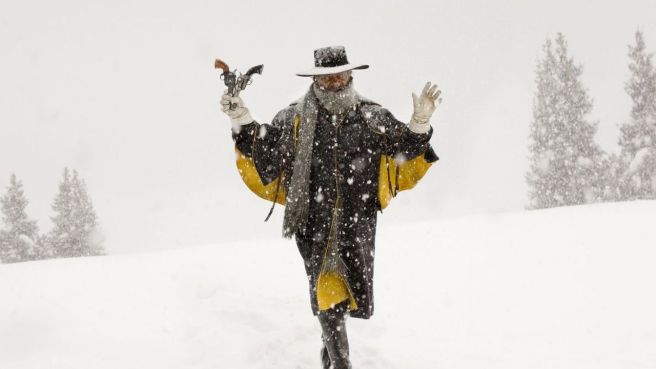
Quentin Tarantino returns to screens this winter with the ultra-violent Western, The Hateful Eight. The story brings together a despicable coterie of villains and pits them against one another in a remote snowed-in outpost. As with every Tarantino film, The Hateful Eight is violent, verbose, and visually sumptuous. This one is also a movie of reflection, a conscious callback to the single setting bravura of the filmmaker’s debut, Reservoir Dogs. The film reunites the director with Dogs co-stars Michael Madsen and Tim Roth, as well as a who’s-who of other acolytes including Kurt Russell, Zoe Bell, and the ubiquitous Samuel L. Jackson.

The film is reportedly also about Tarantino working through his feelings about John Carpenter’s horror film, The Thing, released in 1982. The Hateful Eight contains many conscious nods to the previous film, including its frigid setting, the casting of Carpenter favorite Kurt Russell, gruesome imagery, and best of all, the return of cinema’s greatest composer, Ennio Morricone, who in addition to creating new music for the film, incorporated unused elements from his Thing score. The current three-hour roadshow version begins with a traditional overture, with Morricone’s haunting melodies playing out uninterrupted as the theatre lights dim. This is one of life’s greatest pleasures.

Continue reading The Hateful Eight (Quentin Tarantino, 2015)”

Dangerous Men (John S. Rad, 2005)

dangerous men bikers

If years-in-the-making is a means of quantifying quality, then Dangerous Men is twice as good as Boyhood. Production began at the dawn of the 1980s and yet the film was not completed until two and half decades had passed. And it’s not as if all of the footage was captured during Reagan’s presidency and put on the shelf. Some scenes are filled with late ’70s model cars and feathered hair, only to be interspersed with shots set at a makeshift police station with a calendar marking December 1995.

dangerous men cops

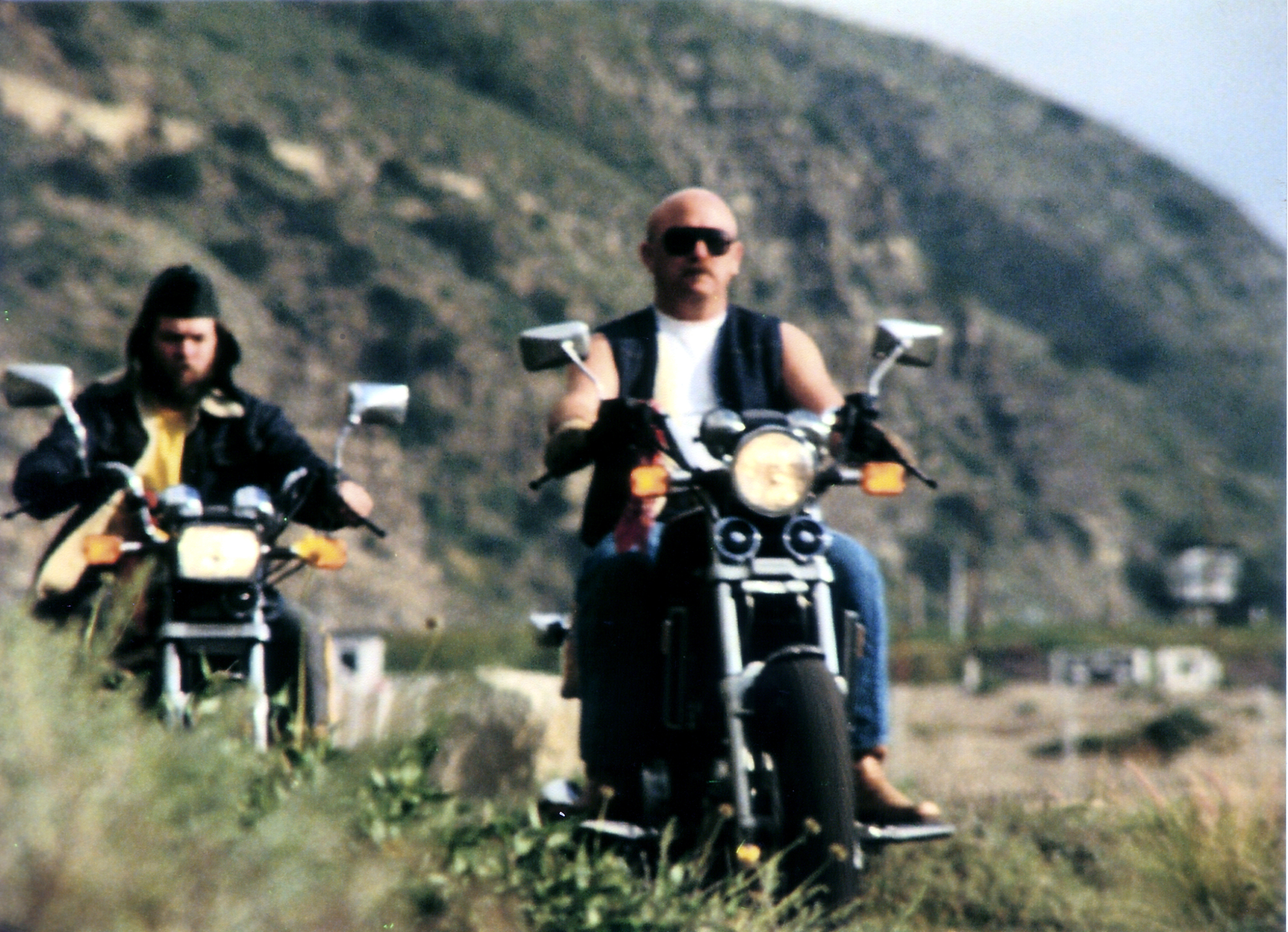
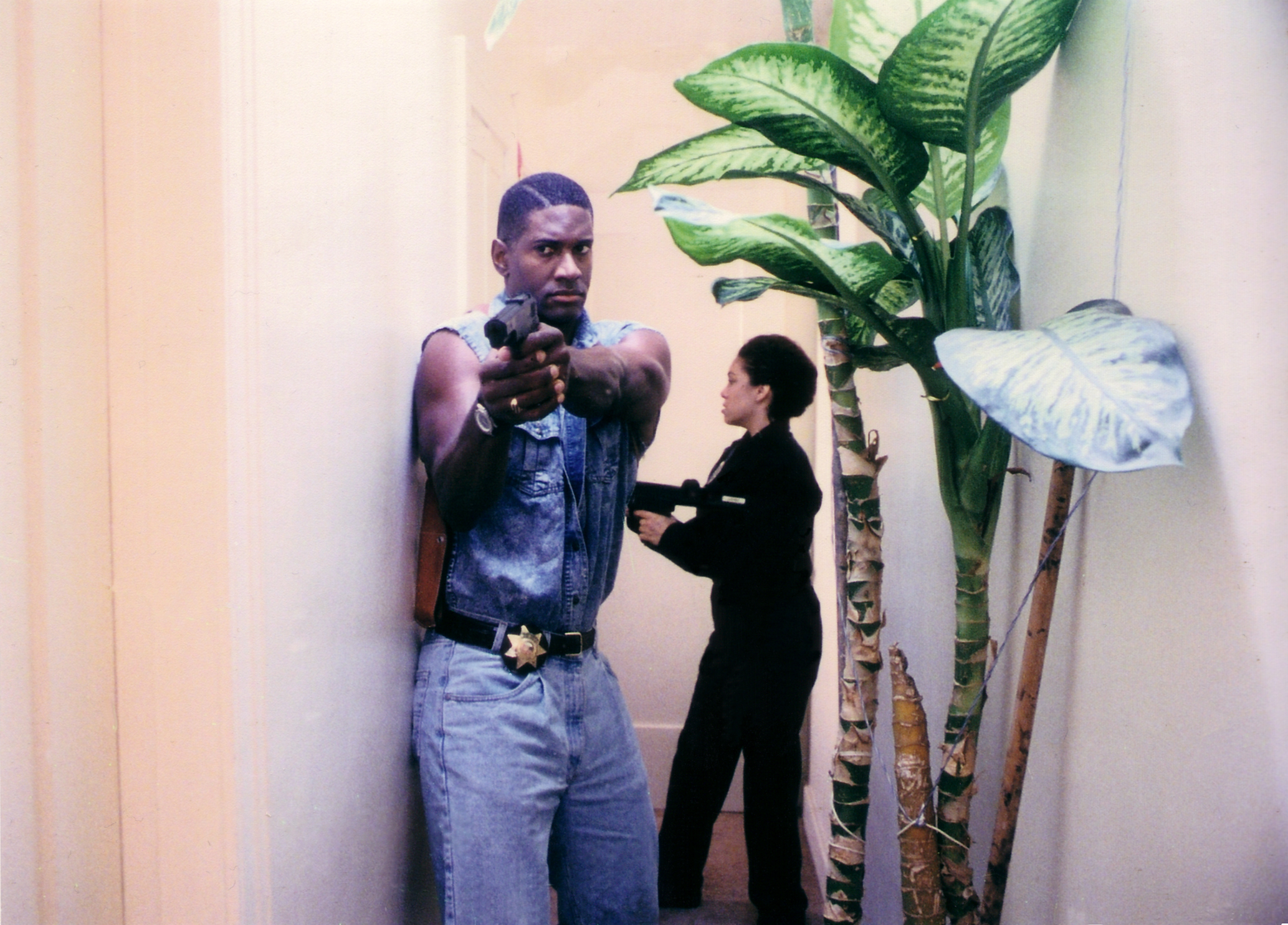
The film tells the story of a woman named Mina, who is out for revenge after her fiancé is killed by bikers. At least that’s the story for about half the running time until Mina ages out of the role and/or the production’s finances temporarily ran dry. At that point the story decides to follow Mina’s brother-in-law, a cop who is also tracking down some bikers but they don’t really have anything to do with one another. In fact the film’s final villain, the incongruously named Black Pepper, never actually does anything wrong, unless the extended belly dance he and his girlfriend watch as prelude to their lovemaking in his barely furnished apartment is somehow illegal.

Dangerous Men is inept. It is often inscrutable and more than a little insane. It spends a significant chunk of time following a thwarted rapist as he wanders through the California desert completely naked as a means of comic relief. He is also British for some reason. Later Mina picks up a prostitute but doesn’t tell the woman that she’s not interested in sex, she only wants to ask questions about her profession, until after they arrive at Mina’s apartment and the prostitute has gotten naked. A lot of people get naked. Most of them are not people you would want to see naked.

dangerous men lovers

The film is an auteurist’s dream come true as Iranian transplant John S. Rad (yes, Rad) lists himself as writer, director, editor, producer, and composer. His is literally the only name in the opening credits. As the film begins, it is his musical score that garners attention with funky synth soundscapes bleeding into tranquil acoustic ballads. But soon it becomes apparent that Rad just had five songs on autoplay which he simply layered throughout the full cut of the film, irrespective of whether the music belonged at any given moment. As happens often throughout Dangerous Men‘s 81 minute running time, one song ends in the middle of a scene and is immediately followed by a tonally different tune, which then plays on into the next scene, which is set in a different location and filmed at a different time with different characters.

Dangerous Men’s release comes courtesy of Drafthouse Films, in partnership with the American Genre Film Archive. And while the film contains elements of the previous Drafthouse treasure Ms. 45, Abel Ferrara’s provocative and powerful tale of feminist revenge, Dangerous Men is more in line with some of Drafthouse’s less  accomplished offerings, such as the newly minted midnight movie staple, Miami Connection. And there is nothing wrong with that. If you want cinema to show you something you’ve never seen before, then Dangerous Men is as worthy a film as any. I for one had never seen a woman hide a knife between her naked butt cheeks.

(Dangerous Men plays in 35mm 11/13 – 11/19 at the Grand Illusion Cinema.)

VIFF 2015: The Forbidden Room (Guy Maddin & Evan Johnson, 2015)

This is part of our coverage of the 2015 Vancouver International Film Festival.

forbidden room faces

Guy Maddin made a music video for a Sparks song about asses starring a lobotomized Udo Kier and whip-wielding Geraldine Chaplin. He (along with co-writer/director Evan Johnson) also made a couple dozen more weird, wacky, wonderful films and smashed them together in the glorious, uproarious new feature, The Forbidden Room. It’s Maddin’s best feature to date and one of the essential cinema experiences of the year.

Continue reading “VIFF 2015: The Forbidden Room (Guy Maddin & Evan Johnson, 2015)”

VIFF Notes: Days 3 & 4

This is part of our coverage of the 2015 Vancouver International Film Festival.

Some brief thoughts on films I saw Sunday and Monday at the festival.

piper

The Piper (Kim Gwangtae, 2015): Full review

three cities

A Tale of Three Cities (Mabel Cheung, 2015): Sweeping historical romance that hearkens back to the grand gestures of classical Hollywood. The film charts the courtship of Jackie Chan’s parents, played by Tang Wei and Sean Lau, as they are kept apart under the duress of war and an evolving 20th century China. It’s better than Doctor Zhivago.

forbidden room

The Forbidden Room (Guy Maddin & Evan Johnson, 2015): A madcap descent into the outer territories of cinema. The Forbidden Room is an audacious and hilarious collection of absurd vignettes, all nested in one another, dreams within hallucinations. Everyone is game to follow Maddin and Johnson through the kaleidoscopic kino-hole, including such greats as Mathieu Almaric, Geraldine Chaplin, and Udo Kier. The undisputed highlight of the festival so far.

port of call

Port of Call (Philip Yung, 2015): An unflinching dual examination of a teenager’s short life and that of the detective who desperately needs closure for her gruesome death. The film contains some of the most graphic imagery ever put onscreen. Acts as both a window into the struggles of contemporary China and a portrait of the unique and universal sadness of teenage girls. Felt at times like a cross between Zodiac and Fire Walk With Me but scarier than both.

tomorrow

It’s Already Tomorrow in Hong Kong (Emily Ting, 2015): White guy living in Hong Kong meets an American woman of Chinese descent. The two hit it off but complications ensue when it is discovered they have other attachments. As a travelogue for the gorgeous city of Hong Kong, this works well enough, with depictions of the majestic skyline and bustling streets. As a romance or a comedy or a showcase for the art of acting, it is a failure.

RIGHT NOW, WRONG THEN_key still (3)

Right Now, Wrong Then (Hong Sangsoo, 2015): Full review

VIFF 2015: Right Now, Wrong Then (Hong Sangsoo, 2015)

This is part of our coverage of the 2015 Vancouver International Film Festival.

RIGHT NOW, WRONG THEN_key still (1)

The new Hong Sangsoo film, Right Now, Wrong Then, is very much concerned with the famed director’s usual themes. He is again at work with a story involving a hard-drinking filmmaker and the nature of casual encounters. But the movie is less about its surface than with an inquiry into its structural narrative. As always, it’s the differences from the works that came before it that excite. The nice thing about Right Now, Wrong Then is that it also affords the joys of differentiating it from itself.

Continue reading “VIFF 2015: Right Now, Wrong Then (Hong Sangsoo, 2015)”

VIFF Notes: Days 1 & 2

This is part of our coverage of the 2015 Vancouver International Film Festival.

Some brief thoughts on the films I saw over the first 48 hours in Vancouver.

paradise

Paradise (Sina Ataeian Dena, 2015): Iranian film about a young teacher in mourning over the death of her parents. The film follows her through daily life as she attempts to put in a work transfer at the school. Meanwhile two of the students have gone missing. The film was shot illegally with some of the participants not even aware that they were being filmed. While it pulls back a little more of the curtain on women’s lives in modern Iran, it never really finds an engaging entry point. Part of this is due to star Dorna Dibaj, whose depiction of depression comes off frequently as simple disaffection.

thoughts once we had

The Thoughts That Once We Had (Thom Andersen, 2015): Full review.

pearl button

The Pearl Button (Patricio Guzman, 2015): Eye-opening documentary that deftly weaves in the fading history of Chile’s indigenous culture with an examination of more recent genocidal atrocities and a rumination on the vitality of water. The coalescence of these elements is deeply satisfying. The Pearl Button is a beautifully shot documentary that at times plays like The Act of Killing mixed with Herzog’s oddity The Wild Blue Yonder.

erbarme

Erbarme dich – Matthaus Passion Stories (Ramon Gieling, 2015): An artfully staged exploration into the power of Johan Sebastian Bach’s “St. Matthew’s Passion”. Musicians, conductors, artists, and writers recount their personal relationship with the work. The film does this while charting rehearsals for a performance featuring a choir of homeless people. (Jesus is played by a shaggy, overweight tenor with Led Zeppelin shirt.)  The best parts of the documentary are the bits that stray from the conventions of the medium, in particular a series of bold intertitles of philosophical musical musings.

vicki

Victoria (Sebastian Schipper, 2015): Full review.

alice

Alice in Earnestland (Ahn Gooc Jin, 2015): A woman works tirelessly to care for her deaf, fingerless husband in a coma when she finds out that redeveloping the neighborhood could be her ticket to financial stability. So she does what any normal person would do and ties a therapist to a chair and feeds her poisoned blowfish. It’s a self-consciously quirky mix of the macabre and the mundane that falls squarely in the latter category, despite the blood and explosions.

VIFF 2015: The Piper (Kim Gwangtae, 2015)

piper performance
This is part of our coverage of the 2015 Vancouver International Film Festival.

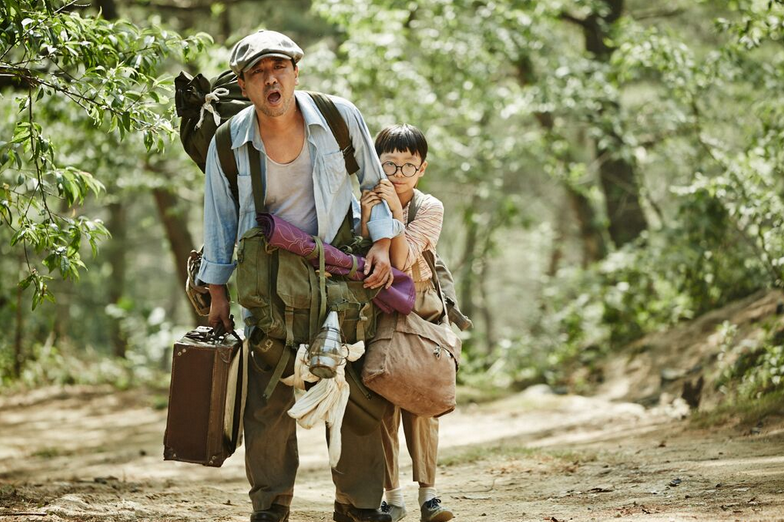
First-time director Kim Gwangtae delivers a fresh take on the “Pied Piper of Hamelin” with his visceral film The Piper. Set in the hinterlands of Korea in the war-torn 1950s, the film begins with a devoted father and son traversing the country in hopes of finding a cure for the boy’s tuberculosis. The pair (played wonderfully by Ryu Seungryong and the absolutely adorable Goo Seunghyeon) stumble upon a hidden village that knows no news of the outside world and eyes their new arrivals with unease. In an effort to ingratiate themselves with the locals, the father offers to rid the town of their rampant rat infestation.

In the early going, The Piper plays it light with goofy antics and the building of a budding romance. But like the smoke used to run out the rats, darkness creeps through the narrative’s cracks long before the fatal finale. And by its conclusion, The Piper has become a gruesome tale of vengeance that would make Park Chanwook or Quentin Tarantino proud. There will be blood. And there will be rats feasting on it.

Continue reading “VIFF 2015: The Piper (Kim Gwangtae, 2015)”

VIFF 2015: Victoria (Sebastian Schipper, 2015)

victoria

Part of our coverage of the 2015 Vancouver International Film Festival.

Gimmicks have long been used to get butts in theatre seats. From the blatantly crass attempts of William Castle, who deployed live effects in the theatres during his B-movie screenings, to the formal constraints of Alfred Hitchcock, who dared himself to film entirely in a boat or an apartment, or in reel-length unbroken takes. Gimmicks are exciting, they pique an audience’s curiosity. But transcending them and delivering a worthwhile work of art at the end is one of the most difficult tasks a filmmaker has. Gimmicks are both blessing and curse.

The aforementioned unbroken take has been tried many times before, including a faux example in last year’s Best Picture winner, Birdman. Now comes the German film Victoria, which manages an honest-to-goodness, no-strings-attached single take as the titular woman, a Spanish transplant, joins a group of guys on a drunken night in Berlin. What begins with the bravado of belligerent boys and the tentative mating dance of the deeply intoxicated, eventually turns sour as Victoria gets enlisted in a foolish and irrevocable act.

Continue reading “VIFF 2015: Victoria (Sebastian Schipper, 2015)”