
 As one Matt Chow movie leaves AMC’s Pacific Place this Thursday, another one opens on Friday, as his collaboration with director Wilson Yip Triumph in the Skies leaves Seattle screens and is replaced by 12 Golden Ducks (both films were released on February 19th in China, part of the Lunar New Year festivities that are the peak of the Chinese movie-going season, like if the US crammed all their releases between Memorial Day and Independence Day into one single week). I haven’t had a chance to see it yet, because it’s so new and because it’s playing as part of AMC’s Asian-Pacific Film program, which doesn’t ever seem to advertise or screen anything for mainstream audiences or critics (this has been the case with several releases in recent months, including major films such as Johnnie To’s Don’t Go Breaking My Heart 2 and Pang Ho-chung’s Women Who Know How to Flirt are the Luckiest and (more or less) Tsui Hark’s The Taking of Tiger Mountain). Given the lack of attention the release of 12 Golden Ducks is likely to receive, we hope this preview post will be somewhat helpful, absent an actual review.
Author: Sean Gilman
Maps to the Stars (David Cronenberg, 2014)

The latest from Canadian director David Cronenberg finds him, for the first time, working in America (well, he was here shooting for five days, which is not nothing). Specifically Hollywood, which is a kind of America only in the very loosest sense. He finds it a tangled wasteland of venality and corruption, naturally enough, but one especially marked by all manner of family relationships gone horribly wrong. Julianne Moore (in a performance that might have won her the Oscar in an alternate world where such awards don’t automatically go to the most diseased performance) plays an aging actress trying to win a role that her mother played 30 years earlier. Said mother is now deceased, having died in a fire some years before, and may have sexually abused Moore as a child. She works through these issues with her therapist, John Cusack (his technique with her is talking-while-massaging, though he appears to make his money primarily via infomercials and airport speaking engagements). Cusack and his wife, Olivia Williams, struggle to maintain their 13 year old son’s acting career while dreading the reappearance of their daughter (Mia Wasikowska), who has been in a sanitarium for seven years after she tried to marry her brother while setting the family home on fire. Wasikowska, through her internet-friendship with Carrie Fischer (playing herself, I guess), gets a job as Moore’s personal assistant and carries on a tentative romance with a chauffeur played by Robert Pattinson (a demotion from his starring role in the last Cronenberg film, Cosmopolis, in which he spent most of the film being driven around town in a limo). Drugs, violence, more incest and more fire ensue.
Continue reading “Maps to the Stars (David Cronenberg, 2014)”
Chimes at Midnight (Orson Welles, 1965)
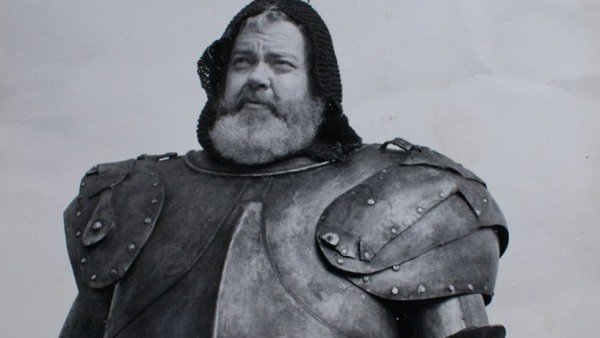
This Thursday, Orson Welles’s most-underseen masterpiece Chimes at Midnight is coming to the Scarecrow Video Screening Lounge. Welles, of course had a legendarily messy filmmaking career, one that can be reasonably-evenly divided between his studio films and his independent productions. The studio films are the most famous, featuring also the former consensus all-time #1 Citizen Kane, the butchered masterpiece The Magnificent Ambersons and the too-twisted-for-Hollywood noirs The Lady from Shanghai and Touch of Evil. His independent films include the dishonest documentary F for Fake, the schizophrenic and multiform funhouse Kane Mr. Arkadin, an adaptation of Kafka’s The Trial (which Welles quite rightly notes is a comedy) and three Shakespeare films: Macbeth, Othello and the greatest of them all, Chimes at Midnight, in which Welles combines parts of the two Henry IV plays with bits from Henry V to tell one story about the fat, blustery rogue Sir John Falstaff.
Casablanca (Michael Curtiz, 1942)

A rather trite, unnecessarily-complicated wartime romance in which the most cynical drunk in the world is persuaded, after getting a second chance with the love of his life, to sacrifice his happiness (and hers, but that’s not really relevant) for the war effort, by tricking her into returning to her anti-Nazi activist husband and continuing her loveless sham of a marriage. He and the corrupt local chief of police (he uses his powers to extort sexual favors from pretty young women in exchange for the chance to flee the Nazis), then wander off into the desert.
Depending on how you define your terms, Casablanca might be the greatest motion picture ever made. An example of Hollywood studio filmmaking at its finest, with assured direction by Michael Curtiz, perhaps the greatest non-auteur director of all-time, and brilliant performances not just from the leads but also from a remarkable cast of character actors bringing depth, nuance and personality to even the smallest role (I’m not kidding: even the croupier manning the roulette wheel is a major talent, Marcel Dalio, who only three years before had starred in Jean Renoir’s masterpiece The Rules of the Game). Peter Lorre, Conrad Veidt, Sidney Greenstreet, Dooley Wilson, SZ Sakall, Leonid Kinskey and John Qualen are simply overkill in a film that already features Paul Henreid and Claude Rains in the major supporting roles. Ingrid Bergman is luminous of course, on the precipice of superstardom, she has the kind of purity that almost makes you forget she’s trying to exchange sex for her husband’s freedom. But Humphrey Bogart reminds you (and her husband – how bold that line is, said by Bogart to Henried, “She did her best to convince me she was still in love with me. . . and I let her pretend.”) It’s his finest performance, cynical cruelty melting before our eyes into wounded romanticism and self-sacrificing heroism. He’s everything America aspires to be: too cool to care about right and wrong, but determined to do the right thing anyway.
If you’ve never seen Casablanca, or if you’ve never seen it on the big screen, or if you’ve seen it a hundred times already, go see it this week at the Central Cinema.
Friday February 27th – Thursday March 5th

Featured Film:
Samuel Fuller at the Grand Illusion Cinema
The Grand Illusion celebrates one of the most singular Americans of the 20th Century this week: journalist, author, soldier, and movie director Samuel Fuller. Along with a week-long run of a documentary about Fuller directed by his daughter Samantha, they’re also presenting 16mm prints of two of his very best films, Shock Corridor and The Naked Kiss. Our Preview.
Sign up for our newsletter and get the best of Seattle arthouse and repertory programming in your Inbox every Friday morning.
Playing This Week:
Singin’ in the Rain (Stanley Donen & Gene Kelly, 1951) Fri-Tues
The Apple (Menahem Golan, 1980) Fri-Tues
The Shining (Stanley Kubrick, 1980) Fri-Sat Midnight Only
Charade (Stanley Donen, 1963) Sun Only
Fists and Fury Festival Program Details Our Preview
Mr. Turner (Mike Leigh) Fri-Thurs
Two Days, One Night (Jean-Pierre & Luc Dardenne) Fri-Thurs Our Preview
National Gallery (Frederick Wiseman) Tues Only Our Preview
A Fuller Life (Samantha Fuller, 2013) Fri-Thurs Our Preview
Shock Corridor (Samuel Fuller, 1963) Mon Only 16mm
The Naked Kiss (Samuel Fuller, 1964) Wed Only 16mm
The Devils (Ken Russell, 1971) Fri Only
Salad Days: A Decade of Punk in Washington, DC (1980-1990) (Scott Crawford) Fri-Sun
Saturday Secret Matinee (The Sprocket Society) Sat Only
Records Collecting Dust (Jason Blackmore) Thurs Only
Leviathan (Andrey Zvyagintsev) Fri-Thurs
Song of the Sea (Tomm Moore) Fri-Thurs
Cinemark Lincoln Square Cinemas:
Badlapur (Sriram Raghavan) Fri-Thurs
Charade (Stanley Donen, 1963) Sun Only
Shredder Orpheus (Robert McGinley, 1989) Fri Only 35mm
Princess Angeline (Sandy Osawa and Yasu Osawa, 2009) Sat Only
The Courage to Love (Paul Ginocchio) Sat Only
Festival of (In)Appropriation Thurs Only
Triumph in the Skies (Wilson Yip and Matt Chow) Fri-Thurs
Zhong Kui: Snow Girl and the Dark Crystal (Peter Pau) Fri-Thurs
Metropolis (Fritz Lang, 1927) Mon Only
Scarecrow Video Screening Lounge:
Electric Dreams (Steve Barron, 1984) Fri Only
La Notte (Michelangelo Antonioni, 1961) Tues Only
Death in Venice (Luchino Visconti, 1971) Thurs Only 35mm
Oscar Nominated Animated Shorts Fri-Thurs
Oscar Nominated Live-Action Shorts Fri-Thurs
Metalhead (Ragnar Bragason, 2013) Fri-Sun Only
Two Days, One Night (Jean-Pierre & Luc Dardenne) Fri-Weds Our Preview
The Tale of the Princess Kaguya (Isao Takahata) Sat-Mon Our Preview
Maps to the Stars (David Cronenberg) Fri-Thurs
Red Army (Gabe Polsky) Fri-Thurs
What We Do in the Shadows (Jemaine Clement & Taika Waititi) Fri-Thurs Our Preview
Maps to the Stars (David Cronenberg) Fri-Thurs
What We Do in the Shadows (Jemaine Clement & Taika Waititi) Fri-Thurs Our Preview
The Shining (Stanley Kubrick, 1980) Sun & Tues Only
2001: A Space Odyssey (Stanley Kubrick, 1968) Fri, Mon & Weds Only
Sync Music Video Festival 2015 Sat Only
Fists and Fury at the Cinerama

This week, the Cinerama is playing what they’ve dubbed their “First Mixed Martial Arts Festival”, a collection of movies, Hong Kong and Japan mostly, in which kicking, punching and/or swordplay is prominently featured. Playing two or three different movies per day, mostly DCP but with some 35mm, its an eclectic mix of masterpieces, curiosities and what amounts to an almost-complete Bruce Lee retrospective.
I don’t think I’ve ever been as mixed about a film series as I am about this mixed martial arts series. On the one hand, and probably most importantly, there are a bunch of great movies playing here, included some films that haven’t played in Seattle since the heyday of Landmark’s Hong Kong repertory run in the mid-1990s. The chance to see Bruce Lee, Jackie Chan, Toshiro Mifune, Stephen Chow and Jet Li in that gorgeous Cinerama environment is not to be dismissed lightly. Even under less than ideal conditions, like digital projections of DCPs and Blu-Rays, seeing these films is a treat. But there appears to be no rhyme or reason to the way this festival was put together, with many of the best films showing at the most inconvenient times, no clear threadlike connecting the films from different countries or eras and a lot of sub-standard source material for a repertory festival.
Samuel Fuller at the Grand Illusion Cinema

Playing at the Grand Illusion this week is Samantha Fuller’s 2013 documentary about her father, A Fuller Life. Aside from a short introduction explaining the concept, her movie consists entirely of excerpts from Fuller’s memoir, as read by a variety of his friends, co-workers and fans (generally shot in the kind of propulsive close-ups so recognizable from Fuller’s films). The images we see are a combination of archival footage, clips from Fuller’s movies and never-before-seen 16mm home movies shot by Sam over the decades. It’s a loving account of a remarkable American, one of the unique and definitive personalities of the 20th Century. Beginning his professional life as a newspaper boy in 1920s Manhattan, he quickly worked his way up to teenaged crime reporter. During the Depression he set out across the country, making his living as a freelance journalist and pulp novelist, chronicling the darkest corners of a turbulent decade (an anecdote he relates about a KKK woman is especially vivid). At the end of the 30s, he settled down in Hollywood, making a living as a screenwriter for hire.
Continue reading “Samuel Fuller at the Grand Illusion Cinema”
Friday, February 20th – Thursday, February 26th
Featured Film:
The 87th Annual Academy Awards
That most sacred of cinephile holidays arrives this Sunday night, as movie fans the world over gather together to complain about how all of the wrong things won and these silly awards that don’t matter and no one should care about them anyway. We guide you through the top contenders and let you know which theatres are hosting special Oscar Night events.
Sign up for our newsletter and get the best of Seattle arthouse and repertory programming in your Inbox every Friday morning.
Playing This Week:
Oscar Nominated Animated Shorts Fri-Sun
Maltese Falcon (John Huston, 1941) Fri-Sat, Mon
Goodfellas (Martin Scorsese, 1990) Fri-Mon
The Rocky Horror Picture Show (Jim Sharman, 1975) Sat Midnight
Oscar Nominated Short Films (Animated & Live-Action) Fri-Thurs
Mr. Turner (Mike Leigh) Fri-Thurs
Ghostbusters (Ivan Reitman, 1984) Sat Only
Force Majeure (Ruben Östlund) Tues Only
The Last: Naruto the Movie (Tsuneo Kobayashi) Fri-Thurs
The Devils (Ken Russell, 1971) Fri-Sat, Thurs
Saturday Secret Matinee (The Sprocket Society) Sat only
Leviathan (Andrey Zvyagintsev) Fri-Thurs
Cinemark Lincoln Square Cinemas:
Oscar Nominated Short Films (Animated & Live-Action) Fri-Thurs
Temper (Puri Jagannadh) Fri-Thurs
Badlapur (Sriram Raghavan) Fri-Thurs
Somewhere Only We Know (Xu Jinglei) Fri-Thurs
Hard to Be a God (Alexsey German) Fri-Mon
Big in Japan (John Jeffcoat) Fri-Thurs
Oscar Nominated Animated Shorts Fri-Thurs
Oscar Nominated Live-Action Shorts Fri-Thurs
Triumph in the Skies (Wilson Yip and Matt Chow) Fri-Thurs
English Only, Please (Dan Villegas) Fri-Thurs
Scarecrow Video Screening Lounge:
The Omega Man (Boris Sagal, 19711) Fri Only
Brief Encounter (David Lean, 1945) Sun Only
Reign of Fire (Rob Bowman, 2002) Sun Only
Chris Marker Group Mon Only
American Fabulous (Reno Dakota, 1991) Tues Only
Restless Natives (Michael Hoffman, 1985) Weds Only
The Devil Bat (Jean Yarbrough 1940) Thurs Only
Blow-Up (Michelangelo Antonioni, 1966) Tues Only
David Lynch and Civil Rights Documentaries (Richard Beymer) Weds Only
The Decameron (Pier Paolo Pasolini, 1971) Thurs Only
Oscar Nominated Animated Shorts Fri-Thurs
Oscar Nominated Live-Action Shorts Fri-Thurs
Gangs of Wasseypur Parts 1 & 2 (Anurag Kashyap, 2013) Fri-Sun Only
The Homesman (Tommy Lee Jones) Mon Only
Mr. Turner (Mike Leigh) Fri-Thurs
Timbuktu (Abderrahmane Sissako) Fri-Thurs
What We Do in the Shadows (Jemaine Clement & Taika Waititi) Fri-Thurs Our Preview.
Two Days, One Night (Jean-Pierre & Luc Dardenne) Fri-Thurs Our Preview.
Girlhood (Celine Sciamma) Fri-Thurs
Mr. Smith Goes to Washington (Frank Capra, 1939) Tues Only
The 87th Annual Academy Awards

The Academy Awards are this Sunday night, and a pair of local theatres are hosting festivities. The Central Cinema‘s shindig starts at 4 pm while the Grand Cinema (hosting the party at Theatre on the Square) kicks things off at 4:30.
Here’s a brief look at the top contenders for this year’s Academy Awards:
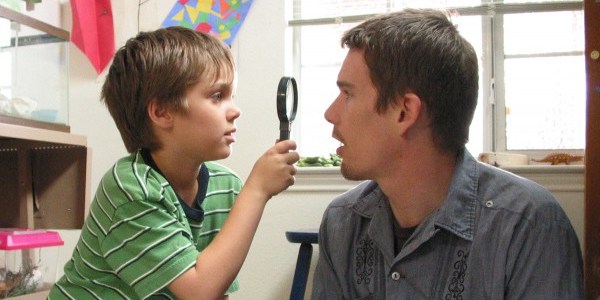
Boyhood: Filmed a little bit at a time over 12 years, director Richard Linklater’s epic portray of one boy’s coming of age made a whole generation of male film critics weep with self-recognition. It’s a fine film, and Linklater, one of the best filmmakers of his generation, may finally get some awards recognition. Almost certainly Patricia Arquette will for her supporting performance as The Boy’s mother.
Birdman or (The Unexpected Virtue of Ignorance): The inexplicably parenthesized title of Alejandro González Iñárritu’s study of an actor on the edge of insanity is the dark horse (dark bird?) contender for the major awards, but will almost certainly take home the prize for Emmanuel Lubezki’s cinematography, given how many people equate length-of-shot with quality-of-shot. Less certain are Michael Keaton’s chances at Best Actor. He should be in more, better things.
The Grand Budapest Hotel: Wes Anderson has his best ever shot at the Oscars this year, with his first Directing and Picture nominations to go along with his third Screenplay nomination (he was also nominated for Best Animated Film in 2009). He’s never won, and his best shot this year is probably in the Original Screenplay category. The film is also a heavy favorite in Production Design, Costume Design and Makeup.
American Sniper: Clint Eastwood’s latest box office smash is a stealth Best Picture contender, but will likely have to settle for simply making a ton of money. Brady Cooper received his third and fourth nominations in the past three years for Producing and Acting in this film. remember when he was Jennifer Garner’s goofy best friend on Alias?
Selma: The biggest snubs of the season were Ava DuVernay missing out on a Directing nomination and David Oyelowo for Best Actor. This might be the best of the Best Picture nominees, but it has no chance to win. It will likely earn only Best Song as a consolation prize, which is pretty awful in a lot of ways.
The Imitation Game: This won the Writer’s Guild Award for Adapted Screenplay, which is absolutely appalling. And it’ll probably win the Oscar too. There is likely to be no less deserving winner Sunday night.
The Theory of Everything: The best chance this by the numbers biopic has for a win is for Eddie Redmayne, for his performance as a real person with a disability, which is perennially an Oscar lock. Only sentimentality toward cinema’s third greatest Keaton can stop him. The film has a shot at Best Score, too.
Whiplash: A lock for Best Supporting Actor for JK Simmons, who has been one of our best supporting actors for years. A very good chance in Sound Mixing as well. I like it’s chances for Editing, though that could go to Boyhood instead. The Academy tends to favor volume in that category, and Whiplash has the most editing of the year. That the quick cutting is impeccably timed and used to expressive purpose is a bonus, largely irrelevant to its Oscar chances.
Best Actress: It’s been making the rounds on the internet in recent weeks the fact that the films that annually contend for the Best Actress Oscar are almost never winners, or even nominees in any other categories. That is again the case this year, with Julienne Moore likely to win for Still Alice. It’s kind of shocking considering just how good Two Days, One Night and Gone Girl are, both of which should have been multiple nominees anchored by terrific lead performances (by Marion Cotillard and Rosamund Pike, respectively). Also shocking is that Anna Kendrick isn’t nominated despite giving three fantastic lead performances in 2014, in Happy Christmas, The Last Five Years, and Into the Woods. Perhaps it was her supporting turn as Jennifer Aniston’s ghost-mentor in Cake that knocked her out of contention (Aniston got shut out as well).
The Tale of the Princess Kaguya: Isao Takahata’s film, likely the last production by Studio Ghibli’s two masters (Hayao Miyazaki’s The Wind Rises lost to Frozen last year), probably has no shot at Best Animated Feature (How to Train Your Dragon 2 is the heavy favorite), but if it did somehow get the prize, no win on Oscar night would make us happier.
Lady Snowblood (Toshiya Fujita, 1973) at the Scarecrow Screening Lounge (February 14, 2015)

One of my earliest and happiest Seattle film experiences was in the late summer of 1998, when I saw Akira Kurosawa’s Yojimbo at Scarecrow Video. It was upstairs, in a little room (I think it’s an office now, but it might be the comedy section) with a dozen folding chairs and a very small screen. The movie played, I believe, in 16mm, a tiny strip of Cinemascope ten feet away. There were four of us in the audience, two strangers and a friend who had never seen a Kurosawa film before, though his films had been seemingly everywhere that August (I had earlier caught Rashomon, Throne of Blood and The Hidden Fortress at the Varsity). It was, of course, a great movie and my friend loved it, sparking his own trip through one of the great 20th Century filmographies. The film showings at Scarecrow ceased sometime shortly after that, I don’t know when or why, but the experience has always stuck with me. We tend to get caught up with the incidentals of our film-going: comfy seats, giant screens, and ear-blasting sound in our multiplexes; giant TVs, plush couches and remote controls in our homes. But all of that is sideshow, what really matters is the movie, and going out to the movie, leaving our own space and sharing a darkened room with a bunch of strangers, all looking at the same pictures on a wall. I’ll see a movie anywhere, in any format, because what matters most is that movie, and there’s no better way to see a movie than in a theatre, any kind of theatre.
 Seattle Screen Scene
