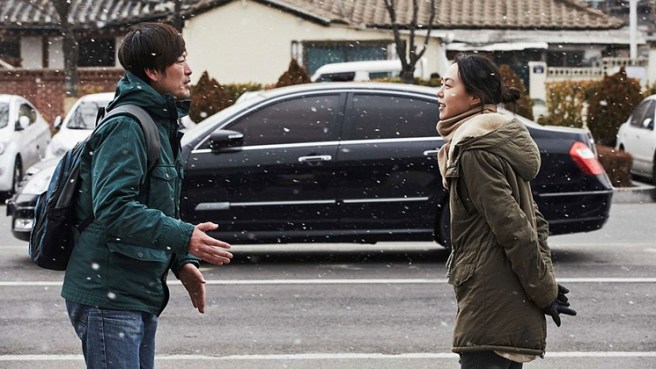
Right Now, Wrong Then (Hong Sangsoo, 2015)

rightnow1

The following is a slightly modified reprint of my review from last fall’s Vancouver International Film Festival.

The Hong Sangsoo film is a perennial highlight of every VIFF (I’ve seen Like You Know it All, Oki’s Movie, Hahaha, In Another Country, Our Sunhi and Hill of Freedomhere over the years) and Right Now, Wrong Then is no disappointment. It’s a very good film, while lacking the formal experimentation that distinguishes his best work (Oki’s Movie, The Day He Arrives) or the sheer giddy pleasure of his funniest movies (Hill of Freedom, In Another Country), it has a precision and focus that assures that, despite a certain conventionality, it will become one of his more popular features (note: This has turned out to be accurate, the film has garnered Hong some of the best reviews and one of the widest releases of his career so far). Split evenly in two halves, it follows a film director, in town for a festival showing and Q & A, as he wanders about a tourist site where he meets a young woman. They talk, drink soju, make awkward approaches at romance and ultimately split when the director is proven to be a dishonest, womanizing lout. Then the film resets, complete with a new title card (the first half is “Right Then, Wrong Now”, the second “Right Now, Wrong Then”) and we replay the same day but with significant differences. The director in this version is honest and open (perhaps to a fault, as when a drunken overheating compels him to strip naked in front of his companions). Hong significantly varies his camera setups in the second section, creating more balanced compositions where in the first half the setups tended to privilege the director’s perspective (including a Hong rarity: an actual POV shot). It’s a mature film, relaxed and confident with a simple truth to tell. But underlying it all is a palpable loneliness. It’s played as sadness, as tragedy in the first half, where the director’s faults lead to failure and angry isolation. In the second half, it’s a wistful melancholy, where people can find happiness in connecting with an other, with the full knowledge that any such connection is necessarily temporary. It’s a quiet and sweet film, a warm room on a cold night, and vice versa.
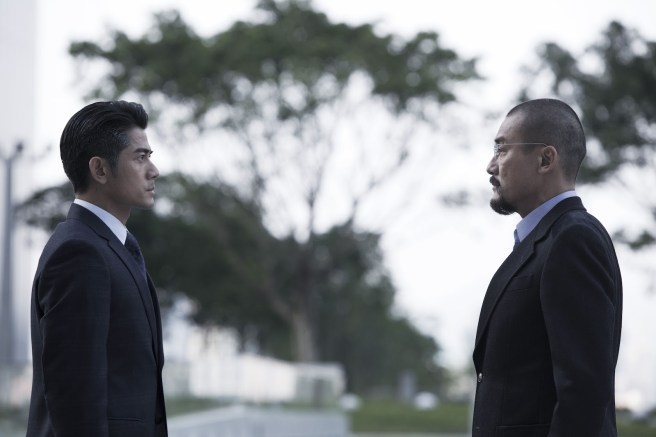
Cold War 2 (Longman Leung & Sunny Luk, 2016)

2012-cold-war-still-2-1

Picking up right where their 2012 hit film, which featured an all-star cast and swept the Hong Kong Film Awards, left off, Longman Leung and Sunny Luk present another suspenseful tale of corruption and double-dealing in the highest echelons of the Hong Kong police department, its two institutional halves at (cold) war with each other. On the operations side is The Other Tony Leung, a tough man of action, of the “break the law to enforce the law” type valorized in Hong Kong cinema since at least the mid-1980s. On the administrative side is Aaron Kwok, emotionless, calculating and fiercely determined to uphold the letter of the law. The two wage a Crimson Tide-esque battle of wills over a tense hostage situation, in which an Emergency Unit van and its five police officers have been captured by unknown criminals. Kwok wins out and assumes command of the force, and the second half of the film follows his investigation of the terrorists, leading to the arrest of Leung’s own son, played by Rise of the Legend‘s Eddie Peng, as the ringleader. But, in a cliffhanger ending, Peng’s accomplices demand his release: they have now kidnapped Kwok’s wife.

Continue reading Cold War 2 (Longman Leung & Sunny Luk, 2016)”

Mike and Dave Need Wedding Dates (Jake Szymanski, 2016)

MIKE-DAVE-NEED-WEDDING-DATES-02

The third of a promised six(!) Anna Kendrick movies to hit Seattle Screens in 2016 is an exemplar of the mayfly model of modern American comedy. Based on a true story formerly adapted into a book, it’s about a pair of dim-witted brothers who are tasked with finding acceptable dates to their younger sister’s wedding. An opening montage establishes their vision of the world: slow-motion revelry, drinking, beautiful people, they see themselves as the life of every party. Home videos presented early in the film by their parents cleverly undermine this fantasy conviction. In fact, the two are loud, obnoxious, and clumsy: their antics destroy every gathering and event they attend. Thus their quest: they must find nice, respectable girls to keep them in line at the destination wedding in Hawaii. To this end, naturally enough, they post an ad on Craigslist, become internet famous, and suffer through a series of meet-and-greets with dreadful dames, a Seven Chances for beer-obsessed millennials. This is apparently as far as the book goes, while the film introduces Kendrick and Aubrey Plaza as the boys’ dates. A kind of Romy and Michelle for the Facebook era, Tatiana and Alice, quickly established to be just as dumb and hedonistic as Mike and Dave, pretend to be nice girls in order to get the free vacation. It’s an attempt at short-circuiting the book’s misogyny with a “hey women are gross and terrible too”. The rest of the film consists of episodic gag sequences at the wedding, with unimaginative and indifferently filmed slapstick adding an element of body horror to the vulgar dadaist improv one-liners that have become the dominant idiom of our comedies in the post-Apatow era.

Continue reading Mike and Dave Need Wedding Dates (Jake Szymanski, 2016)”

Swiss Army Man (Dan Kwan & Daniel Scheinert, 2016)

hank and manny on beach

(NOTE: I also reviewed this film with Adam Kempenaar on the Filmspotting podcast, when I was a guest host for the show. You can take a listen here.) 

It isn’t a new idea, the idea that mental health and happiness are related to accepting yourself as you are. We could reference Free To Be You and Me, that album of the 70’s that challenged gender norms and promoted a celebration of individuality –

Come with me, take my hand, and we’ll run
To a land where the river runs free
To a land through the green country
 . . .
 To a land where the children are free
 And you and me are free to be

Don’t be afraid, the song encourages children. There’s no shame in anything that you are. Just be yourself. Celebrate that.

It’s a message that you can find everywhere now.  Children’s movies, in particular, often contain some version of this idea. If you have short term memory loss like Dory in Finding Dory, if you’re a bunny like Judy Hopps in Zootopia, you are still just as important, just as valuable as anybody else.

In Swiss Army Man, the debut feature film from Dan Kwan and Daniel Scheinert, we have a return to this essential kind of story and these themes. It centers on a man called Hank (Paul Dano), who can’t live with himself anymore. He’s alone, literally and figuratively. He feels bad about life, he feels bad about himself. He feels like “broken,” “dirty,” “trash.” He lacks the courage to seek out a relationship with the woman he admires. He’s ashamed of his desires and his own corporeal reality. And that’s his basic problem. He can’t stand himself and his disgusting body and “weird,” disgusting self.  The film’s journey is, then, about the way he struggles with coming to terms with himself and all of the weird, gross, socially unacceptable bits.

So far, so good.  And so far, a lot like something we’ve seen or heard before.

The film has received attention though for the conceit it employs to tell its story. You’ve probably heard about it already: it’s the farting corpse movie.  The story isolates Hank in the wilderness and gives him a dead body for a companion (Daniel Radcliffe), a companion whose most socially uncomfortable bodily functions take center stage. It is through his interactions with this embarrassing corpse, whose name is Manny, and a very literal dealing with bodily functions, that Hank has to face himself. In Manny, he sees his corporeal, death-fated human reality, and ultimately, must decide, whether or not he will reject it or embrace it. Continue reading Swiss Army Man (Dan Kwan & Daniel Scheinert, 2016)”

Neon Demon (Nicolas Winding Refn, 2016)

 women in underwear

“You ever have a girl screw you out of a job?”
“Yes.”
“What did you do?”
“I ate her.”

Early in Nicholas Winding Refn’s new film, Neon Demon, Jesse (Elle Fanning), a pretty young hopeful from the Midwest and a new arrival to L.A, walks back to her room, down the long balcony corridor of the seedy Pasadena motel where she’s staying. The lighting is lurid, the corridor horribly dark, and when Jesse arrives at her door and the grungy looking lock sticks, an initial feeling of unease rises to panic. Finally force opening the door, she feels for the light, switches it on. Only it doesn’t switch on, and we sense Something is waiting for her in her room. It thuds and moves, and Jesse screams and flees, back down the dark passage. She arrives at a hotel manager’s metal-mesh screen door and cries out for help. A dark, indiscernible figure appears behind the screen, and instead of the relief of the presence of another human being, here, it seems, is another threat. Even when the manager’s figure shifts into the light and we see his face, the menace does not lessen. Hank (Keanu Reeves) leers at Jesse, and when he finally yells for a friend, and the two men escort Jesse back to her room, we fear for her. The men hem her in as they walk, one going before her, one behind. The one in front casually rips away what looks like “Police Do Not Cross” tape. There’s a creeping horror, as we think, Jesse, this naïve innocent, must get out, must get away – and yet she walks on.

Jesse’s room, the three discover when they arrive, has been ransacked by a mountain lion; as the men beat the door open, breaking that sticking lock, the cat looms out of the darkness, a prowling lithe presence. Hank, infuriated, blames Jesse for the destruction of her room. She, he insists, brought the thing into the room. It’s a charge that is horribly unfair; Jesse, surely obviously, didn’t bring the cat into her room. She’s simply an unsophisticated Midwest girl who didn’t realize wild animals roam the hills around L.A., sometimes eating house cats or small pets left outside for the night. Maybe they even enter one’s home at times if a screen door is left open.  Poor Jesse. She doesn’t get it. Continue reading Neon Demon (Nicolas Winding Refn, 2016)”

Three (Johnnie To, 2016)

img_5881

This guest review comes courtesy of critic Jaime Grijalba.

I’m not an expert on Johnnie To, nor do I pretend to be one. Not because I don’t find him interesting, and I will end up watching his entire filmography before too long. I’m wary of clogging the feed of the many people who are unaware of his talents with my half-assed thoughts, especially when there are so many critics and fans that have spent way more time than I’d ever spend examining and studying the style and everything that surrounds the films of To and his Milkyway Image studio. So, with all that I’ve said, what lead me to write about the latest film from one of the most well-regarded Asian directors of the past two decades?

Continue reading Three (Johnnie To, 2016)”

De Palma (Noah Baumbach & Jake Paltrow, 2015)

Brian-De-Palma-in-De-Palma-Documentary

Coinciding with the release of a new documentary about the director from Noah Baumbach and Jake Paltrow, the SIFF Film Center is playing a mini-retrospective of Brian De Palma’s films this weekend, June 24-26. Certified Classics Phantom of the Paradise, Carrie, Obsession, Blow Out, Body Double, Scarface and Carlito’s Way present a neat cross-section of some of his Best Work, and they’re all playing digitally at a discounted ticket price (and free for members).

Continue reading De Palma (Noah Baumbach & Jake Paltrow, 2015)”

SIFF 2016: Sunset Song (Terence Davies, 2015)

Chris's wedding song

I’ve heard the liltin at oor yowe-milkin,
Lassies a-liltin before break o day
Now there’s a moanin on ilka green loanin –
The Flooers o the Forest are a’ wede awa
 . . .
We hear nae mair liltin at oor yowe-milkin
Women and bairnies are heartless and wae
Sighin and moanin on ilka green loanin –
The Flooers of the Forest are a’ wede awa
            From “The Flooers of the Forest” (read in full and/or listen to the song here.)

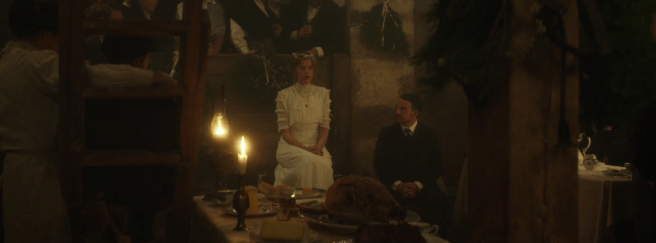
At the center of Terence Davies’s new film, Sunset Song, adapted from Lewis Grassic Gibbon’s 1932 book of the same title, is a wedding. It is a modest affair, a barn for its stage, humble farming folk its participants. It is a celebration of love, a communal joyful gathering, a candle-bright warm pocket in the middle of a dark, snowy New Year’s Eve. And when the bride, Chris Guthrie (Agyness Deyn), sees the barn, prepared by her friends, she says, delighted, “It is like a picture book.” And it is.

In the midst of the merriment, the company calls for a song from the bride, and she sits at their center and sings. It is a sunset song, glowing in the deep colors of grief for the day that has gone, a song for the dead, a song of mourners. It is “Flooers of the Forest,” traditionally a tune played by pipers to commemorate those Scots lost in battle.  A strange choice, it might seem at first, for a wedding, but a choice that gets at the heart of this story, this place, this people, and at the heart of Chris herself. A mournful song is itself a thing of intrinsic paradox: the beauty of its words or music sit, impossibly, within the grief. The song might seem, to a strictly literal mind, to devalue the grief by the very beauty, and yet it is not a devaluation. The grief itself is more grievous, the deeper the beauty of the song. And so such a song defies the intellect, bowing to mystery. Continue reading “SIFF 2016: Sunset Song (Terence Davies, 2015)”

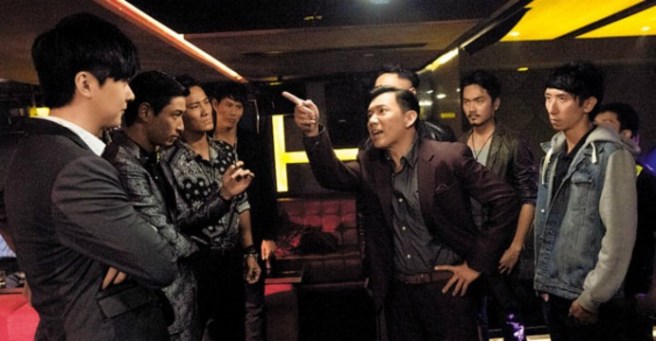
SIFF 2016 Report #3: Disintegration (The Bitter Stems, Thithi, Trivisa, The Mobfathers, Tag)

1262846_3f0ad18a95138db9f622d32ada567268-692x360

Proving once again that no film festival should ever last longer than an Olympic Games, the 2016 SIFF limped to its conclusion this weekend after a soul-crushing 25 days. While the festival had run impressively well over its first two weeks, organized and on time and with nothing in particular for a picky festival-goer like me to complain about, the last week saw an inexplicable series of outrages.

This began on Sunday night, when the programmer tasked with introducing the Johnnie To-produced film Trivisa managed to be both disrespectful, mildly offense and factually inaccurate when he claimed To was the “Roger Corman of Hong Kong”, a producer who would make any movie you had in mind as long as it had “guns or titties”. That same presenter ran the Q&A with actor/producer Chapman To the next night, which was largely unobjectionable (To was the one who mentioned “titties” at least), but the programmer did at one point refer to Mr. To as “Chapman Ho” and later, “Herman”.

Continue reading “SIFF 2016 Report #3: Disintegration (The Bitter Stems, Thithi, Trivisa, The Mobfathers, Tag)”

SIFF 2016: Under the Sun (Vitaly Mansky, 2015)

flags

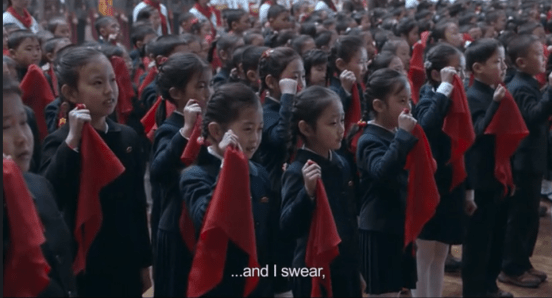
“My father says Korea is the most beautiful country in the eastern part of the globe. Korea is the land of the Rising Sun.”

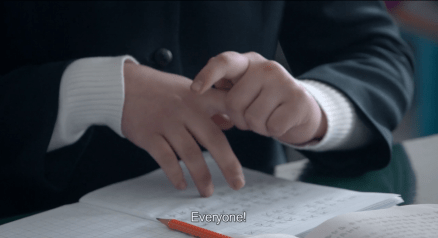
Granted rare access to North Korea, documentary filmmaker Vitaly Mansky follows the story of a young girl who joins the Children’s Union and prepares for the Day of the Sun, birthday of Kim Il-Sung, conqueror of the “American scoundrels.” Working around Korean handlers by filming before “Action!” is called or by lingering on drooping eyelids and fidgeting fingers, the camera captures extraordinary, unscripted moments. Such spontaneity, juxtaposed with the official Korean script that demands its subjects act “with joy” and “patriotism,” offers a complex, poignant portrait of life in a rigid regime.

fingers

Under the Sun screened at the 42nd Seattle International Film Festival.