Casablanca (Michael Curtiz, 1942)

humphrey bogart, claude rains, paul henried & ingrid bergman - casablanca 1943

A rather trite, unnecessarily-complicated wartime romance in which the most cynical drunk in the world is persuaded, after getting a second chance with the love of his life, to sacrifice his happiness (and hers, but that’s not really relevant) for the war effort, by tricking her into returning to her anti-Nazi activist husband and continuing her loveless sham of a marriage. He and the corrupt local chief of police (he uses his powers to extort sexual favors from pretty young women in exchange for the chance to flee the Nazis), then wander off into the desert.

Depending on how you define your terms, Casablanca might be the greatest motion picture ever made. An example of Hollywood studio filmmaking at its finest, with assured direction by Michael Curtiz, perhaps the greatest non-auteur director of all-time, and brilliant performances not just from the leads but also from a remarkable cast of character actors bringing depth, nuance and personality to even the smallest role (I’m not kidding: even the croupier manning the roulette wheel is a major talent, Marcel Dalio, who only three years before had starred in Jean Renoir’s masterpiece  The Rules of the Game). Peter Lorre, Conrad Veidt, Sidney Greenstreet, Dooley Wilson, SZ Sakall, Leonid Kinskey and John Qualen are simply overkill in a film that already features Paul Henreid and Claude Rains in the major supporting roles. Ingrid Bergman is luminous of course, on the precipice of superstardom, she has the kind of purity that almost makes you forget she’s trying to exchange sex for her husband’s freedom. But Humphrey Bogart reminds you (and her husband – how bold that line is, said by Bogart to Henried, “She did her best to convince me she was still in love with me. . . and I let her pretend.”) It’s his finest performance, cynical cruelty melting before our eyes into wounded romanticism and self-sacrificing heroism. He’s everything America aspires to be: too cool to care about right and wrong, but determined to do the right thing anyway.

If you’ve never seen Casablanca, or if you’ve never seen it on the big screen, or if you’ve seen it a hundred times already, go see it this week at the Central Cinema.

Fists and Fury at the Cinerama

3d76d701b3a9c6553aa8b1580ce17316

This week, the Cinerama is playing what they’ve dubbed their “First Mixed Martial Arts Festival”, a collection of movies, Hong Kong and Japan mostly, in which kicking, punching and/or swordplay is prominently featured. Playing two or three different movies per day, mostly DCP but with some 35mm, its an eclectic mix of masterpieces, curiosities and what amounts to an almost-complete Bruce Lee retrospective.

I don’t think I’ve ever been as mixed about a film series as I am about this mixed martial arts series. On the one hand, and probably most importantly, there are a bunch of great movies playing here, included some films that haven’t played in Seattle since the heyday of Landmark’s Hong Kong repertory run in the mid-1990s. The chance to see Bruce Lee, Jackie Chan, Toshiro Mifune, Stephen Chow and Jet Li in that gorgeous Cinerama environment is not to be dismissed lightly. Even under less than ideal conditions, like digital projections of DCPs and Blu-Rays, seeing these films is a treat. But there appears to be no rhyme or reason to the way this festival was put together, with many of the best films showing at the most inconvenient times, no clear threadlike connecting the films from different countries or eras and a lot of sub-standard source material for a repertory festival.

Continue reading “Fists and Fury at the Cinerama”

Samuel Fuller at the Grand Illusion Cinema

fullersamuel11

Playing at the Grand Illusion this week is Samantha Fuller’s 2013 documentary about her father, A Fuller Life. Aside from a short introduction explaining the concept, her movie consists entirely of excerpts from Fuller’s memoir, as read by a variety of his friends, co-workers and fans (generally shot in the kind of propulsive close-ups so recognizable from Fuller’s films). The images we see are a combination of archival footage, clips from Fuller’s movies and never-before-seen 16mm home movies shot by Sam over the decades. It’s a loving account of a remarkable American, one of the unique and definitive personalities of the 20th Century. Beginning his professional life as a newspaper boy in 1920s Manhattan, he quickly worked his way up to teenaged crime reporter. During the Depression he set out across the country, making his living as a freelance journalist and pulp novelist, chronicling the darkest corners of a turbulent decade (an anecdote he relates about a KKK woman is especially vivid). At the end of the 30s, he settled down in Hollywood, making a living as a screenwriter for hire.

Continue reading “Samuel Fuller at the Grand Illusion Cinema”

The Tale of the Princess Kaguya (2013, Isao Takahata)

kaguya bamboo

It is certainly a shame that The Tale of the Princess Kaguya lost to the pleasant if disposable Big Hero 6 in the Best Animated Feature category at last week’s Academy Awards, but it’s even more of a travesty that the film was not nominated for the biggest category, Best Picture. Yes, the Oscars are silly but there’s a special circle of silliness for the continued separation of films solely because they are animated or in a foreign language. Sure, the occasional film sneaks out of its categorical ghetto and garners larger attention, such as Toy Story 3, but by and large these vital films are given their token nod in these subcategories and forgotten. To extrapolate, if we are to have a category called Best Animated Feature, its nominees should only be judged on their animation, not their story nor their music nor their editing.  Continue reading The Tale of the Princess Kaguya (2013, Isao Takahata)”

Lady Snowblood (Toshiya Fujita, 1973) at the Scarecrow Screening Lounge (February 14, 2015)

lady-snowblood-revenge

One of my earliest and happiest Seattle film experiences was in the late summer of 1998, when I saw Akira Kurosawa’s Yojimbo at Scarecrow Video. It was upstairs, in a little room (I think it’s an office now, but it might be the comedy section) with a dozen folding chairs and a very small screen. The movie played, I believe, in 16mm, a tiny strip of Cinemascope ten feet away. There were four of us in the audience, two strangers and a friend who had never seen a Kurosawa film before, though his films had been seemingly everywhere that August (I had earlier caught Rashomon, Throne of Blood and The Hidden Fortress at the Varsity). It was, of course, a great movie and my friend loved it, sparking his own trip through one of the great 20th Century filmographies. The film showings at Scarecrow ceased sometime shortly after that, I don’t know when or why, but the experience has always stuck with me. We tend to get caught up with the incidentals of our film-going: comfy seats, giant screens, and ear-blasting sound in our multiplexes; giant TVs, plush couches and remote controls in our homes. But all of that is sideshow, what really matters is the movie, and going out to the movie, leaving our own space and sharing a darkened room with a bunch of strangers, all looking at the same pictures on a wall. I’ll see a movie anywhere, in any format, because what matters most is that movie, and there’s no better way to see a movie than in a theatre, any kind of theatre.

Continue reading Lady Snowblood (Toshiya Fujita, 1973) at the Scarecrow Screening Lounge (February 14, 2015)”

What We Do in the Shadows (Jemaine Clement/Taika Waititi, 2014)

what we do in the shadows waititi

Last year, Jim Jarmusch reestablished himself in many eyes with the existential ennui of Only Lovers Left Alive. The film interrogated the realities of being a vampire, looking at the practical ramifications of living for hundreds of years. How do the centuries affect one’s outlook on life, love and art? Now an unlikely companion piece arrives from New Zealand with the mockumentary, What We Do in the Shadows, from Eagle vs. Shark director Taika Waititi and frequent collaborator, Jemaine Clement of Flight of the Conchords.

clement what we do in the shadows

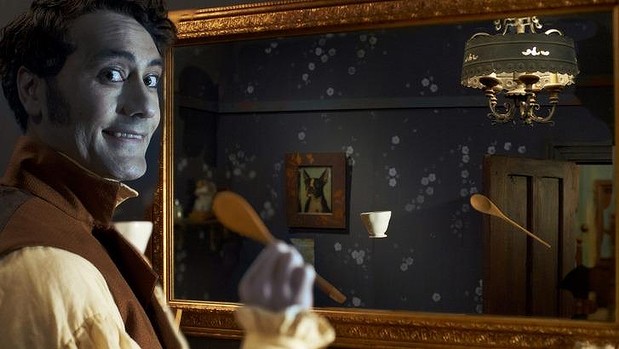
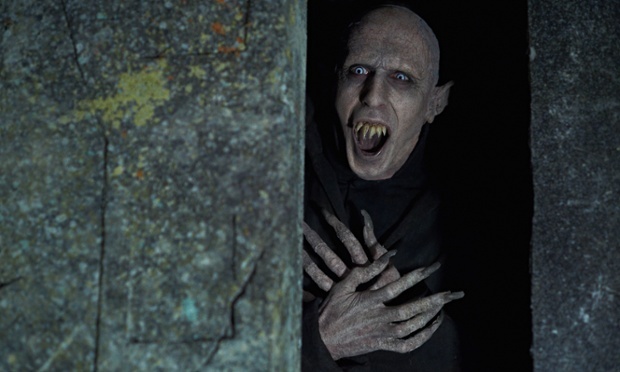
What We Do in the Shadows follows the daily humdrummery of a household of vampires, all of various vintages and dispositions. There’s the dandy, the slob, the troubled one, and Nosferatu. House meetings are called to revisit the neglected chore wheel which has resulted in a stack of blood-drenched dishes in the sink. The film is basically variations on this joke for 80-odd minutes and somewhat surprisingly, it works. It’s a slight but amiable feature, low-key but consistently fun.

what we do in the shadows group

In keeping with the documentary facade, much of the film is shot closely with a spotlight shining directly on the leads, leaving their surroundings bathed in titular darkness. This style is particularly effective when the film introduces special effects such as flying and mutation, all of which are blended seamlessly and provide an occasional jolt amongst the chuckles. And it is mostly chuckles. But they’re consistent chuckles.

what we do in the shadows

The funniest scenes occur when Clement and Waititi decide to go for broke. Despite being a low budget comedy, the film doesn’t shy away from its horrific roots, occasionally doubling down on gore with fountains of deep red blood. Sure, they lay down a newspaper first but come on, that stuff gets everywhere.

(What We Do in the Shadows is now playing at the Sundance Cinemas, The Majestic Bay Theatre, and the SIFF Uptown.)

Seattle Screen Valentine Scene

GoneWiththeWind1

Valentine’s Day hits Seattle screens weird this weekend, with off-kilter romances old and new taking over theatres all across the city. Here they are in alphabetical order:

The Duke of Burgundy (Peter Strickland, 2014) at SIFF Film Center: I haven’t seen this yet, but it was our friend Matt’s favorite movie of 2014. It’s an homage to the European softcore art-porn films of the 1970s. So I assume it’s pretty romantic with great music and some nifty dissolves.

Giant (George Stevens, 1956) at Cinemark theatres in Federal Way and Bellevue: James Dean makes a fortune in oil to impress Elizabeth Taylor, spends his super-wealthy life in misery when she still prefers Rock Hudson, apparently because she can’t understand a word Dean says because he’s always mumbling.

Gone with the Wind (Victor Fleming, 1939) at the Cinerama: Vivien Leigh’s feisty Southern Belle falls for the one man she can’t dominate (Clark Gable), submits to him (sort of), then sabotages their romance with all the incandescent fire of an orange only achievable in Technicolor.

Guys and Dolls (Joseph L. Mankiewicz, 1955) at the Cinerama: Frank Sinatra and Marlon Brando gamble on whether or not Brando can sleep with Jean Simmons (or “take her to Cuba” as they say). He gets her drunk, they go to Cuba. Also there’s gambling. And music. And everyone talks funny.

Harold & Maude (Hal Ashby, 1971) at the SIFF Uptown: Suicidal teenager falls for batty old lady. A favorite of every girl I went to high school with.

It Happened One Night (Frank Capra, 1934) at Scarecrow Video: Paparrazzo Clark Gable stalks runaway heiress Claudette Colbert, destroys the undershirt industry with his daring chest.

Lady Snowblood (Toshiba Fujita, 1973) at Scarecrow Video: Meiko Kaji revenges herself on the people who raped her mother and killed her family. It is snowy and there is blood. Like all Valentine’s Days.

Moulin Rouge! (Baz Luhrmann, 2001) at the Central Cinema: Ewan McGregor invents the mashup and falls tragically in love with Nicole Kidman’s tubercular prostitute and then Kurt Cobain rolls over in his grave.

R100 (Hitoshi Matsumoto, 2013) at the Grand Illusion: Mike saw this movie and wrote about it. I assume the “R100” rating means it’s fun for all ages.

Scott Pilgrim vs. the World (Edgar Wright, 2010) at the SIFF Uptown: A video game universe teaches bassist Michael Cera the key lesson about relationships: the other person is irrelevant, the important thing is to know that you are awesome.

Some Like it Hot (Billy Wilder, 1959) at the Cinerama: Jack Lemmon and Tony Curtis dress in drag to escape mobsters. Curtis pretends to be Cary Grant to sleep with Marilyn Monroe. Lemmon hooks up with Joe E. Brown. Marilyn Monroe is pretty.

True Romance (Tony Scott, 1993) at the Central Cinema: Christian Slater and Patricia Arquette are so cool falling in love over a Sonny Chiba triple feature, coffee and pie. Then they travel across the country to make a fortune selling stolen cocaine. As we all do.

R100 (Hitoshi Matsumoto, 2013)

r100 bathroom

Takafumi Katayama likes it kinky. He works all day in a furniture store and comes home to an adorable son who proudly proclaims he is now the third shortest kid in his class. In between this life of domestic drudgery, Takafumi enjoys getting the snot kicked out of him by dominatrixes dipped in leather. When he discovers that a club provides subscription-service public humiliations, he is nothing but eager to register. But soon the beatings begin encroaching on his normal life and he wants to cancel. Sorry, Takafumi, no refunds.

Continue reading R100 (Hitoshi Matsumoto, 2013)”

Actress (Robert Greene, 2014)

poster

One of my favorite movies of 2014 is back for one night only this Thursday at the Northwest Film Forum. I caught the movie when it played at the Grand Illusion Cinema a couple of years ago, and here is the review I wrote then on my blog.

I think I “related” to parts of Robert Greene’s non-fiction film in the way so many other people “related” to Boyhood, in that when we join her, stay-at-home mom Brandy Burre is very much looking to reestablish an identity for herself outside the home. This manifests itself as one of the main threads of the film’s story: her preparing to restart her acting career after a several years’ hiatus. That need for a creative outlet, for a definition of self that doesn’t revolve around one’s children (and the guilt inherit in that, a little voice telling you that not devoting yourself 100% to your children makes you a bad parent) is something I imagine every parent experiences, especially for those of us who abandon our careers for full-time parenthood. But also, more obliquely and (thankfully) alien to my own experience, this identity shift for Ms. Burre manifests itself in the collapse of her relationship with her partner Tim. This ultimately becomes the dominant storyline of the film: while Burre looks for jobs and gets her hair done and meets with friends, nothing really happens on the job front, but the relationship story unfolds dramatically in time as Tim gradually moves out of the house and we learn ever so little about what actually happened to break them up (both the proximate events and the emotions that underlay it).

Continue reading Actress (Robert Greene, 2014)”

Two Days, One Night (Jean-Pierre & Luc Dardenne, 2014)

B6hV5dsCEAEGwAY Continuing this week at the SIFF Uptown is the latest from neo-realist Belgian masters Jean-Pierre and Luc Dardenne, Two Days, One Night, their first foray into movie-stardom thanks to an Oscar-nominated performance from Marion Cotillard (The Dardennes themselves have never been nominated for an Academy Award, though they have accomplished the rare feat of twice winning the Palme d’Or at the Cannes Film Festival). Cotillard plays a factory worker (solar panels) who has just recently and barely recovered from the suicidal depression that caused a prolonged work absence, thus proving to her bosses that the factory will run just fine without her. She’s been laid off because her co-workers were made to vote on whether they’d rather she continue to work or they get their annual bonus. It’s an absurdly blunt premise that the Dardennes, whatever its worth, remain firmly committed to with their meticulous direct-cinema style. After talking her way into a revote as the film begins, the bulk of the movie follows Cotillard visiting each of her coworkers in turn over the weekend to beg them to allow her to keep her job. The fact that the Dardennes manage to make such a didactic and schematic premise watchable at all is a credit to their skill, and a testament to the fine performances of their cast. Cotillard first and foremost is a stunner, her portrait of a woman desperately trying to keep it together on the brink of disaster is easily on par with her exceptional work in 2013’s The Immigrant, which she probably should have been Oscar-nominated for as well. The only other recognizable face in the film is the man who plays her husband, Fabrizio Rongione, who also played the architect in 2014’s La Sapienza (look for Eugène Green’s very fine film to get a US release in the coming months, hopefully it’ll make it to Seattle), but all the performances are wonderful, each new co-worker bringing a wonderfully individualized set of hang-ups, guilts and possibilities of hope.

Two Days, One Night plays Friday through Thursday at the Kirkland Parkplace Cinema.