Friday September 8 – Thursday September 14

Featured Film:

Nocturama at the Northwest Film Forum

For some reason only playing for a single show, on Sunday night at the Film Forum, is Bertrand Bonello’s spectacular and befuddling story of a group of young people who coordinate a series of terrorist attacks around Paris and then hole up for the night in a department store. The first half is exceptional suspense filmmaking, relentlessly following the twists and turns of their scheme. The second half dissipates the action while cranking up the tension, as the kids don’t quite know what to do next. It’s one of the more controversial releases of the year, and we talked a bit about it on our second SIFF podcast and Ryan wrote about it this week.

Playing This Week:

AMC Alderwood:

True to the Game (Preston A. Whitmore II) Fri-Thurs
A Taxi Driver (Jang Hoon) Fri-Thurs

Ark Lodge Cinemas:

Second Nature (Michael Cross) Fri-Thurs Director Q&A Friday
Ingrid Goes West (Matt Spicer) Fri-Thurs Our Review
Scorchy (Howard Avedis, 1976) Thurs Only

Central Cinema:

My Neighbor Totoro (Hayao Miyazaki, 1988) Fri, Sun-Tues Dubbed or Subtitled, Check Listings

SIFF Egyptian:

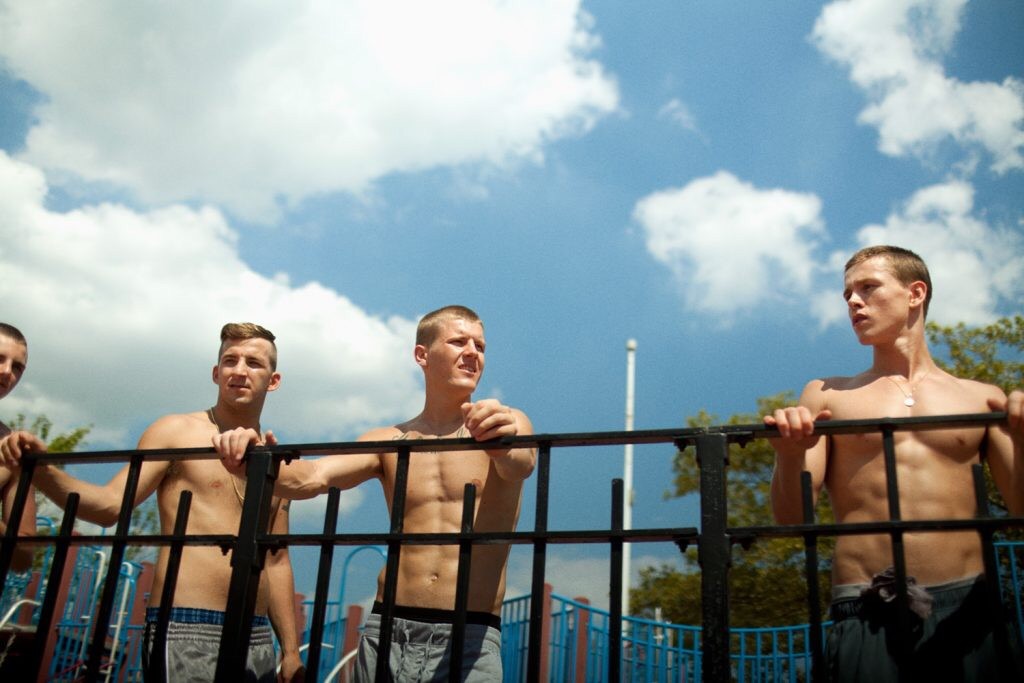
Beach Rats (Eliza Hittman) Fri-Thurs Our Review

Century Federal Way:

True to the Game (Preston A. Whitmore II) Fri-Thurs
The Wrath of Khan (Nicholas Meyer, 1982) Sun & Weds Only

Grand Cinema:

The Trip to Spain (Michael Winterbottom) Fri-Thurs
The Little Hours (Jeff Baena) Fri-Thurs Our Review
Rumble (Catherine Bainbridge & Alfonso Maiorana) Fri-Thurs
Welcome to the Dollhouse (Todd Solondz, 1995) Sat Only
Birthright: A War Story (Civia Tamarkin) Tues Only

Grand Illusion Cinema:

SECS Fest (Various) Fri-Sun Only
Escapes (Michael Almereyda) Sun-Thurs Only
Organic Films (Caryn Cline) Tues Only 16mm & Digital
L7: Pretend We’re Dead (Sarah Price) Starts Thurs

Cinemark Lincoln Square:

Ingrid Goes West (Matt Spicer) Fri-Thurs Our Review
Daddy (Ashim Ahluwalia) Fri-Thurs
Poster Boys (Shreyas Talpade) Fri-Thurs
Arjun Reddy (Sandeep Reddy Vanga) Fri-Thurs
Shubh Mangal Saavdhan (Rs Prasanna) Fri-Thurs
Do It Like an Hombre (Nicolás López) Fri-Thurs
Yuddham Sharanam (Krishna Marimuthu) Fri-Thurs
Lipstick Under My Burkha (Alankrita Shrivastava) Fri-Thurs
MedhaMeeda Abbayi (Prajith G) Fri-Thurs
Operation Alamelamma (Simple Suni) Sat & Sun Only
The Wrath of Khan (Nicholas Meyer, 1982) Sun & Weds Only
The Castle of Cagliostro (Hayao Miyazaki, 1979) Thurs Only Our Review English Dub

Regal Meridian:

Gook (Justin Chon) Fri-Thurs Our Review
Daddy (Ashim Ahluwalia) Fri-Thurs
Good Time (Josh & Benny Safdie) Fri-Thurs Our Review

Northwest Film Forum:

Nocturama (Bertrand Bonello) Sun Only Our Review
#BKKY (Nontawat Numbenchapol) Sun Only Director in Attendance
Black Orpheus (Marcel Camus, 1959) Weds Only 35mm Members Only
Lane 1974 (S.J. Chiro) Starts Thurs

AMC Pacific Place:

The Sinking City – Capsule Odyssey (Stephen Ng Hon-Pong & Nero Ng Siu-lun) Fri-Thurs
Twenty-Two (Ke Guo) Fri-Thurs

Regal Parkway Plaza:

Gook (Justin Chon) Fri-Thurs Our Review
Shubh Mangal Saavdhan (Rs Prasanna) Fri-Thurs

AMC Seattle:

Ingrid Goes West (Matt Spicer) Fri-Thurs Our Review
I Do. . . Until I Don’t (Lake Bell) Fri-Thurs Our Review

SIFF Film Center:

The Fencer (Klaus Härö) Fri-Sun Only
The Oath (Baltasar Kormakur) Fri Only
Rift (Erlingur Thoroddsen) Sat & Sun Only
Free in Deed (Jake Mahaffy) Sun & Tues Only
The Confessions (Roberto Andò) Mon Only
Orpheus (Jean Cocteau, 1950) Weds Only

AMC Southcenter:

Do It Like an Hombre (Nicolás López) Fri-Thurs

Regal Thornton Place:

The Wrath of Khan (Nicholas Meyer, 1982) Sun & Weds Only
The Castle of Cagliostro (Hayao Miyazaki, 1979) Thurs Only Our Review English Dub

SIFF Uptown:

The Trip to Spain (Michael Winterbottom) Fri-Thurs
The Villainess (Jeong Byeong-Gil) Fri-Thurs
Rumble (Catherine Bainbridge & Alfonso Maiorana) Fri-Thurs
May It Last: A Portrait of the Avett Brothers (Judd Apatow & Michael Bonfiglio) Tues Only
Heather Booth: Changing the World (Lilly Rivlin) Thurs Only

Varsity Theatre:

Marjorie Prime (Michael Almereyda) Fri-Thurs
Rememory (Mark Palansky) Fri-Thurs
Step (Amanda Lipitz) Fri-Thurs
Columbus (Kogonada) Fri-Thurs Our Review
The Wrath of Khan (Nicholas Meyer, 1982) Sun & Weds Only
The Castle of Cagliostro (Hayao Miyazaki, 1979) Thurs Only Our Review

In Wide Release:

Baby Driver (Edgar Wright) Our Review
The Big Sick (Michael Showalter) Our Review
Wind River (Taylor Sheridan) Our Review
Leap! (Eric Summer & Éric Warin) Our Review

Nocturama (2016, Bertrand Bonello)

group

Cultural context, even as it relates to single films, is a difficult issue to fully unpack. In the case of Bertrand Bonello’s Nocturama, which plays this week for one night only at the Northwest Film Forum, this idea is especially relevant, given the curious nature of its reception both here and across the pond in its home country of France. This is perhaps to be expected, on account of its incendiary subject matter, but all of these reactions, praise and criticism alike, stem from the extravagance, the seemingly inappropriate ways in which the film presents its ideas. But, crucially, Nocturama is less a film of ideas than of images, of mindsets that remain just out of focus.

The scenario itself is fairly simple: a group of terrorists – all of whom are young adults, half white upper-class and half Arabic lower-class – execute a highly coordinated series of simultaneous attacks around Paris, and hole up for the night in a popular, cavernous shopping mall, à la Dawn of the Dead. The motivations are purposefully left largely unstated: many mentions of capitalism and its ill-effects are made in two extended flashbacks during the film’s first half (there is even a statement that states that the existence of capitalism is a precondition for the downfall of capitalism) but no affiliation with any specific ideology is otherwise named, and each and every member of the crew slowly succumbs to the decadent pleasures of the mall’s many products and accoutrements. In a structural gambit that pays many dividends, especially during the harrowing climax, Nocturama is conducted from so many perspectives that the action is somewhat jumbled; despite the frequent use of on-screen timestamps, the main thread of coherence lies in the rush of movement and motivation from the cast (all of whom possess astonishingly emotive faces, presenting varying levels of fear and determination).

mask

Such a bare-bones description is fundamentally inadequate for any competently-directed film, but especially for this movie and the films of Bertrand Bonello in general. Bonello, as evinced in previous works such as House of Tolerance and Saint Laurent, is known and justly praised for his sense of space and flair, largely expressed through snaking Steadicam long takes. While those other two movies are all about languor (I cannot speak to the contents of his films prior to those), Nocturama takes tension and mounting dread as its modus operandi, in both the first half, dedicated to the execution of the bombings, and the second, which takes place almost entirely inside the mall, with only a few brief sojourns to the eerily quiet city just outside the soundproofed walls. At least in a film this focused, such an approach fits like a glove, moving with a precision that often mirrors that of the characters, at least until they slip up.

It was almost inevitable that Nocturama would come under some form of scrutiny for utilizing such flagrant cinematic techniques, including the use of both Bonello’s own pulsing electronic score and some choice cuts that run the gamut from a show-stopping lip sync of Shirley Bassey’s rendition of “My Way” to Chief Keef’s “I Don’t Like” to Willow Smith’s “Whip My Hair.” But it is as much a victim of poor timing: attacks occurred in Paris both during production (which caused the change in title from the phenomenal Paris Is a Party) and leading up to the release, and as a result it was received with roundly mixed reviews in that country, with some labeling the film as irresponsible. These reactions were much less prevalent when the movie opened here, perhaps because no “significant” attack has occurred in the past few months.

But at the same time, there is an increased urgency in the present, modern moment, a darkness and pessimism that is mirrored and amplified in this film. After my slightly more mixed view of the film when I saw it at SIFF, I rewatched it this past week in New York, and I was struck anew by how vivid, how confidently sleek Nocturama feels, on its own and in comparison to many of the more pedestrian films this year. Seen in a city whose intestines are made of subways not so different from the ones that are so crucial to the first half of the film, more and more resonances emerge from the elegant surfaces, whether it be thematic or purely on a gut level. And, at the end of the day, perhaps only the body matters, whether it is alive in ecstatic motion or silenced by the efficient crack of a gunshot.

SIFF 2017: Beach Rats (Eliza Hittman, 2017)


Eliza Hittman’s Beach Rats seems unaware of, or unwilling to acknowledge, the tensions that lie at the very heart of its premise. Abstracted images of abs, biceps, and one well-maintained Apollo’s belt open the film, each appearing on screen to the flashbulb rhythm of iPhone selfies. From the get-go, Hittman positions her film as ethnography; this body is anatomical subject first, person second. It happens to belong to Frankie, a closeted teenager charting the dawning realization of his sexuality, but more essential to Hitmann’s project is the material culture to which he and his corpus belong. Everything exists in the context of 21st century white youth culture. Nights start on the web but seamlessly extend into the streets, the same neon glow bathing both the bedroom and the boardwalk. Frankie and his friends exist to satiate their bodily hungers night after night, the fundamental corporeality of this subculture made manifest. Ditto the pervasive drug lust, which Hittman treats as both physiological need and social performance. Located quite specifically at Brooklyn’s dead-end—“Avenue Z”—and shot in blown out chiaroscuro that, at times, might make Philippe Grandieux flush with envy, Beach Rats checks itself constantly, a little like a vain teenager, to ensure that it signals thereness at every moment.

Aside from the fact that Spring Breakers already vivisected and laid bare this culture, Hittman’s ethnographic impulse is in and of itself benign. Tired perhaps, but harmless. More troubling are the narrative beats that pulse beneath the style. Frankie’s sexual awakening draws him to older men through the internet, each encounter laced with a hint of predatory danger. Intentionally or not, thanatos and eros are conjured up simultaneously, a fact underlined by the comatose presence of Frankie’s cancer-ridden father who literally functions as stumbling block en route to the bedroom. The film never draws an explicit parallel between Frankie’s fondness for virile middle-aged men and the bodily decay afflicting his father, but it’s an uncomfortably Freudian set-up for a queer film in 2017. Hittman’s conception of gay sexuality as death-tinged in some unconscious way gets compounded by the narrative jerry-rigging that traps Frankie and compels his most reprehensible actions. 

That the film finally reveals itself to be a morality play at core is, again, not a deal-breaker on its own terms. Like ethnography, moralism is an aesthetic (and ethical) choice. Mingling the two, however, makes for an unproductive tension: the here-and-now signifiers absolve Hittman of the burden of judgement, the narrative moralism requires it. It’s just too easy to play the middle against the sides and in the end commit to nothing. Beach Rats instructs Frankie about the dangers of living in the middle. Hittman should take her own advice.

The Seattle Screen Scene Top 100 Films of All-Time Project

When the new Sight & Sound poll came out in 2012, Mike and I each came up with hypothetical Top Tens of our own. For the next few years, we came up with an entirely new Top Ten on our podcast, The George Sanders Show every year around Labor Day. The podcast has ended, but the project continues here at Seattle Screen Scene.

The idea is that we keep doing this until the next poll comes out, by which time we’ll each have a Top 100 list. Well, I will. Mike will have only 98 because he repeated two from his 2012 list on the 2013 one.

Here are Mike’s Top Ten Films of All-Time for 2017:

380200334_1280x720

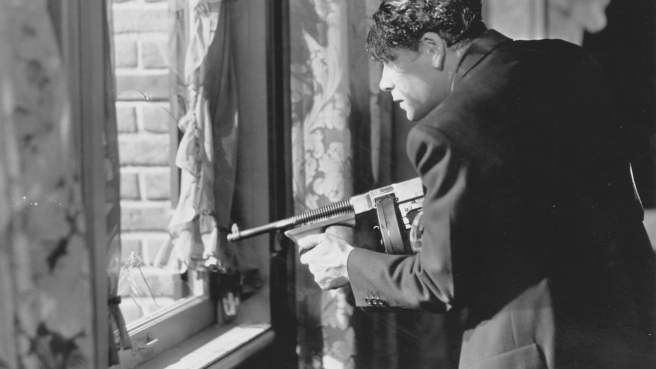
1. Scarface (Howard Hawks, 1932)

tumblr_m56jn44cf81qf7r5lo1_1280.jpg

2. La Strada (Federico Fellini, 1954)

87202853_o

3. Toute la mémoire du monde (Alain Resnais, 1957)

ride-the-high-country-1962

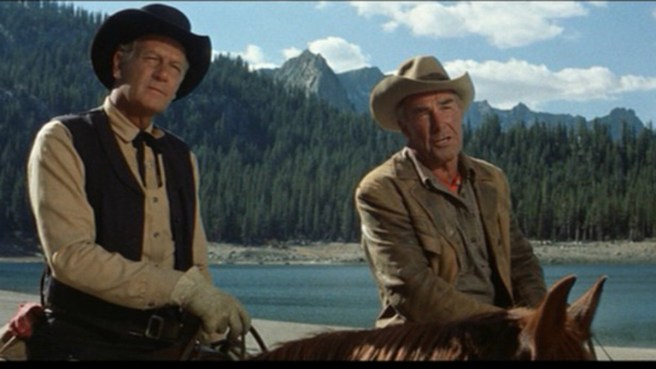
4. Ride the High Country (Sam Peckinpah, 1962)

wavelength-featured.jpg
5. Wavelength (Michael Snow, 1967)

28723id_036_w1600

6. Lone Wolf and Cub: Baby Cart at the River Styx (Kenji Misumi, 1972)

Bill-and-Ted-Bogus-Journey-Keanu-Reeves-Alex-Winter

7. Bill & Ted’s Bogus Journey (Peter Hewitt, 1991)

ratatouille8

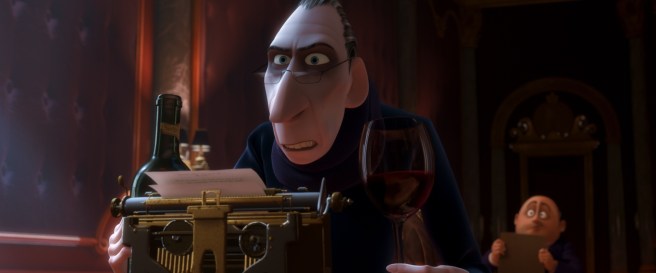
8. Ratatouille (Brad Bird, 2007)

Diane-Kruger-in-Inglorious-Basterds

9. Inglourious Basterds (Quentin Tarantino, 2009)

the-forbidden-room-2-xlarge

10. The Forbidden Room (Guy Maddin & Evan Johnson, 2015)


And here are Sean’s Top Ten Films of All-Time for 2017:

annexmarxbrothersducksoup_nrfpt_03.jpg.CROP.promo-xlarge2

1. Duck Soup (Leo McCarey, 1933)

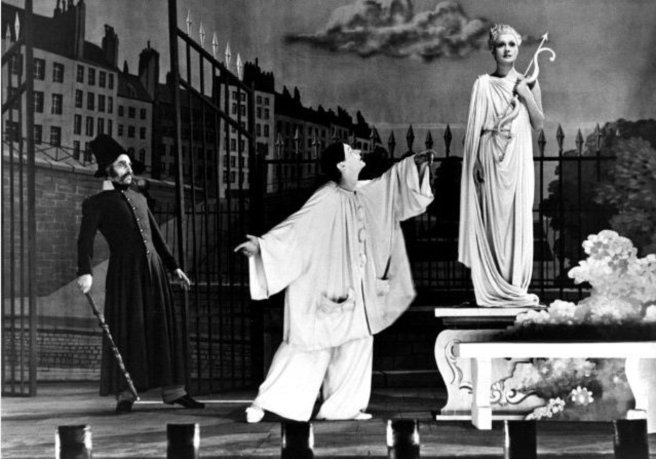
children-of-paradise

2. Children of Paradise (Marcel Carné, 1945)

TIPPI_THE_BIRDS_03LRG

3. The Birds (Alfred Hitchcock, 1963)

younggirlsrochefort-header-1800x800

4. The Young Girls of Rochefort (Jacques Demy, 1968)

A-NEW-LEAF2050

5. A New Leaf (Elaine May, 1971)

tumblr_mlaxteZvae1qztstdo1_1280

6. Celine and Julie Go Boating (Jacques Rivette, 1974)

maxresdefault

7. Wheels on Meals (Sammo Hung, 1984)

broadcast-news-12

8. Broadcast News (James L. Brooks, 1987)

Hjyaw

9. Fire Walk With Me (David Lynch, 1992)

img_0475

10. Dead Man (Jim Jarmusch, 1995)

Friday September 1 – Thursday September 7

Featured Film:

All that Jazz at the Northwest Film Forum

Bob Fosse’s loosely auto-biographical film, about a Broadway director with health and overwork problems (inspired by his attempt to stage Chicago and edit Lenny simultaneously), is the last great musical of the Hollywood studio style, features the best performance of Roy Scheider’s distinguished career and the grandest work of that system’s most distinctive choreographer, and is the best movie of 1979. It plays this week on Saturday and Sunday only on 35mm. Also at the NWFF this weekend is a double feature of documentaries about tap-dancing from George Nierenberg that look really cool: No Maps On My Taps & About Tap, playing Friday and Saturday only.

Playing This Week:

AMC Alderwood:

Valley of Bones (Dan Glaser) Fri-Thurs
A Taxi Driver (Jang Hoon) Fri-Thurs
I Do. . . Until I Don’t (Lake Bell) Fri-Thurs
Midnight Runners (Kim Joo-hwan) Fri-Thurs

Central Cinema:

Treasure of the Sierra Madre (John Huston, 1948) Fri-Weds
The Big Lebowski (Joel & Ethan Coen, 1998) Fri-Weds

Cinerama:

Tron (Steven Lisberger, 1982) Fri Only
Aliens (James Cameron, 1986) Fri Only
Sleeping Beauty (Clyde Geronimi, 1959) Sat Only
West Side Story (Robert Wise & Jerome Robbins, 1961) Sat Only
Star Trek VI: The Undiscovered Country (Nicholas Meyer, 1991) Sat Only
2001: A Space Odyssey (Stanley Kubrick, 1968) Sat & Weds Only
Patton (Franklin J. Schaffner, 1970) Sun Only
Interstellar (Christopher Nolan, 2014) Sun Only
Ghostbusters (Ivan Reitman, 1984) Sun Only
Top Gun (Tony Scott, 1986) Mon Only
Wonder Woman (Patty Jenkins) Mon Only
Inherent Vice (Paul Thomas Anderson, 2014) Tues Only
The Untouchables (Brian De Palma, 1987) Tues Only
Vertigo (Alfred Hitchcock, 1958) Weds Only

Century Federal Way:

A Taxi Driver (Jang Hoon) Fri-Thurs
Midnight Runners (Kim Joo-hwan) Fri-Thurs
Office Space (Mike Judge, 1999) Sun & Weds Only

Grand Cinema:

The Trip to Spain (Michael Winterbottom) Fri-Thurs
The Little Hours (Jeff Baena) Fri-Thurs Our Review
Repo Man (Alex Cox, 1984) Fri Only
In Transit (Albert Maysles, et al) Tues Only

Grand Illusion Cinema:

The Vault (Dan Bush) Fri-Thurs

Cinemark Lincoln Square:

I Do. . . Until I Don’t (Lake Bell) Fri-Thurs
Paisa Vasool (Puri Jagannadh) Fri-Thurs
Puriyatha Puthir (Ranjit Jeyakodi) Fri-Thurs
Arjun Reddy (Sandeep Reddy Vanga) Fri-Thurs
Shubh Mangal Saavdhan (Rs Prasanna) Fri-Thurs
Do It Like an Hombre (Nicolás López) Fri-Thurs
A Gentleman (Krishna D.K. & Raj Nidimoru) Fri-Thurs
Baashaho (Milan Luthria) Fri-Thurs
Office Space (Mike Judge, 1999) Sun & Weds Only

Regal Meridian:

Gook (Justin Chon) Fri-Thurs Our Review
A Gentleman (Krishna D.K. & Raj Nidimoru) Fri-Thurs

Northwest Film Forum:

No Maps On My Taps and About Tap (George T. Nierenberg, 1979 & 1985) Fri & Sat Only
Automatic at Sea (Matthew Lessner) Fri & Sat Only Director in Attendance
All that Jazz (Bob Fosse, 1979) Sat & Sun Only 35mm

AMC Oak Tree:

Deep (Julio Soto Gurpide) Fri-Thurs

AMC Pacific Place:

Wolf Warrior 2 (Wu Jing) Fri-Thurs Our Review
I Do. . . Until I Don’t (Lake Bell) Fri-Thurs

Regal Parkway Plaza:

Gook (Justin Chon) Fri-Thurs Our Review
Finally Found Someone (Theodore Boborol) Fri-Thurs
Shubh Mangal Saavdhan (Rs Prasanna) Fri-Thurs
A Gentleman (Krishna D.K. & Raj Nidimoru) Fri-Thurs

AMC Seattle:

Gook (Justin Chon) Fri-Thurs Our Review
I Do. . . Until I Don’t (Lake Bell) Fri-Thurs

AMC Southcenter:

Valley of Bones (Dan Glaser) Fri-Thurs
The Layover (William H. Macy) Fri-Thurs
Do It Like an Hombre (Nicolás López) Fri-Thurs

SIFF Uptown:

The Trip to Spain (Michael Winterbottom) Fri-Thurs
Columbus (Kogonada) Fri-Thurs Our Review
Rumble (Catherine Bainbridge & Alfonso Maiorana) Fri-Thurs

Varsity Theatre:

Step (Amanda Lipitz) Fri-Thurs
Unlocked (MIchael Apted) Fri-Thurs

In Wide Release:


Baby Driver (Edgar Wright) Our Review
The Big Sick (Michael Showalter) Our Review
Wind River (Taylor Sheridan) Our Review
Good Time (Josh & Benny Safdie) Our Review
Leap! (Eric Summer & Éric Warin) Our Review
Ingrid Goes West (Matt Spicer) Our Review

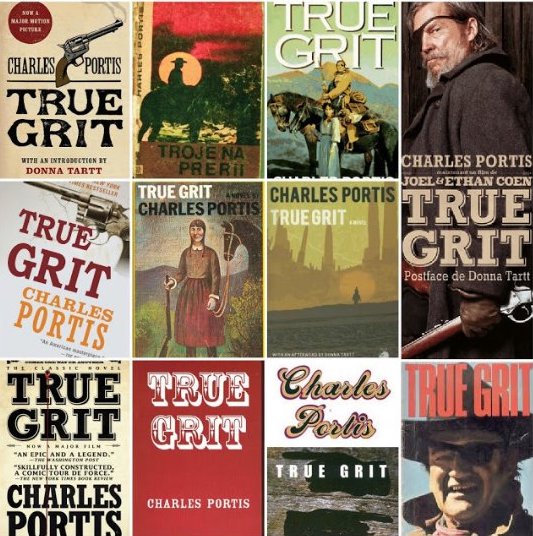
The Frances Farmer Show #14: True Grit

761821._SY540_

Fresh from Melissa introducing the film at the Pickford Film Center in Bellingham, we talk about three versions of True Grit: the 1968 novel by Charles Portis, the 1969 film version directed by Henry Hathaway and starring John Wayne, Kim Darby and Glen Campbell, and the 2010 adaptation by the Coen Brothers, with Jeff Bridges, Hailee Steinfeld and Matt Damon.

You can listen to the show by downloading it directly, or by subscribing on iTunes or the podcast player of your choice.

Note: Zama, which we’ll be reading for the Vancouver Film Festival, is a Spanish language novel by Argentinian writer Antonio di Benedetto.

Friday August 25 – Thursday August 31

Featured Film:

70mm Festival at the Cinerama

Two terrific American indies open this week in wide release: Ingrid Goes West and Good Time, but we’d remiss not to highlight the latest version of the Cinerama’s festival of 70mm film. The calendar is packed with the usual suspects (Lawrence of Arabia, Vertigo, Aliens, Baraka), but if you’ve never had a chance to see them, the next two weeks will be something special. The highlight of the festival, outside the canonical classics, is undoubtedly Sleeping Beauty, which remains the best of Disney’s animated films. I’d also challenge anyone to only go see Khartoum and It’s a Mad Mad Mad Mad World while skipping everything else.

Playing This Week:

AMC Alderwood:

A Taxi Driver (Jang Hoon) Fri-Thurs
Vivegam (Siva) Fri-Thurs In Tamil & Telugu, Check Showtimes
Midnight Runners (Kim Joo-hwan) Fri-Thurs

Ark Lodge Cinemas:

Step (Amanda Lipitz) Fri-Thurs

Central Cinema:

Thelma & Louise (Ridley Scott, 1991) Fri-Tues
South Park (Trey Parker & Matt Stone, 1999) Fri-Tues

Cinerama:

Lawrence of Arabia (David Lean, 1962) Fri-Sun
Khartoum (Basil Dearden, 1966) Fri Only
Vertigo (Alfred Hitchcock, 1958) Sat Only
Aliens (James Cameron, 1986) Sat Only
Sleeping Beauty (Clyde Geronimi, 1959) Sun Only
Ghostbusters (Ivan Reitman, 1984) Sun Only
The Master (Paul Thomas Anderson, 2012) Mon Only
Baraka (Ron Fricke, 1992) Mon Only
It’s a Mad Mad Mad Mad World (Stanley Kramer, 1963) Tues Only
The Hateful Eight (Quentin Tarantino, 2015) Tues Only Our Review
Spartacus (Stanley Kubrick, 1960) Weds Only
Top Gun (Tony Scott, 1986) Weds Only
The Dark Crystal (Jim Henson & Frank Oz, 1982) Thurs Only
The Thing (John Carpenter, 1982) Thurs Only

SIFF Egyptian:

Patti Cake$ (Geremy Jasper) Fri-Thurs

Century Federal Way:

Step (Amanda Lipitz) Fri-Thurs
A Taxi Driver (Jang Hoon) Fri-Thurs
Midnight Runners (Kim Joo-hwan) Fri-Thurs
The Spy Who Loved Me (Lewis Gilbert, 1977) Sun & Weds Only

Grand Cinema:

Whose Streets? (Sabaah Folayan & Damon Davis) Fri-Thurs
Score: A Film Music Documentary (Matt Schrader) Fri-Thurs
Step (Amanda Lipitz) Fri-Thurs
The Little Hours (Jeff Baena) Fri-Thurs Our Review
The Bad Batch (Ana Lily Amirpour) Sat Only
Promised Land (Sarah Salcedo & Vasant Salcedo) Tues Only
Deconstructing the Beatles Sgt. Pepper (Scott Freiman) Weds Only

Grand Illusion Cinema:

Lemon (Janicza Bravo) Fri-Thurs
Attack the Block (Joe Cornish, 2011) Sat Only

Cinemark Lincoln Square:

Vivegam (Siva) Fri-Thurs In Tamil & Telugu, Check Showtimes
Arjun Reddy (Sandeep Reddy Vanga) Fri-Thurs
Bareilly Ki Barfi (Ashwiny Iyer Tiwari) Fri-Thurs
Patti Cake$ (Geremy Jasper) Fri-Thurs
A Gentleman (Krishna D.K. & Raj Nidimoru) Fri-Thurs
Toilet: Ek Prem Katha (Shree Narayan Singh) Fri-Thurs
The Spy Who Loved Me (Lewis Gilbert, 1977) Sun & Weds Only

Regal Meridian:

Gook (Justin Chon) Fri-Thurs Our Review
The Adventurers (Stephen Fung) Fri-Thurs Our Review
Toilet: Ek Prem Katha (Shree Narayan Singh) Fri-Thurs
A Gentleman (Krishna D.K. & Raj Nidimoru) Fri-Thurs

Northwest Film Forum:

Whose Streets? (Sabaah Folayan & Damon Davis) Fri-Thurs
Chicagoland Shorts Vol. 3 Fri Only
Il Boom (Vittorio Di Sica, 1963) Sat & Sun Only
In Pursuit of Silence (Patrick Shen) Weds & Thurs Only

AMC Oak Tree:

Deep (Julio Soto Gurpide) Fri-Thurs

AMC Pacific Place:

Wolf Warrior 2 (Wu Jing) Fri-Thurs Our Review

Regal Parkway Plaza:

A Gentleman (Krishna D.K. & Raj Nidimoru) Fri-Thurs
Finally Found Someone (Theodore Boborol) Fri-Thurs
Kita Kita (Sigrid Andrea P. Bernardo) Fri-Thurs

SIFF Film Center:

The Girl Without Hands (Sébastien Laudenbach) Fri-Sun, Weds & Thurs

AMC Southcenter:

Step (Amanda Lipitz) Fri-Thurs

Regal Thornton Place:

In This Corner of the World (Sunao Katabuchi) Fri-Thurs Our Review

SIFF Uptown:

In This Corner of the World (Sunao Katabuchi) Fri-Thurs Our Review
Columbus (Kogonada) Fri-Thurs Our Review
Step (Amanda Lipitz) Fri-Thurs
The Trip/The Trip to Italy (Michael Winterbottom, 2010, 2014) Mon Only Double Feature

Varsity Theatre:

Step (Amanda Lipitz) Fri-Thurs
69 Kill (Trent Haaga) Fri-Thurs
Maudie (Aisling Walsh) Fri-Thurs

In Wide Release:


Baby Driver (Edgar Wright) Our Review
The Big Sick (Michael Showalter) Our Review
Wind River (Taylor Sheridan) Our Review
Good Time (Josh & Benny Safdie) Our Review
Leap! (Eric Summer & Éric Warin) Our Review
Ingrid Goes West (Matt Spicer) Our Review

Good Time (Josh & Benny Safdie, 2017)

DDVFiJMV0AEHUUC

The Safdie Brothers’ Heaven Knows What was one of the singular films of VIFF 2014, a harrowing, grimy, close-up look at the life of a homeless junkie and her estranged boyfriend, enlivened by a remarkable performance from Arielle Holmes, upon whose life the film was largely based. With a pounding score and aggressive handheld close-up images from cinematographer Sean Price Williams, the film delivered a kind of extreme realism, like a Neveldine/Taylor movie for the socially conscious art house crowd. The Safdies’ follow-up, which premiered at Cannes and opens at SIFF this week, is more explicitly a genre film, if only because instead of a real person playing the lead, they now have a bona fide movie star, Robert Pattinson. It’s a One Crazy Night story, with Pattinson digging himself ever deeper into trouble in the wake of a bank robbery he pulls with his brother, played by Benny Safdie. During the escape Benny is arrested, and later hospitalized after getting into a fight in jail. Pattinson tries to sneak him out of the hospital, which leads to the kinds of unanticipated snags and increasing lunacy that is the hallmark of this kind of film (the movie’s poster explicitly points to Martin Scorsese’s After Hours). As an exercise in suspense filmmaking, the movie is excellent, the music (this time by Oneohtrix Point Never) and Williams’s images perfectly suited to the manic nervousness and driving obsessions of the scenario. Pattinson is, as always, equal parts charismatic and deeply disturbing (would be interesting to pair this with his other great city film, David Cronenberg’s Cosmopolis). The supporting cast as well is marvelously weird, headlined by Jennifer Jason Leigh, and Oscar nominee Barkhad Abdi, but also including newcomers like Taliah Webster, Eric Peykert, Peter Verby, and Buddy Duress (who was also in Heaven Knows What), who has rightfully drawn comparison’s to the great oddball character actor Timothy Carey. One performance though has me baffled, and that is Benny Safdie’s as Pattinson’s developmentally- and hearing-impaired brother. I don’t know what to make of the film’s bookends, with Benny in a hospital undergoing treatment, first answering free-association questions from his psychiatrist (Verby), later in a group exercise. It’s been a couple weeks and I still haven’t come up with a satisfactory explanation for these scenes, but they don’t feel right to me at all. But in-between them lies the most exciting American movie of the year so far.

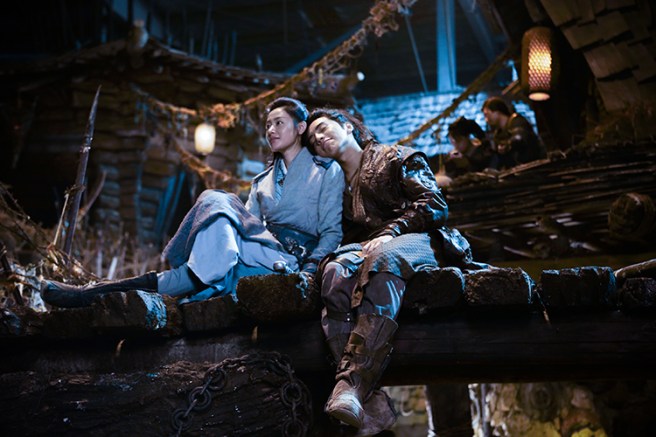
The Legend of the Naga Pearls (Yang Lei, 2017)

王大陸張天愛CP感十足

In what has been a strong summer for Chinese language releases here in Seattle (with Our Time Will Come, Wolf Warrior 2, Meow, Once Upon a Time, and The Adventurers following SIFF’s minifestival of Hong Kong films and their presentation of the restored Taipei Story last week), Legend of the Naga Pearls shrugs its way on screen for the last week of August. The latest in a string of fantasy films built around special effects and photogenic stars, it’s set in the universe of Novoland, which is apparently a popular fictional construction in China, home to more than thirty novels by various authors. This story follows 25 years after a war between humans and the villainous Winged Tribe. A gang of evil former Winged People are trying to assemble a weapon with which to unleash a horde of deadly flying tapirs (seriously) on the human population, which has built their city, Uranopolis, atop the ruins of the Winged Tribe’s city in the clouds. A rag tag team of adventurers unites to steal the key item first. They include the daughter of a good Winged Person, the callow son of a human prince, and a thief with a mysterious blue mark on his hand that turns out to be connected to the eponymous MacGuffin.

Continue reading The Legend of the Naga Pearls (Yang Lei, 2017)”

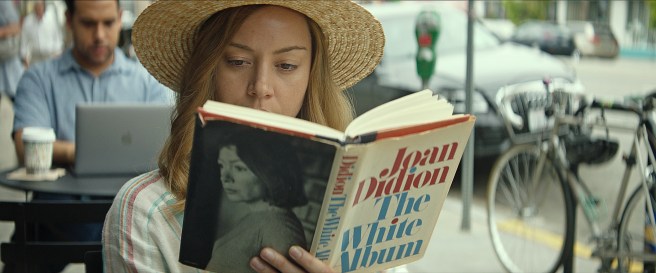
Ingrid Goes West (Matt Spicer, 2017)

ingrid-goes-west-aubrey-plaza

Aubrey Plaza graces Seattle Screens for the second time this summer, following the extended run of the raucous Boccaccio farce The Little Hours at SIFF (and now expanded around town), with the defining stalker movie of the Web 2.0 age. Plaza’s Ingrid is introduced in a psychotic rage, trashing the wedding of an apparent friend, though we soon learn that she didn’t know the person at all: Ingrid just followed her on Instagram. After a sojourn in therapy, and a bit of backstory where it’s revealed that Ingrid has been caring for her sick mother who has since died and left her a tidy sum of cash, Ingrid develops a new Instagram obsession, an ultra-trendy blonde named Taylor (Elizabeth Olsen) and moves to Los Angeles to track her down. Using her internet sleuthing skills, she manufactures random encounters with Taylor and eventually insinuates herself into her life, meeting her husband, her brother and for all appearances becoming her friend. Meanwhile, she strikes up a friendship and romantic relationship with her landlord (O’Shea Jackson, Jr), almost by accident. As Taylor loses interest in Ingrid (dazzled by brighter stars on her own social climbing quest) and Taylor’s brother (the menacingly beefy Billy Magnussen) begins to suspect Ingrid’s lunacy, Plaza’s performance shifts from comically manic to seriously unhinged, Ingrid’s desperate need for acceptance among the beautiful people blinding her to the wonders of her Batman-loving boyfriend (Jackson’s easy-going performance matches in grounded realness Plaza and Magnussen’s hyperactive villainy). I suppose every new stage in communication technology spawns a new variation on the stalker narrative, and it’s tempting to reduce Ingrid Goes West to a statement about The Way Things Are Now, but I don’t know that it has anything more to say about social media than To Die For did about local news celebrity or Play Misty for Me did about talk radio or Single White Female did about Manhattan real estate. The medium changes, but the essential truths of human loneliness and the pathologies we develop in the attempt to cure it, remain the same. More tantalizingly, the film offers itself up in the end as a Taxi Driver for our marginally less violent, but much more ephemeral age.