Weeds on Fire (Stevefat, 2016)

weedsonfire3-1600x900-c-default

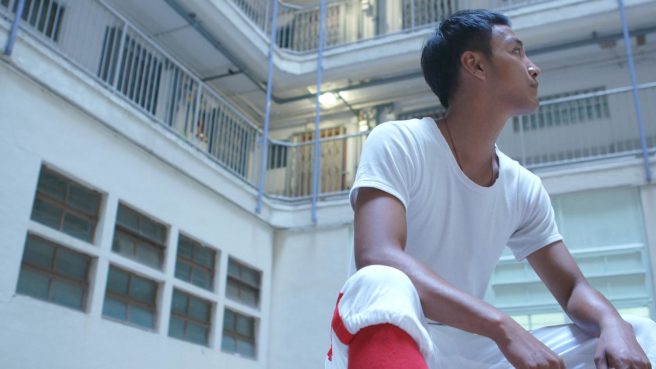
One of the three new films playing at SIFF this weekend as part of their miniseries commemorating the 20th anniversary of the Handover of Hong Kong from Britain to China, along with Mad World and Cook Up a StormWeeds on Fire was one of the surprise hits of 2016 in Hong Kong. The based on true events story follows the founding of the Shatin Martins baseball team, and plays as a more or less conventional, and conventionally uplifting sports story, albeit with a harder edge to its story of high school youth than we see here in America. Think of it as A League of Their Own, but for the kids from Dangerous Encounters – First Kind (the English title is consciously recalling such rebellious Ringo Lam films as City on Fire and School on Fire, the film’s Chinese title means “Half a Step”, which is more generically sports-centric.)

Continue reading Weeds on Fire (Stevefat, 2016)”

Mad World (Wong Chun, 2016)

239de492-136c-11e7-8424-32eaba91fe03_1280x720_145323

For more than a hundred years, all of the world, what is taken to be serious cinema has been defined more often than not by content. Films for grown-ups are supposed to be sober examinations of the social and political issues of the day. These are the movies that win awards. They almost never last, because as society mutates through time, the films remain frozen into irrelevance. Of the social problem films that maintain their greatness, it is almost always because of their secondary characteristics: the craft of directors, actors, writers and others elevate films like The Best Years of Our Lives, I Was a Fugitive from a Chain Gang, On the Waterfront or Bigger than Life beyond the prisons of their own importance. But most fall by the wayside, only unearthed by future generations of box-checkers attempting to watch all the past award winners (for why else would anyone watch Gentleman’s Agreement today?) This dynamic is starkly present in histories of Hong Kong cinema, long haunted by the fact that what the colony/SAR has always been good at are genre films (musicals, martial arts and gangster films, low-brow comedies) featuring an embarrassing lack of social relevance. The narrative around the Hong Kong New Wave has largely been one of selling out: a group of young directors emerge tackling vital issues of the day then become corrupted by mainstream cinema into making impersonal works of goofy entertainment. Going back to the post-war 1950s, when musicals and kung fu serials were incubating a vast array of talent that would dominate the industry for the next 30 years, the films of import were considered to be the social problem films, especially a subgenre of family films revolving around relations between fathers and sons. A look at Taiwan’s Golden Horse Awards, given for more than 50 years to the best in Chinese language film reveals that only a handful of non-war action films have picked up the top prize, the first (as far as I can tell) being Crouching Tiger, Hidden Dragon.
madworld_01

But I may be overstating this. The Hong Kong Film Awards, dating back to 1982, have been much more liberal in their tastes, and last year, confronted with the choice between Trivisa, a serio-comic crime saga from the Milkyway Image studio and Mad World, a Very Important Movie by first-time director Wong Chun about a father and his son and mental illness, they chose the gangsters. Mad World  kicks off a miniseries of Hong Kong films at SIFF this weekend, marking the anniversary of the 1997 Handover of the colony to Mainland China with a trio of new films and a pair of classics. Shawn Yue (an actor and former model last seen here a couple of months ago in Love Off the Cuff) plays a young man suffering from Bipolar Disorder who gets released after a year in a hospital into the custody of his father, an aging truck driver played by Eric Tsang. As Yue attempts to reenter society (and unadvisedly goes off his medication) flashbacks recount the events leading up to his breakdown: he quit his job to care for his elderly mother (Elaine Jin), who appears to have been afflicted with some form of dementia. This strains his relationship with his fiancée and ultimately leads to the mother’s accidental death, for which Yue is charged with manslaughter but found not guilty. The present tense structure of the film follows Yue in a number of attempts to recreate his former life, all of which fail miserably (a former coworker and friend flounders under a financial crisis, his fiancée ambushes him with recrimination at a prayer meeting, a friendship with the boy next door is undermined by the prejudice and gossip of his neighbors). It’s enough to drive anyone nuts.

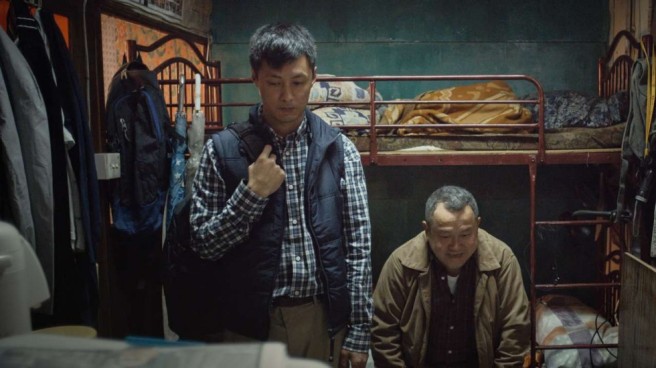
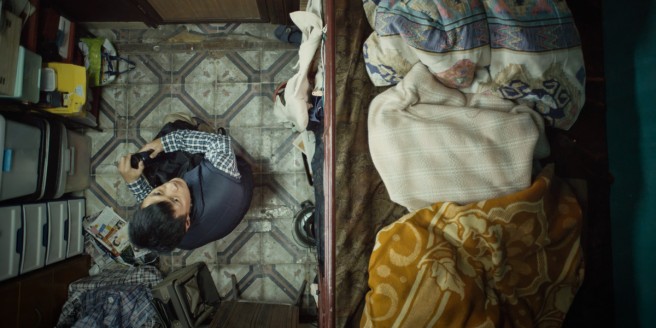
Wong’s film argues that it isn’t so much that there’s anything wrong with Yue, chemically or psychologically, but rather that given the social, material and familial conditions of contemporary society (along with perhaps a genetic inheritance from his mother), depression is not only reasonable, but inevitable. His former friends are materialistic and self-obsessed (and extremely rude at weddings). Everyone he meets makes fun of him for being crazy, there’s even a video of him having a breakdown in a convenience store that goes viral, because apparently everyone in Hong Kong is a monster. His father lives in the tiniest of apartments, an 8×6 room with bunkbed, a TV and a fold-up able, sharing a kitchen and bathroom with half a dozen neighbors. A cramped corner for forgotten people barely serving. With rigid, confining compositions and a sickly melancholic piano score, the film is an unrelenting lecture about the pathology of modern life, illustrated by a melodramatic slideshow demonstrating its devastating effects on a matinée idol.
madworld_05

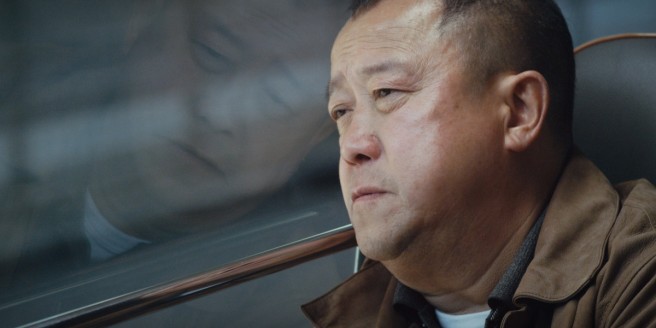
However, Eric Tsang, one of the key figures in Hong Kong cinema for the past 40 years, where he has served as director (Aces Go Places), writer (Tsui Hark’s All the Wrong Clues (for the Right Solution), producer (Drunken Master II, Golden Chicken, After this Our Exile) and actor both comic (as part of Sammo Hung’s Lucky Stars crew) and dramatic (as Maggie Cheung’s husband in Comrades, Almost a Love Story), brings a lived-in reality to the film that compensates for much of its contrivance. Where Yue plays depression as blankness and tears and Jin pushes dementia over the top, Tsang keeps things simple. A good-natured, under-educated man, his attempts to do what’s best for his son are heartbreakingly inadequate (at one point saying what seems exactly the opposite of how one should talk to someone with a mental illness: “Stop being negative. It’s all in your head. Think of something more cheerful. Can’t you be normal?”) At the Hong Kong Film Awards, Tsang won the Best Supporting Actor for his work, while Jin won Supporting Actress and Wong Best New Director. I suspect that, years from now, Tsang’s performance will be the only reason to watch this movie. And it might even be worth it.

Friday June 23 – Thursday June 29

Featured Film:

After the Storm at the SIFF Uptown

Japanese director Kore-eda Hirokazu’s latest, hot off a run at SIFF, opens this week at the Uptown. It’s another of Kore-eda’s quiet examinations of family life, with a run-down father attempting to win back his ex-wife, connect with his son, cope with his mom and sister’s disapproval and avoid writing his second novel while working as a private detective to fuel his gambling addiction. Hiroshi Abe is excellent as the dad, as is Koreeda regular Kirin Kiki as the mother. We reviewed it at VIFF last fall.

Playing This Week:

AMC Alderwood:

Paris Can Wait (Eleanor Coppola) Fri-Thurs
Beatriz at Dinner (Miguel Arteta) Fri-Thurs

Central Cinema:

Jurassic Park (Steven Spielberg, 1993) Fri-Weds
Drop Dead Fred (Ate de Jong, 1991) Fri-Weds

SIFF Egyptian:

The Exception (David Leveaux) Fri-Thurs

Century Federal Way:

DJ Duvvada Jagannadham (Harish Shankar) Fri-Thurs
My Neighbor Totoro (Hayao Miyazaki, 1988) Sun & Mon Only Dubbed Sun, Subtitled Mon
What Ever Happened to Baby Jane? (Robert Aldrich, 1962) Sun & Weds Only

Grand Cinema:

The Exception (David Leveaux) Fri-Thurs
Paris Can Wait (Eleanor Coppola) Fri-Thurs
Beatriz at Dinner (Miguel Arteta) Fri-Thurs
Zardoz (John Boorman, 1974) Sat Only
Truman (Cesc Gay) Tues Only

Grand Illusion Cinema:

The Bad Batch (Ana Lily Amirpour) Fri-Thurs

Cinemark Lincoln Square:

Beatriz at Dinner (Miguel Arteta) Fri-Thurs
Tubelight (Kabir Khan) Fri-Thurs
DJ Duvvada Jagannadham (Harish Shankar) Fri-Thurs
My Neighbor Totoro (Hayao Miyazaki, 1988) Sun & Mon Only Dubbed Sun, Subtitled Mon
What Ever Happened to Baby Jane? (Robert Aldrich, 1962) Sun & Weds Only

Regal Meridian:

Tubelight (Kabir Khan) Fri-Thurs

Northwest Film Forum:

I’m Not Fascinating: The Movie! (Danny Plotnick, 1996) Fri Only Drummer in Attendance
Icaros: A Vision (Leonor Caraballo & Matteo Norzi) Fri-Sun Only
On the Banks of the Tigris: The Hidden Story of Iraqi Music (Marsha Emerman, 2015) Sat & Sun Only
YIPS Fest 2017 Sun Only

AMC Oak Tree:

Paris Can Wait (Eleanor Coppola) Fri-Thurs

AMC Pacific Place:

Beatriz at Dinner (Miguel Arteta) Fri-Thurs
Paris Can Wait (Eleanor Coppola) Fri-Thurs
The Hero (Brett Haley) Fri-Thurs

Regal Parkway Plaza:

Paris Can Wait (Eleanor Coppola) Fri-Thurs
Beatriz at Dinner (Miguel Arteta) Fri-Thurs
Tubelight (Kabir Khan) Fri-Thurs
Can We Still Be Friends? (Prime Cruz) Fri-Thurs

AMC Seattle:

Beatriz at Dinner (Miguel Arteta) Fri-Thurs
Dean (Demetri Martin) Fri-Thurs
The Hero (Brett Haley) Fri-Thurs

SIFF Film Center:

Manifesto (Julian Rosefeldt, 2015) Fri-Sun Our Review

Regal Thornton Place:

My Neighbor Totoro (Hayao Miyazaki, 1988) Sun & Mon Only Dubbed Sun, Subtitled Mon

SIFF Uptown:

After the Storm (Koreeda Hirokazu) Fri-Thurs Our Review
The Wedding Plan (Rama Burshtein) Fri-Thurs
Dean (Demetri Martin) Fri-Thurs
The Hero (Brett Haley) Fri-Thurs
Mad World (Wong Chun) Thurs Only

Varsity Theatre:

Letters from Baghdad (Sabine Krayenbühl & Zeva Oelbaum) Fri-Sun
Paris Can Wait (Eleanor Coppola) Fri-Thurs
Ripped (Brad Epstein) Fri-Thurs

In Wide Release:

Alien Covenant (Ridley Scott) Our Review
Guardians of the Galaxy 2 (James Gunn) Our Review

SIFF 2017 Index

Here is an index of our coverage of SIFF 2017.

Previews:

Festival Preview
Week One
Week Two
Week Three
Week Four

Reviews:

Yourself and Yours (Hong Sangsoo)
Cook Up a Storm (Raymond Yip)
Knife in the Clear Water (Wang Zuebo)
Sami Blood (Amanda Kernell)
Chronicles of Hari (Ananya Kasaravalli)
Finding Kukan (Robin Lung)
Bad Black (Nabwana IGG)
Vampire Cleanup Department (Yan Pak-wing & Chiu Sin-hang)
Mr. Long (Sabu)
Ma’ Rosa (Brillante Mendoza)
Nocturama (Bertrand Bonello)

Capsule Reviews:

Dawson City: Frozen Time (Bill Morrison)
My Journey through French Cinema (Bertrand Tavernier)
The Unknown Girl (Jean-Pierre & Luc Dardenne)
By the Time It Gets Dark (Anocha Suwichakornpong)
Manifesto (Julian Rosefeldt)
Beach Rats (Eliza Hittman)
God of War (Gordon Chan)
Person to Person (Dustin Guy Defa)
Landline (Gillian Robespierre)
Wind River (Taylor Sheridan)
The Little Hours (Jeff Baena)
Have a Nice Day (Liu Jian)
Columbus (Kogonada)
I, Daniel Blake (Ken Loach)
Gook (Justin Chon)
A Ghost Story (David Lowery)

Podcasts:

The Frances Farmer Show #12: SIFF 2017 Part One
The Frances Farmer Show #13: SIFF 2017 Part Two

The Frances Farmer Show #13: SIFF 2017 Part Two

411d294d_c189_49b6_92f3_67f3de88101f_large16x9_aghoststorystill1_32349090476_o.0

The 2017 Seattle International Film Festival has come to an end and Sean, Evan and Ryan get together to talk about what they saw, what they liked and didn’t like among the festival’s archival presentations and new releases. Film discussed include: The Dumb Girl of Portici, Taste of Cherry, Love and Duty, Brainstorm, A Ghost Story, Nocturama, Columbus, Godspeed, Gook and Mr. Long.

You can listen to the show by downloading it directly, or by subscribing on iTunes or the podcast player of your choice.

Friday June 16 – Thursday June 22

Featured Film:

Funeral Parade of Roses at the Northwest Film Forum

In addition to a program of eight of his short films (playing Sunday only) the Northwest Film Forum this weekend presents the restoration of the late Toshio Matsumoto’s 1969 Japanese New Wave classic Funeral Parade of Roses, which I haven’t seen, but which they describe as a “shattering, kaleidoscopic masterpiece . . . one of the most subversive and intoxicating films of the late 1960s: a headlong dive into a dazzling, unseen Tokyo night-world of drag queen bars and fabulous divas, fueled by booze, drugs, fuzz guitars, performance art and black mascara.” Sold.

Playing This Week:

AMC Alderwood:

Paris Can Wait (Eleanor Coppola) Fri-Thurs
Dean (Demetri Martin) Fri-Thurs
Warriors of the Dawn (Jeong Yoon-cheol) Fri-Thurs

Ark Lodge Cinemas:

The House on Coco Road (Damani Baker) Thurs Only

Central Cinema:

But I’m a Cheerleader (Jamie Babbit, 2000) Fri-Mon
Ma vie en rose (Alain Berliner, 1997) Fri-Mon

SIFF Egyptian:

Collide-O-Scope Best of the Worst World Tour Kick-Off Party Weds Only

Century Federal Way:

Warriors of the Dawn (Jeong Yoon-cheol) Fri-Thurs
Resident Evil: Vendetta (Takanori Tsujimoto) Thurs Only
El Dorado (Howard Hawks, 1967) Sun & Weds Only

Grand Cinema:

I, Daniel Blake (Ken Loach) Fri-Thurs
Paris Can Wait (Eleanor Coppola) Fri-Thurs
Water Horse (Jay Russell, 2007) Fri-Thurs
Logan’s Run (Michael Anderson, 1976) Sat Only Our Podcast
Semi-Iconic: The Ballad of Dick Rossetti (Isaac Olsen) Sun & Tues Only
Nise: The Heart of Madness (Roberto Berliner) Tues Only
The Hunchback of Notre Dame (William Dieterle, 1939) Weds Only
The Best Democracy Money Can Buy (Greg Palast & David Ambrose) Thurs Only Free Screening

Grand Illusion Cinema:

Stefan Zweig: Farewell to Europe (Maria Schrader) Fri-Thurs

Cinemark Lincoln Square:

Beatriz at Dinner (Miguel Arteta) Fri-Thurs
Resident Evil: Vendetta (Takanori Tsujimoto) Thurs Only
El Dorado (Howard Hawks, 1967) Sun & Weds Only

Regal Meridian:

Didi’s Dreams (Kevin Tsai) Fri-Thurs

Northwest Film Forum:

Funeral Parade of Roses (Toshio Matsumoto, 1969) Fri-Sun Only
The Short Films of Toshio Matsumoto Sun Only
Last Men in Aleppo (Feras Fayyad) Weds & Thurs Only
Awake, A Dream from Standing Rock (Josh Fox, James Spione & Myron Dewey) Sun Only
Moving History Strikes Back: Battling the Magnetic Media Crisis Thurs Only

AMC Pacific Place:

Beatriz at Dinner (Miguel Arteta) Fri-Thurs

Regal Parkway Plaza:

Paris Can Wait (Eleanor Coppola) Fri-Thurs
Hindi Medium (Saket Chaudhary) Fri-Thurs

AMC Seattle:

Dean (Demetri Martin) Fri-Thurs

SIFF Film Center:

Deconstructung the Beatles: Rubber Soul (Scott Freiman) Fri-Sun

SIFF Uptown:

Dean (Demetri Martin) Fri-Thurs
The Wedding Plan (Rama Burshtein) Fri-Thurs
Best of SIFF 2017 (Various) Fri-Thurs
Roosevelt Film Club’s Summer Screening Weds Only

Varsity Theatre:

Letters from Baghdad (Sabine Krayenbühl & Zeva Oelbaum) Fri-Sun

In Wide Release:

Alien Covenant (Ridley Scott) Our Review
Guardians of the Galaxy 2 (James Gunn) Our Review

Between Work: A Conversation on Claire’s Camera and The Day After

Claires-Camera-620x327

Evan Morgan: The sun’s out, palm trees are in sight, and we’ve temporarily traded in soju for sancerre. Hong Sang-soo is en vacance again. I don’t know about you Sean, but I’m always happy to see Hong in the literally and figuratively breezy mode that he takes up in Claire’s Camera. The seasons have long played a central role in the Hong project, though it seems that the tonal vacillation between his summer and winter films grows with each passing year. Hong’s sense of humor lilts along during the warmer months, and though it never goes entirely dormant in wintertime, it cools and takes on a serrated edge, like cracked ice. Claire’s Camera, in keeping with this seasonal dichotomy, might be his most amiable movie yet, defined as it is by Isabelle Huppert’s warm naiveté and the dabs of sunflower yellow provided by her summer frock. Huppert’s flightiness bleeds into the plotting too, which moves with a nonchalance that borders on amateurishness. I mean that as a compliment. It strikes me that Hong’s acceptance into the upper echelon of the art cinema world (the film unfolds during Cannes, after all) occurred simultaneously with his loosened production methods, and though the competition gatekeepers prefer the more somber Seoul films, the animating spirit of later Hong owes much to the laidback atmosphere of friends who vacation together and decide, ‘what the hell let’s make a movie.’ It’s not for nothing that this most amateur of Hong films is set against the backdrop of the world’s premier film festival.

Continue reading “Between Work: A Conversation on Claire’s Camera and The Day After

SIFF 2017: Nocturama (Bertrand Bonello, 2016)

terrorizers

Like a not-so-metaphorical bomb, one of the only truly exceptional films that played at the 43rd Seattle International Film Festival landed in the final weekend. That film was Bertrand Bonello’s Nocturama, the controversial and highly touted “thriller” (for lack of a better term) about a group of young terrorists who plan and execute a highly coordinated series of bombings around the City of Light. Bonello more or less eschews a concrete and obvious stab at relevancy – the group’s ideology is almost totally ambiguous, save for a likely anti-capitalist bent – in favor of something much more oblique, frightening, and ultimately powerful.

Bonello, who came to prominence for his acclaimed films House of Tolerance (2011) and Saint Laurent (2014), continues his penchant for stylish and meticulous direction, choreographing both the actual terrorist acts and the second half, a long unraveling of both team and sanity in a massive, labyrinthine department store, with the utmost precision. His Steadicam shots have a genuine sense of motion, snaking through subways and seemingly infinite hallways and watching intently for the slightest change in expression on a character’s face. These faces are key in a way; built from a group of relatively new actors, the diverse ensemble has a freshness and uncertainty about them that fits spectacularly well with the ambiguity about their personas and motives, even being conflated with store mannequins at several points. Nocturama has, as might be expected, a certain sort of cold-blooded brutality to it, but it also has vitality, driven forward relentlessly by a pulsing soundtrack and the vividly clear vision of Bonello.

SIFF 2017: A Ghost Story (David Lowery, 2017)

ghost

Note: as this film is under embargo until its release in the Seattle area, here are exactly 75 words.

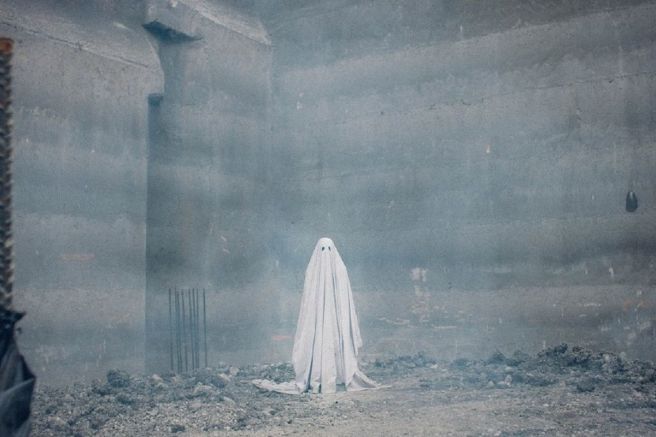
Kudos to David Lowery for attempting to introduce fairly mainstream audiences to Weerasethakul, Tsai, Hou, etc. Unfortunately, his coopting of the slow cinema aesthetic has some of the outlines, especially when it comes to the picturesque settings and highly muted performances, but very little of the feeling and passion behind the great works of that style. Well-mounted and occasionally rather involving, A Ghost Story nevertheless ends up with a muddled, unclear sense of purpose.

SIFF 2017: Gook (Justin Chon, 2017)

gook

Note: as this film is under embargo until its release in the Seattle area, here are exactly 75 words.

Centering on the first day of the Rodney King riots in LA, Gook turns its eye to an underseen perspective on that monumental event: the Korean-American shop owners. The riot is used mostly as a backdrop to a small-scale story of familial bonds, a feint which works for better and worse. Writer-director-star Chon excels in the more comedic and subdued moments, but his film seems to escape his grasp in the self-consciously “lyrical” moments.