2016 Year in Review: Part 2

the-fits

All week long we are taking a look back at the year in film. Yesterday’s discussion of cinematic trends can be found here.

Q: Going into a new year, we all have the films we are eagerly anticipating, but when we look back twelve months later it’s often the surprises that stick with us, the films we knew nothing about or didn’t expect much from that end up making the biggest impact. What film(s) snuck up on you this year, be they works by first-time directors or someone you wrote off long ago, that you will cherish in the years to come?

Continue reading “2016 Year in Review: Part 2”

2016 Year in Review: Part 1

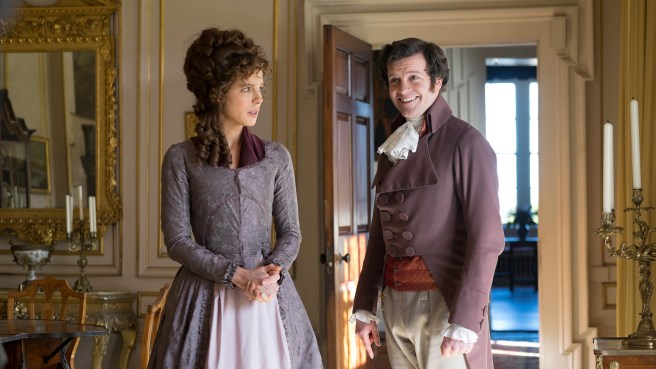
love-and-friendship-06

To wrap 2016 up in a neat little bow before drowning it in the river, we decided to convene a virtual round table with several Seattle Screen Scene contributors. As expected, everyone wrote way too much so this discussion will be parceled out over the course of the week.

Q: Film nerds are often looking for patterns in the chaos and the end of the year always brings out the think pieces on the cinematic themes of the last 12 months. This year was no different. Dispatches from VIFF highlighted a preponderance of poetry in film, with Paterson, Neruda, and others. Recently I liked connecting the quest for love in Knight of Cups and The Love Witch through Tarot cards. What other patterns or significant trends did you notice this year? Anything flying under the radar of the hive mind? 

Continue reading “2016 Year in Review: Part 1”

The Love Witch (Anna Biller, 2016)

pentagram-love-witch

An enigmatic woman descends upon a town, drifting in like a sultry, slinking fog. She moves into a room in a Victorian mansion, where she cooks up home brews of potions and soaps, some of which she sells at the local hippie enclaves. Other mixtures end up in the bodies of lustful men who fall madly in love–or just simply go mad–for this femme fatale in knee high boots and miniskirts. This is Elaine. She’s the heroine of Anna Biller’s latest feminist phantasm, The Love Witch. It’s groovy and gaudy. It’s the second film of the year to track the doomed pursuit of love through the Tarot, the first being Terrence Malick’s Knight of Cups. A wallop of a double feature these two would make.

Continue reading The Love Witch (Anna Biller, 2016)”

Ixcanul (Jayro Bustamante, 2015)

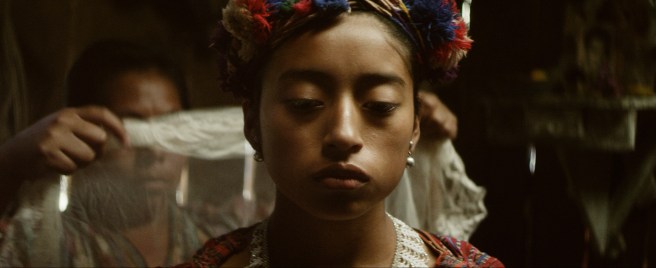
ixcanul_01

(This review was originally published in 2015 as a part of the Vancouver Film Festival coverage.)

Ixacanul opens on a young woman’s passive form and impassive face. Her name is Maria (María Mercedes Coroy), and her mother (María Telón) dresses her and then smooths, parts, and plaits her hair, securing a crown-like garland upon her head. The two Mayan women, alone together in their home, near a volcano, an ixcanul, in a remote region of Guatemala, both absorbed and silent in the exclusive intimacy of their shared activity, indicate that they inhabit a world with which they are familiar, and I am not. I guess, as I first look at them, that Maria is not quite happy to be so taken in hand by her mother – or perhaps she is not quite happy with the event, unknown as yet to me, for which she is being prepared. Continue reading Ixcanul (Jayro Bustamante, 2015)”

The Alchemist Cookbook (Joel Potrykus, 2016)

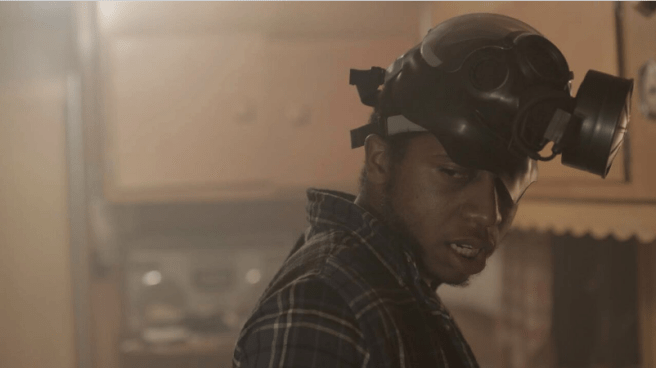
screenshot-2016-11-06-at-12-20-18-am

The Alchemist Cookbook is like The Martian if Matt Damon was living in a rusty trailer deep in the Michigan woods and he decided to pseudo-science the shit out of spare cleaning chemicals because he wasn’t smart, just insane. Call it The Michiganian. The Martian was a clarion call for humanity’s aspirational best. The Alchemist Cookbook is the sobering reality that 99% of us would quickly go nuts if left to our own devices.

Continue reading The Alchemist Cookbook (Joel Potrykus, 2016)”

Certain Women (Kelly Reichardt, 2016)

certain-women-e1452217189427

Kelly Reichardt’s films speak with a particular and rather outmoded cadence, a sort of clenched-jaw Western laconism. American movies and American culture writ large no longer appear interested in such restraint; heroic pauciloquy died with Gary Cooper, or something like that. Our present heroes—and orange skinned villains—fill the air with unceasing clamor, armed with the gift of gab and hair-trigger. Not that there’s anything wrong with that per se. A mythic America of tight-lipped fortitude probably never existed anyways, but it did form a national pop mythos as recently as a half century ago. As it fell out of vogue, cinema’s true believers largely retreated from multiplex screens and into the avant garde, though Clint Eastwood’s Sully was rightly hailed as a recent norm-deviating revival. Non-narrative cinema continues to offer modes of production and consumption amendable to restraint as an aesthetic and moral principle. The problem is that Peter Hutton’s or James Benning’s American landscapes probably aren’t coming to a theater near you (unless you live in Seattle, where the Northwest Film Forum is presenting a one-night-only, attendance-required selection of Hutton’s films next month). Their respective corpuses could not exist without the trail first blazed in Hollywood by someone like John Ford, himself an artist with a tendency to careen between laconism and good old Irish loquaciousness, but neither Hutton nor Benning possesses a conventional interest in storytelling that allowed Ford to thrive in a commercial industry. Enough with those pretty pictures, the people demand characters! Where is our Wyatt Earp? Where have all the strong, silent types gone? Kelly Reichardt knows.

Continue reading Certain Women (Kelly Reichardt, 2016)”

VIFF 2016: Aquarius (Kleber Mendonça Filho, 2016)

aquarius

In the span of just two features (I can’t speak for the shorts) Brazilian director Kleber Mendonça Filho has developed a truly indelible mise-en-scène. Architecture’s contour and form take center stage in front of Filho’s camera, his eye ever attuned to man’s geometric impositions on the world. Cavernous widescreen images locate everything within environmental context; it’s not enough to say that Filho’s characters are defined by the spaces they occupy. The spaces occupy them.

Filho’s dynamics of power concern primarily the dominance of hearth and home. In Neighboring Sounds, one familial clan holds sway over an entire city block, the ill-begotten gain of an unexplained original sin. There the family’s grip on their petty empire comes under attack from within by infiltrators lurking in the compound. Dona Clara, the materfamilias of Aquarius, is under siege from without. Greedy real estate developers have their eye on the eponymous apartment complex where she remains the last holdout. Clara’s life is housed in the walls of the Aquarius and Filho imbues every nook and every piece of furniture—including a particularly memorable dresser—with one woman’s personal history. Clara’s commitment to this place gets sketched out by Filho’s cartographic camera, but equal credit goes to the fire burning in Sonia Braga’s eyes. The legendary Brazilian actress almost seems to fight against Filho’s architectural sensibilities. Her hair alone is capable of commanding the screen, enveloping the widescreen frame in swaths of undulating black. It even demands its own chapter. Braga’s place in the mise-en-scène nurtures a productive friction between actor and director. But Filho occasionally opts for a smoother course elsewhere. To call Aquarius safe seems patently false: it caused some notable controversy in its home country after its premiere, though that’s possibly a result of the cast and crew’s public politics at Cannes more than the overt announcements of the film itself. But Filho doesn’t hide his aims either, and trying to cleave a wedge between the red carpet protest and what’s on screen is a fool’s errand. The struggle to control one old flat speaks volumes for Filho. If anything Aquarius‘s premise plays too neatly as metaphor—less, uh, termite, more white elephant. Not every film needs clandestine subtext, however, and Filho certainly isn’t the first auteur to use his second at-bat as a pretext for stylistic and thematic clarification, though I wonder if expansion rather than distillation might’ve made for a knottier movie. Still, methinks Filho has a masterpiece in him, so, thanks in large part to Braga’s ferocious performance, we’ll just have to settle for Aquarius being merely very good.

VIFF 2016: Yourself and Yours (Hong Sang-soo, 2016)


A comedy of remarriage as only Hong Sang-soo could imagine it, Yourself and Yours rearranges the familiar building blocks of social anxiety, sex, and—most of all—soju to tell the story of one couple’s breakup and reunion. Or, given that this is Hong’s protean world, perhaps it’s not a reunion at all but a new couple, newly formed. Key to this Hongian puzzlebox is Minjung, a young woman with a well-known love of drink recently sworn off the sauce at the behest of her boyfriend. Rumors of soju recitivism split the couple up and Minjung encounters two different men who profess to know her from the past. Minjung, for her part, claims no memory of them, offering up a suspicious twin sister look-a-like story or blank stares in response. The exact nature of these  misidentifications forms the film’s core mystery. It’s certainly possible that Minjung’s penchant for drink has obliterated these men from her mind, though it’s equally plausible that the self is an infinitely branching set of traits, often repeated and therefore identifiable, but always shifting emphasis, shape, and order, so also essentially unstable. Sounds like Hong’s movies.

Unlike his other recent features, Yourself and Yours offers no structural blueprint at the outset. Hill of Freedom‘s jumbled letters explain that film’s disorganized narration and Right Now, Wrong Then‘s initial title card (the inverted Wrong Then, Right Now) clues the attentive Hong viewer into the game being played. The dissipated dreaminess that governs Nobody’s Daughter Haewon comes closest, but with a crucial difference: Minjung does not appear to be dreaming. None of the strange happenings emanate from her consciousness. If anything, the unblinking earnestness of actress You-Young Lee’s performance ensures that Minjung remains a fixed point, no matter the cognitive dissonance she inflicts on the men around her. She is a mystery to others but never to herself.

That self-assurance allows Minjung to act the Hongian sage, the one character with sufficient wisdom to proffer extra-filmic advice: “Knowing is not as important as we think.” Perhaps that’s the only explanation for this hall of mirrors, though if this is a Stanley Cavellian comedy, as the final moments suggest, it’s one that takes his idea of transformation literally: “I am changed before your eyes, different so to speak from myself, hence not different. To see this you will have to correspondingly suffer metamorphosis.” Is Minjung’s mutable personhood just a screwball game to win back her lover, to make him transform? He can’t deny his partner’s true self (I drink therefore I am) and expect to keep her. So she wins. Is her victory a consequence of drunken forgetfulness, a spatiotemporal rupture, farcical roleplay? The beauty of Hong’s cinema lies in never having to choose.

Voyage of Time: The IMAX Experience (Terrence Malick, 2016)

voyage-of-time-sun

Avowed acolytes of Terrence Malick have been practically foaming at the mouth since word got out that the revered filmmaker planned to release a movie capturing the birth of the universe. The idea stems from the most infamous sequence in Malick’s masterpiece, The Tree of Life, which audaciously inserted the Big Bang into the story of young boy growing up in Texas. Oh, and he’s going to release it in IMAX. Detractors argued that Malick has been making nature documentaries for the last decade already, as his narrative features have become more abstract and often appear to be more interested in their elemental shots of earth and sky. But regardless of one’s perceptions and expectations, nothing can truly prepare a viewer for the experience of drifting through the newborn cosmos on a six-story high screen as Bach comes booming out in 12,000 watts of surround sound.

Continue reading Voyage of Time: The IMAX Experience (Terrence Malick, 2016)”

TFF 2016: Women Who Kill (Ingrid Jungermann, 2016)

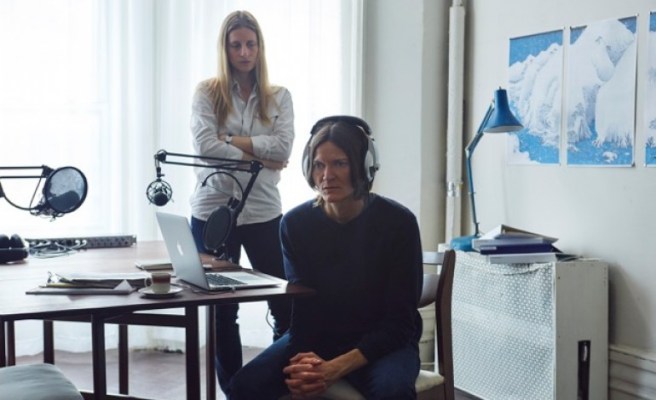
women-who-kill

Fear not America, with Women Who Kill the 21st century finally has the indie So I Married an Axe Murderer it has long been clamoring for. Writer/director Ingrid Jungermann stars as Morgan, an employee at a natural foods cooperative and co-host of a popular podcast about female murderers. The show unearths the gruesome details of different homicides and even includes interviews from prison with the women incarcerated for their crimes. Morgan’s podcast partner is Jean, played by Ann Carr, who also happens to be Morgan’s ex. When Morgan falls for a mysterious new arrival at the co-op, Jean sees signs that Simone–or is her real name Alison?–might be a killer herself.

Continue reading “TFF 2016: Women Who Kill (Ingrid Jungermann, 2016)”