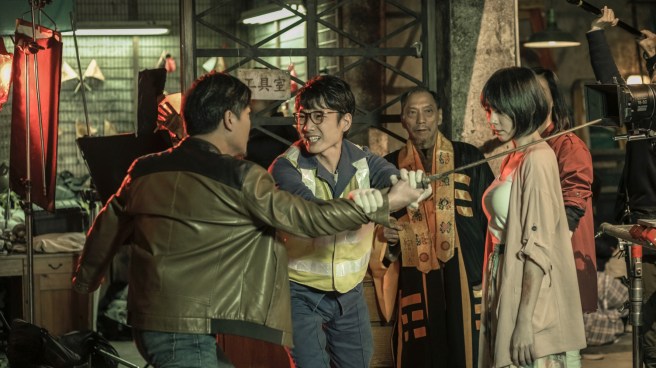
Meow (Benny Chan, 2017)

03a0339e-67a8-11e7-8c84-2c9d21aee0d8_1280x720_120635

From Mao to Meow: Revolution in Contemporary Chinese Cinema

Pop will eat itself.

Last summer veteran Hong Kong director Benny Chan brought us the year’s best martial arts film with the High Noon variation Call of Heroes. This year, he’s made the summer’s most improbable movie: a heart-warming comedy about a giant alien cat who befriends a mop-headed Louis Koo and his wacky family. Pudding is the greatest warrior on the distant planet Meow, a cat-world (literally: it’s shaped like a cat’s head) wracked by meteor collisions that has been hoping to colonize Earth for centuries. But none of the cat-agents sent to Earth have ever returned, though there are snippets of their successes: inspiring worship from the ancient Egyptians and modeling yoga in India. Pudding crashes on Earth and loses his MacGuffin, making him susceptible to the corrupting influences of Earth static. In a last ditch effort to save himself, he merges with the form of a fat orange house-cat, the resulting abomination being a obese, six foot tall ball of cuteness.

Continue reading Meow (Benny Chan, 2017)”

Our Time Will Come (Ann Hui, 2017)

img_5782-h_2017

The most anticipated, and almost assuredly the best, World War II film of the summer, by one of the greatest filmmakers of the past forty years, opens here tomorrow exclusively at the Pacific Place: director Ann Hui’s Our Time Will Come. Based on true events in the resistance against the Japanese occupation of Hong Kong, the film is so effective at its generic thrills, the suspense and action sequences and quiet moments of melancholy patriotism and laments for lost comrades that form the core of the resistance/war film, everything from For Whom the Bell Tolls to Army of Shadows, that one almost doesn’t notice that she’s radically revised one of the most masculine of genres into a story about the unbreakability of women.

Continue reading Our Time Will Come (Ann Hui, 2017)”

Weeds on Fire (Stevefat, 2016)

weedsonfire3-1600x900-c-default

One of the three new films playing at SIFF this weekend as part of their miniseries commemorating the 20th anniversary of the Handover of Hong Kong from Britain to China, along with Mad World and Cook Up a StormWeeds on Fire was one of the surprise hits of 2016 in Hong Kong. The based on true events story follows the founding of the Shatin Martins baseball team, and plays as a more or less conventional, and conventionally uplifting sports story, albeit with a harder edge to its story of high school youth than we see here in America. Think of it as A League of Their Own, but for the kids from Dangerous Encounters – First Kind (the English title is consciously recalling such rebellious Ringo Lam films as City on Fire and School on Fire, the film’s Chinese title means “Half a Step”, which is more generically sports-centric.)

Continue reading Weeds on Fire (Stevefat, 2016)”

Mad World (Wong Chun, 2016)

239de492-136c-11e7-8424-32eaba91fe03_1280x720_145323

For more than a hundred years, all of the world, what is taken to be serious cinema has been defined more often than not by content. Films for grown-ups are supposed to be sober examinations of the social and political issues of the day. These are the movies that win awards. They almost never last, because as society mutates through time, the films remain frozen into irrelevance. Of the social problem films that maintain their greatness, it is almost always because of their secondary characteristics: the craft of directors, actors, writers and others elevate films like The Best Years of Our Lives, I Was a Fugitive from a Chain Gang, On the Waterfront or Bigger than Life beyond the prisons of their own importance. But most fall by the wayside, only unearthed by future generations of box-checkers attempting to watch all the past award winners (for why else would anyone watch Gentleman’s Agreement today?) This dynamic is starkly present in histories of Hong Kong cinema, long haunted by the fact that what the colony/SAR has always been good at are genre films (musicals, martial arts and gangster films, low-brow comedies) featuring an embarrassing lack of social relevance. The narrative around the Hong Kong New Wave has largely been one of selling out: a group of young directors emerge tackling vital issues of the day then become corrupted by mainstream cinema into making impersonal works of goofy entertainment. Going back to the post-war 1950s, when musicals and kung fu serials were incubating a vast array of talent that would dominate the industry for the next 30 years, the films of import were considered to be the social problem films, especially a subgenre of family films revolving around relations between fathers and sons. A look at Taiwan’s Golden Horse Awards, given for more than 50 years to the best in Chinese language film reveals that only a handful of non-war action films have picked up the top prize, the first (as far as I can tell) being Crouching Tiger, Hidden Dragon.

madworld_01

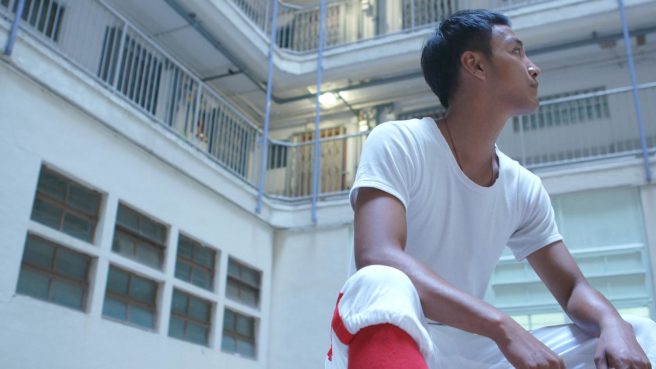
But I may be overstating this. The Hong Kong Film Awards, dating back to 1982, have been much more liberal in their tastes, and last year, confronted with the choice between Trivisa, a serio-comic crime saga from the Milkyway Image studio and Mad World, a Very Important Movie by first-time director Wong Chun about a father and his son and mental illness, they chose the gangsters. Mad World  kicks off a miniseries of Hong Kong films at SIFF this weekend, marking the anniversary of the 1997 Handover of the colony to Mainland China with a trio of new films and a pair of classics. Shawn Yue (an actor and former model last seen here a couple of months ago in Love Off the Cuff) plays a young man suffering from Bipolar Disorder who gets released after a year in a hospital into the custody of his father, an aging truck driver played by Eric Tsang. As Yue attempts to reenter society (and unadvisedly goes off his medication) flashbacks recount the events leading up to his breakdown: he quit his job to care for his elderly mother (Elaine Jin), who appears to have been afflicted with some form of dementia. This strains his relationship with his fiancée and ultimately leads to the mother’s accidental death, for which Yue is charged with manslaughter but found not guilty. The present tense structure of the film follows Yue in a number of attempts to recreate his former life, all of which fail miserably (a former coworker and friend flounders under a financial crisis, his fiancée ambushes him with recrimination at a prayer meeting, a friendship with the boy next door is undermined by the prejudice and gossip of his neighbors). It’s enough to drive anyone nuts.

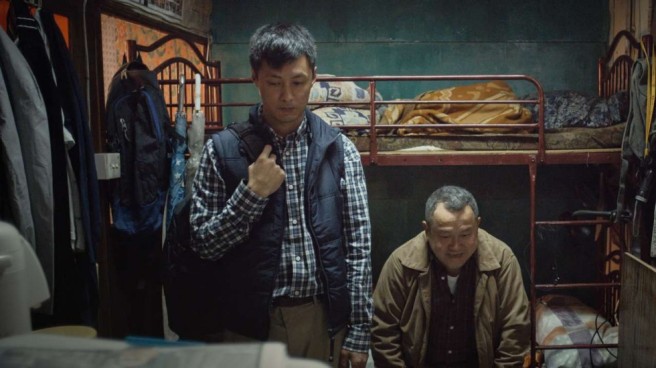
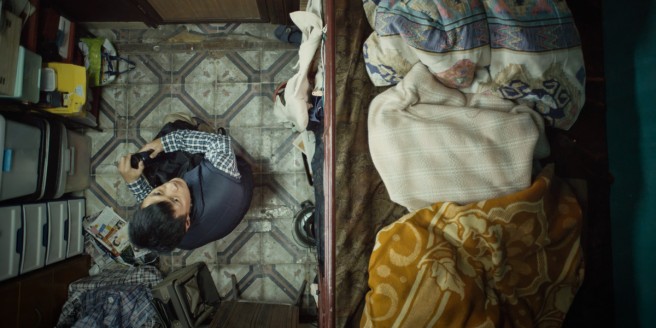
Wong’s film argues that it isn’t so much that there’s anything wrong with Yue, chemically or psychologically, but rather that given the social, material and familial conditions of contemporary society (along with perhaps a genetic inheritance from his mother), depression is not only reasonable, but inevitable. His former friends are materialistic and self-obsessed (and extremely rude at weddings). Everyone he meets makes fun of him for being crazy, there’s even a video of him having a breakdown in a convenience store that goes viral, because apparently everyone in Hong Kong is a monster. His father lives in the tiniest of apartments, an 8×6 room with bunkbed, a TV and a fold-up able, sharing a kitchen and bathroom with half a dozen neighbors. A cramped corner for forgotten people barely serving. With rigid, confining compositions and a sickly melancholic piano score, the film is an unrelenting lecture about the pathology of modern life, illustrated by a melodramatic slideshow demonstrating its devastating effects on a matinée idol.

madworld_05

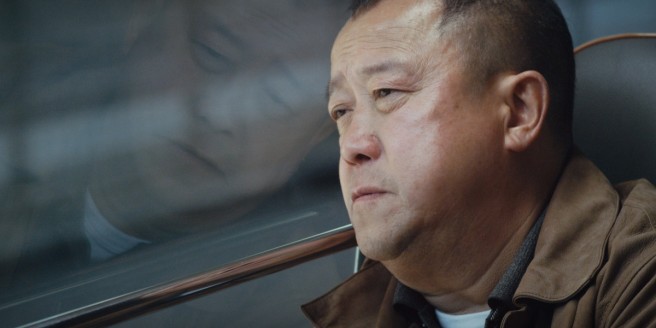
However, Eric Tsang, one of the key figures in Hong Kong cinema for the past 40 years, where he has served as director (Aces Go Places), writer (Tsui Hark’s All the Wrong Clues (for the Right Solution), producer (Drunken Master II, Golden Chicken, After this Our Exile) and actor both comic (as part of Sammo Hung’s Lucky Stars crew) and dramatic (as Maggie Cheung’s husband in Comrades, Almost a Love Story), brings a lived-in reality to the film that compensates for much of its contrivance. Where Yue plays depression as blankness and tears and Jin pushes dementia over the top, Tsang keeps things simple. A good-natured, under-educated man, his attempts to do what’s best for his son are heartbreakingly inadequate (at one point saying what seems exactly the opposite of how one should talk to someone with a mental illness: “Stop being negative. It’s all in your head. Think of something more cheerful. Can’t you be normal?”) At the Hong Kong Film Awards, Tsang won the Best Supporting Actor for his work, while Jin won Supporting Actress and Wong Best New Director. I suspect that, years from now, Tsang’s performance will be the only reason to watch this movie. And it might even be worth it.

SIFF 2017: Vampire Cleanup Department (Yan Pak-wing & Chiu Sin-hang, 2017)

vampirecleanupdepartment_08_34016280095_o

In loving homage to classic 1980s Hong Kong vampire films like Sammo Hung’s Encounters of the Spooky Kind, The Dead and the Deadly and the Mr. Vampire series, first-time directors Yan and Chiu have built an effects heavy update of the old lore: the vampires still hop and are still immobilized by Taoist amulets (pieces of yellow paper with magic characters written on them) but they also vaporize when stabbed by wooden swords. Babyjohn Choi plays a young man who joins the eponymous department led by none other than comedy legend Richard Ng, Chin Siu-ho (one of the students in the original Mr. Vampire) and Yeun Cheung-yan (one of Yuen Woo-ping’s younger brothers). But rather than merely update the old formula with new effects, along the lines of last year’s Ghostbusters remake, the film instead becomes a cute romance, as Babyjohn accidentally turns a pretty vampire girl almost human. Lin Min-chen, a Malaysian actress whose previous credits amount to eleven episodes of the Taiwanese TV series Prince of Wolf and being a “Instagram sensation. . . known for her angelic face and killer body”, plays the vampire girl in a performance that owes at least a little bit to Bae Doona’s work in Kore-eda Hirokazu’s Air Doll. She can’t talk, or walk, or go out in the sunlight, but she’s got big eyes. The romance such as it is, is the nicest thing in the film, and there are some other funny moments, but despite the local pedigree in genre and in the veteran talent on-screen feels weirdly unrooted, like so many Hong Kong films trying to appeal to audiences outside the (former) colony. There’s a training montage joke, but rather than reference local films, it calls back to Rocky and The Karate Kid. There’s a subplot about a rival government organization, but it’s totally undeveloped, perhaps because of the political implications of a local group being forced to submit to the rigid amoral hierarchy of a bureaucratic power. So rather than make something specific, Yan and Chiu opt for the blandly general. Those 80s films, especially Sammo Hung’s, had a real misanthropic bleakness to them, a sense of horror as much existential as violent. There’s none of that here, only cuteness.

SIFF 2017: Cook Up a Storm (Raymond Yip, 2017)

COOK-UP-A-STORM-copy

One of only two Hong Kong films to be playing at SIFF this year is this cooking film from star Nicholas Tse and director Raymond Yip. It’s a Lunar New Year film, opening a week after the holiday both at home and abroad, to avoid box office competition from Tsui Hark and Stephen Chow’s Journey to the West: Conquering the Demons. It played here briefly at the Pacific Place, but SIFF is reviving it for the festival. I’m not exactly sure why, probably because of the food. Director Yip is strictly workmanlike, the guiding force behind the film is Tse, who has been one of the more figures in Hong Kong over the past twenty years. The son of star actor Patrick Tse (Story of a Discharged Prisoner), he began as a popular singer before moving into movies (Time and Tide, Jade Goddess of Mercy, Bodyguards & Assassins) and television (where he hosts and cooks on a popular foodie show called Chef Nic) and a series of romantic entanglements with Faye Wong and Cecilia Cheung. Cook Up a Storm appears to be an attempt to extend the Chef Nic brand, as Tse plays a local Cantonese chef challenged by a European-trained, Michelin-starred chef who opens an upscale restaurant across the street. Both Nic and the new chef (a truly international man: half-Korean and half-Chinese, raised and trained in Europe, he’s played by Korean singer/actor Jung Yong-hwa) have secrets which they must overcome to win a game show-style culinary competition.

Continue reading “SIFF 2017: Cook Up a Storm (Raymond Yip, 2017)”

Love Off the Cuff (Pang Ho-cheung, 2017)

love_off_the_cuff_07-h_2017

Love Off the Cuff starts with a horror movie, a tale set in the recent past about a village terrorized by a monster that eats children. As creepy as it is ridiculous, it functions as a none-too-subtle allegory for the crisis at the heart of the relationship between Cherie (Miriam Yueng) and Jimmy (Shawn Yue), which we’ve seen grow from its beginnings at shared cigarette breaks in Love in a Puff to the inevitable break-up/reunion cycle in Love in the Buff. Seven years on from the first film (which remains arguably the best romantic film of the decade), Cherie and Jimmy are comfortably living together back in Hong Kong, but visits from long-lost family members serve to highlight the rut they’ve found themselves in. Cherie’s father, who abandoned her, her mother and her brother years ago, shows up with a very young bride-to-be and looks to party with Jimmy. While Jimmy’s visiting godmother turns out to be a much younger woman (“She’s from Canada, they’re very liberal there. What if she prances about in her bra?” Cherie fearfully exclaims). The two visits inspire insecurity in Cherie: she’s jealous of the younger woman and fearful that Jimmy will turn out like her lecherous father, but more devastatingly they highlight the degree to which she was already dissatisfied with Jimmy’s childishness.

Continue reading Love Off the Cuff (Pang Ho-cheung, 2017)”

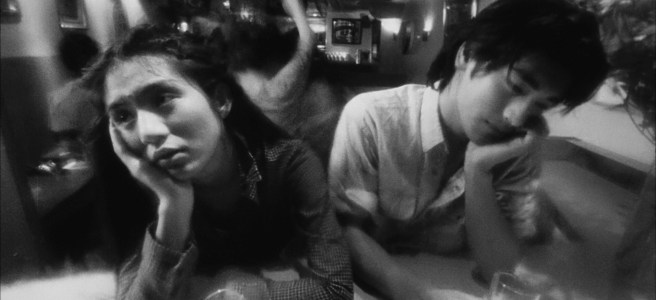
The Frances Farmer Show #11: A Quiet Passion, Chungking Express and Fallen Angels

After a lengthy absence, The Frances Farmer Show returns with a quick look at some films playing on Seattle Screens, including a preview of Terence Davies’s Emily Dickinson biopic A Quiet Passion, which opens here on May 5th. We then discuss Wong Kar-wai’s mid-90s masterpieces Chungking Express and Fallen Angels.

You can listen to the show by downloading it directly, or by subscribing on iTunes or the podcast player of your choice.

The Sword Master (Derek Yee, 2016)

c%c2%99%c2%bee%c2%8a%c2%b1ae%c2%9e%c2%97c%c2%88ae%c2%9e%c2%81a%c2%af%c2%b9a%c2%86%c2%b3no-logo

In 1977, at the age of twenty and making only his third film, Derek Yee got the starring role in Death Duel, a film by prolific Shaw Brothers director Chor Yuen. After helping spark a revitalization of Cantonese language language cinema with his hit ensemble comedy The House of 72 Tenants in 1973, Chor had settled into his own little corner of the Shaw Brothers universe, making a series of lavishly ornate studio-bound wuxias, usually adaptations of novels by popular author Gu Long. The stories are intricate fantasy tales of swordsmen who travel the jianghu, the chivalric world that runs alongside but separate from the everyday reality of the Chinese peasantry, a world with its own hierarchical structures (usually based on swordsmanship) and complex rivalries and feuds. Unlike the Shaolin films that Shaws directors Chang Cheh and Lau Kau-leung were making at the same time, Chor’s movies are relentlessly ahistorical, existing entirely in a world of their own making (even the geography is fictional). The fights scenes are acrobatic and wire-aided and make occasional use of magic but more usually bizarre weaponry and poisons are featured. Chor fills his brightly colored sets with beautiful decorations, gorgeously landscaped backdrops and ornamentations that block  and frame our view of the scene: it’s the closest Shaw Brothers ever came to replicating Josef von Sternberg’s aesthetic. After the success of Death Duel, Derek Yee went on to star in several more Chor Yuen films over the next decade, the final days of the Shaws’ studio, joining Alexander Fu Sheng and Ti Lung as Chor’s primary stars in films like Heroes Shed No Tears, the Sentimental Swordsman movies, and Heaven Sword and Dragon Sabre Part I & II. But with Shaws in decline, wuxia work dried up and Hong Kong action cinema went in new directions: Fu Sheng died tragically young, and Ti Lung found himself overshadowed by his younger costar in A Better Tomorrow, Chow Yun-fat. Derek Yee turned to screenwriting and directing.

Never as prolific as many of his Hong Kong contemporaries, Yee has nonetheless had a productive and somewhat acclaimed career as a director. He won the Hong Kong Film Award for Best director for C’est la via, mon cheri in 1993 and One Night in Mongkok in 2004, and has been nominated for that award five other times. His 1996 film Viva Erotica, with Shu Qi and Leslie Cheung is one of the very best films I’ve seen in 2016. Cheung plays a young director with artistic aspirations who can only find work making a cheap soft-core porn movie. Shu Qi plays his star, a woman who comes to learn that she in fact has more to offer to art than her physical assets. Lau Ching-wan has a brief cameo as a successful director named “Derek Yee” who chats with Cheung and then runs and jumps off a pier, killing himself. Its the kind of weird, beautiful, romantic paean to art that one rarely finds among the work of martial arts actor/directors. Yee has made a handful of action movies over the years, along with comedies and romances, but now, with The Sword Master, he’s made his first period martial arts film. He’s gone all the way back to his beginning, remaking Death Duel in the style of 21st century digital wuxia.

050614_176

The story is about two swordsmen who have grown disillusioned with the cutthroat world of the jianghu, where all anyone cares about is celebrity and power. One, Yen Shi-san, cloaked in black with his face tattooed to look like a diseased skull, learns that he’s dying and retreats to a cemetery, where he works as a gravedigger. The other, the Third Master of Sword Manor, abandons his clan’s estate and finds work as an errand boy in a brothel, where he is known as Useless Chi. After defending a young prostitute (allowing himself to be stabbed multiple times by a pair of irate customers without flinching), he flees the brothel, knowing his identity will soon be discovered. He takes up with a friendly young man in a nearby village, who just happens to be the brother of the prostitute he saved and also happens to be located near to Yen’s cemetery. Eventually, all the forces of the jianghu descend on Chi and Yen and the village, led by the woman Chi was supposed to marry, the daughter of another powerful clan, along with a mysterious group of warriors in skull masks armed with nasty poisoned weapons. Everyone fights everyone while Yen resolves to defend the weak and Chi attempts to defend his new family from the psychotic woman who loves him without actually doing any fighting himself. It ends in a battle, followed by the inevitable duel between the two heroes.

a%c2%80%c2%9cc%c2%87%c2%95a%c2%8d%c2%81a%c2%b8%c2%89a%c2%80%c2%9da%c2%bd%c2%95ae%c2%b6%c2%a6a%c2%b8%c2%9ce%c2%8cao%c2%91ae%c2%89e%c2%90%c2%bda%c2%8f%c2%b6no-logo

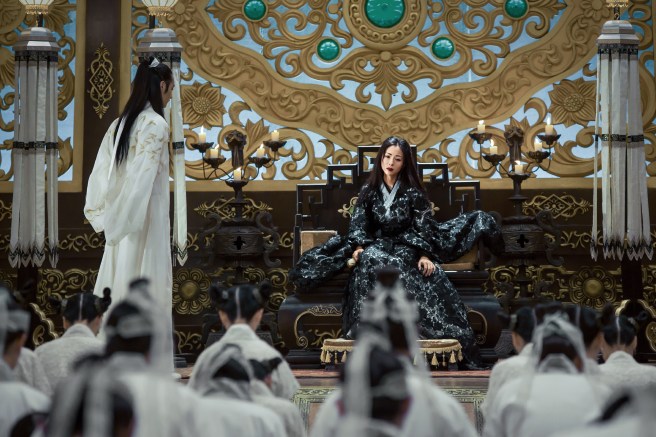
In tone, the film is faithful to Chor Yuen’s works: while lacking the distinctive overcluttered visual style it faithfully reproduces his bright colors and fanciful locations (the setting for the final duel, a fog-enshrouded mountain-top crowned by an ancient, white-blossomed tree, is pure Chor). But Yee and his co-writer and co-producer Tsui Hark, have slightly shifted the emphasis of the original film, amplifying the emotions and the romances while cutting down on the characters and miscellaneous swordsmen who appear only to be cut down after an action sequence or two. The result is less a reflection of a cutthroat world where everyone is driven by ambition, the desire to be known as the best, to rise to the top of the jianghu, where the only way a swordsman’s life can have value is by being known as a great swordsman than it is a soap operatic entanglement of intersecting love triangles. Chor’s films reflect the decadence of Hong Kong in the 1970s and 1980s, a laissez-faire world disconnected from the mainland and from history, a ruthless capitalist paradise. The new film is from a different world entirely, and its characters are driven not by ambition but by thwarted desire. Everyone in the film loves someone who doesn’t love them back, the heroes manage to make peace with this, the villains are twisted into evil. But along the way, we’re treated with many a lush romantic interlude, including several momentum-killing flashbacks to the lifelong romance between Chi and his murderous girlfriend.
072714_068

For the fight sequences, Yee adopts the digitally-enhanced techniques of contemporary wuxias, with lots of slow-motion and computerized movements. It lacks weight and none of the performances or scenes are particularly exceptional, though neither are they ever bad. The fights are fluid and faithfully recreate the fantastical style of the Shaws movies, eschewing the rapid cuts of Tsui and Ching Siu-tung’s wire-fus of the late 80s and early 90s. The choreography is by Yuen Bun, who’s most famous for his work with Johnnie To, and while it lacks the virtuosity of the fights in this summer’s Call of Heroes (with Eddie Peng and Wu Jing choreographed by Sammo Hung), it’s a step above the action in Yuen Woo-ping’s Crouching Tiger, Hidden Dragon: Sword of Destiny. That film provides the best point of comparison, as an adaptation of wuxia literature harkening back to the 1970s, but reformulating the characters and motivations for an audience trained to accept personal melodrama as the only motivation for action heroics (see also: every Marvel movie). The Crouching Tiger sequel though gets the balance all wrong: the characters don’t make much sense and the action is too disconnected, even when it’s quite good (and Donnie Yen and Michelle Yeoh are certainly more charismatic and accomplished performers than the competent stars of Yee’s film: Lin Gengxin and Peter Ho). The Sword Master is the best version of what Sword of Destiny tried to be, a pulpy wuxia romantic melodrama. A throwback and a tribute to one of Hong Kong’s most distinctive filmmakers.

VIFF 2016: Yellowing (Chan Tze-woon, 2016)

f_yellowing_still_03

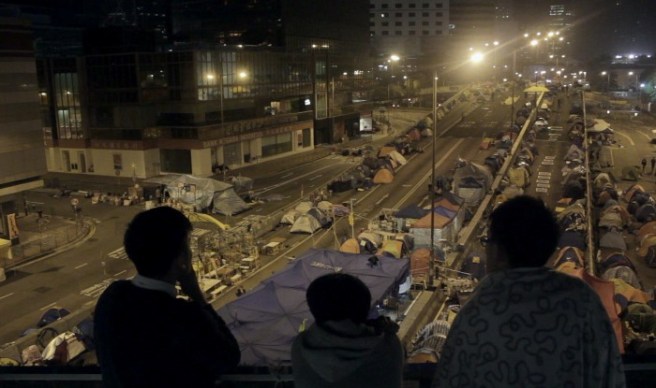
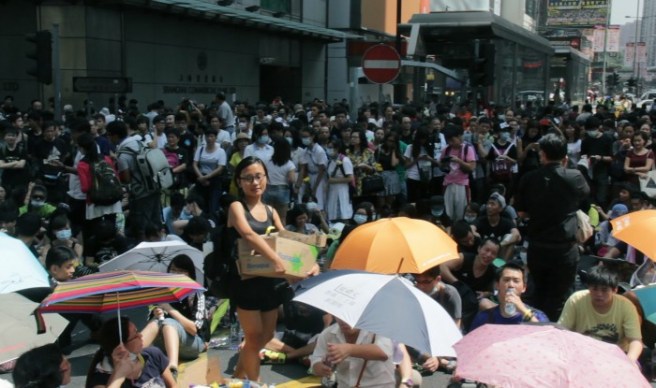
As a documentary about the 2014 Umbrella Movement, in which thousands of young Hong Kongers gathered to Occupy districts throughout the city in protest of the PRC’s decision to not allow the former colony to directly choose its candidates for high office, Yellowing is something remarkable in our time: an honest direct cinema film, with nary a hint of meta-commentary about film theory or storytelling. Not that there’s anything wrong with the doc/fiction hybrids that have become so ubiquitous lately, there’s just something refreshing about the open earnestness of the filmmaking here, mirroring a little bit the idealism of the young people at its center. Shortly after the Hong Kong police attacked protesters with tear gas on September 27, 2014, Chan began filming the students as they set-up in and occupied the Admiralty and Mongkok neighborhoods. He focuses on a few young people through the run of the 67 day occupation: a man nicknamed Lucky Egg who gives impromptu lectures in English and political philosophy; a young man who works in construction who wanders in and out of the protests–something big always seems to happen when he’s there; a law and literature student named Rachel who makes announcements in three languages and provides the film’s eloquent final statement, an open letter to a professor who had infuriatingly denounced the students’ idealism.

f_yellowing_still_01

In focusing on the details of the occupation, recording the quotidian requirements of activism (building rain-proof shelters, finding a mattress to sleep on, distributing water, masks and umbrellas to counter gas attacks), as well as the ideological arguments the protestors are making (they want to be able to vote for their leaders, this is anathema to a paranoid one-party state), Chan’s film resembles no less than Peter Watkins’s La Commune (Paris 1871), one of the great films of this century. The similarities between the protestors then and now is striking, but Watkins’s film, being nearly six hours long, takes a couple of meta-fictional turns in its historical reenactments (for instance: the film’s actors discuss the issues the Communards raised in character, and also as themselves, expressing how the process of playing 150 year old activists affected the way they see politics in their own time). Chan has no need of such artifice: his movie isn’t a reenactment, and we see the impact the process has on his subjects unfolding as it actually happened. Beyond that, we get a feel for both the city itself and the young people not leading, but forming the heart of the movement. Whether discussing the nuts and bolts of activism and its limits (most of them know very well they cannot succeed, but they’re there anyway; Rachel distributes yellow wristbands sporting the slogan “They Can’t Kill Us All”), or just hanging around trying (and failing) to meet girls (“you need guts and brains to get a girl”). In its ground-floor, first-person perspective, it finds more honesty and wisdom and life than a hundred Hollywood issue-advocacy films.