This Week at the Multiplex

CrimsonPeak_trailer

After ten days in Vancouver and another couple of weeks trying to recover from ten days in Vancouver, I’d fallen quite a bit behind on the early stages of autumn multiplex season, the time of year when superheroes and cartoons recede from Seattle Screens to be replaced by middling movies for grownups, long shot award hopefuls, and films that star actors people like me (old people) grew up with. So over three trips to the multiplex this past week, I caught up with five of the first wave of what will amount to the (self-proclaimed) best Hollywood has to offer in 2015. More of the same will follow between now and then end of January, when the stragglers of Oscar season will finally make their way onto Seattle Screens, but if the early returns are any indication, this is shaping up to be a solid year for the American cinema. And when you consider that it’s also a banner year for international film, the year in film 2015 is shaping up quite nicely indeed.

Continue reading “This Week at the Multiplex”

Attack On Titan: End of the World (Shinji Higuchi, 2015)

attack on titan pic 6

Seattle Screen Scene’s review of the first film can be found here.

Just a few weeks ago, the first Attack on Titan played in American screens. It was a frequently disturbing film that took the Titan universe and re-imagined it in tokusatsu terms. Because it appears that the latest trend in Japanese cinema is to take these manga/anime properties and milk them for all they’re worth, the film adaptation was split into two parts (see also: Parasyte, Bokura Ga Ita, etc.). This is where the problems begin.

Continue reading “Attack On Titan: End of the World (Shinji Higuchi, 2015)”

VIFF 2015: The Assassin (Hou Hsiao-hsien, 2015)

the assassin

Hou Hsiao-hsien structures his new film, The Assassin, as a sort of once upon a time tale. It begins with narration, a mix of the historical and the mythic, and I am at once immersed in a dream-like tale that will, indeed, haunt my memory, just as history and myth so often do, becoming reference points in my present, even when I am not consciously aware of their influence.

It is ninth century China, and political struggle infects the kingdom. The royal court fears a strong, militarized outer province, Weibo; too much delegated power is a threat to the court’s own strength. Weibo, with a century of nearly complete self-governance, fears a reduction in its autonomy. It is a struggle that absorbs everyone.

And yet within this kingdom, there is a mother who tells another story, the story of a single bird. Caged and alone, the bird sits silent, a small stranger in the human world around it, unable to sing to those so unlike itself. Its human keepers feel compassion for it and give it a mirror. Recognizing something like itself, it sings a song of sadness. It dances, and then it dies.

Continue reading “VIFF 2015: The Assassin (Hou Hsiao-hsien, 2015)”

VIFF 2015: Domestic Intimacies: Ixcanul (Jayro Bustamante, 2015) and 45 Years (Andrew Haigh, 2015)

Maria and MotherGeoff sitting with Kate

Preface:
Human, and faced with a sea of things, images, stories, characters, all bobbing this way and that, slipping and sliding away from me, I seek some rope to grasp, a line that might form for me a connection between the things. And if I can only pull that line taut, I might be able to stay above the waves and see a pattern in the flotsam.

It isn’t really flotsam, of course, that wave of films I found my fest-inexperienced self submerged beneath at this year’s Vancouver International Film Festival.  Each film in itself is a unique, individual thing, only forced, by necessity into a mass. And we should be used, in any case, to consuming art in the mass, collective form – in a museum, in an anthology – curated and then presented to us as somehow related objects.  Even if we pick our way through an anthology or skip rather guiltily past the 13th century wing of the museum and make straight for the Impressionists, we are still aware of all of these disparate things gathered together under an umbrella of a particular Thing, and, invited to do so, the pattern seeking mind all the more eagerly links themes, ideas, modes, shapes, colors.

Artists, of course, do not live in a vacuum, and their works may be, certainly, drawing from other works, even without conscious intent. Still, it would be difficult to say 8th century Chinese landscapes were drawing any influence from Byzantine frescoes. And yet, place such a set of landscapes next to a few frescoes, I’d surely spot a pattern. I can’t help it; I put them together, and the one will converse with the other.

And so, while yet understanding the potential folly of such conjunctions and conversations, I can’t help but make them and hope that such a convergence will illuminate the individual objects themselves.

Jayro Bustamante’s Guatemalan film, Ixcanul, has very little in common with Andrew Haigh’s thoroughly British film, 45 Years, and yet, as the VIFF programming gods would have it, I saw them back to back on a Saturday afternoon early this October, and they nestle comfortably together in my mind, chapter 1 and chapter 2 in a little anthology of Domestic Intimacies.   Continue reading “VIFF 2015: Domestic Intimacies: Ixcanul (Jayro Bustamante, 2015) and 45 Years (Andrew Haigh, 2015)”

VIFF 2015: Mountains May Depart (Jia Zhangke, 2015)

RGB tiff image by MetisIP

 Part of our coverage of the 2015 Vancouver International Film Festival. This review is by Vancouver-based critic Neil Bahadur.

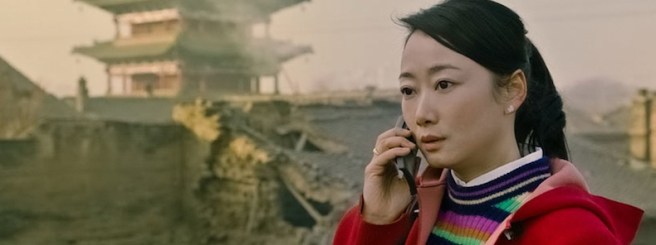
The most ambitious film so far from the great director Jia Zhangke, working in a gorgeous, cyclical structure that it might make it too easy to disregard the film’s more provocative aspects. Jia has been obsessed with the globalization of China since day one, but what is different here is the syphoning of aspects of contemporary China into three broken segments, each of which purport to be a narrative-driven family melodrama. But what seems youthful naivete is rather the fading of a culture, what seems disillusionment of middle-age is the economic collapse of the world we live in today. . . so the earnestness of the film’s final third is the only response possible to the removal of culture entirely. Jia’s 2025 is a fairy-tale world, a complete fantasy wherein this (actually very conventional) three-act structure, surrealism is fully integrated into this narrative sense. And because of the disparity between this part and the first two, this approach disconcerts rather than shocks or provokes. The movie is a series of Brechtian devices which exhaust themselves, and so the only option left is to wear its heart on its sleeve.

Continue reading “VIFF 2015: Mountains May Depart (Jia Zhangke, 2015)”

VIFF 2015: The Forbidden Room (Guy Maddin & Evan Johnson, 2015)

This is part of our coverage of the 2015 Vancouver International Film Festival.

forbidden room faces

Guy Maddin made a music video for a Sparks song about asses starring a lobotomized Udo Kier and whip-wielding Geraldine Chaplin. He (along with co-writer/director Evan Johnson) also made a couple dozen more weird, wacky, wonderful films and smashed them together in the glorious, uproarious new feature, The Forbidden Room. It’s Maddin’s best feature to date and one of the essential cinema experiences of the year.

Continue reading “VIFF 2015: The Forbidden Room (Guy Maddin & Evan Johnson, 2015)”

VIFF 2015: Right Now, Wrong Then (Hong Sangsoo, 2015)

This is part of our coverage of the 2015 Vancouver International Film Festival.

RIGHT NOW, WRONG THEN_key still (1)

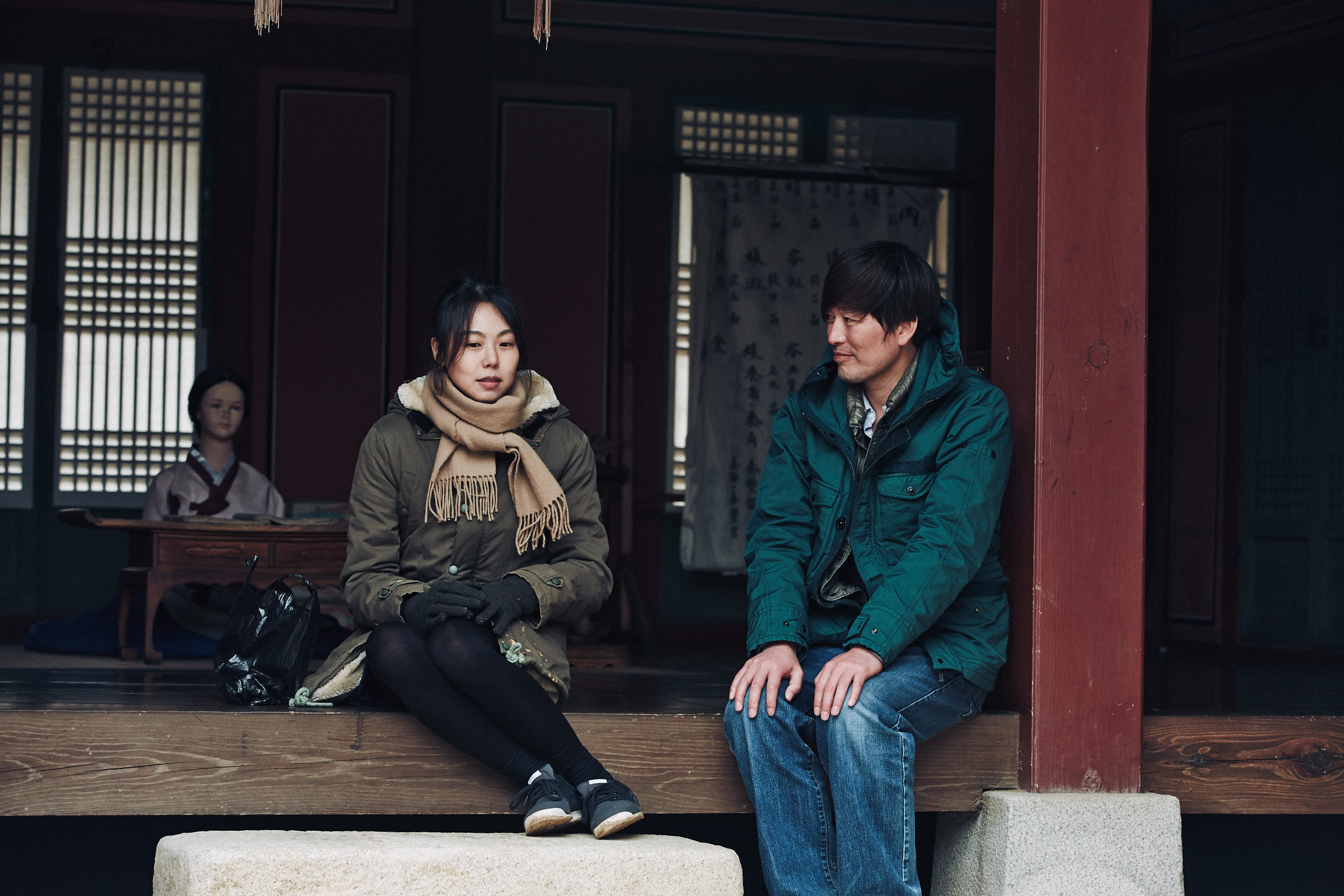
The new Hong Sangsoo film, Right Now, Wrong Then, is very much concerned with the famed director’s usual themes. He is again at work with a story involving a hard-drinking filmmaker and the nature of casual encounters. But the movie is less about its surface than with an inquiry into its structural narrative. As always, it’s the differences from the works that came before it that excite. The nice thing about Right Now, Wrong Then is that it also affords the joys of differentiating it from itself.

Continue reading “VIFF 2015: Right Now, Wrong Then (Hong Sangsoo, 2015)”

Entertainment (Rick Alverson, 2015)

entertainment_0Part of our coverage of the 2015 Vancouver International Film Festival. This review is by Vancouver-based critic Neil Bahadur.

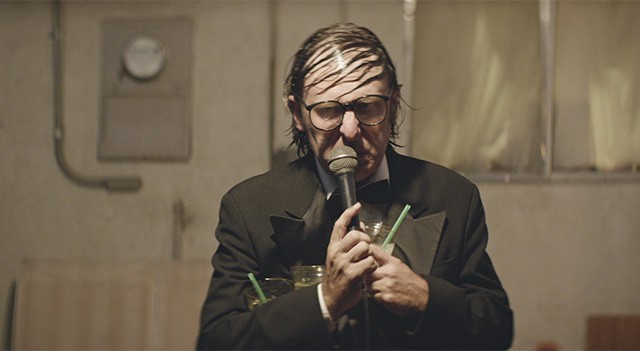
Rick Alverson’s new film Entertainment, isn’t perfect. At first, I didn’t know if I’d even call it great. If not for Neil Hamburger’s humor, the first hour of the film would feel endlessly repetitive and banal, situations reiterating themselves with seeming meaninglessness, mimicking The Comedian’s situation which repeats itself in a series of dive-bars, where he is only greeted with disappointment and indifference. Not for nothing is the only place where Hamburger elicits a response a prison. Self-defeat rules this comedian’s life, and so too the film; it seems humor itself is the only defense mechanism left before falling into the void of cynicism and despair. Alverson’s distance is disconcerting at first: as Phil Coldiron alluded to in his review, Alverson has an Antonioni-esque spacial awareness. But perhaps this is necessary to make distinct the difference between Hamburger the performer, and Turkington the actor. Yet both are very similar: Turkington attempts twice to connect to his daughter and fails, Hamburger attempts several times to connect to an audience and fails. Hamburger doesn’t use these life-disappointments as fodder for material, he rather vomits out mad, belligerent nonsense (admittedly for me, often quite amusing) But for all these lapses of humor, I was ready to give up on the film. “OH great, another movie about like, alienation or something and some shitty guy being an asshole.” There’s even an impossibly obvious shot where our comedian walks around in circles. But then Turkington/Hamburger has to face repercussions for his actions, and suddenly the film takes a sharp, unexpected turn into something far more abstract, forcing me to re-evaluate something I was about to write-off. It became clear that Hamburger/Turkington is on a sort of pilgrimage, a hellish progression from self-consciousness to self-awareness.

Continue reading Entertainment (Rick Alverson, 2015)”

VIFF 2015: The Piper (Kim Gwangtae, 2015)

piper performance
This is part of our coverage of the 2015 Vancouver International Film Festival.

First-time director Kim Gwangtae delivers a fresh take on the “Pied Piper of Hamelin” with his visceral film The Piper. Set in the hinterlands of Korea in the war-torn 1950s, the film begins with a devoted father and son traversing the country in hopes of finding a cure for the boy’s tuberculosis. The pair (played wonderfully by Ryu Seungryong and the absolutely adorable Goo Seunghyeon) stumble upon a hidden village that knows no news of the outside world and eyes their new arrivals with unease. In an effort to ingratiate themselves with the locals, the father offers to rid the town of their rampant rat infestation.

In the early going, The Piper plays it light with goofy antics and the building of a budding romance. But like the smoke used to run out the rats, darkness creeps through the narrative’s cracks long before the fatal finale. And by its conclusion, The Piper has become a gruesome tale of vengeance that would make Park Chanwook or Quentin Tarantino proud. There will be blood. And there will be rats feasting on it.

Continue reading “VIFF 2015: The Piper (Kim Gwangtae, 2015)”

VIFF 2015: James White (Josh Mond, 2015)

james-white
Part of our coverage of the 2015 Vancouver International Film Festival. This review is by Vancouver-based critic Neil Bahadur.

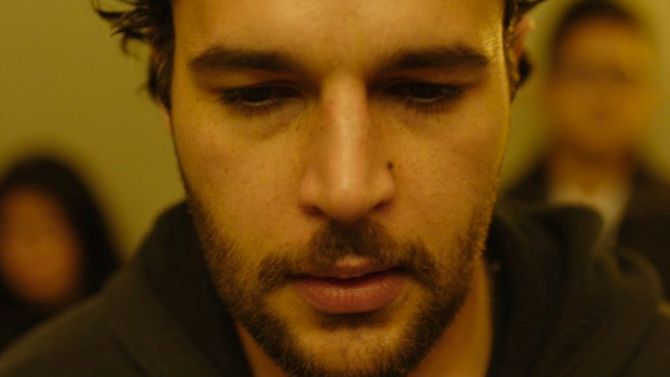
Beautifully unpretentious. The debut feature of indie producer Josh Mond, James White, is surprising in its coming from the New York independent scene because of its tender sincerity. Dishonesty is alien to this director; perhaps the film is more moving than it is interesting, but what of it? Clearly a very personal work, this is an attempt at self-catharsis, a successful attempt to try to express (and really document) emotions that one has difficulty understanding. Shot in a mere 18 days, the movie’s tight and controlled structure almost seems to betray its modesty. This isn’t a criticism: the movie never overreaches its fiscal limitations and is rather designed around it. And perhaps because of its remarkable self-control, the film seems far more ambitious than it actually is. The movie is so fixed in its purpose and it never misses a beat. It’s like James Gray distilled.

Continue reading “VIFF 2015: James White (Josh Mond, 2015)”