SIFF 2016 Report #3: Disintegration (The Bitter Stems, Thithi, Trivisa, The Mobfathers, Tag)

1262846_3f0ad18a95138db9f622d32ada567268-692x360

Proving once again that no film festival should ever last longer than an Olympic Games, the 2016 SIFF limped to its conclusion this weekend after a soul-crushing 25 days. While the festival had run impressively well over its first two weeks, organized and on time and with nothing in particular for a picky festival-goer like me to complain about, the last week saw an inexplicable series of outrages.

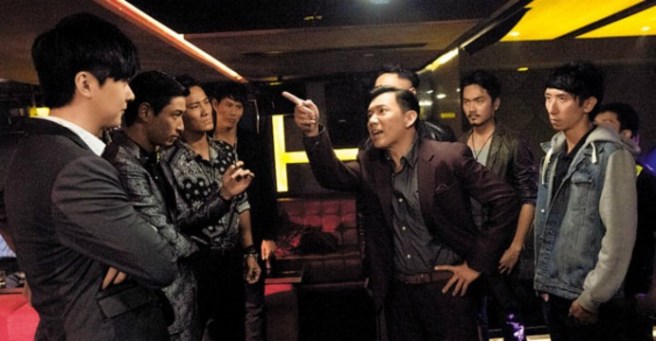
This began on Sunday night, when the programmer tasked with introducing the Johnnie To-produced film Trivisa managed to be both disrespectful, mildly offense and factually inaccurate when he claimed To was the “Roger Corman of Hong Kong”, a producer who would make any movie you had in mind as long as it had “guns or titties”. That same presenter ran the Q&A with actor/producer Chapman To the next night, which was largely unobjectionable (To was the one who mentioned “titties” at least), but the programmer did at one point refer to Mr. To as “Chapman Ho” and later, “Herman”.

Continue reading “SIFF 2016 Report #3: Disintegration (The Bitter Stems, Thithi, Trivisa, The Mobfathers, Tag)”

SIFF 2016 Preview Week Three and Beyond

mountains-depart

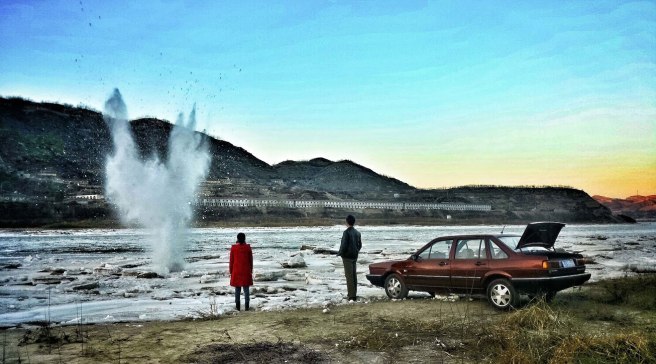
The Seattle International Film Festival races into it’s third week (has it really only been fifteen days? With only a mere ten to go?) and here we have some titles you won’t want to miss. We’ll link to our reviews of the titles listed here as we write them, as we’ve been doing with our Week One and Week Two Previews. We previewed the festival back on Frances Farmer Show #6 and discussed it at its midway point on Frances Farmer #7. We’ll have a complete wrap-up of the SIFF just as soon as it ends.

Continue reading “SIFF 2016 Preview Week Three and Beyond”

SIFF 2016 Report #2: The Big Road, The Island Funeral, Heaven Can Wait, The Final Master and My Beloved Bodyguard

193.1

Brief accounts of a handful of films from the SIFF’s second week as it rolls into its third.

The Big Road (Sun Yu, 1935) – Something like an amalgam of Our Daily Bread and Mrs. Miniver for the Anti-Japanese War, by which I mean it’s a propaganda film celebrating first the communal virtues of collectivist rural life (the hard work of uniting the nation through literal road-building) and then the bold heroism of that collective as it stands against Imperialist aggression, in the form of the traitorous land-owning, but not land-working, class (relics of Old China, these rulers wear 19th Century clothes, and live in Qing mansions, the feudal system in opposition to the power of the Modern Industrial Worker). It ambles, plotless for most of its length, but it’s accumulated enough power that by the end, as its hero (eight characters combine to form one hero, a communist Voltron) is smashed to bits by advanced machines of war, it resembles nothing less than “Guernica” in its devastation.

Continue reading “SIFF 2016 Report #2: The Big Road, The Island Funeral, Heaven Can Wait, The Final Master and My Beloved Bodyguard

The Frances Farmer Show #7: SIFF 2016 Midpoint Report

Almost halfway through the marathon that is the Seattle International Film Festival, we take a break to talk about some of the films we’ve seen so far. Movies discussed include: Chimes at Midnight, Sunset Song, Love & Friendship, Long Way North, Our Little Sister, Alone, The Island Funeral, Concerto, A Bride for Rip Van Winkle, Cameraperson, Women He’s Undressed, In a Valley of Violence, The Final Master, Lo and Behold, The Lure, Tiny, The Seasons in Quincy and Scandal in Paris.

You can listen to the show by downloading it directly, or by subscribing on iTunes or the podcast player of your choice.

Some corrections:

The woman in The Island Funeral takes a trip with her brother, not her sister.
The Seasons in Quincy starts in the winter and ends in the autumn, not summer, because that’s how seasons work.

Chongqing Hot Pot (Yang Qing, 2016)

chongqinghotpot_

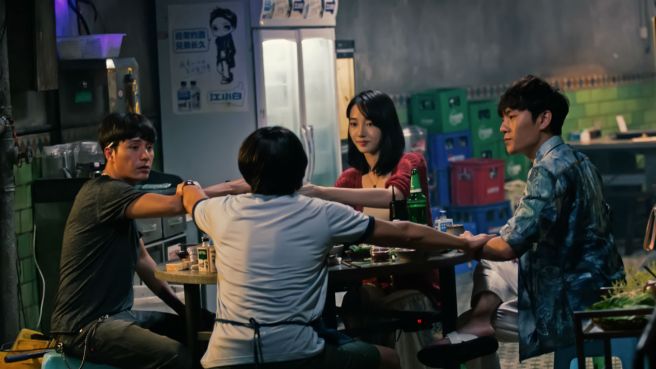
The latest Chinese import to grace Seattle Screens, now playing at the Regal Meridian, is an absurdist thriller about trio of friends who own a failing underground restaurant and who accidentally tunnel into a nearby bank vault. After a tense prologue that recalls any number of Hong Kong gangster thrillers, men in black wearing Journey to the West masks arrive at a bank during a torrential downpour. The getaway driver has a tense run-in with a traffic cop, leading to panic in the bank as the robbers are soon surrounded and desperate for a way out. The camera tracks into the vault and discovers a hole in the ground, leading us down through a cave and into the restaurant, and back in time to the events leading up to the standoff. We’re told that the city of Chongqing (alternately “Chungking”), in southwestern China, is famous for its hot pot restaurants, and that lately people have been adapting the city’s network of caves and bomb shelters into trendy eating locales. Three old school friends have done just that, but the business is failing and they’re rapidly trying to unload it. To jack up their asking price, they try to extend the tunnel themselves, and that’s how they get into the bank. The bulk of the film revolves around their schemes to fix the hole without anyone finding out what they’ve done, while avoiding the temptation to steal the money.

Continue reading Chongqing Hot Pot (Yang Qing, 2016)”

Rise of the Legend (Roy Chow, 2014)

rise_of_the_legend_still

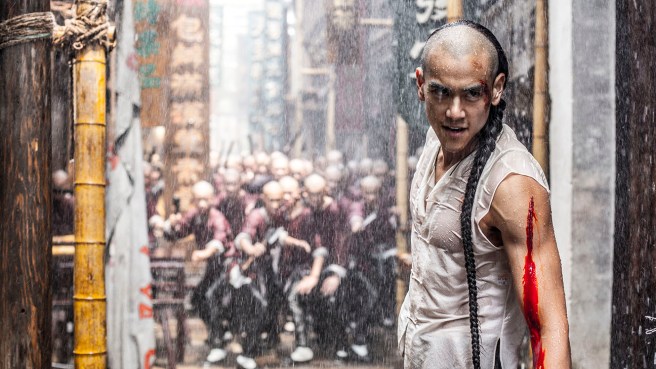
Every generation gets the Wong Fei-hung they deserve. A fin-de-siècle doctor and martial arts instructor, the real life Wong has been inspiring cinematic incarnations for most of the history of Hong Kong’s film industry. The first was in a series of productions running form the late 1940s to the mid 1960s, where Wong was played by Kwan Tak-hing as the embodiment of Confucian masculine values. Dignified, somewhat aged, even-handed and scrupulous, Kwan played Wong in an astounding 77 films (at least), between 1949’s The True Story of Wong Fei-hung: Whiplash Snuffs the Candle Flame and 1981’s Dreadnaught, which is some kind of a record. A generation of actors and stuntmen, choreographers and directors (most notably Lau Kar-leung and Yuen Woo-ping) got their starts training on the Wong Fei-hung films, which served roughly the same role for Hong Kong action cinema that Roger Corman’s exploitation films did for the New Hollywood. Lau Kar-leung put his twist on the character with Gordon Liu starring as a young student Wong in Challenge of the Masters in 1976 and as a somewhat older man striving after nonviolent resolutions to the deadly rivalries of the kung fu world in 1981’s Martial Club. Yuen Woo-ping and his father Yuen Siu-tien, who also worked on the Kwan Tak-hing series, upended the Wong Fei-hung mythos in 1978 with Drunken Master, in which a young Jackie Chan plays Wong as an impetuous, vulgar, undisciplined youth who is beaten into shape by the eponymous instructor (the elder Yuen), kicking of an era of irreverent kung fu comedy hybrids and launching Chan as a superstar. Tsui Hark revising the legend again in 1991 with his Once Upon a Time in China series, in which Jet Li played the hero with a mix of Kwan’s grace and nobility,  Chan’s youthfulness and Li’s own awkward romanticism. Now, Roy Chow gives us Rise of the Legend, with Eddie Peng playing Wong as a brooding, blood-spattered young warrior, desperately fighting against the nihilistic hell that is Guangzhou’s Pearl River Delta in the late 19th Century.

Continue reading Rise of the Legend (Roy Chow, 2014)”

Ip Man 3 (Wilson Yip, 2015) and Monster Hunt (Raman Hui, 2015)

Ip-Man-photo-2

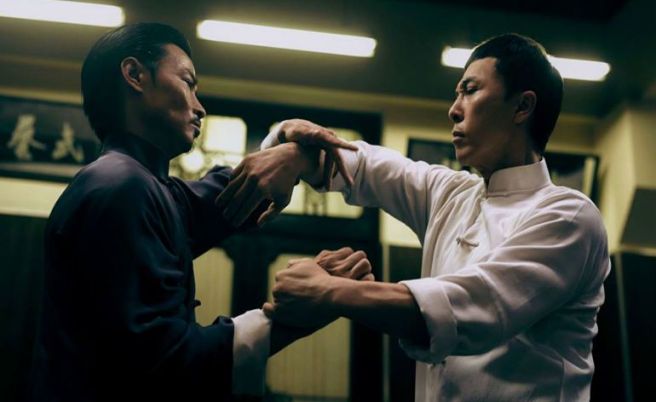
The disaporic film program at the AMC Pacific Place this week features two of the hottest Chinese-language films of the past year: the latest in Donnie Yen’s series about Wing Chun Master Ip Man and the CGI monster-wuxia that took the Chinese box office by storm last summer, breaking records on its way to becoming the highest-grossing local film in the Mainland’s history. The two films represent state of the art variations on the two oldest forms of the Chinese martial arts film, kung fu and wuxia tricked out with digital manipulations and effects, packed with enough celebrity cameos and show-stopping stunts to make even the most generic or implausible story a lot of fun.

Continue reading Ip Man 3 (Wilson Yip, 2015) and Monster Hunt (Raman Hui, 2015)”

Mr. Six (Guan Hu, 2015)

mr-6

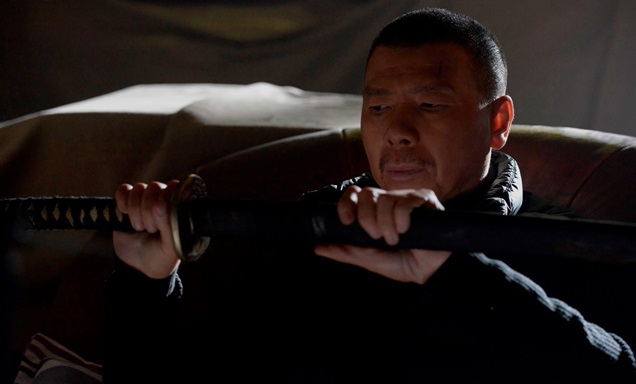
Playing this week at the Pacific Place is Mr. Six, a gangster drama which earned star Feng Xiaogang the Best Actor award at this past Golden Horse Awards (which are held annually in Taiwan and honor Chinese-langauge film). Feng plays Mr. Six, an aging Beijing street tough, now in his late 50s, who gets caught in a rivalry with a much younger gang. With the deliberate pace of Sixth Generation realism, director Guan Hu deemphasizes the more lurid elements of the Chinese gangster film, focusing instead on Mr. Six’s character and the ways in which he interacts with a Beijing vastly different than the one he dominated in the 1980s. As such, the film provides a wonderful showcase for Feng, a director of popular comedies and occasional actor, whose best known work in the US is probably his dark and very serious 2006 Hamlet variation The Banquet, which starred Zhang Ziyi, one of the overblown period films that followed the success of Crouching Tiger, Hidden Dragon and Hero early in this century. His Mr. Six is amiable and steely, a quiet authority barely concealing depths of anger and disappointment.

Continue reading Mr. Six (Guan Hu, 2015)”

Mojin: The Lost Legend (Wu Ershan, 2015)

la-et-mn-capsule-mojin-movie-reviews-20151218

International treasure Shu Qi stars in this blockbuster effects-action film out of China, opening this week at the Pacific Place. One of a trio of grave robbers, Shu and her compatriots Chen Kun and Huang Bo find themselves roped into a scheme to dig up a MacGuffin from an ancient tomb by a creepy cult leader and her armed gang of nobodies. Deadly traps, zombies, colored lights and CGI adventure follow, with all the weightless, personality-free sheen of 21st century Chinese digital cinema. Directed by Wu Ershan, the man behind 2012’s Painted Skin: The ResurrectionMojin has some potentially intriguing ideas at its core, but one has to dig deep to find them.

Continue reading Mojin: The Lost Legend (Wu Ershan, 2015)”