SIFF 2016 Report #3: Disintegration (The Bitter Stems, Thithi, Trivisa, The Mobfathers, Tag)

1262846_3f0ad18a95138db9f622d32ada567268-692x360

Proving once again that no film festival should ever last longer than an Olympic Games, the 2016 SIFF limped to its conclusion this weekend after a soul-crushing 25 days. While the festival had run impressively well over its first two weeks, organized and on time and with nothing in particular for a picky festival-goer like me to complain about, the last week saw an inexplicable series of outrages.

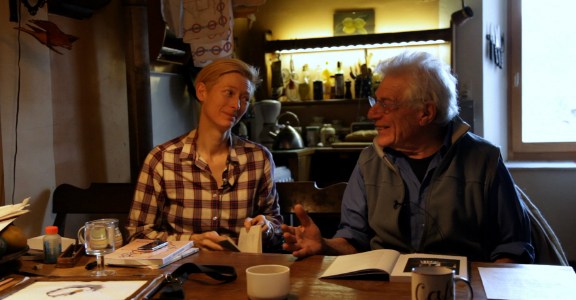
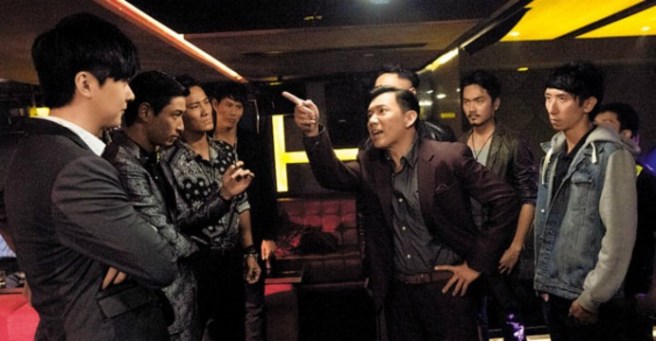
This began on Sunday night, when the programmer tasked with introducing the Johnnie To-produced film Trivisa managed to be both disrespectful, mildly offense and factually inaccurate when he claimed To was the “Roger Corman of Hong Kong”, a producer who would make any movie you had in mind as long as it had “guns or titties”. That same presenter ran the Q&A with actor/producer Chapman To the next night, which was largely unobjectionable (To was the one who mentioned “titties” at least), but the programmer did at one point refer to Mr. To as “Chapman Ho” and later, “Herman”.
Continue reading “SIFF 2016 Report #3: Disintegration (The Bitter Stems, Thithi, Trivisa, The Mobfathers, Tag)”

SIFF 2016 Preview Week Three and Beyond

mountains-depart

The Seattle International Film Festival races into it’s third week (has it really only been fifteen days? With only a mere ten to go?) and here we have some titles you won’t want to miss. We’ll link to our reviews of the titles listed here as we write them, as we’ve been doing with our Week One and Week Two Previews. We previewed the festival back on Frances Farmer Show #6 and discussed it at its midway point on Frances Farmer #7. We’ll have a complete wrap-up of the SIFF just as soon as it ends.

Continue reading “SIFF 2016 Preview Week Three and Beyond”

SIFF 2016 Report #2: The Big Road, The Island Funeral, Heaven Can Wait, The Final Master and My Beloved Bodyguard

193.1

Brief accounts of a handful of films from the SIFF’s second week as it rolls into its third.

The Big Road (Sun Yu, 1935) – Something like an amalgam of Our Daily Bread and Mrs. Miniver for the Anti-Japanese War, by which I mean it’s a propaganda film celebrating first the communal virtues of collectivist rural life (the hard work of uniting the nation through literal road-building) and then the bold heroism of that collective as it stands against Imperialist aggression, in the form of the traitorous land-owning, but not land-working, class (relics of Old China, these rulers wear 19th Century clothes, and live in Qing mansions, the feudal system in opposition to the power of the Modern Industrial Worker). It ambles, plotless for most of its length, but it’s accumulated enough power that by the end, as its hero (eight characters combine to form one hero, a communist Voltron) is smashed to bits by advanced machines of war, it resembles nothing less than “Guernica” in its devastation.

Continue reading “SIFF 2016 Report #2: The Big Road, The Island Funeral, Heaven Can Wait, The Final Master and My Beloved Bodyguard

The Frances Farmer Show #7: SIFF 2016 Midpoint Report

Almost halfway through the marathon that is the Seattle International Film Festival, we take a break to talk about some of the films we’ve seen so far. Movies discussed include: Chimes at Midnight, Sunset Song, Love & Friendship, Long Way North, Our Little Sister, Alone, The Island Funeral, Concerto, A Bride for Rip Van Winkle, Cameraperson, Women He’s Undressed, In a Valley of Violence, The Final Master, Lo and Behold, The Lure, Tiny, The Seasons in Quincy and Scandal in Paris.

You can listen to the show by downloading it directly, or by subscribing on iTunes or the podcast player of your choice.

Some corrections:

The woman in The Island Funeral takes a trip with her brother, not her sister.
The Seasons in Quincy starts in the winter and ends in the autumn, not summer, because that’s how seasons work.

The Frances Farmer Show Ep. 6: SIFF Preview, The Long Day Closes and Tokyo Sonata

With the Seattle International Film Festival fast approaching, we discuss earlier films by two prominent directors whose films will be bookending this year’s SIFF. Terence Davies will be kicking the festival off with his Sunset Song, while Kiyoshi Kurosawa will bring it to a close with Creepy, and so we talk about Davies’s 1992 masterpiece of poetic memory The Long Day Closes and Kurosawa’s 2008 surreal domestic melodrama Tokyo Sonata. We’re joined as well by Melissa to preview this year’s festival, running down some new obscurities, interesting documentaries, much-anticipated archival presentations and more. All that, plus cameo appearances from TS Eliot and Paul Verlaine.

You can listen to the show by downloading it directly, or by subscribing on iTunes or the podcast player of your choice.

Episode 4: Youth of the Beast and Sonatine

This week, to mark the on-going Seijun Suzuki retrospective at the Grand Illusion and the Northwest Film Forum, we discuss the idiosyncratic Japanese director’s career and one of his more famous and influential gangster films, 1963’s Youth of the Beast. We also talk about the Yakuza film in general, and all the crazy things Suzuki did to it, and take a look at actor/director Takeshi Kitano’s own take on the yakuza film in his 1993 film Sonatine. All that plus more goings on around town, including an upcoming tribute to a great director at the Film Forum and the novelty of the Cinema showing something on film.

You can listen to the show by downloading it directly, or by subscribing on iTunes or the podcast player of your choice.

Yakuza Apocalypse (Takashi Miike, 2015)

NEs7EunSg2oSvy_1_a

Playing this Friday and Saturday at midnight only comes the latest from prolific Japanese lunatic Takashi Miike. The limited late night time slot gives a hint of what to expect, even if you’re unfamiliar with Miike’s work, much of which amounts to highly imaginative reworkings of familiar genres, pushing them to their extreme (and often extremely violent) conclusions. But while the Miike review that doesn’t contain the word “gonzo” is a rarity, he is no scattershot shock auteur, rather his films, unpredictable as they may be, are always guided by a clever intelligence. He’s not a director of chaos, but of logical absurdity. Of the more than 40 films he’s directed this century, I’ve only seen a handful, but Yakuza Apocalypse is firmly in the tradition of earlier films like Sukiyaki Western Django, 13 Assassins and his remake of the Maskai Kobayashi classic Harakiri in their critique of the psychotic masculinity that underlies the ideology of Japanese action narratives. Of course, critiquing the samurai code has been an essential part of the samurai/yakuza genres in cinema since at least the end of World War II. But Kobayashi, Kihachi Okamoto and Akira Kurosawa, as far as I know at least, never made a film about gangster vampires fighting demons in plushy cosplay frog outfits.

Continue reading Yakuza Apocalypse (Takashi Miike, 2015)”

SIFF 2015: Snow on the Blades (Setsurô Wakamatsu, 2014)

This is part of our coverage of the 2015 Seattle International Film Festival.

SnowOnTheBlades_Still02

A measured, thoughtful samurai film set in the transition years between the fall of the Tokugawa Shogunate and the rapidly modernizing Meiji period, in 1860s Japan, Snow on the Blades follows a lone samurai’s quest for redemption as the world changes around him. Sporting the glossy sheen that’s become the dominant visual style of historical epics in recent years, every snowflake a brilliant white, every earth tone deep and rich, every camellia a signifier, it presents a sharp ideological break with its forebears, the contemplative samurai epics of the 1950s and 60s, most especially Masaki Kobayashi’s Harakiri (and its 2011 remake by Takashi Miike). Rejecting the simple one-to-one allegory of the samurai ethos as stand-in for the military dictatorship that so disastrously led Japan into World War II, director Setsurô Wakamatsu’s film seeks out a kind of middle ground, condemning the brutality at the heart of the code while extolling the heroism of the men and women who killed (themselves and others) to enforce it.

Continue reading “SIFF 2015: Snow on the Blades (Setsurô Wakamatsu, 2014)”

Lady Snowblood (Toshiya Fujita, 1973) at the Scarecrow Screening Lounge (February 14, 2015)

lady-snowblood-revenge

One of my earliest and happiest Seattle film experiences was in the late summer of 1998, when I saw Akira Kurosawa’s Yojimbo at Scarecrow Video. It was upstairs, in a little room (I think it’s an office now, but it might be the comedy section) with a dozen folding chairs and a very small screen. The movie played, I believe, in 16mm, a tiny strip of Cinemascope ten feet away. There were four of us in the audience, two strangers and a friend who had never seen a Kurosawa film before, though his films had been seemingly everywhere that August (I had earlier caught Rashomon, Throne of Blood and The Hidden Fortress at the Varsity). It was, of course, a great movie and my friend loved it, sparking his own trip through one of the great 20th Century filmographies. The film showings at Scarecrow ceased sometime shortly after that, I don’t know when or why, but the experience has always stuck with me. We tend to get caught up with the incidentals of our film-going: comfy seats, giant screens, and ear-blasting sound in our multiplexes; giant TVs, plush couches and remote controls in our homes. But all of that is sideshow, what really matters is the movie, and going out to the movie, leaving our own space and sharing a darkened room with a bunch of strangers, all looking at the same pictures on a wall. I’ll see a movie anywhere, in any format, because what matters most is that movie, and there’s no better way to see a movie than in a theatre, any kind of theatre.

Continue reading Lady Snowblood (Toshiya Fujita, 1973) at the Scarecrow Screening Lounge (February 14, 2015)”