Friday October 7 – Thursday October 13

Featured Film:

The 2016 Vancouver International Film Festival

Our coverage of the VIFF 2016 continues this week, with more reviews coming of films we saw last week and films we’re going to see this week. So far we’ve covered: The Unknown Girl, The Lockpicker, Beautiful 2016, The Intestine, Toni Erdmann, Never Eat Alone and Last Poems, Maudite Poutine and Pop Song, Crosscurrent, Werewolf, A Quiet Passion, and Yellowing. There’s more to come, including the runaway hit of the festival: Rat Film!

Playing This Week:

AMC Loews Alderwood:

Mirzya (Rakeysh Omprakash Mehra) Fri-Thurs

Central Cinema:

Rear Window (Alfred Hitchcock, 1954) Fri-Weds
The ‘Burbs (Joe Dante, 1989) Fri-Weds

SIFF Egyptian:

The Beatles: 8 Days a Week (Ron Howard) Fri-Mon, Weds
The 18th Annual Animation Show of Shows Fri-Mon, Weds

Century Federal Way:

Nikka Zaildar (Simerjit Singh) Fri-Thurs
American Graffiti (George Lucas, 1973) Fri-Thurs

Grand Cinema:

Tacoma Film Festival Fri-Thurs Full Program
Top Gun (Tony Scott, 1986) Weds Only

Grand Illusion Cinema:

Phantasm: Remasterd (Don Coscarelli, 1979) Fri-Thurs
Phantasm: Ravager (David Hartman) Sat Only
Ben Popp: Juxtaposed Aesthetix Tues Only Video

Landmark Guild 45th:

A Man Called Ove (Hannes Holm) Fri-Thurs
Shin Godzilla (Hideaki Anno) Tues Only

Cinemark Lincoln Square:

M.S. Dhoni (Neeraj Pandey) Fri-Thurs
Mirzya (Rakeysh Omprakash Mehra) Fri-Thurs
Premam (Alphonse Puthren) Fri-Thurs
Remo (Bakkiyaraj Kannan) Fri-Thurs
American Graffiti (George Lucas, 1973) Fri-Thurs

Regal Meridian:

Soulmate (Derek Tsang) Fri-Thurs Our Review
Operation Mekong (Dante Lam) Fri-Thurs Our Review
M.S. Dhoni (Neeraj Pandey) Fri-Thurs
L.O.R.D. – Legend of Ravaging Dynasties 3D (Guo Jingming) Fri-Thurs

Northwest Film Forum:

KINOFEST Seattle 2016  Fri-Sun Full Program
Chatty Catties (Pablo Valencia) Sat Only
Mr. Blot’s Academy (Krzysztof Gradowski, 1983) Weds Only

AMC Oak Tree:

Better Off Single (Benjamin Cox) Fri-Thurs

AMC Pacific Place:

I Belonged to You (Zhang Yibai) Fri-Thurs

Regal Parkway Plaza:

Mirzya (Rakeysh Omprakash Mehra) Fri-Thurs
No Manches Frida (Nacho Garcia Velilla) Fri-Thurs
M.S. Dhoni (Neeraj Pandey) Fri-Thurs
Barcelona: A Love Untold (Olivia Lamasan) Fri-Thurs

Seattle Art Museum:

T-Men (Anthony Mann, 1947) Thurs Only 35mm

Seven Gables:

Captain Fantastic (Matt Ross) Fri-Thurs

SIFF Film Center:

Irish Reels Film Festival Fri-Sun Full Program

Sundance Cinemas:

American Honey (Andrea Arnold) Fri-Thurs Our Review
Don’t Think Twice (Mike Birbiglia) Fri-Thurs
London Road (Rufus Norris) Fri-Thurs
Under the Shadow (Babak Anvari) Fri-Thurs

SIFF Cinema Uptown:

American Honey (Andrea Arnold) Fri-Thurs Our Review
A Man Called Ove (Hannes Holm) Fri-Weds
Seattle 48 Hour Horror Film Project Tues Only

Varsity Theatre:

Hunt for the Wilderpeople (Taika Waititi) Fri-Thurs
Ebb and Flow  Sun Only

VIFF 2016: Yellowing (Chan Tze-woon, 2016)

f_yellowing_still_03

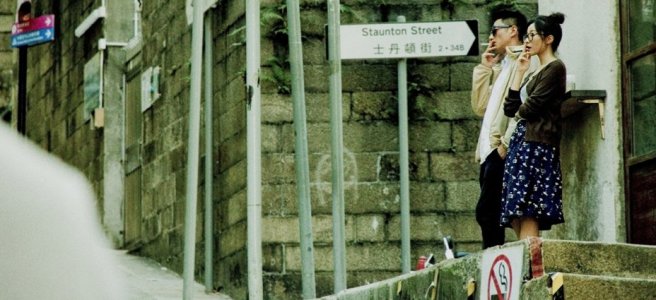
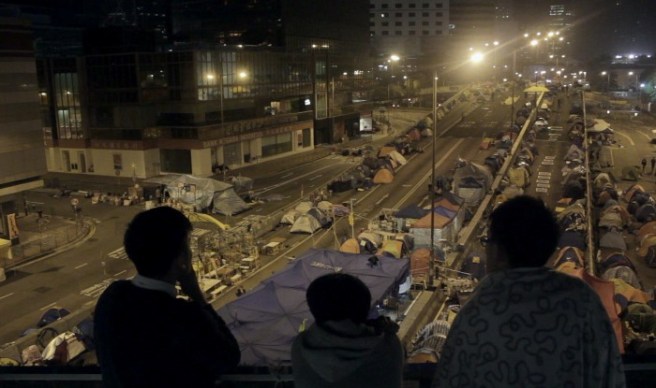
As a documentary about the 2014 Umbrella Movement, in which thousands of young Hong Kongers gathered to Occupy districts throughout the city in protest of the PRC’s decision to not allow the former colony to directly choose its candidates for high office, Yellowing is something remarkable in our time: an honest direct cinema film, with nary a hint of meta-commentary about film theory or storytelling. Not that there’s anything wrong with the doc/fiction hybrids that have become so ubiquitous lately, there’s just something refreshing about the open earnestness of the filmmaking here, mirroring a little bit the idealism of the young people at its center. Shortly after the Hong Kong police attacked protesters with tear gas on September 27, 2014, Chan began filming the students as they set-up in and occupied the Admiralty and Mongkok neighborhoods. He focuses on a few young people through the run of the 67 day occupation: a man nicknamed Lucky Egg who gives impromptu lectures in English and political philosophy; a young man who works in construction who wanders in and out of the protests–something big always seems to happen when he’s there; a law and literature student named Rachel who makes announcements in three languages and provides the film’s eloquent final statement, an open letter to a professor who had infuriatingly denounced the students’ idealism.

f_yellowing_still_01

In focusing on the details of the occupation, recording the quotidian requirements of activism (building rain-proof shelters, finding a mattress to sleep on, distributing water, masks and umbrellas to counter gas attacks), as well as the ideological arguments the protestors are making (they want to be able to vote for their leaders, this is anathema to a paranoid one-party state), Chan’s film resembles no less than Peter Watkins’s La Commune (Paris 1871), one of the great films of this century. The similarities between the protestors then and now is striking, but Watkins’s film, being nearly six hours long, takes a couple of meta-fictional turns in its historical reenactments (for instance: the film’s actors discuss the issues the Communards raised in character, and also as themselves, expressing how the process of playing 150 year old activists affected the way they see politics in their own time). Chan has no need of such artifice: his movie isn’t a reenactment, and we see the impact the process has on his subjects unfolding as it actually happened. Beyond that, we get a feel for both the city itself and the young people not leading, but forming the heart of the movement. Whether discussing the nuts and bolts of activism and its limits (most of them know very well they cannot succeed, but they’re there anyway; Rachel distributes yellow wristbands sporting the slogan “They Can’t Kill Us All”), or just hanging around trying (and failing) to meet girls (“you need guts and brains to get a girl”). In its ground-floor, first-person perspective, it finds more honesty and wisdom and life than a hundred Hollywood issue-advocacy films.

VIFF 2016: Crosscurrent (Yang Chao, 2016)

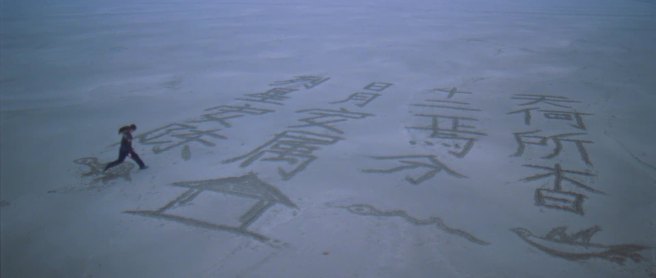
crosscurrent_ausschnitt2-omeu

Poetry is the subject of the moment for 2016. Like Volcanos and Asteroids and Mars before it, we’ve been blessed this year with a plethora of films about writers of verse. Jim Jarmusch’s Paterson, Terence Davies’s A Quiet Passion, and Pablo Larraín’s Neruda have all the headlines, and as great as those are (and the first two are without a doubt, great films, while the third, well, isn’t really about poetry and I’m not sure how much it’s about its poet either), the best film about Poetry here at VIFF might just be Yang Chao’s Crosscurrent. Like last year’s Kaili Blues and 2013’s Four Ways to Die in My Hometown, it’s an independent, somewhat obscure Chinese film where the lines between past and present, myth and reality, documentary and fiction are difficult to grasp. Reversing the direction of Jean Vigo’s great river film L’Atalante, Yang follows a boat on its journey up the Yangtze from Shanghai to its source high on the Tibetan plateau. The captain, whose father has recently died, sees a woman in the Shanghai harbor but fails to meet her. The next night, the boat’s engine stops working and the captain finds, hidden in the machinery, an old and dusty book, filled with poems chronicling another man’s journey on the river (dated 1989), a different poem for every stop on the way along the third longest river in the world. The engine restarts (machines always work better when you take the poetry out of them) and the journey begins in earnest.

On-screen titles give us the locations of each stop, along with how many days the boat has been running, as well as the corresponding poem, composed by Yang himself. At each stop, the captain sees the woman again, always looking for him on the shore. They fall in love, have sex, make food, steal vegetables, but always he goes back to his boat and always she reappears further down the line on land. Ace DP Mark Lee Ping-bin shot the film on 35mm: back in 2012 (when it was filmed) digital technology was incapable of capturing his images, from the fog and steam of the harbors, to the depths of night on the river (a beam of light tracing the movements of the woman high on a cliff-face), to the pairing of the woman’s face, in close-up with a ball of fire: first a lamp, then a candle flame (the floating balls of light Lee found in Hou Hsiao-hsien’s The Assassin appear briefly here as well). Two-thirds of the way up the river, the Three Gorges Dam severs their connection, its locks taking over the movement of the boat with a ear-shattering, inhumane shriek, throwing the vehicle out into an artificial landscape, through the drowned villages of Still Life and past towering limestone cliffs. The Dam is the definitive break with nature, with the past: modernity cannot recapture what went before, and the captain and the woman can no longer meet. The central mystery of the film is ungraspable in all the best ways. The woman at times seems the soul of the river, or an apparition from the past, doomed to repeat her tragedy Marienbad-style. She could be a manifestation of grief, of longing, of loneliness. She’s all of that and more, and the captain, lost in his dream, can only follow her to the river’s end.

VIFF 2016: Maudite Poutine (Karl Lemieux, 2016) and Pop Song (Matthew Taylor Blais, 2016)

cq1eacpukaav-im

The loudest film of the Future // Present series thus far is Karl Lemieux’s film about a drummer in a noisy band (I’m at least 20 years out of date on music genres) trying to make up for the fact that he and his bandmates, in an off-screen act of stupidity, stole a bunch of pot from local gangsters and now owe several thousand dollars they don’t have and can’t raise. The drummer, Vincent, walks and drives around, drinks beer, works at his job in a factory and tries to get his brother, a meth addict with connections to the mob, to help him out. It’s all shot in black and white, with long sequences scored only by music, recalling the hallucinatory interstitial passages of Jim Jarmsuch’s Dead Man, or the desperate final third of A Spell to Ward Off the Darkness. Jean-Simon Leduc, as Vincent, dominates the film, but he’s an incongruous presence in this world. Looking a bit like George Clooney and a lot like Jordan Catalano-era Jared Leto, he’s far too pretty to be a drummer, let alone to be trapped in this dead-end life.

Paired with the feature is one of the best films of the festival so far this year, a three minute short Pop Song (a perfect title), directed by Matthew Taylor Blais. Completely silent, it’s a visual experiment wherein images are layered such that they cancel each other out, creating black spaces in the frame, and then misaligned by a frame, creating a spatial and temporal discontinuity which, with the movement of the image, reveals flashes of gorgeous bright color. Documenting a few quotidian locations: a street sign, trees in a park, a woman, we see their beauty in an entirely new way. It reminded me of Lois Patiño’s Night Without Distance and the nature footage from Godard’s Adieu au langage.

VIFF 2016: Never Eat Alone (Sofia Bohdanowicz, 2016)

nea

Of the three films in VIFF’s new Future // Present series that I’ve seen thus far, the program Sunday night of Toronto filmmaker Sofia Bohdanowicz’s new feature paired with three of her short films is the standout. The feature is a fictionalization of the story of her maternal grandmother, Joan Benac, playing herself, who in the early 1950s, appeared as a singer and actress on a kitschy television show. Remembering this in a dream, she tasks her granddaughter Audrey (played by Deragh Campbell, in one of her three films at VIFF this year) with finding the show and tracking down the boy she co-starred with and had dated briefly. She does, she thinks, and writes the man a letter. He’s living on the other end of the country, in a small town where he lives alone and teaches a choir. Audrey writes the man a letter, asking him to call, but he never manages to connect with the women in Toronto (he’s played by George Radovics, Bohdanowicz’s producer’s grandfather). The bulk of the film cuts between the three principals, usually as they’re eating, alone. The television episode is interspersed throughout, and there’s a digressive slideshow of the grandmother’s trip to the Bahamas, both of which are actual artifacts. But wholly fictionalized scenes abound as well, such as one where Audrey tries on a bunch of old clothes her grandmother is trying to get rid of while the two delicately balance familial niceness with the desire not to give or receive these gifts. It’s a found-footage film, using bits and pieces of the past to build a collage of a fictionalized history, an alternate reality version of her family’s history. It bears a kind of inverse relationship to Liu Jiayin’s Oxhide films, which use a highly structured script and compositional style to document her family’s life, their work and routines and relationships as they go about various tasks: cleaning the house, making leather goods, cooking dumplings. Bohdanowicz in contrast films with an off-hand directness, emotionally straightforward compositions chronicling wholly improvised interactions (both Campbell and Benac receive screenplay credits).

Even more astonishing though, are the three short films paired with the feature, chronicling Bohdanowicz’s paternal grandmother. The first, A Prayer, is a short documentary, following said grandmother around her house has she does various chores (and eats a meal, alone, naturally). The second, An Evening, is something special: a tour of the grandmother’s house shortly after her death, patiently documenting its spaces while one of her records plays on the stereo, intermittently marred by a broken needle, from late afternoon until the space disappears into the darkness of night. It’s a film Chantal Akerman would be proud of. The third, Another Prayer, replays the first short, but superimposed over the now empty spaces of the woman’s home, completely silent. Each film is prefaced by a poem composed by Bohdanowicz’s great-grandmother, and the cumulative effect of the trilogy together is devastating.

VIFF 2016: Toni Erdmann (Maren Ade, 2016)

toni-erdmann4

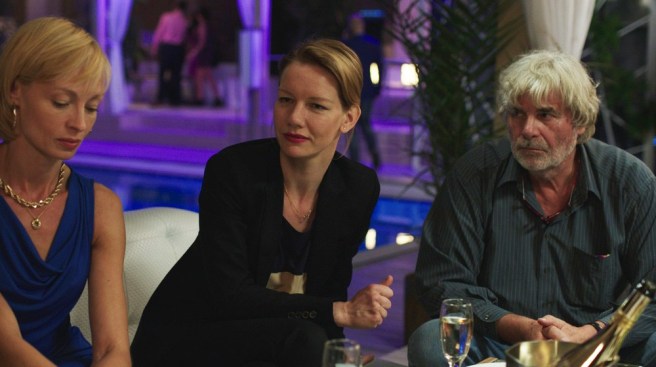
The talk of the Cannes Film Festival, where it received as rapturous a critical response as any film is likely to get (no less than Amy Taubin said it was one of her ten favorite films of all-time on Film Comment’s festival podcast), Toni Erdmann is finally making its run through the fall festival circuit, and here in Vancouver it capped my first day at the festival. And what is surely a great surprise, it’s a film that lives up to the hype. A nearly three-hour screwball comedy about a father, a daughter, and international capitalism, it’s the best film made about parenthood since Yasujiro Ozu died, and surely the funniest German film ever made. Peter Simonischek plays the father, a large, gregarious and goofy older man, a music teacher with a penchant for pranks of the false teeth and bad wig variety. His daughter, played by Sandra Hüller, is a high-ranking consultant working in Bucharest to help a corporation outsource its workforce. She’s too busy to notice how miserable she is, but after a perfunctory visit home, dad drops in on her life unannounced, generally being foolish and weird and embarrassing. At the halfway point she sends him home, only for him to return in disguise as Toni Erdmann, a life coach who insinuates himself among her friends at parties and work functions. The film is a symphony of double takes, as every character, great and small, is stunned by Toni’s oddity, his eyes twinkling mischievously whenever someone plays along with his games. The final third of the film escalates, in classic screwball style, through a masterful series of set-pieces, as hilarious as they are devastating. It’s difficult to describe the achievement of this film to someone who hasn’t seen it, the way it impossibly negotiates the simultaneous absurdity and despair of life, the way it captures the pride we have in our children and our overwhelming sorrow when they’re in pain. Watching it at VIFF, in a 1,000 seat auditorium, feeling the entire vast room captivated and rapturous with every twist and shock and small poignancy, is one of the great movie-going experiences I’ve ever had.

Operation Mekong (Dante Lam, 2016)

movie_015739_185447

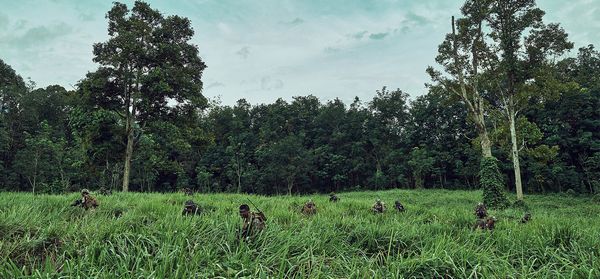
Opening this week at the Regal Meridian is the latest action film from director Dante Lam, whose Beast Cops and Jianghu: The Triad Zone were two of the better Hong Kong films to come out during the industry trough that followed the colony’s handover to China in the late 1990s. More recently, his MMA film Unbeatable earned a handful of acting prizes for its star, Nick Cheung, back in 2013. Operation Mekong is a procedural programmer based on true events, starring Eddie Peng (Rise of the Legend) and Zhang Hanyu (The Taking of Tiger Mountain, Mr. Six). Thirteen Chinese citizens are killed on the Mekong River, in the notorious no-man’s land known as the Golden Triangle, the intersection of Burma, Thailand and Laos that has long been the headquarters for the drug trade and action movies using the drug trade as a plot motivation (see, for example, John Woo’s Heroes Shed No Tears from way back in 1986). It’s meth now, rather than heroin, but the more things change, the more they’re exactly the same. Suspecting drug lord involvement, the Chinese government convinces the other three nations to cooperate, and sends in an elite squad of heavily-armed cops to expose, capture and, if necessary, kill the bad guys.  Zhang heads the squad, all of whom are given code names from Greek mythology, except for their remarkable German Shepherd, who is named “Bingo”. Peng serves as their local contact, an intelligence officer who has been working the area with an impressive array of fake mustaches for five years.

What follows are all the familiar beats of a high-explosive action film. Strong extended set-pieces packed with carnage, leavened with stretches of exposition and character-building. There’s a scene where every member of the team introduces themselves around a communal meal, a scene where one muses about his daughter back home, another one where a cop has a tragic backstory relived in flashbacks which will come back to haunt him at a narratively-convenient time. The remarkable thing about Johnnie To’s Drug War is that he didn’t bother with any of this stuff, trusting the tightness of his plot and sequence construction to carry the audience through the running time of the film. Lam and his team of screenwriters though settle for the typical, thus no matter how good the actors and the action is, and they’re pretty good for the most part, the movie is ultimately is just treading water, doing everything we’ve seen before, just a bit louder, and with more drone-mounted cameras. As an homage and update to the heyday of Cannon Films-era actioners, it doesn’t get much slicker.

Friday September 30 – Thursday October 6

Featured Film:

The 2016 Vancouver International Film Festival

Most of the Seattle Screen Scene staff is going to be in Vancouver for the next couple of weeks, covering one of he best film festivals in North America. From acclaimed international festival hits like Toni ErdmannThings to ComePersonal Shopper, ElleAquarius, and A Quiet Passion (among many others), to cutting edge Canadian films like WerewolfNever Eat Alone and Maliglutit, anticipated American movies such as PatersonManchester by the SeaShort Stay and The Love Witch, to the best program of Asian films in North America, featuring The HandmaidenYourself and YoursCrosscurrent, GodspeedBy the Time it Gets Dark and more, we’ll have dozens of reviews and maybe even the long-awaited return of The Frances Farmer Show coming soon.

Playing This Week:

AMC Loews Alderwood:

The Age of Shadows (Kim Jee-woon) Fri-Thurs Our Review
Monty Python and the Holy Grail (Terry Gilliam & Terry Jones, 1975) Fri & Sat Only Quote-Along

Ark Lodge Cinemas:

Hunt for the Wilderpeople (Taika Waititi) Fri-Thurs

Central Cinema:

Singin’ in the Rain (Stanley Donen & Gene Kelly, 1952) Fri-Weds
The Shawshank Redemption (Frank Darabont, 1993) Fri-Weds

SIFF Egyptian:

The Beatles: 8 Days a Week (Ron Howard) Fri-Thurs
Multiple Maniacs with Mink Stole in person (John Waters, 1970) Fri Midnight Only with Mink Stole in person

Century Federal Way:

The Age of Shadows (Kim Ji-woon) Fri-Thurs Our Review
M.S. Dhoni (Neeraj Pandey) Fri-Thurs
Nikka Zaildar (Simerjit Singh) Fri-Thurs

Grand Cinema:

The Beatles: 8 Days a Week (Ron Howard) Fri-Thurs
The Hollars (John Krasinski) Fri-Thurs
A Tale of Love and Darkness (Natalie Portman) Fri-Thurs
Café Society (Woody Allen) Fri-Thurs
Lo and Behold, Reveries of the Connected World (Werner Herzog) Tues Only
Tacoma Film Festival Starts Friday Full Program

Grand Illusion Cinema:

The Quiet Earth (Geoff Murphy, 1985) Fri-Thurs
I Drink Your Blood (David E. Durston, 1970) Sat Only
Digimon Adventure tri. Chapter 1: Reunion (Keitaro Motonaga) Fri-Weds
Kampai! For the Love of Sake (Mirai Konishi) Sat & Sun Only
up, up, and away (Andy Liotta) Thurs Only live music & video

Landmark Guild 45th:

A Man Called Ove (Hannes Holm) Fri-Thurs
Captain Fantastic (Matt Ross) Fri-Thurs
Rurouni Kenshin Part III: The Legend Ends (Keishi Ohtomo) Tues & Weds Only

Cinemark Lincoln Square:

M.S. Dhoni (Neeraj Pandey) Fri-Thurs
Hyper (Santosh Srinivas) Fri-Thurs
Majnu (Virinchi Varma) Fri-Thurs
Pink (Aniruddha Roy Chowdhury) Fri-Thurs

Regal Meridian:

Soulmate (Derek Tsang) Fri-Thurs Our Review
Operation Mekong (Dante Lam) Fri-Thurs Our Review
M.S. Dhoni (Neeraj Pandey) Fri-Thurs
L.O.R.D. – Legend of Ravaging Dynasties 3D (Guo Jingming) Fri-Thurs

Northwest Film Forum:

The 19th Local Sightings Film Festival Fri-Sat Full Program
Moving History: An Archival Screening Night Weds Only
MEMORY Presents: Program No. 2 Thurs Only Free, Curators in Attendance
Desert Cathedral (Travis Gutiérrez Senger) Thurs Only

AMC Oak Tree:

The Hollars (John Krasinski) Fri-Thurs

AMC Pacific Place:

I Belonged to You (Zhang Yibai) Fri-Thurs

Regal Parkway Plaza:

Pink (Aniruddha Roy Chowdhury) Fri-Thurs
No Manches Frida (Nacho Garcia Velilla) Fri-Thurs
M.S. Dhoni (Neeraj Pandey) Fri-Thurs
Barcelona: A Love Untold (Olivia Lamasan) Fri-Thurs

Seattle Art Museum:

The Chase (Arthur Ripley, 1946) Thurs Only 35mm

SIFF Film Center:

Dying to Know: Ram Dass & Timothy Leary (Gay Dillingham) Fri-Sun

Sundance Cinemas:

Don’t Think Twice (Mike Birbiglia) Fri-Thurs
The Lovers and the Despot (Ross Adam & Robert Cannan) Fri-Thurs

SIFF Cinema Uptown:

Cameraperson (Kirsten Johnson) Fri-Thurs Our Review Our Other Review
A Man Called Ove (Hannes Holm) Fri-Thurs
Phantasm (Don Coscarelli, 1979) Sat Only
Promised Land (The Salcedos) Tues Only
Cameraperson (Kirsten Johnson) Weds Only Skype Q & A

Varsity Theatre:

Hunt for the Wilderpeople (Taika Waititi) Fri-Thurs
Seattle Latino Film Festival Sat-Weds Full Program

The Age of Shadows (Kim Jee-woon, 2016)

2016-the-age-of-shadows-thumb-860xauto-62812

Hot off its premiere at the Venice Film Festival and the announcement of its being chosen as South Korea’s submission for the Foreign Language Academy Award, the latest film from director Kim Jee-woon (The Good, The Bad, The WeirdI Saw the Devil) opened this past Friday. But not in Seattle: it’s only playing at the Alderwood Mall AMC in Lynnwood and the Cinemark theatre in Federal Way, another example of the mixed-blessing that is the state of Asian film distribution in the United States. On the one hand, were this exact same film French or German, you could expect it to be picked up by one of the major art house distributors and get a nationwide roll-out, eventually playing somewhere like SIFF or a Landmark theatre. Along with that would go critical attention and a much wider audience. Instead, as Korean, Chinese, Filipino and Indian films are increasingly only released in the US in small runs targeted at diasporic and immigrant communities, with no advance publicity and little advertising to the public at large, it’s likely that if The Age of Shadows does develop an American following, it will come only once the movie is widely available to stream on the internet. But on the plus side, for those of us that happen to live near a major urban center, we get to see some of the best movies in the world in a theatrical setting, with no waiting.

Continue reading The Age of Shadows (Kim Jee-woon, 2016)”

Friday September 23 – Thursday September 29

Featured Film:

Cameraperson at the SIFF Uptown

Documentary cinematographer Kirsten Johnson assembled a personal yet expansive memoir out of outtakes and unused footage from the many films she’s shot over the course of her twenty year career, traveling the world from Bosnia to Liberia, Alabama to Wyoming. It was one of our favorite films at SIFF this year, and it begins its theatrical run at the Uptown this week on Wednesday night, along with a Skype Q&A with Johnson herself. We’ll have more coverage of this very fine film later in the week.

Playing This Week:

AMC Loews Alderwood:

The Age of Shadows (Kim Ji-woon) Fri-Thurs
Monty Python and the Holy Grail (Terry Gilliam & Terry Jones, 1975) Fri & Sat Only Quote-Along

Ark Lodge Cinemas:

Hunt for the Wilderpeople (Taika Waititi) Fri-Thurs

Central Cinema:

Ferris Bueller’s Day Off (John Hughes, 1986) Fri-Weds
Mean Girls (Mark Waters, 2004) Fri-Weds

SIFF Egyptian:

Peaches Christ’s Return To Grey Gardens Thurs Only

Century Federal Way:

The Age of Shadows (Kim Ji-woon) Fri-Thurs
Dharam Yudh Morcha (Naresh S. Garg) Fri-Thurs
Star Trek II: The Wrath of Khan (Nicholas Meyer, 1982) Sun & Weds Only Director’s Cut

Grand Cinema:

The Beatles: 8 Days a Week (Ron Howard) Fri-Thurs
The Hollars (John Krasinski) Fri-Thurs
Complete Unknown (Joshua Marston) Fri-Thurs
Café Society (Woody Allen) Fri-Thurs
Phantasm (Don Coscarelli, 1979) Fri & Sat Only
A Town Called Panic (Stephane Aubier & Vincent Patar, 2009) Sat Only
Speed Sisters (Amber Fares) Sat Only
Zero Days (Alex Gibney) Tues Only

Grand Illusion Cinema:

Zoom (Pedro Morelli) Fri-Thurs
I Drink Your Blood (David E. Durston, 1970) Fri Only
Time Bandits (Terry Gilliam, 1981) Sat Only
solid objects: Films by Brian Short Tues Only
Private Vices, Public Virtues (Miklós Jancsó, 1975) Thurs Only

Landmark Guild 45th:

Come What May (Christian Carion) Fri-Thurs
Captain Fantastic (Matt Ross) Fri-Thurs

Cinemark Lincoln Square:

Queen of Katwe (Mira Nair) Fri-Thurs
Banjo (Ravi Jadhav) Fri-Thurs
Majnu (Virinchi Varma) Fri-Thurs
Thodari (Prabhu Solomon) Fri-Thurs
Jyo Achyutananda (Srinivas Avasarala) Fri-Thurs
Pink (Aniruddha Roy Chowdhury) Fri-Thurs
Star Trek II: The Wrath of Khan (Nicholas Meyer, 1982) Sun & Weds Only Director’s Cut

Regal Meridian:

Soulmate (Derek Tsang) Fri-Thurs Our Review
No Manches Frida (Nacho Garcia Velilla) Fri-Thurs

Northwest Film Forum:

The 19th Local Sightings Film Festival Fri-Thurs Full Program

AMC Pacific Place:

Queen of Katwe (Mira Nair) Fri-Thurs

Regal Parkway Plaza:

Pink (Aniruddha Roy Chowdhury) Fri-Thurs
No Manches Frida (Nacho Garcia Velilla) Fri-Thurs
The Hollars (John Krasinski) Fri-Thurs
Barcelona: A Love Untold (Olivia Lamasan) Fri-Thurs

Seattle Art Museum:

Nightmare Alley (Edmund Goulding) Thurs Only Our Podcast

Landmark Seven Gables:

The Hollars (John Krasinski) Fri-Thurs

SIFF Film Center:

Don’t Think Twice (Mike Birbiglia) Fri-Sun

Sundance Cinemas:

Don’t Think Twice (Mike Birbiglia) Fri-Thurs
Southside with You (Richard Tanne) Fri-Thurs
Operation Avalanche (Matthew Johnson) Fri-Thurs
My Blind Brother (Sophie Goodhart) Fri-Thurs
Other People (Chris Kelly) Fri-Thurs
Three Days in Auschwitz (Philippe Mora) Fri-Thurs

SIFF Cinema Uptown:

Dying to Know: Ram Dass & Timothy Leary (Gay Dillingham) Fri-Thurs
The Beatles: 8 Days a Week (Ron Howard) Fri-Thurs
Phantasm (Don Coscarelli, 1979) Sat Only
Promised Land (The Salcedos) Tues Only
Cameraperson (Kirsten Johnson) Weds Only Skype Q & A

Varsity Theatre:

Hunt for the Wilderpeople (Taika Waititi) Fri-Thurs