Ricki and the Flash (Jonathan Demme, 2015)

Ricki

Meryl Streep’s joie de vivre is undeniable. She throws herself into the roles she chooses with thoroughness and vigor, and even in her more serious roles, she seems to perform with a kind of joy that’s always flowing just under the surface. One feels she truly loves her craft, and no matter the role, she’s in it, with all her heart. And she’s good, of course. The best, maybe. Everybody knows that. She can play it camp, she can play it serious, she can play it comic. She’s a master of voices and tones, on screen and off screen, big roles and small (my children and I love her superb narration of the Kevin Henkes’s picture book, Chrysanthemum). And she sings, too, with that same mastery and joy we see in her acting. Her early training, as she told Terry Gross on Fresh Air in 2012, included opera, and she’s proved her vocal quality and her skill in musical performance in films like Postcards from the Edge, A Prairie Home CompanionMamma Mia!, and Into the Woods. Never mind her acting, I’d go to a concert just to hear Meryl Streep sing.

And that’s a lot of what we get in Jonathan Demme’s latest film, Ricki and the Flash: a Meryl Streep concert film, featuring full length, live performance songs, where Streep not only sings but plays guitar, and she performs with professional musicians: Rick Springfield, Rick Rosas, Joe Vitale, and Bernie Worrell.  Extraordinarily, she seems like one of them. It’s unfortunate perhaps, then, that the film isn’t fully a concert film, that it’s not a kind of fictional version of the documentary concert films Demme made early in his career – Stop Making Sense (1984) – and has made within the past decade or so: Enzo Avitabile: Music Life (2012); Kenny Chesney: Unstaged (2012)and a trio of Neil Young films, Neil Young: Heart of Gold (2006), Trunk Show (2009), Neil Young Journeys (2012). It’d be an odd concert film, to be sure – an actress playing and singing cover songs with professional musicians in front of a fictional audience comprised of a collection of extras – but that sort of film is possible; it’s very close, for example, to what Robert Altman did so delightfully with Streep, a part of an ensemble cast, in A Prairie Home Companion. Demme, surely, could do something in the same vein, particularly if he had the caliber of musical performers he has in Ricki. I’d like to see it. Continue reading Ricki and the Flash (Jonathan Demme, 2015)”

The Heroic Trio (Johnnie To, 1993)

The-Heroic-Trio

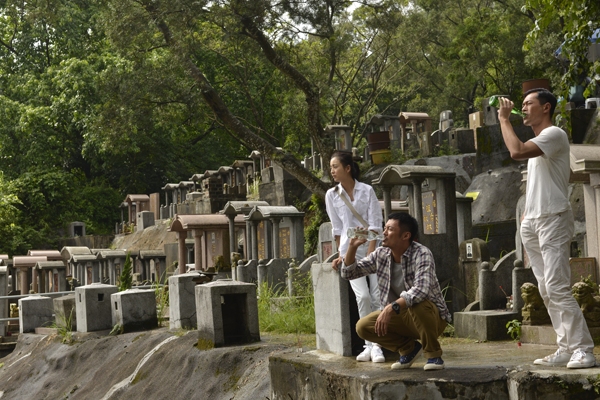
Before becoming an renowned auteur, a favorite of critics and film festivals the world over, Johnnie To was known primarily in the West for the two films he made in 1993 in collaboration with director and action choreographer Ching Siu-tung. The Heroic Trio and Executioners star Michelle Yeoh, Maggie Cheung and Anita Mui as superheroes in a pre- and then post-apocalyptic Hong Kong, a wuxia Charlie’s Angels. Though he’d had a run of local hits, including back-to-back highest-grossing films of the years 1988 and 1989 (the ensemble farce The Eighth Happiness and the melodrama All About Ah-Long, respectively), none of his films managed to find much interest outside of Hong Kong, and his reputation, locally as well as abroad, was one of a competent professional filmmaker, subservient to the authorial personalities of his stars (Chow Yun-fat, Stephen Chow and Andy Lau) and producers (the gang at the Cinema City studio, where he worked alongside more accomplished peers such as Tsui Hark and Ringo Lam). But the prospect of beautiful women in sexy costumes flying around, doing weird shit and beating the hell out of people was enough to get the Heroic Trio films a home video release in the US, where more than 20 years later they remain among the most available of all of To’s films, standard content for streaming services. It was the first Johnnie To film I ever saw, I rented the old English-dubbed VHS from Scarecrow Video a long time ago. It plays tomorrow night in a definitely-better (hopefully subtitled) version in Scarecrow’s Screening Lounge.

Continue reading The Heroic Trio (Johnnie To, 1993)”

Bajrangi Bhaijaan (Kabir Khan, 2015)

bajrangi 1

This guest review comes from Jhon Hernandez of the Society for the Study of Modern Visual Culture.

When discussing Bajrangi Bhaijaan, the first instinct might be to solely view it as a Salman Khan vehicle. After all, Khan is one of the biggest stars in all of Indian cinema, and this is but another in a string of hits that he’s had over the last 20 years. His recent films have all been formulaic action thrillers that mostly rely on his charisma and the relationship he has with his adoring fans to make them work, if they work at all. And, while a lot of what’s pleasurable about the new film has to do with Salman Khan’s film persona and how this film uses it to its own ends, a look at the director, Kabir Khan, might be worthwhile. I’m an auteurist. What can you do?

Continue reading Bajrangi Bhaijaan (Kabir Khan, 2015)”

Wild City (Ringo Lam, 2015)

wildcitymovie

After more than a decade of semi-retirement, legendary director Ringo Lam returns to the big screen with a thriller that hearkens back to the golden age of the Hong Kong crime film. Lam made his mark in the late 80s and early 90s with a series of action films, gritty, ultra-violent and grounded in a darkly pessimistic view of human nature and Hong Kong’s future, movies where everything seemed to be, as many of their titles indicate, ‘on fire’. Rejecting the aspiration toward transcendence of John Woo, or the narrative and thematic ambition of Tsui Hark, Lam’s films best captured the nihilistic urge for chaos at the heart of the Hong Kong New Wave. That particular moment, an apocalyptic age when the prospect of the Handover to the Mainland hung over every aspect of Hong Kong life, had dissipated by the late 90s, when Lam had joined Woo and Tsui in scraping together Hollywood products beneath their talent level (as fine as many of their American films are, and many of them are quite good, I don’t think this point is debatable). When he tired of that, he walked away to spend more time with his family. His only film since the 2003 direct-to-video Van Damme film In Hell was one third of the omnibus film Triangle made with Tsui and Johnnie To in 2007.

Continue reading Wild City (Ringo Lam, 2015)”

Gremlins (Joe Dante, 1984)

gremlins present

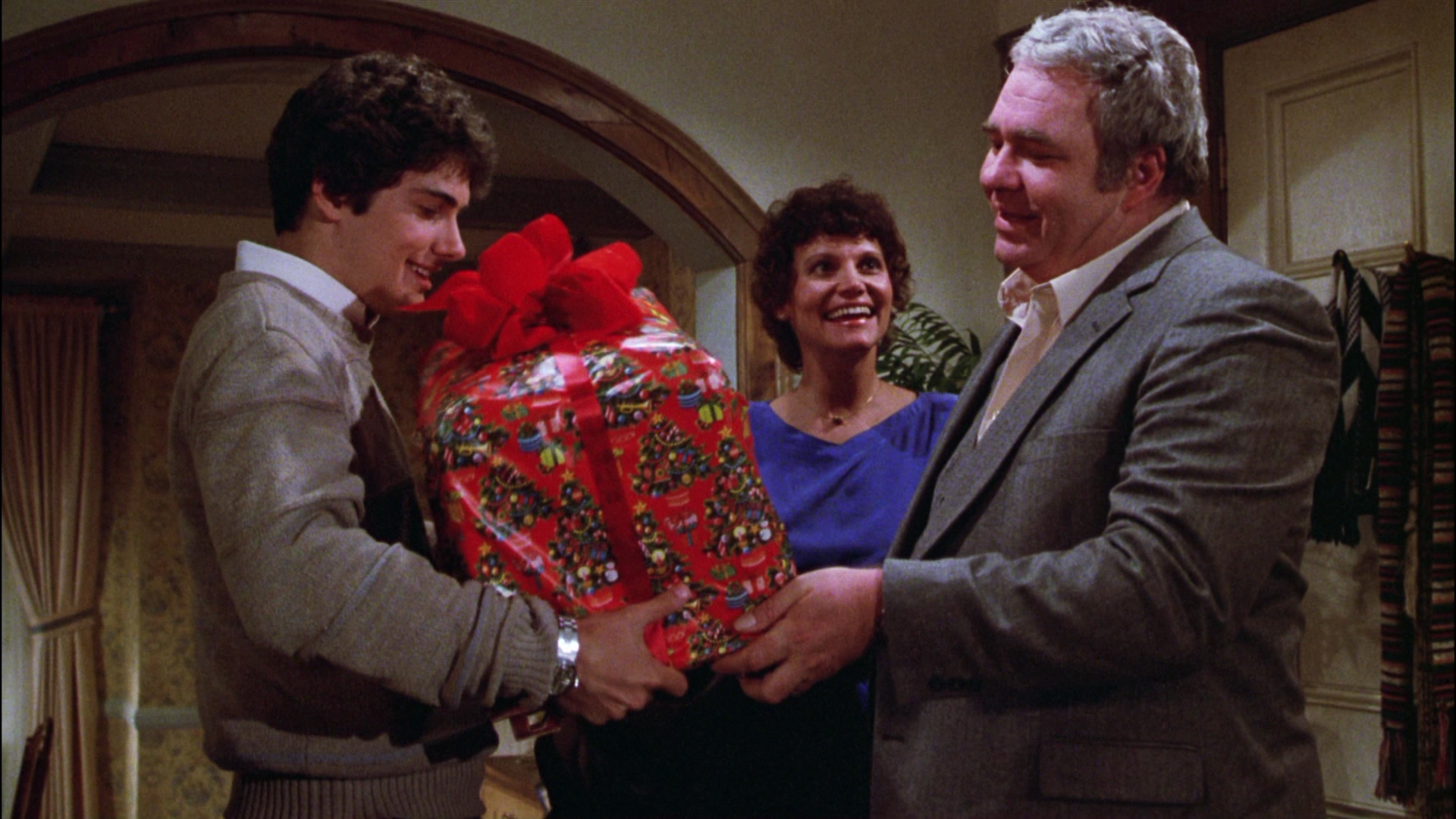
It all started with a little trouble in Chinatown. There a young boy said, “I told you everything was real”. That’s important. Christmas is closing in and a kind-hearted father is looking for the perfect gift for his son. In a basement junk shop he spies a creature that sounds like Howie Mandel. Like any sane person he feels compelled to adopt this “mogwai”. Then all hell breaks loose. Tying together strands of The Twilight Zone, the boomer ascendency, and the dominant milieu of executive producer Steven Spielberg, Joe Dante’s Gremlins transcends them all to become a masterpiece of mayhem.

Continue reading Gremlins (Joe Dante, 1984)”

Tangerine (Sean Baker, 2015)

girls on street walking

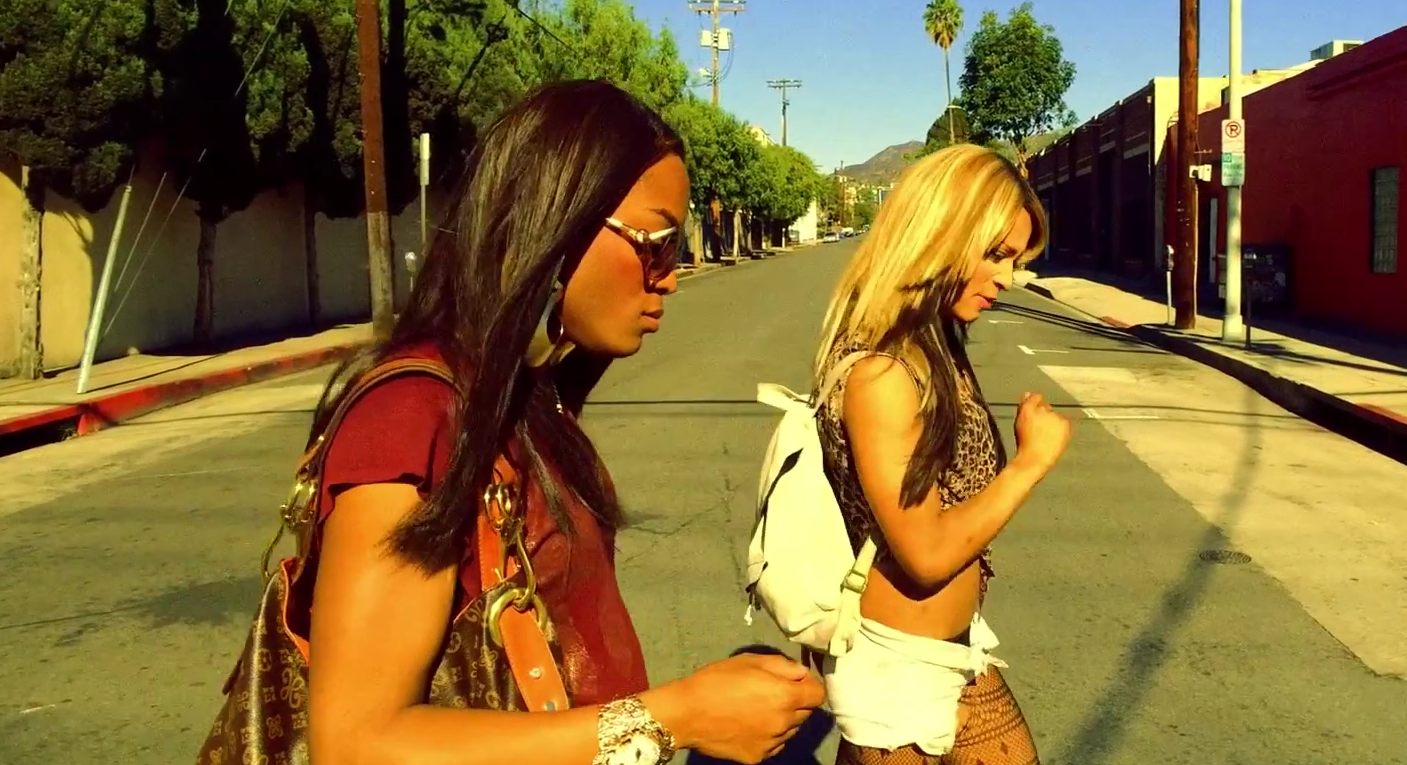
It is Christmas Eve in Hollywood, a day in Tinseltown when everything is even more brightly showy than usual. It’s a town of glitz and dreams and fantasies, where stars soar higher than high and multitudes of others scramble below to make a living in those stars’ dusty grit. A few golden names will get a terrazzo or brass star on Hollywood Boulevard, an aspirational spot on the ground that is, perhaps ironically, open to be trod on by anyone in need of a sidewalk. And there is something of that sly irony in Sean Baker’s newest film, Tangerine, for Baker is a good deal more interested in those doing the treading on those stars, those who walk on and work in the streets, than in those who have their names emblazoned into them. And indeed, as the film opens – a shot of two pairs of hands clasping and exchanging a doughnut over a table at Donut Time, a place that couldn’t be farther from the showiness of the Walk of Fame – I am a good deal less curious about the stars whose names I might recognize than I am about to whom those hands on the table belong.

The hands are Sin-Dee’s (Kitana Kiki Rodriguez) and Alexandra’s (Mya Taylor), two friends, two transgender sex workers, whose journey, set all in one day in the Los Angeles streets and in the day-to-day haunts of those who make a living on the streets, invites us to question what we know, or what we think we know, about Los Angeles and those who live in it. Is the city, and by extension its inhabitants, as one character in the film puts it, a “beautifully wrapped lie”? Continue reading Tangerine (Sean Baker, 2015)”

A Hard Day (Kim Seonghun, 2014) & Unexpected (Kris Swanberg, 2015)

Opening this week on Seattle Screens are two fine features that played at this past Seattle International Film Festival. I reviewed them briefly when they played then, and here are some expanded versions of those short reviews.

maxresdefault

A Hard Day – Somewhere the dominant strain of the crime movie genre morphed from Woovian tales of moral codes in unjust societies (ala A Better Tomorrow) to Rube Goldberg narratives driven by slapstick escalations of violence. I suspect it was somewhere around the time of Infernal Affairs, as Alan Mak and Andrew Lau’s crime thriller adopted the speed and rhythm of Johnnie To’s Milkyway thrillers, matched it with Lau’s bright, digitally slick blues, grays and blacks, and neglected to add To and his vast team of writers’ depth of purpose to their ingeniously wicked plot schematics. Thus suspense and drama comes not from characters or ideals, but from complications in plot, driving the protagonists into ever more desperate and implausible actions and unlikely camera angles. A world of shifting, impenetrable surfaces, as superficial as it is mutable. Laurel & Hardy, Where the Sidewalk Ends and The Big Clock are the reference points for Kim Seonghun’s thriller, about a cop who accidentally runs over a man on an empty street at night and goes to great lengths to cover it up. And when it turns out that he wasn’t alone on that street, and that maybe the guy he thought he killed was already dead, he finds himself lost in an ever escalating spiral of darkly comic suspense sequences, moving from mere moral corruption to unbelievably, but no less thrillingly, wild cacophonies of destruction.

A Hard Day opens Friday, July 24 at the Grand Illusion.

Unexpected-22

Unexpected – The second-best Cobie Smulders film of the year so far, falling well behind Andrew Bujalski’s romantic comedy Results. Director Kris Swanberg’s story is about a high school teacher (Smulders) who becomes pregnant and bonds with one of her students, an African-American girl with dreams of going to college and who is just-as-surprisingly knocked-up. Swanberg is mostly successful at navigating a minefield of problematicism, as the two leads are developed and performed with just enough nuance that neither ends up as the source of lesson-learning for the other. The dangers in such a scenario should be obvious – this is as eyeroll-inducing a premise for an American indie film as I’ve seen in a while (and that includes Me and Earl and the Dying Girl). Still, despite exceeding expectations, there isn’t enough depth to the characters (everyone outside the two leads is broadly painted and either inexplicable or pointless) to overcome cheap plot contrivances (a key point in the film requires both women to demonstrate a complete lack of understanding of the geography of Chicago-area colleges, which is pretty much unforgivable). It’s an OK movie with a couple of fine performances. Its success lies in eliciting a shrug rather than a wince.

Unexpected open Friday July 24 at the Sundance Cinemas.

Do I Sound Gay? (David Thorpe, 2014)

do-i-sound-gay

Director David Thorpe’s genial, absorbing documentary Do I Sound Gay? delves into the personal and political implications of the stereotypical “gay voice,” using the director’s worries about his own voice as a launch pad into questions of shame, desire, masculinity, and self-acceptance. In it, Thorpe strikes a fine balance between telling a personal story and exploring the topic analytically as he lets us eavesdrop on funny, thoughtful conversations between him and his friends, turns the lens on his efforts to change his own voice, interviews academics and speech therapists, solicits the insights of gay celebrities, and presents some revealing (and occasionally dismaying) clips from television and cinema from the last hundred years. While not quite as probing as I would have liked it to be, the film nevertheless is a smart and appealing look at an under-examined facet of gay life and culture.

Continue reading Do I Sound Gay? (David Thorpe, 2014)”

A Pigeon Sat on a Branch Reflecting on Existence (Roy Andersson, 2014)

pigeon dance

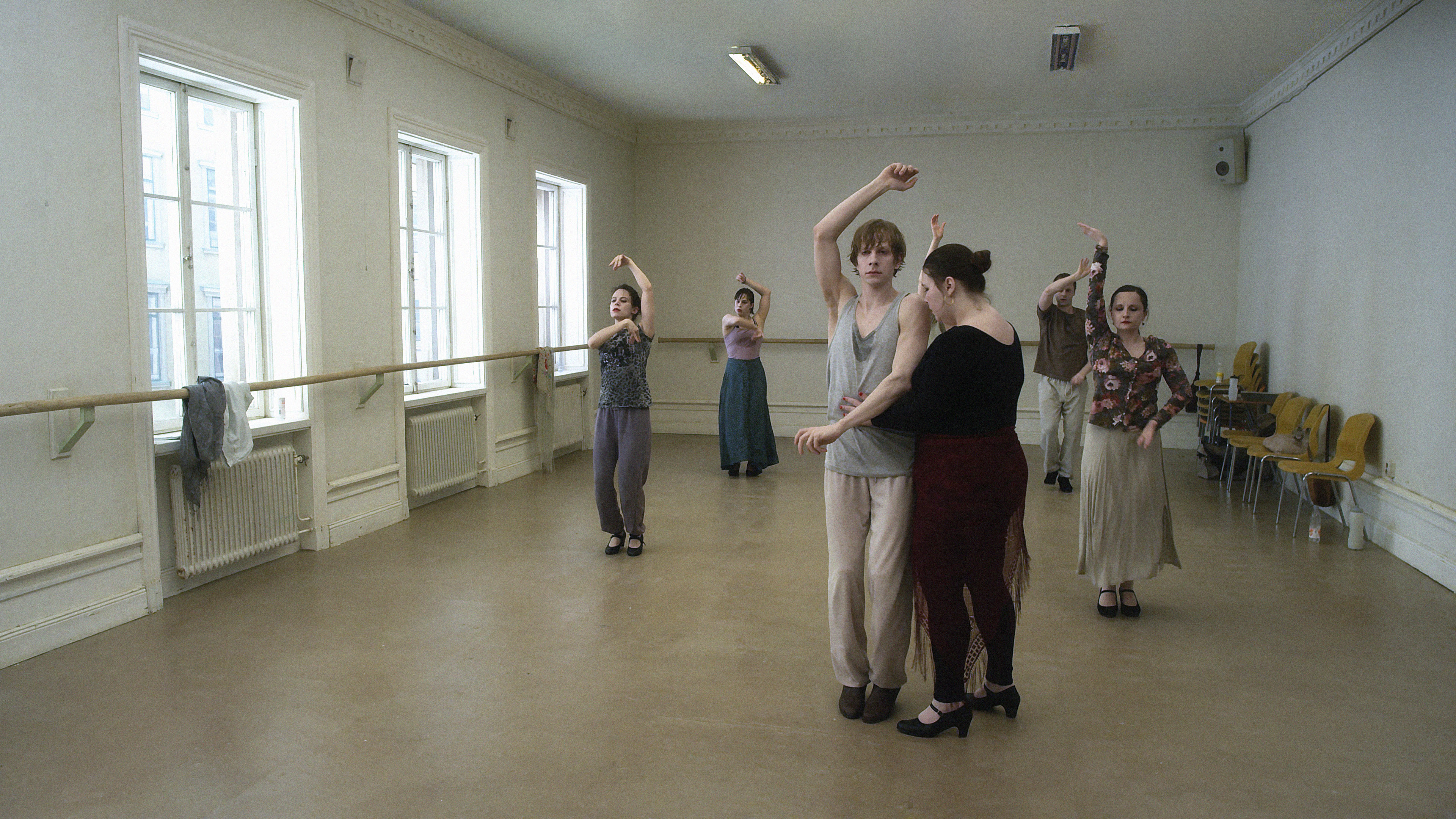
Seven years after You, the Living, which itself came seven years after Songs from the Second Floor, the revered Swedish director Roy Andersson delivers the final film in his “Living Trilogy”, A Pigeon Sat on a Branch Reflecting on Existence. For those familiar with either of its forebears, Pigeon is more of the same. It is 100 minutes of deftly composed black comic vignettes, each detailing an indignity upon a loosely connected group of people. Critics like to relish in the depictions of capitalistic foibles and other vaguely political themes. Andersson himself claims the film was inspired by a 16th century painting. One’s enjoyment of A Pigeon Sat on a Branch Reflecting on Existence may depend on how much you are willing to believe that.

Continue reading A Pigeon Sat on a Branch Reflecting on Existence (Roy Andersson, 2014)”

Two Romantic Comedies: Trainwreck (Judd Apatow, 2015) and The Lady Eve (Preston Sturges, 1941)

trainwreck-judd-apatow-amy-schumer

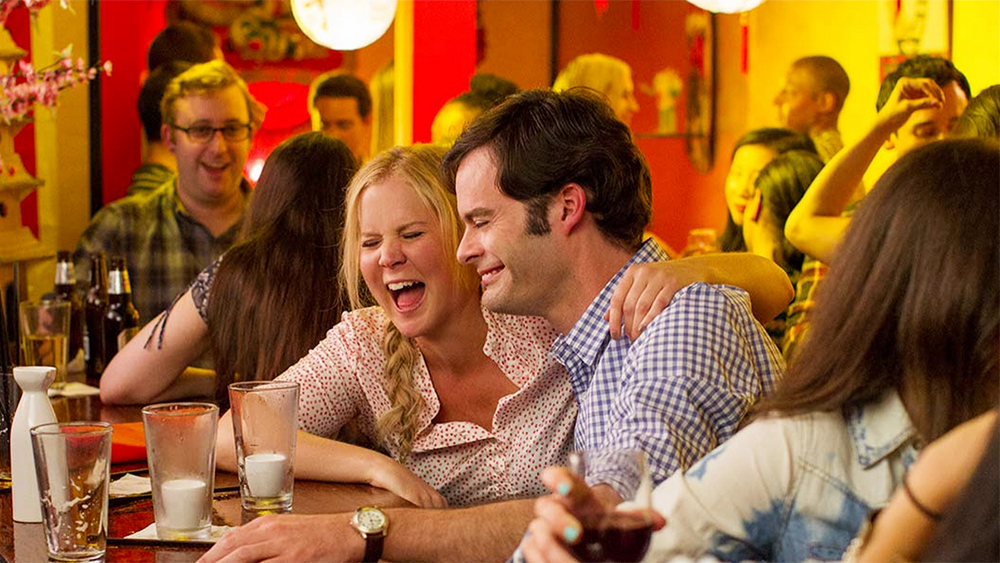
The latest release from the Judd Apatow empire opens tomorrow here in Seattle, written by and starring comedian Amy Schumer and directed by Apatow himself. Schumer plays a magazine writer with commitment issues and a fondness for wine and weed. Much to her surprise, she falls for a dweeby sports surgeon (Bill Hader) and must choose between growing up and reforming her ways or losing a swell guy. The film thus deftly flips the gender roles of a typical Hollywood romantic comedy, as it’s been practiced in film and television of the past 30 years or so. That reversal is the motor of the funniest parts of the film: Schumer’s assertiveness with her boyfriends (an agonizing attempt at dirty talk from John Cena) and Hader’s heartfelt exchanges with his athlete friends (LeBron James and Amar’e Stoudemire). Filled with the surreal-improv style comedy from the supporting players that defines the Apatow brand (it’s no surprise that the clear winner this time is Tilda Swinton), the film is dragged down by the shambolic, disjunctive approach to narrative that has also come to define Apatow’s work.

Continue reading “Two Romantic Comedies: Trainwreck (Judd Apatow, 2015) and The Lady Eve (Preston Sturges, 1941)”