Friday April 21 – Thursday April 27

Featured Film:

HyperNormalization at the Northwest Film Forum

There are a lot of highlights this week on Seattle Screens, from new releases (James Gray’s The Lost City of Z, Cristian Mungiu’s Graduation), continuing runs (Makoto Shinkai’s Your Name.) and the next films in retrospectives on Yasujiro Ozu, David Lynch and Douglas Sirk (Good MorningBlue VelvetDune and Imitation of Life, respectively), as well as the start of the Cinerama’s big Anime Festival. But if I had to see one movie this week, it would be the Northwest Film Forum’s free screening on Saturday of Adam Curtis’s HyperNormalization. Curtis is a documentarian for the BBC, and if you’re familiar with his work, this new one won’t be anything new. It’s rather another facet in his continuing argument that our modern world is the result of elite fear, a reaction to the instability of the post-industrial world, defined by corporate and governmental desires for stability and commodification. The story this time traces the careers of Muammar Gaddafi and Donald Trump, with sidelines on Russian manipulation of media and the deadening effect of the internet and social media (Our Fake World) on movements for social change. It’s three hours of horror, humor and Brian Eno, and, flawed or incomplete as Curtis’s argument may be, it explains our present moment as well as anything else I’ve seen.

Playing This Week:

AMC Alderwood:

Colossal (Nacho Vigalondo) Fri-Thurs
Their Finest (Lone Scherfig) Fri-Thurs

Ark Lodge Cinemas:

Kedi (Ceyda Torun) Fri-Tues

Central Cinema:

Porco Rosso (Hayao Miyazaki, 1992) Fri-Mon Subtitled Sun & Mon Only
Airplane! (David Zucker, Jim Abrahams & Jerry Zucker, 1980) Fri-Tues

Cinerama:

The Wind Rises (Hayao Miyazaki, 2013) Tues Only Subtitled
Tokyo Godfathers (Satoshi Kon & Shôgo Furuya, 2003) Tues Only Subtitled
Wolf Children (Momoru Hosada, 2012) Weds Only Subtitled
Summer Wars (Momoru Hosada, 2009) Weds Only Subtitled

SIFF Egyptian:

Colossal (Nacho Vigalondo) Fri-Thurs

Century Federal Way:

Manje Bistre (Baljit Singh Deo) Fri-Thurs
Colossal (Nacho Vigalondo) Fri-Thurs
The Graduate (Mike Nichols, 1967) Sun & Weds Only

Grand Cinema:

Trainspotting 2 (Danny Boyle) Fri-Thurs
Tommy’s Honour (Jason Connery) Fri-Thurs
Trainspotting (Danny Boyle, 1996) Fri Only
The Void (Jeremy Gillespie & Steven Kostanski) Sat Only
Sonita (Rokhsareh Ghaem Maghami) Sun Only
Ayanda (Sara Blecher) Mon Only
Tanna (Martin Butler & Bentley Dean) Tues Only
The Fits (Anna Rose Holmer) Weds Only

Grand Illusion Cinema:

The Void (Jeremy Gillespie & Steven Kostanski) Sat, Weds & Thurs Only
Mission Control: The Unsung Heroes of Apollo (David Fairhead) Sun & Mon Only
Who’s Crazy? (Thomas White, 1966) Fri-Thurs

Landmark Guild 45th:

Your Name. (Makoto Shinkai) Fri-Thurs Our Review Subtitled or Dubbed in English, Check Listings
Colossal (Nacho Vigalondo) Fri-Thurs

Cinemark Lincoln Square:

Your Name. (Makoto Shinkai) Fri-Thurs Our Review Subtitled
Noor (Sunhil Sippy) Fri-Thurs
Colossal (Nacho Vigalondo) Fri-Thurs
Their Finest (Lone Scherfig) Fri-Thurs
The Graduate (Mike Nichols, 1967) Sun & Weds Only

Regal Meridian:

Trainspotting 2 (Danny Boyle) Fri-Thurs
Tommy’s Honour (Jason Connery) Fri-Thurs
Their Finest (Lone Scherfig) Fri-Thurs

Northwest Film Forum:

Alive and Kicking (Susan Glatzer) Fri & Sat Only
HyperNormalization (Adam Curtis) Sat Only Free
Graphic Means: A History of Graphic Design Production (Briar Levit) Weds Only

Paramount Theatre:

Selected Silent Shorts (Various) Mon Only

Regal Parkway Plaza:

Trainspotting 2 (Danny Boyle) Fri-Thurs
Can’t Help Falling in Love (Mae Czarina Cruz-Alviar) Fri-Thurs

Seattle Art Museum:

Equinox Flower (Yasujiro Ozu, 1958) Thurs Only 35mm

Landmark Seven Gables:

Graduation (Cristian Mungiu) Fri-Thurs Our Review

SIFF Film Center:

Blue Velvet (David Lynch, 1986) Fri & Sat Only
Dune (David Lynch, 1984) Sat & Sun Only 35mm
Imitation of Life (Douglas Sirk, 1959) Tues Only 35mm

AMC Southcenter:

Your Name. (Makoto Shinkai) Fri-Thurs Our Review Subtitled Only

Sundance Cinemas:

Their Finest (Lone Scherfig) Fri-Thurs

Regal Thornton Place:

Your Name. (Makoto Shinkai) Fri-Thurs Our Review

SIFF Uptown:

Your Name. (Makoto Shinkai) Fri-Thurs Our Review Subtitled Only
My Entire High School Sinking into the Sea (Dash Shaw) Fri-Thurs

Varsity Theatre:

Queen of the Desert (Werner Herzog, 2015) Fri-Thurs Our Review
The Graduate (Mike Nichols, 1967) Weds Only

In Wide Release:
The Lost City of Z (James Gray) Our Review
Free Fire 
(Ben Wheatley) Our Review
The Fate of the Furious 
(F. Gary Gray) Our Review

Free Fire (Ben Wheatley, 2016)

free_fire_cast_3

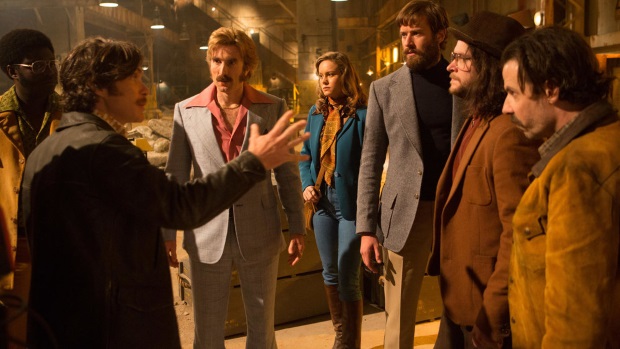
Ben Wheatley’s Free Fire is as pointless an exercise in nihilistic violence as Seattle Screens have seen in some time. For some reason it’s set in the late 1970s, as a representative of the IRA played by Cillian Murphy (The Wind that Shakes the Barley) attempts to buy machine guys at an abandoned factory in Boston. The deal has been put together by Brie Larson (Room) and Armie Hammer (The Lone Ranger), the latter unrecognizable in turtleneck and beard. The dealer is South African actor Sharlto Copley (Chappie), leading a gang of ruffians, one of whom got in a fight with one of Murphy’s gang of ruffians the night before. When the two men recognize each other, they begin fighting, someone pulls a gun and soon the two sides are, as they say, freely firing at each other. Later some other people will show up and start shooting at everyone, but no one, apparently, knows why. One person will survive, of course, but it doesn’t matter who, or why, or for how long, though the final shot manages the unique feat of cribbing from both Reservoirs Dogs and The 400 Blows.

Continue reading Free Fire (Ben Wheatley, 2016)”

Now It’s Dark: The Films of David Lynch

director

Few directors have had their various idiosyncrasies and common threads crystallized into a “brand” in the public consciousness as much as David Lynch. The “Lynchian” is used as a catch-all term for the weird and surreal, regardless of how much or how little the subject that is being referred to reflects the actual ideas behind Lynch’s oeuvre. So what is Lynchian, not only in the actual predilections exhibited in the master filmmaker’s works but in a general sense? For one, it is the aesthetics, a by-and-large gorgeous rendering of something just off the path of reality. It is also the performances (often delivered by frequent collaborators) and characters: archetypes made into living people, not quite stylized or exaggerated so much as simply heightened. But most of all it is the subject matter, the obsession with the quite literal battle between the light and the dark even as glimmers of each appear within the other. Moreover, it is inexorably bound to a singular sense of Americana and iconography: with only two exceptions early in his career, all of his films are set almost wholly in the United States, and he draws out the various manifestations of the American Dream in ways both reaffirming and troubling.

SIFF’s marvelous retrospective covers a good portion (but significantly not all) of David Lynch’s filmography, and even more impressively it takes place mostly on 35mm. It begins, fittingly, with Lynch’s first feature film Eraserhead (1977), which to this day remains one of his most beguiling and technically staggering films. Starring frequent collaborator Jack Nance, it is a essentially plotless work, about a man who is forced to care for his hideously deformed child in an industrial wasteland. The focus is, as is always the case with Lynch, on the sustained mood, on the sense of disquiet that threatens to burst forth at any moment. And Eraserhead holds his most hauntingly gorgeous mood, one that sustains itself through some of the most surreal and beautiful visions Lynch, or any other filmmaker, has ever conjured.

Lynch continued onward with the only two films of his that can be described as studio films: The Elephant Man (1980) and Dune (1984). The Elephant Man is perhaps the most straightforward work of Lynch’s films playing in this retrospective, a sober and fairly faithful depiction of the story of John Merrick (played by the late John Hurt in a mighty performance), a severely deformed—deformity is a major recurring image in Lynch’s work—man who fights to be accepted by the society of 19th century London. This is Lynch’s last feature in black & white, and even in what could be a straightforward biopic, he finds ways to insert both what rapidly becomes his trademark surrealism and an extraordinary sense of humanity, a gentleness that sets this remarkable film ahead of standard “Oscar bait,” though this was indeed nominated for multiple Oscars, the only time this has occurred in Lynch’s career.

Dune is an even stranger (from an auteurist standpoint) entry in Lynch’s oeuvre, the only artistically compromised film he has made. An adaptation of Frank Herbert’s mammoth sci-fi novel about the war for a planet that contains the most valuable substance in the universe, it went through a notoriously long gestation that infamously involved Alejandro Jodorowsky and ended in a severely trimmed version of Lynch’s vision. Though Lynch rejects the film today, not to mention many of his most ardent admirers, there is far more of him in this film than expected. He manifests himself through both casting—many actors, notably Kyle MacLachlan and Jack Nance, recur again and again through his filmography—and imagery, through the vast, often beautifully hideous landscapes and figures). But leaving aside all of that, Dune is simply a hugely entertaining and strange science-fiction epic, a flawed but incredibly ambitious epic far more interesting than its conventional reputation.

After Dune, Lynch retreated to his wheel-house and produced probably his most iconic and indelible work in the public consciousness, Blue Velvet (1986). His first deep-dive into the psychosexual thematics that dominate his filmography, it takes the story of a young man discovering the seedy underbelly of his small town and casts it as nothing less than the battle for the soul of humanity. Lynch’s sentimentality manifests itself for the first time here, mixing freely and beautifully with his cynicism. There are the performances, of course—Dennis Hopper and Isabella Rossellini’s daring parts get all of the attention, but even more impressive are MacLachlan and Laura Dern—but there is also the perfect distillation of the noir mindset, the archetypes twisted into figures that are both dirtier and purer than what is typically seen.

Mysteriously, Lynch’s so-called middle period is not represented here, but it consists of some of his most divisive and strange works, as well as representing the most successful section of his career. Blue Velvet launched Lynch into the stratosphere of popular culture, and he used this new fame to make his landmark TV show Twin Peaks and the Palme d’Or-winning Wild at Heart. Unfortunately, his fame in the cultural consciousness only lasted until the last half of the extended second season of Twin Peaks, and he further alienated most of his fans with his heartbreaking, immensely gorgeous, and troubling film maudit Twin Peaks: Fire Walk With Me, from which he retreated back into his experimental roots.

theater

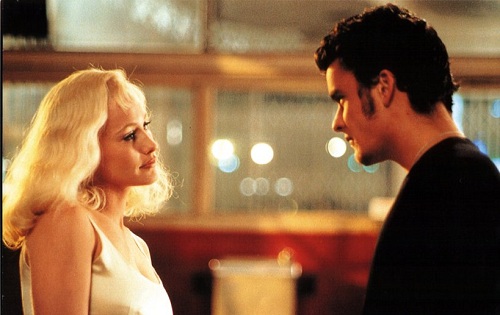
Lost Highway (1997) is one of Lynch’s most curious movies, the first film of his informal “L.A. Trilogy” and his first experiment in truly fractured and segmented narratives. It depicts, from what can be ascertained, a man (Bill Pullman) who morphs into a younger man (Balthazar Getty) after being accused of murder, while he appears to see the same woman (Patricia Arquette) assuming two completely different identities. Functionally, it is the only Lynch film that depicts two entirely different moods, one the sustained horror of Eraserhead and one the neo-noir riff of Blue Velvet, and as such it represents a fascinating transition film for Lynch.

After an unexpected but entirely lovely and elegiac digression in the form of The Straight Story, Lynch emerged with one of the most acclaimed films ever made (and my own favorite film): Mulholland Drive (2001). This movie is the apotheosis of Lynch’s total command of cinema, even though it is essentially a repurposed television pilot with added footage. He skillfully weaves two essentially disparate plot strands—an aspiring actress (Naomi Watts, delivering one of the greatest and most layered performances in the history of the medium) and an amnesiac woman (Laura Harring) trying to uncover the latter’s identity and a film director (Justin Theroux) having strange troubles on his latest production—into a tapestry of fear and desire in the strange land of Hollywood, and the various ruptures in the fabric of reality have rarely been more pronounced or moving in any film. It is, oddly but wonderfully, the consensus masterpiece of the 21st century thus far, a haunting portrayal of the lines between life and death, love and betrayal, fantasy and reality.

Having garnered a renewed goodwill of sorts, Lynch proceeded to challenge it with his most obscure and ambitious work, Inland Empire (2006). A three-hour “epic” shot on muddy and blurred digital video, it moves through no less than five levels of reality as an actress played by Laura Dern (in a soul-rendingly incredible series of performances) appears to inhabit various roles and encounters no small amount of shadowy figures. This is perhaps the only film in which Lynch is completely unmoored from any sense of reality, and it is the movie of an untethered genius for the better. There is a charge, a vitality to this oddly beautiful film that mixes freely with the scenes of unbearable horror, of whatever other side there is. But there is catharsis at the end of this long, dark tunnel; I hope that Lynch will make another feature film, but the final moments of Inland Empire serve as the perfect capstone, the glorious denouement to a master’s oeuvre.

I should note here that David Lynch is my favorite director; perhaps no other filmmaker has had nearly as much sole influence on my cinephilia and taste. Indeed, watching Eraserhead (my first taste of Lynch) at midnight on a television with the lights completely off a few years ago effectively changed my life. But regardless, the films, and certainly their impact and wildly varying reception, can speak for themselves. Of course, to what extent this speech can be deciphered will forever remain a mystery, and that’s precisely the way to experience the wonders and terrors of David Lynch.

Lost Highway ( David Lynch, 1997)

highway1

The following is adapted from a review I wrote back in 2007 for a David Lynch Blog-athon.

Bill Pullman plays a saxophonist who kills his wife (Patricia Arquette) because she was apparently cheating on him, and is so guilty over the murder that while in prison he goes insane and creates another reality for himself, one in which he’s a young mechanic (Balthazar Getty). Pullman’s fantasy world is something out of the 50s or early 60s of American Graffiti, with its car obsessions, pleasant suburban family, and the cute girl next door (Natasha Gregson Wagner). Unfortunately for Pullman, his subconscious won’t quite let him forget his crime, and soon Getty’s hanging around with a gangster (Robert Loggia) and his femme fatale girl (Arquette again). As in a typical film noir, Getty falls for the bad girl, conspires with her to commit some crimes (including a murder or two) and comes to a bad end.

Continue reading Lost Highway ( David Lynch, 1997)”

The Fate of the Furious (F. Gary Gray, 2017)

car crush

Especially in a time where franchises are getting only more complex, more bloated, it is interesting to consider the evolution of such a hugely successful movie series as The Fast and the Furious. Originally a comparatively “small” franchise focused exclusively on street racing, it has ballooned into an insane, globe-trotting mesh of spycraft and ensemble drama. I have only seen the previous incarnation of this series, Furious 7, but it is clear that the franchise has become much more (for better and worse) than its humble origins: from box office alone, Furious 7 grossed twice the amount of its predecessor, for more reasons than the untimely demise of franchise star Paul Walker.

So what step in the series’ evolution does The Fate of the Furious take? Quite simply, it doubles down on the core, car-fueled action. While the previous installment featured no small amount of hand-to-hand combat and gunplay (even bringing Tony Jaa for a fairly small role), Fate is, for better or worse, focused on races and chases. As a result, the movie more than delivers on the requisite amount of vehicular destruction across several countries and types of terrain.

Continue reading The Fate of the Furious (F. Gary Gray, 2017)”

Your Name. (Makoto Shinkai, 2016)

57d24a23a675e_1

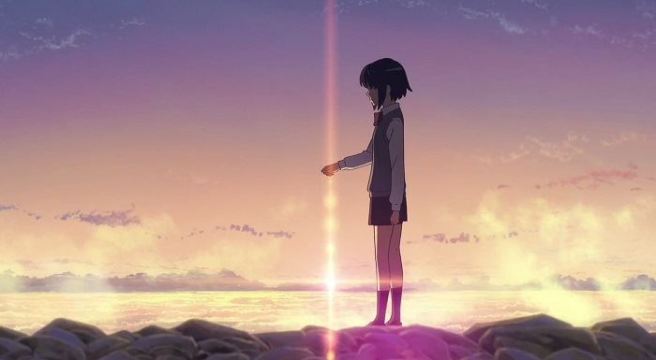
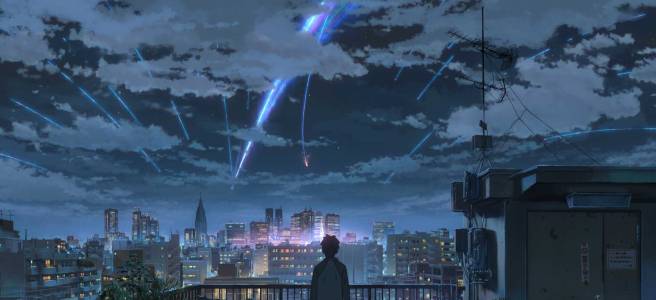
Makoto Shinkai’s latest anime smashed records across Asia last fall, becoming the highest grossing Japanese film in the history of China and Thailand, the second highest grossing Japanese film in Japanese history (behind Spirited Away), the worldwide top-grossing anime ever and the eighth highest grossing traditionally-animated film of all-time. Finally opening across North America this week, it has a chance to add to that record, and I think we’re all pulling for it to raise that extra $20 million it needs to overtake Pocahontas. Like his highly-acclaimed short features 5 Centimeters per Second (2007) and The Garden of Words (2013), it’s a story of two young people attempting to forge a connection. Romantically, yes, but also metaphysically. Apparently caused by the appearance of a comet close to the Earth, country girl Mitsuha and city boy Taki begin switching bodies: sometimes they wake up inhabiting the other, sometimes they don’t. They find this bewildering, of course, but eventually they figure out its rhythms and it turns out to be quite fun. And funny: Taki’s teenaged-boy obsession with his own (sort-of) breasts is perhaps the film’s truest note. Things reach a crisis point when the comet reaches its closest point and the body-switching ceases, sending each character in desperate search of the real-life other, complicated by the fact that they keep forgetting the other person’s existence.

Your Name. isn’t quite as other-worldly gorgeous as those two earlier films (they’re the only two other features I’ve seen from Shinkai), its combination of hand-drawn, computer and rotoscoped animation is a little more conventional, just as its plot and approach to narrative is a little more familiar. 5 Centimeters per Second was a trilogy of vignettes about a couple who loved each other once but where split apart by geography, and their attempts and failures to reconnect over a lifetime. The Garden of Words was about the Platonic love between a depressed teacher and a fifteen year old student. Your Name. unites these two in splitting its heroes in both time and space; human connection being so difficult that truly achieving it involves breaking the known laws of physics. The tragedy of the film comes from the loss of memory: human brains are unreliable and fungible, and the omnipresent devices we think make us more interconnected are even more fragile. Tradition and ritual though unite us with a past we cannot comprehend. Mitsuha is part of a long family line of makers of braided cords, who specially prepare a kind of saké as an offering for an unnamed god. They’ve forgotten the reasons for the rituals, but they perform them nonetheless. Where every other device of history and communication (cell phone, history book, museum photograph) fails, the braided cord, explicitly a metaphor for the dense and incomprehensible construction of space-time, persists.

Friday April 7 – Thursday April 13

Featured Film:

Makoto Shinkai’s Your Name.

The latest film from the master of sentimental anime finally opens here in the US after smashing box office records last fall throughout Asia. Shinkai is a maker of supernaturally gorgeous romances like 2007’s 5 Centimeters per Second and 2013’s The Garden of Words, and the unusually punctuated Your Name. appears to follow in this vein. Based on his own novel, it’s about a pair of teenagers, country girl and city boy, who begin intermittently switching bodies. It’s playing in both English and the original Japanese at various theatres around town, be sure to check the listings to make sure you get the proper version.

Playing This Week:

AMC Alderwood:

Your Name. (Makoto Shinkai) Fri-Thurs Our Review
John Wick: Chapter 2 (Chad Stahelski) Fri-Thurs Our Review
Hidden Figures (Theodore Melfi) Fri-Thurs Our Review
The Prison (Kim Rae-won & Han Suk-kyu) Fri-Thurs

Central Cinema:

Ghostbusters (Ivan Reitman, 1984) Fri-Mon, Weds
Friday (F. Gary Gray, 1995) Fri-Mon
Blood Diner (Jackie Kong, 1987) Tues Only

SIFF Egyptian:

Raw (Julia Ducournau) Fri-Thurs
Danger Diva (Robert McGinley) Thurs Only World Premiere, Live Performance by Thunderpussy

Century Federal Way:

Clue (Jonathan Lynn, 1985) Sun & Weds Only

Grand Cinema:

Personal Shopper (Olivier Assayas) Fri-Thurs Our Review
Land of Mine (Martin Pieter Zandvliet) Fri-Thurs
The Last Word (Mark Pellington) Fri-Tues
Brazil (Terry Gilliam, 1985) Sat Only
Ixcanul (Jayro Bustamante, 2015) Sun Only Our Review
Venice (Kiki Alvarez, 2014) Mon Only
Antarctica: Ice & Sky (Luc Jacquet) Tues Only
Real Boy (Shaleece Haas) Thurs Only

Grand Illusion Cinema:

The Void (Jeremy Gillespie & Steven Kostanski) Fri-Thurs
Kizumonogatari Part 3: Reiketsu (Tatsuya Oishi & Akiyuki Shinbo) Sat-Mon Only

Landmark Guild 45th:

Your Name. (Makoto Shinkai) Fri-Thurs Our Review Subtitled or Dubbed in English, Check Listings
Kedi (Ceyda Torun) Fri-Thurs

Cinemark Lincoln Square:

Your Name. (Makoto Shinkai) Fri-Thurs Our Review Subtitled or Dubbed in English, Check Listings
Cheliyaa (Mani Ratnam) Fri-Thurs Telugu
Kaatru Veliyidai (Mani Ratnam) Fri-Thurs Tamil
Guru (Sudha K Prasad) Fri-Thurs
Clue (Jonathan Lynn, 1985) Sun & Weds Only

Regal Meridian:

Trainspotting 2 (Danny Boyle) Fri-Thurs

Northwest Film Forum:

Cinemania (Angela Christlieb & Stephen Kijak, 2002) Fri Only 35mm
I Called Him Morgan (Kasper Collin) Starts Thurs
Surround Sound Laydown Sat Only Live music, film screening, and poetry reading!
Apple Pie (Sam Hamilton) Sun Only
A Roll for Peter Thurs Only

AMC Oak Tree:

1 Mile to You (Leif Tilden) Fri-Thurs

AMC Pacific Place:

La La Land (Damien Chazelle) Fri-Thurs Our Review
The Devotion of Suspect X (Alec Su) Fri-Thurs

Regal Parkway Plaza:

Song to Song (Terrence Malick) Fri-Thurs Our Review
The Last Word (Mark Pellington) Fri-Thurs
Hidden Figures (Theodore Melfi) Fri-Thurs Our Review
Northern Lights: A Journey to Love (Dondon S. Santos) Fri-Thurs

Seattle Art Museum:

Tokyo Story (Yasujiro Ozu, 1953) Thurs Only 35mm

Landmark Seven Gables:

Frantz (François Ozon) Fri-Thurs

SIFF Film Center:

As You Are (Miles Joris-Peyrafitte) Fri-Sun Only
All That Heaven Allows (Douglas Sirk, 1955) Tues Only

AMC Southcenter:

Your Name. (Makoto Shinkai) Fri-Thurs Our Review Subtitled Only

Sundance Cinemas:

Personal Shopper (Olivier Assayas) Fri-Thurs Our Review
Wilson (Craig Johnson) Fri-Thurs

Regal Thornton Place:

Your Name. (Makoto Shinkai) Fri-Thurs Our Review

SIFF Uptown:

Your Name. (Makoto Shinkai) Fri-Thurs Our Review Subtitled Only
Trainspotting 2 (Danny Boyle) Fri-Thurs

Varsity Theatre:

Aftermath (Elliott Lester) Fri-Thurs
The Assignment (Walter Hill) Fri-Thurs

Queen of the Desert (Werner Herzog, 2015)

queen_of_the_desert_523x2751

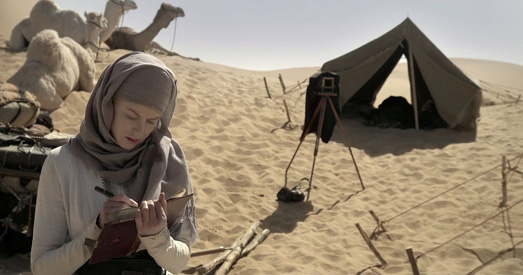
Werner Herzog’s biopic of British archeologist Gertrude Bell premiered more than two years ago at the Berlin Film Festival to poor reviews, and is only this week making its way onto American screens. Why this should be is not immediately clear, the ins and outs of which international art house films make it into domestic distribution is far too complex a matter for my mind to comprehend, but I believe it involves some combination of corporate nepotism, the star system and random chance. The stars in this case are what make the film worth watching, as Nicole Kidman can enliven even the deadest of features, and this might be her most heroic effort in that vein to date. There’s almost nothing of Werner Herzog in the film, though there might have been once: Bell superficially appears to be his kind of a hero, obsessed with a harsh landscape, driven outside the bounds of society to do something remarkable, but at nearly every level the film feels compromised. Herzog is the only credited writer, but this has all the hallmarks of a film written and edited by a committee.

Continue reading Queen of the Desert (Werner Herzog, 2015)”

Song to Song (Terrence Malick, 2017)

song-to-song_terrence-malick_rooney-mara_02

Making its way to Seattle last week for an unheralded run at the Pacific Place, then quickly dropped to a single show in town and shunted off to Tukwila’s Parkway Plaza was the latest film from the most singular artist working in mainstream American film today. As with every Terrence Malick film since his reemergence with 1998’s The Thin Red LineSong to Song has been met with baffled derision by much of what passes for the Hollywood intelligentsia, that dense Ouroboros of movie reviewers, Oscar bloggers and self-appointed box office gurus that pass as journalists in our debased world. The complaints are familiar, cheap and lazy, ultimately sourced in the fact that Malick doesn’t make movies like They expect movies to be made. Unable to conceive of possibilities beyond their narrow imaginations, his refusal to conform is viewed alternately as pretension or incompetence (see for example Christopher Plummer’s whining about Malick during The Tree of Life‘s Oscar campaign that Malick didn’t know how to edit films, a complaint (I believe, perhaps uncharitably) ultimately sourced in the fact that Malick cut out most of Plummer’s performance in The New World). Malick doesn’t make conventional movies, and it’s easier to snark about twirling and poetry (the nerve!) than it is to wrestle with what he does make.

Continue reading Song to Song (Terrence Malick, 2017)”

Friday March 24 – Thursday March 30

Featured Film:

Song to Song at the Pacific Place

Surprisingly absolutely no one, the latest film from Terrence Malick has proven to be divisive among critics and audiences. If you happen to be one of those people who think that not only are his early films (Badlands and Days of Heaven) great, but so are his middle films The Thin Red Line and The New World) and his late films (The Tree of Life, To the Wonder and Knight of Cups), and we here at Seattle Screen Scene most definitely are in that camp, then the unheralded release of Song to Song, opening with no advance publicity at the Pacific Place this week, is a cause of both extreme consternation and great excitement. If Malick, or just late Malick, is not your cup of tea, then by all means do not miss the next film up in SAM’s Ozu series, Late Spring, playing on 35mm on Thursday. The rest of us will be happily twirling twirling twirling into the AMC.

Playing This Week:

AMC Alderwood:

Personal Shopper (Olivier Assayas) Fri-Thurs Our Review
The Last Word (Mark Pellington) Fri-Thurs
Wilson (Craig Johnson) Fri-Thurs
Katamarayudu (Kishore Kumar Pardasani) Fri-Thurs
John Wick: Chapter 2 (Chad Stahelski) Fri-Thurs Our Review
La La Land (Damien Chazelle) Fri-Thurs Our Review
Split (M. Night Shyamalan) Fri-Thurs Our Review

Central Cinema:

Sunset Blvd. (Billy Wilder, 1950) Fri-Weds
Being John Malkovich (Spike Jonze, 1999) Fri-Weds

Century Federal Way:

Katamarayudu (Kishore Kumar Pardasani) Fri-Thurs
Phillauri (Anshai Lal) Fri-Thurs
The Karate Kid (John G. Avildsen, 1984) Sun & Weds Only

Grand Cinema:

Kedi (Ceyda Torun) Fri-Thurs
A United Kingdom (Amma Asante) Fri-Thurs
The Sense of an Ending (Ritesh Batra) Fri-Thurs
The Last Word (Mark Pellington) Fri-Thurs
Lost Highway (David Lynch, 1997) Sat Only
Wolf Totem (Jean-Jacques Annaud, 2015) Mon Only
Jaws (Steven Spielberg, 1975) Tues Only
The Fog of War (Errol Morris, 2003) Thurs Only

Grand Illusion Cinema:

Paterson (Jim Jarmusch) Sat-Mon, Weds & Thurs Our Review Our Other Review
Suntan (Argyris Papadimitropoulos) Fri-Thurs
Saturday Secret Matinees: Presented by the Sprocket Society
 (Various directors & years) Sat Only 16mm
A Tale of Two Cities: Portland & Seattle Tues Only

Landmark Guild 45th:

Trainspotting 2 (Danny Boyle) Fri-Thurs
The Sense of an Ending (Ritesh Batra) Fri-Thurs
Kedi (Ceyda Torun) Fri-Thurs

Cinemark Lincoln Square:

Badrinath Ki Dulhania (Shashank Khaitan) Fri-Thurs
Katamarayudu (Kishore Kumar Pardasani) Fri-Thurs
Wilson (Craig Johnson) Fri-Thurs
The Karate Kid (John G. Avildsen, 1984) Sun & Weds Only

Northwest Film Forum:

The Land of the Enlightened (Pieter-Jan De Pue) Fri-Sun
Homeland: Iraq Year Zero (Abbas Fahdel, 2015) Sat & Sun Only
Strike a Pose (Ester Gould & Reijer Zwaan) Weds & Thurs Only
Contemporary Color (Bill Ross IV & Turner Ross) Thurs-Sun

AMC Oak Tree:

Wilson (Craig Johnson) Fri-Thurs

AMC Pacific Place:

Song to Song (Terrence Malick) Fri-Thurs
The Last Word (Mark Pellington) Fri-Thurs
Wilson (Craig Johnson) Fri-Thurs
La La Land (Damien Chazelle) Fri-Thurs Our Review
Seattle Jewish Film Festival Fri-Sun Only Full Program

Regal Parkway Plaza:

I Am Not Your Negro (Raoul Peck) Fri-Thurs Our Review
Slamma Jamma (Tim Chey) Fri-Thurs
The Sense of an Ending (Ritesh Batra) Fri-Thurs
The Last Word (Mark Pellington) Fri-Thurs
Wilson (Craig Johnson) Fri-Thurs
Katamarayudu (Kishore Kumar Pardasani) Fri-Thurs

Seattle Art Museum:

Late Spring (Yasujiro Ozu, 1949) Thurs Only 35mm

Landmark Seven Gables:

Land of Mine (Martin Pieter Zandvliet) Fri-Thurs

SIFF Film Center:

The Lure (Agnieszka Smoczynska) Fri-Sun Only Our Review
Post Alley Film Festival Sat Only Full Program

AMC Southcenter:

Sword Art Online The Movie – Ordinal Scale (Tomohiko Itō) Fri-Thurs
The Red Turtle (Michaël Dudok de Wit) Fri-Thurs

Sundance Cinemas:

Personal Shopper (Olivier Assayas) Fri-Thurs Our Review 
The Last Word (Mark Pellington) Fri-Thurs
Wilson (Craig Johnson) Fri-Thurs
All Nighter (Gavin Wiesen) Fri-Thurs
Donald Cried (Kristopher Avedisian) Fri-Thurs

SIFF Uptown:

Personal Shopper (Olivier Assayas) Fri-Thurs Our Review
Trainspotting 2 (Danny Boyle) Fri-Thurs
The Salesman (Asghar Farhadi) Fri-Thurs
Kedi (Ceyda Torun) Fri-Thurs
Seattle Jewish Film Festival Mon-Thurs Only Full Program

Varsity Theatre:

I Am Not Your Negro (Raoul Peck) Fri-Thurs Our Review

In Wide Release:

Hidden Figures (Theodore Melfi) Our Review