Friday October 13 – Thursday October 19

Featured Film:

The Princess Bride in Wide Release

Our VIFF coverage is on-going though the festival has come to an end, and there’s good stuff to be seen on the art house circuit (the TWIST film festival, Ex Libris at the Grand, Days of Heaven at SAM), and I wouldn’t normally feature one of these TCM/Fathom Events repertory showings, but it’s my wife’s birthday week and this is her favorite movie, an adaptation of the book by her favorite author. If you haven’t seen it, don’t miss it this Sunday and Wednesday at any of several multiplexes around the region. If you have seen it, you might as well watch it again. It never, ever gets old.

Playing This Week:

Admiral Theatre:

Rooted in Peace (Greg Reitman) Mon Only

AMC Alderwood:

Brave (Brenda Chapman & Mark Andrews, 2012) Fri-Thurs
The Outlaws (Kang Yoonsung) Fri-Thurs

Central Cinema:

Dial M for Murder (Alfred Hitchcock, 1954) Fri-Tues
Hausu (Nobuhiko Obayashi, 1977) Fri-Tues
Get Out (Jordan Peele) Thurs Only

SIFF Egyptian:

TWIST Seattle Queer Film Festival Fri-Thurs Full Program

Century Federal Way:

Bailaras (Ksshitij Chaudhary) Fri-Thurs
The Princess Bride (Rob Reiner, 1987) Sun & Weds Only

Grand Cinema:

Lucky (John Carroll Lynch) Fri-Thurs
Rosemary’s Baby (Roman Polanski, 1968) Sat Only
Ex Libris: New York Public Library (Frederick Wiseman) Tues Only Our Review
The Lady Vanishes (Alfred Hitchcock, 1938) Weds Only

Grand Illusion Cinema:

M.F.A. (Natalia Leite) Fri-Thurs
Finding Joseph I: The HR from Bad Brains Documentary (James Lathos) Sat Only
Danger Diva (Robert McGinley) Sat & Weds Only
EXcinema Group Show Tues Only

Cinemark Lincoln Square:

Judwaa 2 (David Dhawan) Fri-Thurs
Raju Gari Gadhi 2 (Omkar) Fri-Thurs
Mahanubhavudu (Maruthi) Fri-Thurs
Kaafi Thota (T. N. Seetharam) Sat & Sun Only
The Princess Bride (Rob Reiner, 1987) Sun & Weds Only

Regal Meridian:

Chasing the Dragon (Wong Jing & Jason Kwan) Fri-Thurs
Wind River (Taylor Sheridan) Fri-Thurs Our Review
Mother! (Darren Aronofsky) Fri-Thurs Our Review

Northwest Film Forum:

Tasveer South Asian Film Festival Fri-Sun Full Program
TWIST Seattle Queer Film Festival Fri-Thurs Full Program

AMC Pacific Place:

Brave (Brenda Chapman & Mark Andrews, 2012) Fri-Thurs
City of Rock (Dong Chengpeng) Fri-Thurs
Never Say Die (Yang Song & Chiyu Zhang) Fri-Thurs

Regal Parkway Plaza:

Judwaa 2 (David Dhawan) Fri-Thurs
Last Night (Bb Joyce Bernal) Fri-Thurs
Til Death Do Us Part (Chris Stokes) Fri-Thurs
Wind River (Taylor Sheridan) Fri-Thurs Our Review

AMC Seattle:

The Big Sick (Michael Showalter) Fri-Thurs Our Review
So B. It (Stephen Gyllenhaal) Fri-Thurs
The Secret Scripture (Jim Sheridan) Fri-Thurs

Seattle Art Museum:

Leon Morin, Priest (Jean-Pierre Melville, 1961) Weds Only
Days of Heaven (Terrence Malick, 1978) Thurs Only

SIFF Film Center:

Wasted! The Story of Food Waste (Anna Chai & Nari Kye) Fri-Sun
Crash Kids Sat Only
The Painting (Jean-François Laguionie, 2011) Weds Only

AMC Southcenter:

Brave (Brenda Chapman & Mark Andrews, 2012) Fri-Thurs

SIFF Uptown:

Dolores (Peter Bratt) Fri-Thurs
Lucky (John Carroll Lynch) Fri-Thurs
International Ocean Film Tour Thurs Only

Varsity Theatre:

Columbus (Kogonada) Fri-Thurs Our Review Our Other Review
Walking Out (Andrew J. Smith & Alex Smith) Fri-Thurs
The Princess Bride (Rob Reiner, 1987) Weds Only

In Wide Release:
Blade Runner 2049 (Denis Villeneuve) Our Review

SPL: Paradox (Wilson Yip, 2017)

paradox2

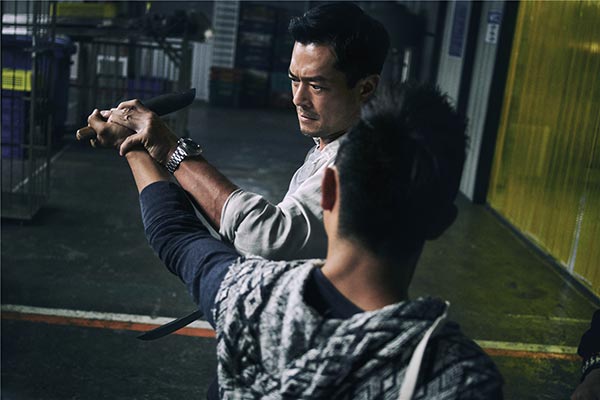
It’s unclear if this film is actually a continuation of the SPL series or if it just started as one and then mutated into its own thing. I thought I saw the characters for “Sha Po Lang” on the title card of the movie though, so I’m just gonna go with it. Regardless, like the second film in the series, SPL 2: A Time for ConsequencesParadox has only a tenuous thematic relation to its forbearers: all of the characters are new. Louis Koo plays a Hong Kong cop who travels to Pattaya, in Thailand, in search of his daughter, who has gone missing. He hooks up with a Thai cop (Wu Yue) as the two uncover an organ trafficking ring with connections all the way to the top of city government. Helping out in the investigation is another cop, a superstitious (possibly psychic) Tony Jaa, star of the last SPL and arguably the best martial arts star in the world today, in what amounts to little more than a guest-starring role. The final villain is played by Lam Ka-tung (Sparrow, Trivisa), which means that the two most important Thai characters in the film are played by Chinese actors. Such are the vagaries of international cinema.

Continue reading SPL: Paradox (Wilson Yip, 2017)”

VIFF 2017 Index

maxresdefault

This is an index to our coverage of the 2017 Vancouver International Film Festival, categorized by writer:

All of Us:
The Frances Farmer Show #15: VIFF 2017 Recap

Sean Gilman:
24 Frames (Abbas Kiarostami, 2017)
Claire’s Camera (Hong Sangsoo, 2017)
120 Beats per Minute (Robin Campillo, 2017)
Bad Genius (Nattawut Poonpiriya, 2017)
Future//Present (Maison du bonheur, Fail to Appear, Black Cop, Still Night Still Light, PROTOTYPE, & Forest Movie)
SPL: Paradox (Wilson Yip, 2017)
The Killing of a Sacred Deer (Yorgos Lanthimos, 2017)

Evan Morgan:
Forest Movie (Matthew Taylor Blais, 2017) & Prototype (Blake Williams, 2017)
Maison du bonheur (Sofia Bohdanowicz, 2017)
Western (Valeska Grisebach, 2017)
Paradox (Wilson Yip, 2017)

Ryan Swen:
“Scaffold” (2017, Kazik Radwanski) & “Let Your Heart Be Light” (2016, Deragh Campbell & Sophy Romvari)
A Skin So Soft (Denis Côté,2017)
Faces Places (Agnès Varda & JR, 2017)
The Florida Project (Sean Baker, 2017)

Jhon Hernandez:
Close-Knit (Naoko Ogigami, 2017)

Nathan Douglas:
Milla (Valérie Massadian,2017)
BC Spotlight (Luk’Luk’I, Never Steady, Never Still, Entanglement, Once There Was A Winter, Gregoire)

Melissa Tamminga:
24 Frames (Abbas Kiarostami, 2017)
Sami Blood (Amanda Kernell, 2016)
Top of the Lake: China Girl (Jane Campion, 2017)

VIFF 2017: Future//Present

sofia20rv3

The Future//Present program at VIFF has quickly become one of the most dynamic and interesting streams the festival has to offer, adding to the festival’s longtime commitment to the cutting edge in Asian cinema an exploration of the burgeoning Canadian independent film scene, offering showcase opportunities to young filmmakers from Nova Scotia to Vancouver. This year’s program was even better than last year’s inaugural offering, and provided some of the festival’s most interesting, engaging and challenging films.

Last year’s program was lead by a feature and a trilogy of shorts from director Sofia Bohdanowicz, who returns this year with her documentary Maison du bonheur. Filmed on a Bolex over 30 days during a stay with a friend’s mother in Paris, the film is both the story of a woman and the way she does things (makes bread, gets her hair styled) and the story of a woman making a film about a woman she finds fascinating. While not as explicitly meta-cinematic as Never Eat Alone, Bohdanowicz continually leaves in her own attempts to erase herself from her movie (telling her subject how to answer questions when the questioner won’t be heard, or telling people not to look directly at the camera or acknowledge her presence), and at times simply can’t help but take it over, including snippets of her nightly audio journal entries, or taking a side trip to Deauville, the site of some unexplained unhappiness in her past, for which this trip, this film project, seems in some way designed to, if not exactly erase, then somehow compensate for: she wants new memories. It’s a warm, fascinating film from one of the best young filmmakers in the world today.

Continue reading “VIFF 2017: Future//Present”

Bad Genius (Nattawut Poonpiriya, 2017)

Bad_Genius_2.jpg

Fresh off of wide acclaim both at film festivals across North America (the New York Asian Film Festival, Fantastic Fest in Austin and the Fantasia Film Festival in Montreal as well as here at VIFF) and at home, where it was just edged out as Thailand’s submission to the Academy Awards (in favor of SIFF favorite (and veteran of last year’s VIFF) By the Time It Gets Dark, Nattawut Poonpiriya’s cheating scandal/heist film is one of the most enjoyable, smartest genre films of the year. Chutimon Chuengcharoensukying plays Lynn, the eponymous Bad Genius, who allows her pretty, but dumb, friend Grace and Grace’s pretty, but dumb and super-rich, boyfriend Pat to convince her to help them cheat on tests at their high school, an exclusive (ie expensive) private school. Lynn lives modestly with her father, a divorced teacher, and only attends the school on what she believes is a full-ride scholarship. When she learns the school is still charging her father money he really can’t afford, she decides to stick it to the system by snagging as much money from her wealthy classmates as she can. Eventually she ropes in the school’s other star scholarship student, Bank, who’s as smart as Lynn but even poorer. Years of cheating eventually lead them to try to cheat the STIC, the standardized test given to students all around the world who hope to study abroad.

The whole film, and especially the cheating sequences, are hyper-kinetic, with camera movement and on-screen graphics bringing life to what is essentially a group of kids filling in bubbles with a #2 pencil (there’s even a killer chase sequence, in a film about test-taking!). But Nattawut also deftly delineates the economic landscape of the school, with the rich kids pressured by their families to succeed at all costs: their exploitation of the poor, smart kids is merely following the logic of their parents’ ideology. And the poor kids, recognizing how the system is rigged against them, are motivated to sell their labor to the highest bidder, regardless of the ethical consequences. The ultimate moral crisis in the film is not so much the cheating, everyone knows that’s “wrong” and everyone does it anyway. Rather it’s in the differing ways Lynn and Bank chose to act within a society in which everyone cheats. Bank, fully internalizing the demon logic of capitalism, is never content, he’s constantly out to squeeze another million baht out of his marks, always in need of a new grift. For Lynn though, ultimately, enough is enough. She alone has the imagination both to create the scheme to cheat the system, and to see a way out of it.

120 Beats per Minute (Robin Campillo, 2017)

120_bpmles_films_de_pierre-france_3_cincma-page_114-memento_films_production-fd_production_photo6

120 Beats per Minute, inexplicably changed to Beats per Minute or simply BPM for its English language title, at least so far, we’ll see when it gets a regular theatrical release, is a heist film built around a social problem, a social problem film structured around a series of heists, a film about politics that sees action as not only possible, but necessary for life in the face of inexplicable tragedy. It’s the story of the Paris branch of ACT UP in the early 90s, protesting the Mitterrand government’s silence about the AIDS crisis and pushing drug companies to speed up the release of new drugs that promised to greatly ameliorate the effects of the deadly disease. The film alternates between fascinating group discussions in which the activists argue about and plan various tactics (with shades of Ken Loach’s masterpiece The Wind that Shakes the Barley) with highly suspenseful recreations of their guerrilla demonstrations. One invasion of a drug company office, for example, is as fraught with suspense as any sequence in any film this year. Running through it all is the love story between a young HIV+ activist and a new, negative member (regardless of their status, all ACT UP members would claim to the public to be positive). Each movement is punctuated by a dance party, the youth of the world luxuriating in a space where they’re free to express their sexuality with the kind of joyous release that comes from spending most of your life confronting your own imminent mortality. The film is an effective counterpoint to all of the nihilism of Nocturama, where a later generation of revolutionaries lacks the imagination or will power to carve out a place for themselves outside the system, where their aimless act of resistance is easily swallowed up by the world they stand against. If there’s a more vital piece of popular cinema this year, I’ll be pleasantly surprised.

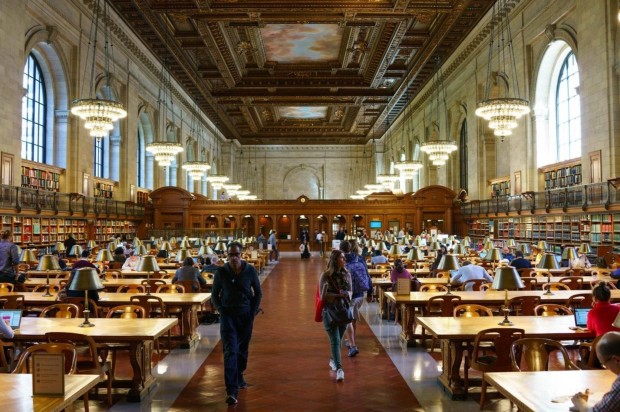
Ex Libris: New York Public Library (Frederick Wiseman, 2017)

Ex-Libris-2-1-620x412

Opening today and running for (most of) the next week at the Northwest Film Forum is the latest film from Frederick Wiseman, the 87 year old documentarian who may very well be the best director of the last ten years. Coming to prominence at the height of the cinema-verité trend, debuting with Titicut Follies fifty years ago, Wiseman has spent his career examining institutions and the ways in which they do and do not serve their public. The verité label doesn’t quite apply to him (and he’s often rejected it), his films are too carefully organized, his images too artfully designed. There’s a fly on the wall element to be sure, along side his disdain for direct interviews (though he’s not above filming one of his subject being filmed by a journalist, as he did in Ballet for example). But his movies are too patient, too precise to be lumped together with the Pennebakers or Maysleses. His last decade of work has been mostly films about artistic organizations (La Danse: The Paris Opera Ballet, Crazy Horse, Boxing Gym, National Gallery), along side profiles of communities both urban (In Jackson Heights) and academic (At Berkeley). Ex Libris, combines both elements into an examination of the interactions between the organization and its community. Alternating, as he has in all these recent films, between scenes of the institution being used with those of it being run, with interstitial shots establishing the various branches of the library system in their neighborhood, Wiseman makes an engrossing argument for the fundamental necessity of the public library, a space anyone can use for any number of reasons, from reading for pleasure to doing research to after school programs to expanding internet access to people who otherwise couldn’t afford it. While at the same time the contrasting images of the wealthy donors who help fund the library and the desperately poor people who depend on it for everyday life points to the fundamental inadequacy of the library itself, of “education” alone as a means for creating a just society.  This library is the ultimate neo-liberal institution, the well-meaning bureaucrats who run it working as best they can to ameliorate the conditions of poverty just enough to hold back real change, while the philanthropic set pat themselves on the back for going to see Ta-Nahesi Coates get interviewed.

Friday October 6 – Thursday October 12

Featured Film:

Ex Libris: New York Public Library at the Northwest Film Forum

We’re still covering the Vancouver Film Festival (in fact, I’m still in Canada), so far we have reviews of 24 Frames, Forest Movie and Prototype, Claire’s Camera, Maison du bonheur, Scaffold and Let Your Heart Be Lightand Western, with more to come over the next week or so. In the meantime, one of the best films of the year is opening this week at the NWFF, Frederick Wiseman’s look at the New York Public Library system. Prowling around various branches through the city, focusing on the people who organize and fund the library and the people who use it, and the implicit class and racial differences that separate them, Wiseman demonstrates both the necessity of the liberal project and its fundamental inadequacy.

Playing This Week:

Admiral Theatre:

Rooted in Peace (Greg Reitman) Mon Only

AMC Alderwood:

The Princess and the Frog (Ron Clements & John Musker, 2009) Fri-Thurs
Judwaa 2 (David Dhawan) Fri-Thurs
Brad’s Status (Mike White) Fri-Thurs
Earth: One Amazing Day (Peter Webber, Lixin Fan & Richard Dale) Fri-Thurs

Ark Lodge Cinemas:

Creepshow (George Romero, 1982) Thurs Only

Central Cinema:

North by Northwest (Alfred Hitchcock, 1959) Fri-Tues
Shaun of the Dead (Edgar Wright, 2004) Fri-Tues

SIFF Egyptian:

The Last Dalai Lama? (Mickey Lemle) Fri-Mon
Clive Davis: The Soundtrack of Our Lives (Chris Perkel) Tues Only

Century Federal Way:

Bailaras (Ksshitij Chaudhary) Fri-Thurs
Life of Brian (Terry Jones, 1979) Sun & Weds Only

Grand Cinema:

Tacoma Film Festival Fri-Thurs Full Program
The Shining (Stanley Kubrick, 1980) Sat Only

Grand Illusion Cinema:

The Force (Peter Nicks) Fri-Thurs
Danger Diva (Robert McGinley) Fri & Sat Only
Better Watch Out (Chris Peckover) Fri & Sat Only
Finding Joseph I: The HR from Bad Brains Documentary (James Lathos) Thurs & Next Sat Only

Cinemark Lincoln Square:

Judwaa 2 (David Dhawan) Fri-Thurs
Chef (Raja Krishna Menon) Fri-Thurs
Mahanubhavudu (Maruthi) Fri-Thurs
Spyder (A.R. Murugadoss) Fri-Thurs
Life of Brian (Terry Jones, 1979) Sun & Weds Only

Regal Meridian:

Chasing the Dragon (Wong Jing & Jason Kwan) Fri-Thurs
Brad’s Status (Mike White) Fri-Thurs
Judwaa 2 (David Dhawan) Fri-Thurs

Northwest Film Forum:

Tasveer South Asian Film Festival Fri-Thurs Full Program
Ex Librs: New York Public Library (Frederick Wiseman) Fri-Sun, Weds & Thurs Our Review
Unrest (Jennifer Brea) Fri-Sun, Weds & Thurs

AMC Pacific Place:

The Princess and the Frog (Ron Clements & John Musker, 2009) Fri-Thurs
City of Rock (Dong Chengpeng) Fri-Thurs
Never Say Die (Yang Song & Chiyu Zhang) Fri-Thurs
Sky Hunter (Li Chen) Fri-Thurs

Regal Parkway Plaza:

Judwaa 2 (David Dhawan) Fri-Thurs
Last Night (Bb Joyce Bernal) Fri-Thurs
Til Death Do Us Part (Chris Stokes) Fri-Thurs
Brad’s Status (Mike White) Fri-Thurs
Wind River (Taylor Sheridan) Fri-Thurs Our Review

AMC Seattle:

The Big Sick (Michael Showalter) Fri-Thurs Our Review

Seattle Art Museum:

Les enfant terribles (Jean-Pierre Melville, 1950) Weds Only
The File on Thelma Jordan (Robert Siodmak, 1950) Thurs Only

SIFF Film Center:

Take Every Wave: The Life of Laird Hamilton (Rory Kennedy) Fri-Thurs

AMC Southcenter:

The Princess and the Frog (Ron Clements & John Musker, 2009) Fri-Thurs
Til Death Do Us Part (Chris Stokes) Fri-Thurs

SIFF Uptown:

Dolores (Peter Bratt) Fri-Thurs
Pearl Jam: Let’s Play Two (Danny Clinch) Fri-Thurs
Eternal Sunshine of the Spotless Mind (MIchel Gondry, 2004) Weds Only

Varsity Theatre:

Columbus (Kogonada) Fri-Thurs Our Review Our Other Review
Te Ata (Nathan Frankowski) Fri-Thurs

In Wide Release:

Blade Runner 2049 (Denis Villeneuve) Our Review
Mother! (Darren Aronofsky) Our Review

Claire’s Camera (Hong Sangsoo, 2017)

2017 - Claire's Camera 4

Mysterious Object at Cannes

Claire’s Camera, barely over an hour long and shot in about a week at last year’s Cannes Film Festival, isn’t even the best Hong Sangsoo movie of the past year. That would be On the Beach at Night Alone. Nor is it likely to be the most popular, with The Day After, which like Claire’s Camera played at Cannes this year, more likely to attract an audience outside of Hong’s hardcore devotees, with a look and mood more in line with the masters of the European art film. But there isn’t a film this year that I’ve had more fun thinking about and rewatching than Claire’s Camera, with the possible exceptions of Baahubali 2 and the film Hong had at this year’s SIFF (and last year’s VIFF), Yourself and Yours. Every Hong film gets better the more times you watch it, his peculiarly fluid approach to reality and temporality make even the most basic elements of his scenarios matters for speculation, kaleidoscopic objects that shift not only meaning but cause and effect with every new viewing. But Claire’s Camera is exceptional in this regard. Each time I’ve seen it, I’ve had to invent a whole new theory of the film, none of which have so far managed to explain all the facts as they’re presented. Watching it is like trying to solve a puzzle in which several key pieces are missing. I’m going to try and work through it here, which will involve sorting through the plot in detail. If you haven’t seen the film yet, you should, it’s delightful. But you should probably stop reading now if spoilers concern you.

Continue reading Claire’s Camera (Hong Sangsoo, 2017)”

24 Frames (Abbas Kiarostami, 2017)

170524094225-abbas-kiarostami-24-frames-5-super-169

Abbas Kiarostami’s final film is a compendium of 24 four and a half minutes sequences, inspired, an opening title card notes, by the late director’s wonderings about still images, paintings and photographs, imagining what might have happened before or after the single instant captured by the artist. He says that the project was originally going to be based around recreations of several of his favorite paintings, but in the process he decided to just mostly use photos he had taken instead.

The first frame though is a painting, Pieter Brueghel the Elder’s “Hunters in the Snow”. After resting onscreen for a bit, the scene slowly becomes animated with images (smoke rises from chimneys, snow falls) and sounds (a howling wind, a squawking crow). Soon the painting comes to life, motion everywhere except the people, the only humans we’ll see in any of the frames, do not move. Most of the frames to follow will feature some or all of these elements – birds, snow, wind, sometimes music (Kiarostami has room for both Ave Maria and, shockingly, Andrew Lloyd Webber), the hypnotic white noises of winter otherwise broken only by the occasional (unseen) hunter’s gunshot, a bolt in inexplicable terror rupturing the natural world.

Not that Kiraostami’s nature is one of peaceful harmony. The birds are constantly fighting amongst themselves – over food or a newly dug nest in the snow or a choice spot on a railing. A wolf stalks a flock of sheep as they huddle together against the wind. A cat prowls in the distance, suddenly appearing with silent playfulness in the foreground. Even the lions are afraid of thunder. Notable as well is that most of the animals we see aren’t even real, but rather this “natural” world is the manufactured product of a more or less realistic CGI.

The project is a relaxed meditation on what must have been a lifelong interest for Kiarostami, a master of both the frame within the frame (think of the car windows in Certified Copy) and the interaction of the world outside the frame with the one within it (the cobbled together conversations of Taste of Cherry, the courtroom scenes of Close-Up, or the simultaneously terrifying and liberating shatter at the end of Like Someone in Love). Most of the frames in 24 Frames contain internal frames, window panes or railings or fences or trees organizing the image. And the things Kiarostami adds to them as well function as frames, turning the potentialities of a still image into a part of a single sequence of events. A moment could be a part of anything, but in assigning a narrative function to it, Kiarostami defines it as a single thing, at least for four and a half minutes (what happens after is again a matter of infinite possibility). Framing is an imposition of order onto chaos. And despite the fact that images we see are ones of nature, the temptation to anthropomorphize them into little dramas motivated by human psychology is inescapable. I liked to imagine that the same crows were recurring in frame after frame, only to be tormented by one obnoxious bird (Kiarostami’s Angry Bird) who kept messing with them, trying to eat their food, trying to take over their perch. A little dog sets himself at war with a flag on a beach, barking at it relentlessly until it falls, he skips away exultant in his victory. I see myself in the frames about traveling herds, not so much the deer moving along at his own pace, against the crowd, rather in the cow sleeping on the beach, too lazy to get up and move along before the tide rolls in. This too is an act of framing: we obviously don’t know what animates a cow (well, except for animated cows, who are motivated by the whims of the auteur), their causation is in our choosing. Even the inanimate objects are susceptible to this framing by identification, the helical strand of saplings, centered in the snow, surrounded by the squares an rectangles of window panes, with larger, more impressive trees in the background, recalls, for me, Charlie Brown’s Christmas tree, a brave little tree standing alone against the rush of modernity. In this case the association of memory does the work of defining the still object more or less unconsciously. We intrude on boundless nature with our thoughts, our intentionality, our memories, transforming everything we see, and not always with the rip of a chainsaw or the murderous intent of a rifle.