VIFF 2016: Beautiful 2016 (Hideo Nakata; Alec Su; Stanley Kwan; Jia Zhangke, 2016)

beautiful2016__cutline__onedayinourlivesof

There are always one or two duds in these omnibus things, so let’s get those out of the way. Beautiful 2016’s first short is an embarrassing Ozu homage that repurposes his hometown (Kamakura) and his one-time actress (Kyoko Kagawa), though if you’re going to steal from the master, at least do us the favor of making off with some of his good humor. A dull banality best left forgotten. Dama Wang Who Lives on Happiness Avenue is quite possibly already forgotten. An indistinct void focused on a spritely, well-coiffed older woman jazzercising her way through Shangahi, Alec Su’s debut short is mercifully, well, short.

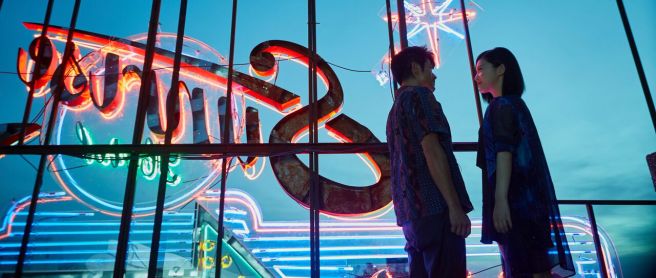
A real sense of artistry kicks in with One Day in Our Lives of…Director Stanley Kwan crafts some lovely images of nocturnal Hong Kong, his sense of texture undiminished even after a decade or so out in the wilderness. Distorted Wongian clocks, vertiginous tilts, and a weirdly haunting pop song provide the primary pleasures, though the Day for Night behind-the-scenes antics feel a bit stale. Kwan, once an inheritor of Hong Kong’s art-film tradition, seems to have lost opportunities as the industry shifted production modes this century, though it’s perhaps equally plausible that Kwan’s open life as a gay man curtailed his early promise. Whatever the case, One Day in Our Lives of… should prod those who’ve ignored Kwan for a decade or more (guilty as charged!) to give films like Everlasting Regret a belated look.

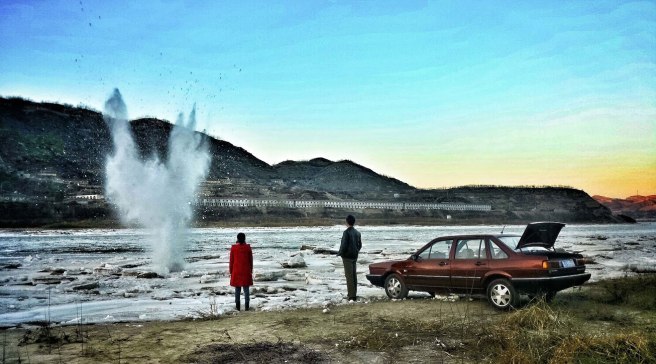
Jia Zhangke, on the other hand, is at the apex of his career. He comes swinging into Beautiful 2016—and I do mean swinging—with the swagger of a filmmaker who recognizes his own mid-career mastery. That self-knowledge is not, however, a straight-jacket for Jia. If anything, he’s discovered a more elastic vision of himself as an artist, willing to let in a kind of looseness that he kept at bay with the more static, calling-card early films. Last year’s Mountains May Depart proved that definitively, so it’s not coincidental that The Hedonists begins with a snatch of melancholic score from the prior feature. The presence of Jing Dong Liang as Liangzi, the poor miner destined for destruction in Mountains May Depart, also reiterates that we’re in a pre-established world. But without wasting time, Jia reconfigures the melodrama of his 2015 masterpiece into a buddy comedy. The transition plays subtly at first, until an uproarious cameo from the director himself, equipped with cigar and sunglasses and shouty bravado, brings down the house. Jia’s sense of play extends to the camera too, which he mounts on a newly acquired drone. Given that Jia helped reorient the Chinese film industry around digital technology, it shouldn’t come as a surprise that he employs the newest tech better than just about anyone else. But when a standard tracking shot suddenly achieves lift off and ascends to the heavens, a genuine sense of wonder sets in. At this point in Jia’s career, you can only marvel at the corporeal and artistic weightlessness.
Operation Mekong (Dante Lam, 2016)

movie_015739_185447

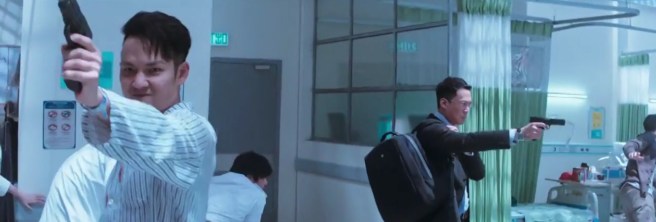
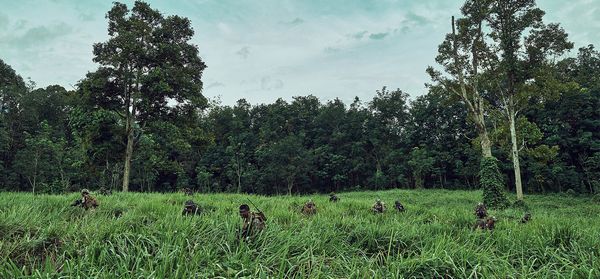
Opening this week at the Regal Meridian is the latest action film from director Dante Lam, whose Beast Cops and Jianghu: The Triad Zone were two of the better Hong Kong films to come out during the industry trough that followed the colony’s handover to China in the late 1990s. More recently, his MMA film Unbeatable earned a handful of acting prizes for its star, Nick Cheung, back in 2013. Operation Mekong is a procedural programmer based on true events, starring Eddie Peng (Rise of the Legend) and Zhang Hanyu (The Taking of Tiger Mountain, Mr. Six). Thirteen Chinese citizens are killed on the Mekong River, in the notorious no-man’s land known as the Golden Triangle, the intersection of Burma, Thailand and Laos that has long been the headquarters for the drug trade and action movies using the drug trade as a plot motivation (see, for example, John Woo’s Heroes Shed No Tears from way back in 1986). It’s meth now, rather than heroin, but the more things change, the more they’re exactly the same. Suspecting drug lord involvement, the Chinese government convinces the other three nations to cooperate, and sends in an elite squad of heavily-armed cops to expose, capture and, if necessary, kill the bad guys.  Zhang heads the squad, all of whom are given code names from Greek mythology, except for their remarkable German Shepherd, who is named “Bingo”. Peng serves as their local contact, an intelligence officer who has been working the area with an impressive array of fake mustaches for five years.

What follows are all the familiar beats of a high-explosive action film. Strong extended set-pieces packed with carnage, leavened with stretches of exposition and character-building. There’s a scene where every member of the team introduces themselves around a communal meal, a scene where one muses about his daughter back home, another one where a cop has a tragic backstory relived in flashbacks which will come back to haunt him at a narratively-convenient time. The remarkable thing about Johnnie To’s Drug War is that he didn’t bother with any of this stuff, trusting the tightness of his plot and sequence construction to carry the audience through the running time of the film. Lam and his team of screenwriters though settle for the typical, thus no matter how good the actors and the action is, and they’re pretty good for the most part, the movie is ultimately is just treading water, doing everything we’ve seen before, just a bit louder, and with more drone-mounted cameras. As an homage and update to the heyday of Cannon Films-era actioners, it doesn’t get much slicker.

One Night Only (Matt Wu, 2016)

unspecified-2

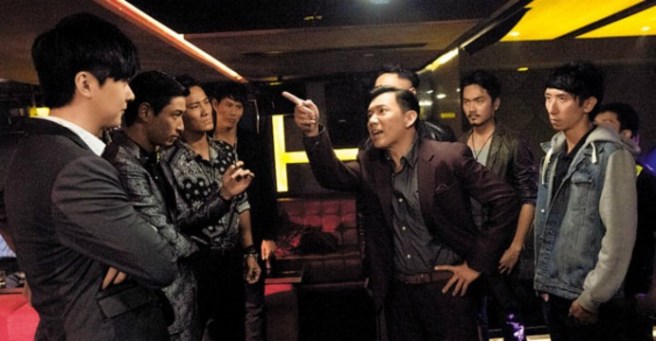
An Aaron Kwok movie is opening on Seattle Screens for the second time in three weeks, as the now venerable pop star/actor follows up his taciturn performance as the cooly rational police bureaucrat in Cold War 2 with a turn as a compulsive gambler with unresolved family issues in Matt Wu’s One Night Only. It’s the Taiwanese Wu’s directorial debut and also stars his wife, Yang Zishan, who starred in Three actress Zhao Wei’s directorial debut So Young a few years ago, an unrelated sequel to which called Never Gone opened last week at the Pacific Place. Like a lot of debut films, One Night Only is positively bursting with ideas and influences, its a work of exuberant cinephilia, pulling together elements of films as disparate as Nights of Cabiria, Rebel Without a Cause, 2046, One Night in Mongkok, the Fast and the Furious series and what I imagine Nicholas Sparks films are like into a movie that resolutely refuses to simply be one thing, but rather changes shape every reel or so in a way that never quite holds together, but is nonetheless fascinating in its audacity. It recalls last year’s under-the-radar gem of diasporic Chinese cinema, Go Away Mr. Tumor, a film that juggled the demands of the cute CGI rom-com and the cancer melodrama far more successfully than it had any right to. One Night Only doesn’t hang together quite as well, or at all even, but it’s got more energy than almost any movie you’re likely to see at the multiplex this summer.

Continue reading One Night Only (Matt Wu, 2016)”

Cold War 2 (Longman Leung & Sunny Luk, 2016)

2012-cold-war-still-2-1

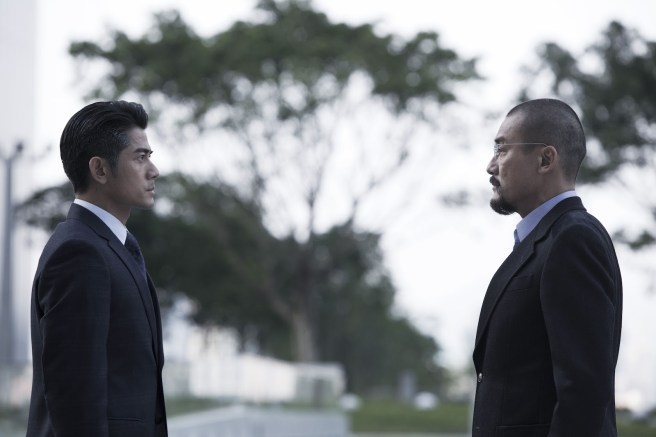
Picking up right where their 2012 hit film, which featured an all-star cast and swept the Hong Kong Film Awards, left off, Longman Leung and Sunny Luk present another suspenseful tale of corruption and double-dealing in the highest echelons of the Hong Kong police department, its two institutional halves at (cold) war with each other. On the operations side is The Other Tony Leung, a tough man of action, of the “break the law to enforce the law” type valorized in Hong Kong cinema since at least the mid-1980s. On the administrative side is Aaron Kwok, emotionless, calculating and fiercely determined to uphold the letter of the law. The two wage a Crimson Tide-esque battle of wills over a tense hostage situation, in which an Emergency Unit van and its five police officers have been captured by unknown criminals. Kwok wins out and assumes command of the force, and the second half of the film follows his investigation of the terrorists, leading to the arrest of Leung’s own son, played by Rise of the Legend‘s Eddie Peng, as the ringleader. But, in a cliffhanger ending, Peng’s accomplices demand his release: they have now kidnapped Kwok’s wife.

Continue reading Cold War 2 (Longman Leung & Sunny Luk, 2016)”

Three (Johnnie To, 2016)

img_5881

This guest review comes courtesy of critic Jaime Grijalba.

I’m not an expert on Johnnie To, nor do I pretend to be one. Not because I don’t find him interesting, and I will end up watching his entire filmography before too long. I’m wary of clogging the feed of the many people who are unaware of his talents with my half-assed thoughts, especially when there are so many critics and fans that have spent way more time than I’d ever spend examining and studying the style and everything that surrounds the films of To and his Milkyway Image studio. So, with all that I’ve said, what lead me to write about the latest film from one of the most well-regarded Asian directors of the past two decades?

Continue reading Three (Johnnie To, 2016)”

The Frances Farmer Show #10: Three and Shock Corridor

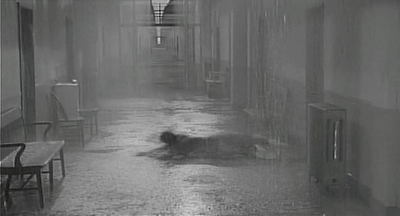
This week Mike and Sean, for the third time, trek out to downtown Seattle to catch the opening night of the new Johnnie To film, the hospital-set thriller Three, with Louis Koo, Zhao Wei and Wallace Chung. Paired with it is another thriller set in a hospital, Samuel Fuller’s 1963 Shock Corridor, about a journalist who goes undercover in a mental institution and comes unglued.

You can listen to the show by downloading it directly, or by subscribing on iTunes or the podcast player of your choice.

A Correction:

Philip Ahn, who played Dr. Hong in Shock Corridor, was Korean-American, not Chinese American.

SIFF 2016 Report #3: Disintegration (The Bitter Stems, Thithi, Trivisa, The Mobfathers, Tag)

1262846_3f0ad18a95138db9f622d32ada567268-692x360

Proving once again that no film festival should ever last longer than an Olympic Games, the 2016 SIFF limped to its conclusion this weekend after a soul-crushing 25 days. While the festival had run impressively well over its first two weeks, organized and on time and with nothing in particular for a picky festival-goer like me to complain about, the last week saw an inexplicable series of outrages.

This began on Sunday night, when the programmer tasked with introducing the Johnnie To-produced film Trivisa managed to be both disrespectful, mildly offense and factually inaccurate when he claimed To was the “Roger Corman of Hong Kong”, a producer who would make any movie you had in mind as long as it had “guns or titties”. That same presenter ran the Q&A with actor/producer Chapman To the next night, which was largely unobjectionable (To was the one who mentioned “titties” at least), but the programmer did at one point refer to Mr. To as “Chapman Ho” and later, “Herman”.

Continue reading “SIFF 2016 Report #3: Disintegration (The Bitter Stems, Thithi, Trivisa, The Mobfathers, Tag)”

SIFF 2016 Preview Week Three and Beyond

mountains-depart

The Seattle International Film Festival races into it’s third week (has it really only been fifteen days? With only a mere ten to go?) and here we have some titles you won’t want to miss. We’ll link to our reviews of the titles listed here as we write them, as we’ve been doing with our Week One and Week Two Previews. We previewed the festival back on Frances Farmer Show #6 and discussed it at its midway point on Frances Farmer #7. We’ll have a complete wrap-up of the SIFF just as soon as it ends.

Continue reading “SIFF 2016 Preview Week Three and Beyond”

SIFF 2016 Report #2: The Big Road, The Island Funeral, Heaven Can Wait, The Final Master and My Beloved Bodyguard

193.1

Brief accounts of a handful of films from the SIFF’s second week as it rolls into its third.

The Big Road (Sun Yu, 1935) – Something like an amalgam of Our Daily Bread and Mrs. Miniver for the Anti-Japanese War, by which I mean it’s a propaganda film celebrating first the communal virtues of collectivist rural life (the hard work of uniting the nation through literal road-building) and then the bold heroism of that collective as it stands against Imperialist aggression, in the form of the traitorous land-owning, but not land-working, class (relics of Old China, these rulers wear 19th Century clothes, and live in Qing mansions, the feudal system in opposition to the power of the Modern Industrial Worker). It ambles, plotless for most of its length, but it’s accumulated enough power that by the end, as its hero (eight characters combine to form one hero, a communist Voltron) is smashed to bits by advanced machines of war, it resembles nothing less than “Guernica” in its devastation.

Continue reading “SIFF 2016 Report #2: The Big Road, The Island Funeral, Heaven Can Wait, The Final Master and My Beloved Bodyguard